


Paralysis & Spinal Cord Injury Lawyer
Life-Altering Paralysis. Serious Legal Help.
If a catastrophic accident or someone's negligence left you or a loved one paralyzed—whether paraplegia, quadriplegia, or another severe spinal cord injury—CHG Personal Injury Lawyers focuses exclusively on securing the compensation you need for lifetime care, lost income, and dignity.
Why Families Trust CHG
Florida Bar
Licensed Attorneys
Nationwide
Cases Across the U.S.
Catastrophic Only
Focused Practice
By CHG Lawyers · Published August 22, 2026
Paralysis Injury Lawyer Florida: A Guide to Paraplegia, Quadriplegia, and Your Legal Rights
When a serious accident causes paralysis, your life changes forever. You face immediate medical emergencies and years—often decades—of specialized care, equipment, home modifications, and lost income. If someone else’s negligence or failure to provide basic safety caused that accident, you may have a legal claim for compensation to cover those lifetime costs. This guide explains what paralysis is, how it happens in Florida, what it costs, how fault is proven, and what your family should do first.
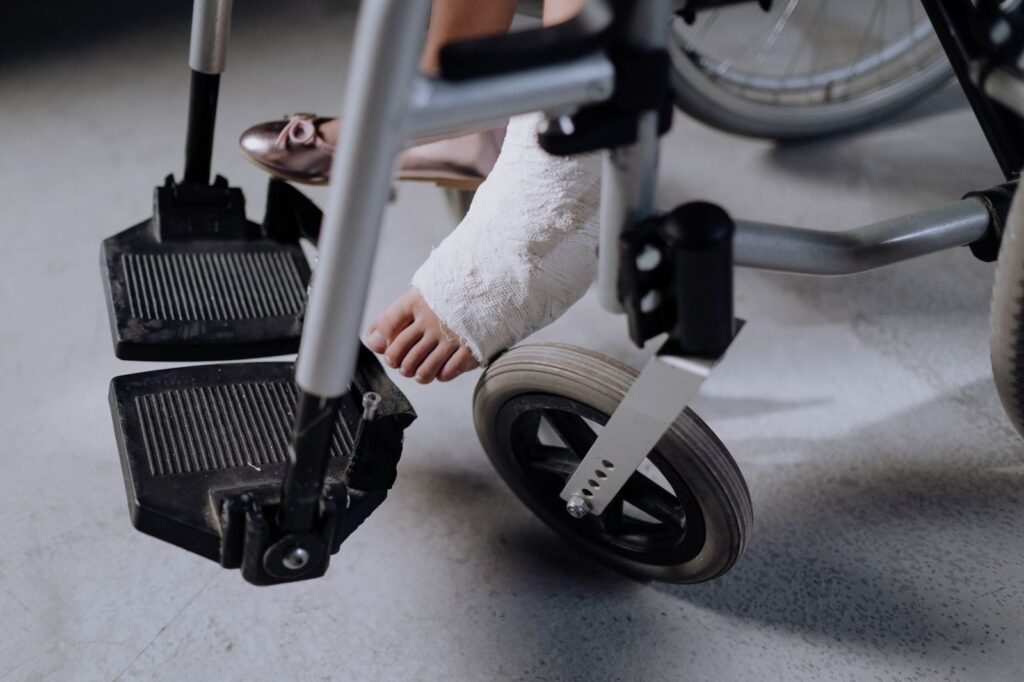
If you're in a specific region, we have local experience: Paralysis cases are among the most complex personal-injury claims. Talk it through with our team — the first consultation is free, confidential, and carries no obligation.
What Is Paralysis? Paraplegia vs. Quadriplegia
Paralysis is the permanent loss of voluntary movement and sensation below the level of a spinal cord injury. It affects mobility, independence, and quality of life.
Paraplegia is paralysis of the lower body and legs. It results from injury to the thoracic (mid-back) or lumbar (lower-back) spinal cord. A person with paraplegia typically keeps full use of their arms and hands but cannot walk or move their legs.
Quadriplegia—also called tetraplegia—is paralysis of all four limbs and the torso. It results from injury to the cervical (neck) spinal cord. The higher the cervical injury, the greater the loss of function. Some individuals with high cervical injuries cannot breathe without a ventilator or move any limbs.
Complete vs. Incomplete Paralysis
A complete spinal cord injury means total loss of movement and sensation below the injury level. Significant recovery is unlikely, though some neurological improvement can occur in the first year after injury.
An incomplete spinal cord injury means some movement or sensation remains below the injury level. Incomplete injuries often offer better prospects for recovery and adaptation, though function varies widely depending on which nerve pathways survived.
The American Spinal Injury Association (ASIA) Impairment Scale classifies spinal cord injuries from A (complete) to E (normal). This helps doctors and families understand severity and recovery potential.
For a detailed comparison, see Paraplegia vs. Quadriplegia: Key Differences.
How Paralysis Happens: Common Accidents in Florida
Over 17,700 new spinal cord injuries occur annually in the United States. Most result from traumatic accidents. In Florida, paralysis-causing accidents take several forms.
Truck Accidents. High-speed collisions with commercial trucks cause catastrophic spinal cord damage. Truck drivers may be fatigued, distracted, or violating Federal Motor Carrier Safety Administration (FMCSA) rules. The truck company may fail to maintain brakes or tires, or load cargo improperly. Each creates separate liability.
Negligent Security and Violent Crime. If you were assaulted, shot, robbed, or sexually attacked on someone else’s property—an apartment complex, parking lot, garage, hotel, bar, gas station, or ATM—and the property owner failed to provide reasonable security (working locks, adequate lighting, cameras, or security guards), the owner may be liable. This is called negligent security, a form of premises liability. The owner’s duty is to protect visitors and tenants from foreseeable harm.
Rideshare Collisions. Uber and Lyft drivers who cause accidents through negligent driving, vehicle maintenance failures, or improper hiring can leave passengers paralyzed. The platform itself may also bear liability. See Paralysis from Rideshare Accidents for details.
Short-Term Rental and Hotel Accidents. Unsafe conditions—inadequate security, negligent maintenance, slippery surfaces, or failure to warn of hazards—can cause falls and spinal injuries. Property owners must maintain safe premises and disclose known dangers.
Construction Zone Accidents. Unguarded excavations, falling debris, or equipment failures cause spinal injuries. Construction companies and site owners must follow safety regulations.
Other Serious Accidents. Motorcycle crashes, ATV accidents, drowning incidents, jet ski collisions, and medical negligence (surgical errors, misdiagnosis) can all result in paralysis.
In catastrophic-injury cases, we investigate the full chain of responsibility. We look not just at the immediate cause but at the decisions, failures, and violations that made the accident possible.
The Lifetime Cost of Paralysis Care
Paralysis does not shorten life expectancy. A person paralyzed at age 25 may face 60+ years of specialized care. The costs are staggering and accumulate over decades.
Immediate and Ongoing Medical Costs: – Emergency transport, trauma surgery, and hospitalization – Acute rehabilitation (often 2–6 months) – Ongoing physician care, imaging, and specialist visits – Medications for pain, infection prevention, and complications – Wound care and pressure-ulcer prevention – Urological and bowel management supplies
Home Modifications and Accessibility: – Wheelchair ramps and accessible entryways – Bathroom renovations (roll-in showers, grab bars, accessible toilets) – Bedroom modifications – Smart home technology and automated systems – Vehicle modifications for hand controls or wheelchair lifts
Mobility and Adaptive Equipment: – Wheelchairs (manual and motorized; replacement every 3–5 years) – Transfer devices and lifts – Adaptive vehicles or vehicle modifications – Specialized beds and pressure-relief mattresses – Communication and computer access devices
Personal Care Attendants: – 24-hour or near-24-hour assistance with daily activities (bathing, dressing, toileting, eating, grooming) – This is often the single largest expense: $50,000–$100,000+ annually depending on hours and location
Rehabilitation and Therapy: – Physical therapy and occupational therapy – Mental health and counseling services – Vocational rehabilitation
Lost Wages and Earning Capacity: – Inability to work or reduced work capacity – Lost promotions and career advancement – Reduced Social Security and retirement benefits
The Christopher & Dana Reeve Foundation and National Spinal Cord Injury Statistical Center document that lifetime care costs vary dramatically by age, severity, and location. A person injured at age 25 with high tetraplegia faces substantially higher lifetime medical expenses than someone injured at age 65, simply because care accumulates over more decades.
For a detailed breakdown, see Lifetime Cost of Paralysis Care and Who Pays for Lifetime Paralysis Care.
Who Is Liable? Proving Fault in a Paralysis Case
To recover compensation, you must prove that someone else is legally responsible for the accident that caused your paralysis. That requires establishing four elements: duty, breach, causation, and damages.
Duty. The defendant owed you a legal duty of care. Drivers owe other road users a duty to drive safely. Property owners owe visitors and tenants a duty to maintain safe premises and provide reasonable security. Employers owe workers a duty to provide safe working conditions.
Breach. The defendant violated that duty through negligence, recklessness, or intentional wrongdoing. A truck driver who falls asleep at the wheel breaches the duty to drive safely. A property owner who fails to fix broken locks or provide lighting breaches the duty to maintain security.
Causation. The defendant’s breach directly caused the accident and your injury. The accident would not have happened without the defendant’s conduct.
Damages. You suffered real, measurable harm—in this case, catastrophic spinal cord injury and paralysis.
Truck Accident Liability
Truck accident cases often involve multiple defendants: the driver, the trucking company, the vehicle manufacturer, the cargo loader, and sometimes a maintenance contractor. Liability theories include driver fatigue (violating FMCSA hours-of-service rules), distraction, speeding, mechanical failure, improper cargo loading, and company negligence in hiring, training, or supervision.
Negligent Security Liability
A property owner is liable for negligent security if: – A violent crime (assault, shooting, robbery, sexual assault) occurred on the property – The crime was foreseeable (similar crimes had occurred nearby, or the property was known to be unsafe) – The owner failed to provide reasonable security measures (working locks, adequate lighting, cameras, guards, or other protections) – That failure allowed the crime to occur – You were injured as a result
The owner’s duty is not to prevent all crime but to take reasonable steps proportional to the risk.
Rideshare and Short-Term Rental Liability
Rideshare platforms and short-term rental companies can be liable for driver negligence, vehicle maintenance failures, inadequate background checks, and failure to warn of known hazards. The platform or property owner’s own negligence may also create liability.
Comparative Fault in Florida
Florida’s comparative negligence law (Fla. Stat. § 768.81) allows recovery even if you were partly at fault—as long as you were not more than 50% responsible for the accident. If you were 30% at fault and the defendant 70% at fault, you recover 70% of your damages. If you were 51% at fault, you recover nothing.
This rule removes the fear that any personal action bars your claim. Even if you made a mistake, you may still recover if the defendant bears the greater share of responsibility.
Evidence and Proof
Winning a paralysis case requires solid evidence: police accident reports, witness statements, security footage, accident reconstruction by engineers, medical records documenting the injury and its cause, photographs of the scene, maintenance records (for trucks or properties), and expert testimony on liability and damages.
Time is critical. Accident scenes change, witnesses move, memories fade, and video footage is deleted. A lawyer must act quickly to preserve evidence.
See Proving Fault in a Paralysis Case and Comparative Fault in Paralysis Claims for detailed guidance.
Paralysis Compensation: What Your Claim May Cover
Compensation in a paralysis case falls into two categories: economic and non-economic damages.
Economic Damages cover measurable financial losses: – All past and future medical expenses (emergency care, surgery, hospitalization, ongoing treatment, therapy, medications, supplies) – Home modifications and accessibility equipment – Mobility aids and adaptive vehicles – Personal care attendant wages (often the largest component) – Lost wages and lost earning capacity – Rehabilitation and vocational training
Non-Economic Damages cover intangible harm: – Pain and suffering – Loss of enjoyment of life and independence – Emotional distress and psychological trauma – Loss of consortium (the loss of companionship and intimacy a spouse experiences)
How Compensation Is Calculated
Calculating lifetime paralysis compensation requires expert testimony. Life-care planners project decades of medical and care costs. Vocational experts calculate lost earning capacity. Economists adjust future costs for inflation and discount them to present value. Medical experts testify to the nature and permanence of the injury.
Most cases settle through negotiation between your attorney and the defendant’s insurance company or legal team. Some proceed to trial, where a jury decides liability and awards damages.
No Guarantee of Outcome
Each case is unique. Compensation depends on the strength of liability evidence, the severity of injury, the defendant’s insurance coverage, the jurisdiction (some juries award more generously than others), and the quality of expert testimony. We cannot predict or guarantee your result, but we can tell you honestly what similar cases have recovered and what factors influence value.
See How Paralysis Compensation Is Calculated for a detailed breakdown.
Not sure what your next step is?
Talk it through with our team — the first consultation is free, confidential, and carries no obligation.
Statute of Limitations: Time Limits for Filing in Florida
Florida’s statute of limitations for personal injury claims is two years from the date of the accident (Fla. Stat. § 95.11). For wrongful death claims, the deadline is two years from the date of death.
Missing this deadline bars your claim forever. You cannot recover, no matter how strong your case.
The clock generally starts on the date of the accident. Exceptions exist for minors (the deadline may be extended) and in rare cases where the injury was not discovered immediately, but these exceptions are narrow. Do not rely on them.
If you or a loved one was paralyzed in an accident, contact a lawyer as soon as possible. Even if years have passed, an attorney can determine whether your claim is still timely.
See Paralysis Statute of Limitations in Florida for details.
Wrongful Death: When Paralysis Results in Loss of Life
Some paralysis-causing accidents result in death. A catastrophic truck crash, a fatal shooting during a negligent-security incident, a rideshare collision, or a drowning can end a life.
In Florida, the wrongful-death claim is filed by the personal representative of the estate on behalf of the survivors, such as the spouse, children and parents (Fla. Stat. § 768.20).
Wrongful death claims are brought with the same dignity and seriousness as any other catastrophic-injury claim. The loss is real and deserves full legal recourse.
See Paralysis Wrongful Death Claims: Help for Loved Ones for guidance on bringing a claim after losing a loved one.
What to Do First: Immediate Steps After a Paralysis-Causing Accident
If you or a loved one has just been paralyzed in an accident, here’s what to do:
-
Seek Emergency Medical Care Immediately. Spinal cord injuries are medical emergencies. Call 911 and ensure the injured person receives trauma care at a hospital with spinal-cord-injury expertise.
-
Report the Accident to Police. If the accident involved a vehicle, assault, or other crime, file a police report. Obtain the report number and the officer’s contact information.
-
Document the Scene. Take photographs of the accident scene, the vehicles or property involved, lighting conditions, and any visible hazards. Write down the names and phone numbers of witnesses.
-
Preserve Evidence. Do not allow the accident scene to be cleaned, altered, or destroyed. If security footage exists (at a property or on a nearby business), ask that it be preserved. Keep all medical records, imaging, and test results.
-
Do Not Sign Anything or Give a Recorded Statement Without Legal Advice. Insurance adjusters will contact you. Do not agree to record a statement or sign a release without consulting an attorney first. Anything you say can be used against you.
-
Notify Your Insurance Company. You must report the accident to your own insurer, but keep your statement brief and factual. Do not speculate or accept fault.
-
Gather Key Information. Collect the names, phone numbers, and addresses of all witnesses. Get the other driver’s or property owner’s insurance information. Take photos of your injuries and the scene from multiple angles.
-
Contact a Paralysis Injury Lawyer Immediately. Time is critical. Evidence degrades, witnesses move, and the statute of limitations is two years. A lawyer can immediately issue preservation letters, investigate the accident, and protect your rights.
See First Steps After a Loved One Is Paralyzed for a detailed checklist.
Regional Representation: Paralysis Injury Lawyers in Florida
We represent paralysis injury clients throughout Florida and nationwide. If you’re in a specific region, we have local experience:
- Miami Paralysis Injury Lawyer
- Orlando Paralysis Injury Lawyer
- Tampa Paralysis Injury Lawyer
- Jacksonville Paralysis Injury Lawyer
Have questions about what happened?
Ask our team directly. The first conversation is free, confidential, and there is no obligation to continue.
Why You Need a Paralysis Injury Lawyer
Paralysis cases are among the most complex personal-injury claims. They involve catastrophic, permanent injury; lifetime care costs spanning decades; multiple defendants; sophisticated liability theories; and expert testimony on medicine, economics, and vocational capacity.
Insurance companies have teams of adjusters and defense lawyers. They minimize claims and fight hard to avoid paying the true cost of lifetime care. You need experienced representation to level the playing field.
Evidence is time-sensitive. Accident scenes change, witnesses move or forget details, and security footage is deleted. A lawyer acts immediately to preserve critical evidence and lock in witness testimony.
Valuing a paralysis case requires expertise. Calculating lifetime care costs, lost earning capacity, and non-economic damages demands medical experts, life-care planners, vocational specialists, and economists. We coordinate these experts and present their findings persuasively.
Our firm focuses exclusively on catastrophic injury cases: spinal cord injuries, paralysis (paraplegia and quadriplegia), traumatic brain injuries, amputations and limb loss, severe burns, and wrongful death. We do not handle minor injuries or routine claims. That focus means we understand the medical, financial, and emotional complexity of your situation.
No Upfront Cost
Most paralysis cases are handled on a contingency fee basis. You pay nothing upfront. We advance the costs of investigation, expert witnesses, and court filing fees. We recover our fee only if we obtain compensation for you—either through settlement or trial verdict. If we recover nothing, you owe us nothing.

Frequently Asked Questions
How much is a paralysis case worth?
There is no fixed value. Compensation depends on the severity of injury (complete vs. incomplete, high vs. low spinal cord level), age at injury, life expectancy, lifetime care costs, lost earning capacity, the strength of liability evidence, and the defendant’s insurance coverage.
Can I recover if I was partially at fault?
Yes, under Florida’s comparative negligence law. If you were 50% or less at fault, you can recover your proportional share of damages. If you were more than 50% at fault, you cannot recover.
How long does a paralysis case take?
Most cases settle within 1–3 years. Complex cases with multiple defendants or disputed liability may take longer. Some proceed to trial, which adds 6–12 months or more.
What if the defendant has no insurance?
We investigate all sources of recovery: the defendant’s personal assets, umbrella policies, workers’ compensation (if the injury occurred at work), uninsured motorist coverage on your own policy, and any other available funds.
Do I have to go to trial?
No. Most cases settle through negotiation. We prepare every case as if it will go to trial, which strengthens our negotiating position. But settlement is often faster and more certain than trial.
If a serious accident left you or a loved one paralyzed and you’re wondering whether someone else bears responsibility for your lifetime care, reach out. Families in your situation contact us regularly to explore what compensation might cover their costs and help them move forward.
What Sets Our Approach Apart
We Understand the Full Impact
Paralysis changes everything—mobility, independence, relationships, work, and finances. We listen to your story and build your case around the real, lifelong costs you'll face.
Rigorous Investigation & Evidence
Whether your injury came from a truck crash, negligent security, rideshare collision, or unsafe premises, we dig deep into liability, gather expert testimony, and hold wrongdoers accountable.
Comprehensive Damage Calculation
We don't settle for surface numbers. We work with medical and vocational specialists to quantify lifetime care, lost earning capacity, adaptive equipment, home modifications, and non-economic losses.
Clear Communication in Your Language
We explain the legal process and your options in plain English or Spanish—no jargon, no surprises. You stay informed every step.
Types of Paralysis Cases We Handle
Spinal Cord Injuries & Paralysis
Complete or incomplete injuries at any level—cervical, thoracic, lumbar, or sacral—causing paraplegia or quadriplegia.
Truck & Motor Vehicle Crashes
High-impact collisions with commercial trucks, rideshare vehicles, motorcycles, and ATVs that result in catastrophic spinal damage.
Negligent Security & Premises Liability
Assaults, shootings, and violent attacks at apartment complexes, parking garages, hotels, and businesses where the owner failed to provide adequate security.
Catastrophic Back & Neck Injuries
Severe injuries from construction accidents, falls, maritime incidents, and other events causing permanent neurological damage and loss of function.
Time Matters
Paralysis cases involve complex medical evidence, accident reconstruction, and liability investigation. The sooner you reach out, the sooner we can preserve critical evidence and begin building your claim.
Common Questions About Paralysis Cases
How much is a paralysis case worth?
There is no fixed value. Compensation depends on the severity of injury (complete vs. incomplete, spinal cord level), your age, life expectancy, lifetime care costs, lost earning capacity, the strength of liability evidence, and the defendant's insurance coverage. Cases range widely based on these factors.
Can I recover if I was partially at fault?
Florida law allows recovery even if you bear some responsibility—your award is reduced by your percentage of fault. We evaluate all circumstances to determine liability and maximize your recovery.
What if the at-fault party has no insurance?
We explore all available sources of compensation, including uninsured motorist coverage, premises liability policies, and other assets. We also investigate whether multiple parties share responsibility.
How long does a paralysis case take?
Timeline varies. Some cases settle within months; others require litigation and may take years. We work at the pace that serves your interests, never rushing to a low settlement.