

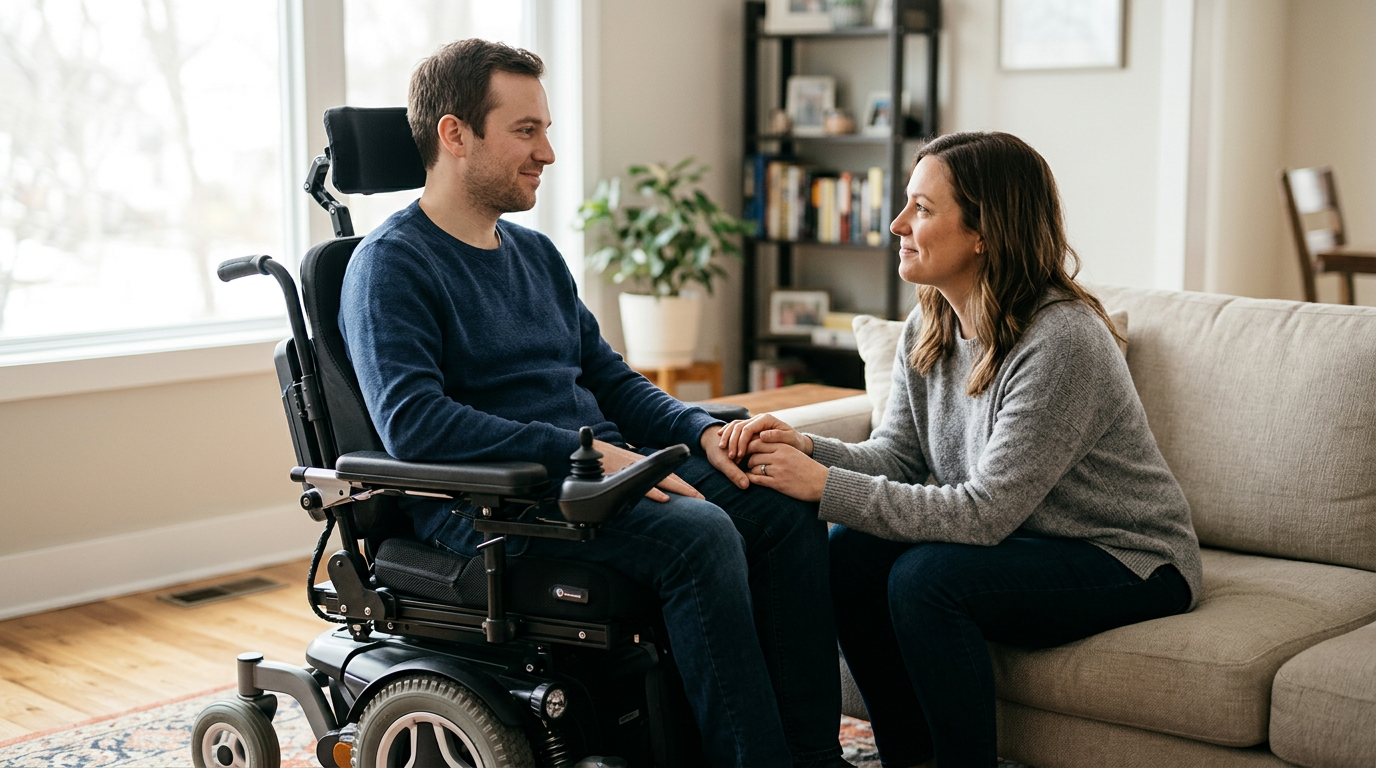
Family Guide · Spinal Cord Injury & Paralysis
Your Loved One Is Paralyzed. Here's What to Do Next.
A paralyzing spinal cord injury changes everything in an instant. This plain-language guide walks families through the first medical, financial, and legal decisions so you can protect the person you love.
Help from attorneys who focus on catastrophic injury
Nationwide
Cases accepted across the U.S.
FL Bar
Florida Bar–admitted attorneys
EN/ES
Bilingual English & Spanish resources
$0
Free, no-obligation case review
By CHG Lawyers · Published August 06, 2026
What to Do After a Loved One Is Paralyzed in an Accident: A Family’s First-Steps Guide
You didn’t plan for this. One phone call changed everything, and now you’re standing in a hospital hallway trying to figure out what happens next. This guide walks you through the first hours, days, and weeks — medical, emotional, practical, and legal — in plain language, and in the order families actually face them.
Right now, the legal claim is not your first problem. Keeping your loved one stable, figuring out who can make decisions for them, protecting the family’s income, and lining up care come first. We put those first too. The legal steps come later in this guide, where they belong.
Families ask us two things before anything else, so here are the answers up front. This firm takes catastrophic cases nationwide, not only in Florida. And every conversation and document can happen in English or Spanish — with our team, not a stranger relayed over a phone line.
This is educational information, not a substitute for advice from your loved one’s doctors or a licensed attorney.
Not sure what your next step is?
Talk it through with our team — the first consultation is free, confidential, and carries no obligation.
First 48 hours: what your family actually needs to handle
The medical team is stabilizing your loved one. Your job in the first two days is narrower than it feels: gather information, reduce chaos, and figure out who has the authority to make decisions if your loved one can’t.
- Find the lead on the care team. In a trauma unit that may be a trauma surgeon or an attending physician; ask who coordinates the overall plan and how to reach them.
- Start one notebook or phone log — today. Names of doctors, diagnoses, medications, and every question. Trauma steals memory. Put it on paper while it’s fresh.
- Name one or two family points of contact. This keeps updates consistent and stops a dozen relatives from calling the nurses’ station.
- Ask for a hospital medical interpreter if English isn’t your first language. Federal law — Section 1557 of the Affordable Care Act and Title VI of the Civil Rights Act — requires most hospitals that receive federal funds to provide free language access, including interpreters and translated discharge instructions. You do not have to rely on a bilingual relative to translate medical decisions.
Who can decide, sign, and act when your loved one can’t
This is the question most guides skip — and it’s often the most urgent one. If your loved one is sedated, on a ventilator, or otherwise unable to communicate, someone has to be able to consent to treatment, talk to insurers, and handle money. Here’s how that authority actually works.
Check for an advance directive first. Many adults already named a health care surrogate (Florida’s term for a health care agent) under Fla. Stat. § 765.202. Ask family whether your loved one signed a health care surrogate form, a living will, or a durable power of attorney. The hospital social worker can help you locate one and put it in the chart.
If there’s no surrogate and your loved one can’t consent, Florida’s health care proxy statute, Fla. Stat. § 765.401, sets an order of who may make medical decisions — starting with a court-appointed guardian, then a spouse, then an adult child, then a parent, and so on. This covers medical choices, but not necessarily finances or legal claims.
A durable power of attorney (Fla. Stat. § 709.2104) lets a named agent handle money, bills, and paperwork — but only if it was signed before the injury and includes durable language.
If nothing was signed in advance, a family member may need to petition a Florida court for guardianship (or an emergency temporary guardianship) under Chapter 744 to gain legal authority to act. Ask the hospital social worker to start this conversation early; guardianship takes time. An attorney can explain how this affects the injury claim, because in most states a claim on behalf of an incapacitated adult is brought by that legal representative.
Sorting out decision-making authority now prevents frozen bank accounts and stalled insurance claims later.
Understanding paralysis after an accident
Paralysis means loss of muscle function, often with loss of feeling, usually from damage to the spinal cord. Where the injury sits on the spine determines how much of the body is affected.
Paraplegia affects the legs and lower body. Quadriplegia (also called tetraplegia) affects the arms, hands, trunk, legs, and pelvic organs. Per the Mayo Clinic, the higher on the spinal cord the injury occurs, the more of the body it affects.
Doctors also describe injuries as complete or incomplete. In a complete injury, nearly all feeling and movement below the level of injury is lost; in an incomplete injury, some function remains, per the Mayo Clinic. Care teams grade the injury with the ASIA Impairment Scale, a standard tool from the American Spinal Injury Association.
Something important to hold onto: your loved one’s team may not give a firm prognosis right away. The first weeks are about stabilizing and assessing, not final answers. Swelling and spinal shock can temporarily mask what function may return, so doctors often wait for these to settle before predicting long-term recovery. Give the medical picture time to develop.
For more, see our paralysis resource page and our page on spinal cord injuries.
Preventing secondary complications — and planning the rehab transfer
Once your loved one is stable, two things deserve your attention in the hospital.
Ask what the team is doing to prevent secondary complications. The Mayo Clinic names the real risks: pressure injuries (skin breakdown), blood clots, breathing problems, and bladder and bowel complications. Ask specifically how each is being prevented.
Learn about the rehab transfer. Most patients move from acute care to inpatient rehabilitation. Ask whether a specialized spinal cord injury rehab center is available — for example, a facility in the SCI Model Systems network, overseen by the National Institute on Disability, Independent Living, and Rehabilitation Research. These centers concentrate expertise in spinal cord injury care.
Families who track dates, providers, and diagnoses early tend to be far better prepared for what comes later — both medically and legally.
How to help someone who is newly paralyzed
Follow your loved one’s emotional lead and support their independence. Listen more than you advise.
Grief, anger, fear, and silence are all normal. Don’t rush anyone to “stay positive.” When you can, support their choices instead of doing everything for them — what to eat, when to rest, who visits. Small decisions restore a sense of control.
Before discharge, ask the rehab team to teach you basic care and safe transfer techniques. Practicing while professionals watch builds confidence for both of you.
Watch for signs of depression. The Mayo Clinic lists it as a common complication. Encourage professional mental-health support early, not as a last resort.
Your loved one will likely ask the hardest questions — Will I walk again? How long until I recover? Answer honestly and gently, and point them to the care team rather than guessing. These are medical questions, and the answers differ for every person. False hope and false despair both hurt.
Have questions about what happened?
Ask our team directly. The first conversation is free, confidential, and there is no obligation to continue.
Preparing for life after discharge
Preparing for home starts well before discharge day.
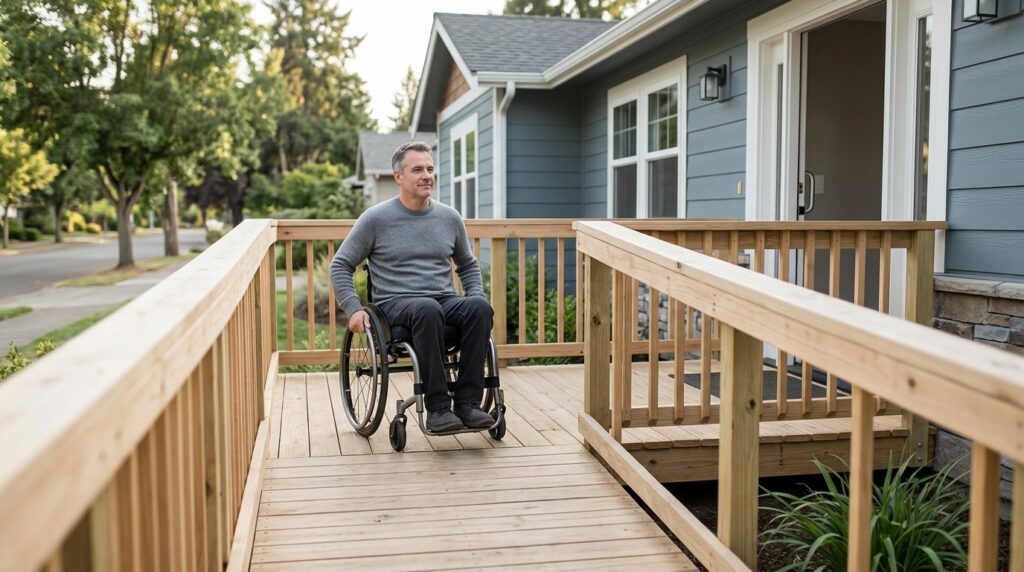
Home accessibility. Ramps, wider doorways, grab bars, and a roll-in shower are common needs. Ask the rehab team’s occupational therapist to assess what your specific home will require.
Assistive equipment. Wheelchairs, transfer boards, and other durable medical equipment take time to order and fit. Start early. Ask a hospital social worker or case manager how to begin and what insurance may cover.
Ongoing rehabilitation. Physical and occupational therapy usually continue after discharge. Progress is often slow and uneven. That’s normal.
A support network. Line up home health help, peer support, and trusted national resources. The Christopher & Dana Reeve Foundation offers free caregiver guides through its Paralysis Resource Center, with staff who answer questions in English and Spanish.
Take care of yourself as a caregiver
Caregiver burnout is real, and protecting your own health is part of caring for your loved one.
Rest, eat, and accept help. Respite care lets someone step in so you can step away — it isn’t a luxury, it’s how you keep going. Share duties across family members and outside helpers so the load doesn’t fall on one person.
Find a caregiver support group or counselor; talking with people who understand eases the isolation. And keep a few things that are just yours — a walk, a friend, a quiet coffee. Taking care of yourself is not selfish. It’s necessary.
Protecting your family’s finances
Start organizing money and paperwork now, and be careful before you sign anything or give statements to insurers.
The costs of a severe spinal cord injury are staggering, and families are rarely prepared for them. The National Spinal Cord Injury Statistical Center at the University of Alabama at Birmingham publishes average costs by injury type. Its published figures show average first-year expenses for high tetraplegia exceeding $1.3 million, with substantial costs every year afterward — and those figures do not include lost wages. The Christopher & Dana Reeve Foundation reports that roughly 1 in 50 people in the U.S. lives with some form of paralysis.
A few practical safeguards:
- Keep every bill, record, and receipt in one place. A single folder or box saves enormous stress later.
- Notify insurers promptly, but be careful what you say. You often are not required to give a recorded statement right away. Understand your rights first.
- Don’t rush to sign or settle. A quick settlement offer can arrive before anyone knows the full prognosis. Once the true lifetime cost of care becomes clear, an early settlement may fall far short.
In catastrophic cases, the full future cost of care often becomes clear only months later. That’s why patience early on matters so much.
When the accident may have been someone else’s fault
If someone else’s carelessness caused the paralysis, your family may have a legal claim that can help pay for lifelong care.
Ask a simple question: what caused the injury? Common causes include a truck crash, another driver, a dangerous property, unsafe conditions, or medical negligence. When another party’s negligence leads to paralysis, the law may hold them accountable.
Preserving evidence early matters. Take photos. Save the vehicle if you can. Write down witness names. Request incident and police reports. Note property conditions before they change. Evidence disappears fast, and the days right after an accident are when it’s most available.
There’s one situation many families don’t realize is a claim. Suppose your loved one was attacked, shot, robbed, or assaulted on someone else’s property — an apartment complex, a parking lot or garage, a hotel, a gas station, or a store. If the owner failed to provide reasonable security (working locks and gates, lighting, cameras, or guards) and that failure allowed the attack to happen, the property owner may share responsibility. Lawyers call this negligent security, a form of premises liability — an owner’s legal duty to keep a property reasonably safe. You can learn more on our negligent security page.
Two Florida rules shape these claims:
- Deadline to file. Under Fla. Stat. § 95.11, most negligence claims arising on or after March 24, 2023 must generally be filed within two years. Different deadlines can apply to specific facts, so confirm yours with a lawyer.
- Shared fault. Under Fla. Stat. § 768.81, Florida follows a modified comparative negligence rule: fault can be divided among parties, a person found more than 50% at fault generally cannot recover, and any recovery is reduced by the injured person’s share of fault.
No one can honestly promise a specific result. A licensed attorney can explain how these rules apply to your family’s situation during a free case evaluation.
Want to know where you stand?
Tell us what happened and our team will walk you through the options available to you, at no cost.
How a catastrophic-injury attorney can help
A catastrophic-injury attorney investigates the accident, identifies every responsible party and insurance policy, and documents the full future cost of care with medical and economic experts.
That last part matters most in paralysis cases. Proving lifetime costs — attendant care, equipment replacement, home health, and lost earning power — is difficult. It often relies on a life-care plan, a report prepared by a certified life-care planner, plus testimony from a vocational or economic expert. A lawyer builds that record so any settlement or verdict reflects real needs rather than a rushed guess.
The practical benefit is simple: your family can focus on caregiving and recovery while the legal team handles the claim, deadlines, and insurers. If your loved one is incapacitated, the attorney can also explain how their legal representative (surrogate, agent, or court-appointed guardian) brings the claim on their behalf.
Our attorneys are admitted to The Florida Bar. We take catastrophic cases nationwide, with support in English and Spanish, so families can ask questions in the language they think in. See our catastrophic injury claims and truck accidents pages for more. The next step is a free, no-obligation case evaluation.
Frequently asked questions
Who can make medical and legal decisions if my loved one can’t?
If they signed a health care surrogate form or durable power of attorney before the injury, that named person acts. If not, Florida’s proxy statute (Fla. Stat. § 765.401) sets an order of who may make medical decisions, and a family member may need to petition a court for guardianship to handle finances and legal claims. Ask the hospital social worker to start this early.
Can someone walk again after being paralyzed?
It depends on the injury, and only the medical team can answer for your loved one. Some people with incomplete injuries regain function; complete injuries often cause permanent paralysis.
How long does recovery take?
There’s no single timeline. Inpatient rehab may last weeks; adapting to life at home continues for months or years.
How can I best help someone who is newly paralyzed?
Listen more than you advise, support their independence, learn basic care from the rehab team, and watch for signs of depression — encouraging professional mental-health support early.
How soon should we talk to a lawyer?
Sooner is better. Evidence can disappear, and Florida’s two-year filing deadline under Fla. Stat. § 95.11 may apply. Talking early helps preserve photos, reports, and witness accounts.
Is help available in Spanish?
Yes. This firm provides case evaluations and works with families in both English and Spanish, and represents catastrophic-injury clients nationwide.
Get guidance you can rely on
You don’t have to figure this out alone. Knowing what to do after a loved one is paralyzed feels impossible in the moment — this guide, and a caring legal team, can help lighten the load.
If someone else’s negligence caused your loved one’s paralysis, a licensed attorney can explain your options in a free, confidential case evaluation. We serve families in Florida and across the country, in English and Spanish, with no pressure and no obligation.
The First Days: Where to Focus
Stabilize the medical care
Spinal cord injuries require specialized care and often transfer to a rehabilitation facility. Ask the treating team about the level and completeness of the injury, the rehab plan, and equipment your loved one will need at home.
Ask for the hospital social worker
The social worker or case manager can connect the family with resources, explain decision-making authority, and help start guardianship or surrogate paperwork early — before decisions pile up.
Preserve what happened
Keep photos, names of witnesses, the crash or incident report, and any records about the property or vehicle involved. Do not throw anything away. This evidence can matter later in a claim.
Track every cost
Start a folder for medical bills, lost wages, home-modification quotes, and mileage to appointments. Lifetime care for paralysis is expensive, and documenting it now protects the family's claim.
Who Can Make Decisions When Your Loved One Cannot
A surrogate or power of attorney they named
If your loved one signed a health care surrogate form or durable power of attorney before the injury, that named person can act on their behalf for medical and, if authorized, financial matters.
Florida's proxy statute
If no document exists, Florida's proxy law (Fla. Stat. § 765.401) sets an order of who may make medical decisions — typically a spouse, adult children, or parents.
Court-appointed guardianship
To handle finances and legal claims when your loved one cannot, a family member may need to petition a court for guardianship. Ask the hospital social worker to help you start this early.
Be careful with the insurance company's early call
An adjuster may call within days offering a quick settlement or asking for a recorded statement. Paralysis brings a lifetime of costs that are impossible to value this early. Do not sign anything or give a recorded statement before you understand what the injury will truly require. Talk to an attorney first.
When Someone Else May Be Responsible
Truck and serious crashes
A commercial truck crash can leave a driver or passenger with a spinal cord injury and permanent paralysis. Trucking companies and their insurers move quickly to protect themselves, so preserving evidence early is critical.
An attack on unsafe property
If your loved one was shot, assaulted, or attacked at an apartment complex, parking garage, hotel, or business that failed to provide reasonable security — working locks, lighting, cameras, or guards — the property owner may be legally responsible. This is called negligent security.
Medical negligence
When a preventable medical error causes paralysis, the family may have a claim. Records and timelines matter, so gather documents early and have them reviewed.
The most catastrophic outcome
If a loved one did not survive, the family may be able to bring a wrongful-death claim. You do not have to navigate this alone — we handle these cases with care and respect for your family.