

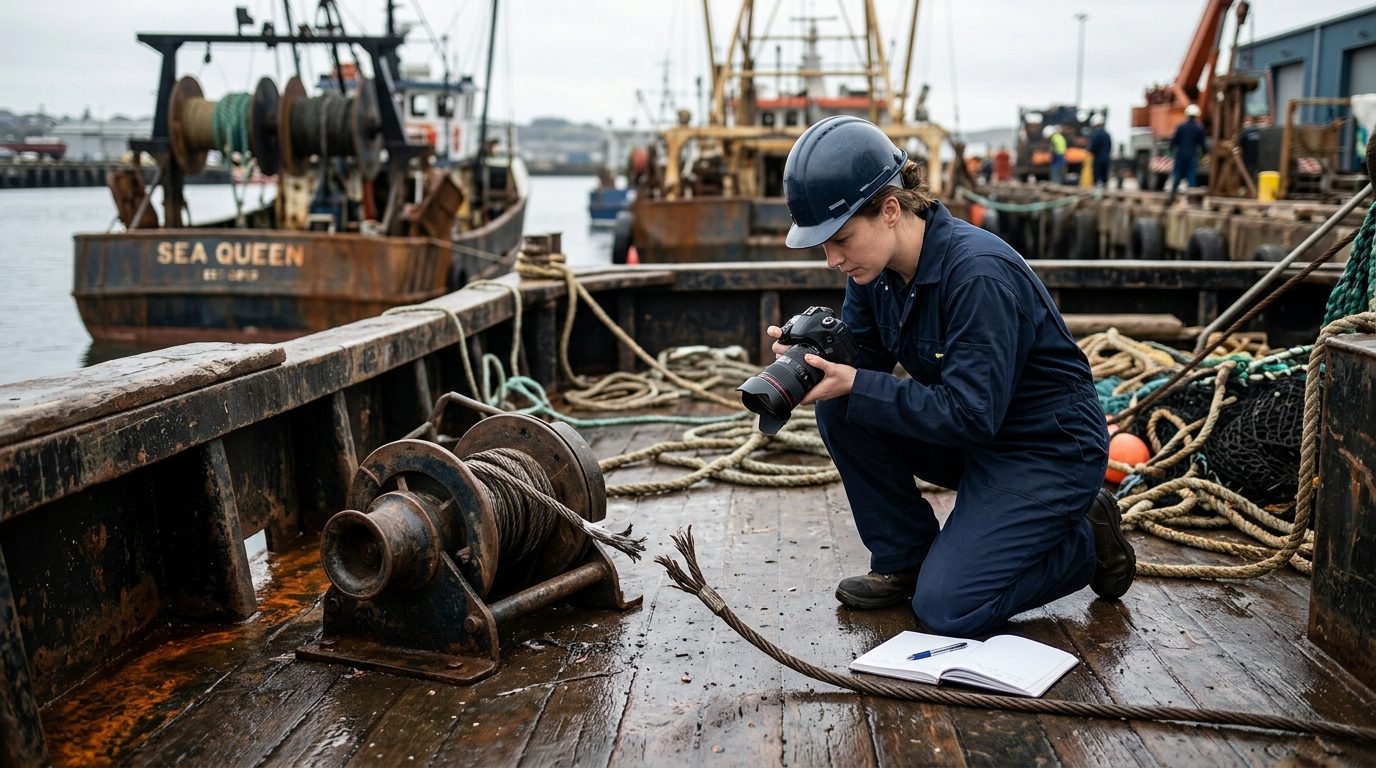
Maritime & Boat Accident Claims
Catastrophic Boat Accidents & Maritime Injuries
When a boating accident leaves you or a loved one permanently injured, you deserve answers and accountability.
By CHG Lawyers · Published August 31, 2026
Maritime Injury Claims: Catastrophic Boat, Ship & Watercraft Accidents
When someone is catastrophically injured—or killed—in a boating, shipping, or offshore accident, the legal rules are completely different from land-based personal injury claims. Maritime law is a federal system with its own courts, remedies, and procedures. This guide explains what maritime injury claims are, who qualifies, what accidents trigger them, and how to pursue compensation.
Not sure what your next step is?
Talk it through with our team — the first consultation is free, confidential, and carries no obligation.
What Is a Maritime Claim?
A maritime claim is a lawsuit for injury or death from an accident on water. This includes oceans, gulfs, inland waterways, or lakes—and accidents involving vessels, ships, boats, or watercraft.
Maritime law covers accidents on navigable waters and falls under federal law, not state personal injury law. If you’re injured aboard a commercial fishing vessel, cargo ship, offshore oil rig, cruise ship, or recreational boat, maritime law may apply.
Catastrophic injuries are the focus of maritime claims. These include: – Spinal cord injuries and paralysis – Traumatic brain injuries – Amputations and limb loss – Severe burns – Drowning – Wrongful death
The key difference: maritime law provides specialized protections and remedies unavailable under ordinary state law. Understanding which maritime statute applies to your situation is the first step toward recovery.
Types of Maritime Injury Claims
Maritime law creates several distinct pathways for injured workers and passengers to seek compensation.
Jones Act Claims
Seamen are workers whose job ties them to a vessel’s operation.
If you work as a crew member, deck hand, engineer, captain, or similar role aboard a ship or offshore platform, you may qualify as a seaman. Jones Act claims require you to prove negligence. But they provide access to damages for: – Medical costs – Lost wages – Pain and suffering – Permanent disability
Unlike workers’ compensation, the potential recovery is much broader.
Longshore and Harbor Workers’ Compensation Act (LHWCA) Claims
The Longshore and Harbor Workers’ Compensation Act (33 U.S.C. § 901 et seq.) covers dock workers, longshoremen, and harbor workers injured while loading or unloading cargo, working on piers, or performing related duties.
LHWCA is a no-fault system. You don’t have to prove negligence to receive benefits. Instead, you receive: – Medical care – Disability payments (partial or total) – Death benefits set by federal law
LHWCA workers can also pursue third-party claims against vessel owners, contractors, or equipment manufacturers whose negligence contributed to the injury.
Maintenance and Cure Claims
Maintenance and Cure is a separate maritime remedy. It requires an employer to pay for an injured seaman’s medical care and living expenses during recovery. This duty exists independent of fault—the employer must provide it regardless of who caused the accident. It’s often pursued alongside a Jones Act negligence claim.
General Maritime Negligence Claims
Passengers, recreational boaters, and others not covered by the Jones Act or LHWCA can pursue general maritime negligence claims. These claims are filed against vessel owners and operators. You must prove that the defendant breached a duty of care and caused the injury.
Cruise Ship Injury Claims
Passengers injured aboard cruise vessels may pursue claims under maritime law, general negligence, or the cruise line’s liability policies. Cruise ship accidents can involve falls, collisions, fires, or inadequate medical care.
Offshore Platform and Rig Injury Claims
Workers on oil rigs and gas platforms may qualify as seamen under the Jones Act. They may also pursue claims under the Outer Continental Shelf Lands Act (43 U.S.C. § 1333).
Wrongful Death Claims
When a maritime accident is fatal, surviving family members can pursue wrongful death claims. Family members include spouse, children, parents, and dependents.
Who Qualifies as a Seaman?
The term “seaman” has a specific legal meaning in maritime law. It determines which protections apply to you.
A seaman is a worker whose job ties them to a vessel and its operation. This includes crew members, deck hands, engineers, captains, and offshore workers whose duties are integral to the vessel’s function.
The key test: Is your work substantial and permanent (or long-term)? Do you spend a significant portion of your time aboard the vessel or on an offshore platform?
Not all water workers are seamen. Dock workers, shore-based employees, casual laborers, and temporary workers may fall under LHWCA or general negligence law instead. Understanding your classification matters because it determines which statute protects you and what remedies are available.
In the catastrophic-injury cases we handle, seaman status often determines whether a Jones Act claim is available. Jones Act claims typically offer broader damages than LHWCA or workers’ compensation.
Common Causes of Catastrophic Maritime Accidents
Maritime accidents that result in catastrophic injuries often involve operator negligence, equipment failure, or unsafe conditions.
Operator Negligence
Speeding, reckless operation, impaired operation (drugs or alcohol), and failure to follow safety protocols cause many serious accidents. Operators owe a duty to passengers and crew to operate vessels safely and responsibly.
Defective Equipment or Vessels
Mechanical failure, poor maintenance, design defects, and faulty propellers can cause catastrophic accidents. Vessel owners have a duty to maintain their vessels in safe condition and to warn of known hazards.
Inadequate Safety Measures
Missing or non-functional life jackets, non-functional lifeboats, missing railings or barriers, and insufficient crew training contribute to injuries and deaths.
Collision and Impact
Vessel-to-vessel collisions, striking fixed objects, and groundings cause serious trauma and drowning.
Propeller Strikes
Contact with moving propellers causes amputation injuries. It is a leading cause of catastrophic maritime accidents.
Drowning and Near-Drowning
Falls overboard, capsizing, and failure to rescue result in fatal or permanently disabling injuries.
Fires and Explosions
Fuel leaks, electrical failures, and inadequate fire suppression systems cause severe burn injuries and death.
Negligent Security on Vessels and Docks
Assaults, robberies, and attacks due to inadequate security measures can cause catastrophic injuries. Poor lighting, broken locks, and lack of surveillance contribute to these incidents.
Catastrophic Injuries in Maritime Accidents
Maritime accidents cause the most severe, life-altering injuries imaginable.
Spinal cord injuries and paralysis result from falls, collisions, or crush injuries. They cause permanent loss of function below the injury site.
Traumatic brain injuries from head trauma during collisions or falls can cause cognitive, physical, and emotional impairment lasting a lifetime.
Amputations and limb loss from propeller strikes, machinery, or crush injuries require lifelong prosthetics, rehabilitation, and adaptation.
Severe burn injuries from fires, explosions, or contact with hot surfaces cause permanent scarring, pain, and functional loss.
Drowning and near-drowning result in fatal outcomes or permanent brain damage and disability.
Wrongful death—the most catastrophic outcome—leaves families grieving and financially devastated. Families who lose a loved one in a maritime disaster have the right to pursue justice and hold responsible parties accountable.
Maritime Law and Jurisdiction
Maritime claims fall under federal law and federal courts, not state courts. Understanding jurisdiction matters because it determines which court hears your case, which law applies, and what remedies are available.
U.S. Code Title 46—Shipping governs maritime commerce and vessel operation.
Territorial waters matter: U.S. maritime law applies in U.S. territorial waters and, in some cases, on the high seas. Claims arising in international waters or foreign waters may involve additional complexities and international law. Early consultation with an attorney experienced in maritime law ensures your claim is filed in the correct court and under the correct legal framework.
The Jones Act: Protection for Injured Seamen
The Jones Act (46 U.S.C. § 688) is a federal statute that allows seamen to sue their employers for negligence. This right is unavailable to most land-based workers under state workers’ compensation laws.
If you’re a seaman and your employer (or a co-worker) was negligent and caused your injury, you can pursue a Jones Act claim. You must prove negligence: that the defendant owed you a duty of care, breached that duty, and caused your injury.
Damages include: – Medical costs – Lost wages – Pain and suffering – Permanent disability – Loss of earning capacity
The Jones Act also preserves your right to pursue a Maintenance and Cure claim. This is your employer’s obligation to pay medical care and living expenses during recovery.
Jones Act seamen have broader remedies than workers’ compensation typically allows. Early legal consultation is critical to protecting your rights.
Have questions about what happened?
Ask our team directly. The first conversation is free, confidential, and there is no obligation to continue.
The Longshore and Harbor Workers’ Compensation Act (LHWCA)
The Longshore and Harbor Workers’ Compensation Act (33 U.S.C. § 901 et seq.) is a federal no-fault insurance program. It covers dock workers, longshoremen, harbor workers, and others injured while loading or unloading cargo or working on piers.
LHWCA provides: – Medical benefits – Disability benefits (partial or total) – Death benefits
Because it’s a no-fault system, you don’t have to prove negligence to receive benefits. You only have to show the injury arose out of and in the course of employment.
LHWCA workers can also pursue third-party claims against vessel owners, contractors, equipment manufacturers, or others whose negligence contributed to the injury. This allows recovery beyond LHWCA’s statutory benefits.
Negligence and Liability in Maritime Accidents
Maritime negligence claims require proof of four elements: duty, breach, causation, and damages.
Vessel owners and operators owe a duty of care to passengers and crew. They must operate safely and maintain equipment. A breach occurs when they fail to follow safety protocols, operate responsibly, or maintain the vessel.
The breach must directly cause the injury (causation). Damages include: – Medical costs – Lost wages – Pain and suffering – Permanent disability – Wrongful death
Multiple parties may be liable: the vessel owner, the operator, the employer, third-party contractors, equipment manufacturers, or security companies.
Comparative negligence (shared fault) may apply (Fla. Stat. § 768.81(6)). If the injured person was partly at fault, damages may be reduced. Vessel operators may claim the injured person assumed the risk or was negligent themselves. But these defenses often fail when the defendant’s negligence is gross or willful.
Wrongful Death in Maritime Accidents
A maritime accident is wrongful death when it’s caused by negligence, operator error, or unsafe conditions and results in death.
Surviving family members can pursue wrongful death claims. Family members include spouse, children, parents, and dependents. They can pursue claims under the Death on the High Seas Act or general maritime law.
Statute of limitations varies by jurisdiction and claim type. Acting quickly is essential: evidence must be preserved, witnesses interviewed, and legal deadlines met. Families grieving a maritime death deserve compassionate, experienced legal guidance.
Steps to Take After a Maritime Accident
Immediate action protects your legal rights and strengthens your claim.
Seek Medical Attention
Get medical care right away. Document all injuries and treatment.
Report the Accident
Report the accident to the vessel operator, the U.S. Coast Guard (if required by regulation), and relevant authorities.
Preserve Evidence
Take photographs and video. Collect witness statements. Request vessel maintenance records and accident reports.
Do Not Sign Documents
Do not sign settlement offers, liability waivers, or statements without legal advice.
Gather Information
Collect: – Vessel name and registration – Operator and crew names – Passenger and witness contact information – Insurance details
Consult an Attorney
Contact an attorney as soon as possible. Maritime law is complex. Early legal guidance protects your rights and strengthens your claim.
Statute of Limitations for Maritime Claims
The deadline to file a maritime claim varies by claim type and jurisdiction.
- Jones Act claims: typically 3 years from the date of injury
- LHWCA claims: 1 year from the date of injury or when the worker knew (or should have known) the injury was work-related
- General maritime negligence claims: often 3 years but may vary
- Wrongful death claims under the Death on the High Seas Act: 3 years from the date of death
In some cases, the deadline may be extended (tolled). For example, if the injured person is a minor. Missing the deadline bars the claim entirely. Acting quickly is essential.
Compensation in Maritime Injury Claims
Maritime injury claims can recover substantial damages for catastrophic injuries.
Medical Expenses
Past and future treatment, surgery, rehabilitation, and ongoing care.
Lost Wages
Income lost due to the injury and inability to work.
Pain and Suffering
Compensation for physical pain, emotional distress, and reduced quality of life.
Permanent Disability Damages
Account for permanent loss of function, earning capacity, and independence.
Wrongful Death Cases
Families recover lost income, loss of companionship, funeral expenses, and the deceased’s pain and suffering.
Punitive Damages
In cases of gross negligence or willful misconduct, punitive damages may be awarded.
Many maritime accidents involve multiple insurance policies. Recovery may come from several sources.
Why Maritime Claims Are Complex
Maritime law differs significantly from state personal injury law, creating complexity at every stage.
Multiple federal statutes apply: the Jones Act, LHWCA, general maritime law, and international conventions. Federal courts and admiralty courts handle maritime cases under specialized procedural rules.
Multiple parties may be liable—vessel owners, operators, employers, third-party contractors. Multiple insurance policies may apply.
Accidents at sea are difficult to investigate. Evidence may be lost or inaccessible. Expert testimony from naval engineers, accident reconstructionists, and medical specialists is often necessary.
Early retention of experienced maritime counsel ensures proper investigation, preservation of evidence, and pursuit of all available remedies.
Want to know where you stand?
Tell us what happened and our team will walk you through the options available to you, at no cost.
How We Help
We focus exclusively on catastrophic maritime injuries: spinal cord injuries, paralysis, traumatic brain injuries, amputations, severe burns, drowning, and wrongful death.
While based in Florida, we handle maritime cases nationwide. We represent injured workers and passengers across the country. Our nationwide capability means we can pursue maritime claims regardless of where the accident occurred—whether on U.S. territorial waters, the high seas, or international waters involving U.S. parties.
Our attorneys are licensed in Florida and experienced in Jones Act, LHWCA, and general maritime claims. We: – Investigate thoroughly – Preserve evidence – Interview witnesses – Work with maritime experts to build a strong case – Pursue full compensation for medical costs, lost wages, pain and suffering, and permanent disability damages
In wrongful death cases, we support families through the process and fight for justice.

FAQ
What is the difference between a Jones Act claim and an LHWCA claim?
Jones Act claims are for seamen (crew, deck hands, offshore workers) and require proof of negligence. LHWCA claims are for dock and harbor workers and are no-fault (you don’t have to prove negligence). Jones Act seamen can recover broader damages. LHWCA workers receive statutory benefits but can also pursue third-party claims.
Who qualifies as a seaman under maritime law?
A seaman is a worker whose job ties them to a vessel’s operation and who spends a significant portion of time aboard the vessel or on an offshore platform. Crew members, deck hands, engineers, captains, and offshore workers typically qualify. Dock workers and shore-based employees usually do not.
What should I do immediately after a maritime accident?
Seek medical attention, report the accident to the vessel operator and U.S. Coast Guard (if required), preserve evidence (photographs, witness statements, records), gather information (vessel details, operator names, insurance), and consult an attorney before signing any documents.
How long do I have to file a maritime injury claim?
Jones Act claims typically allow 3 years from injury. LHWCA claims allow 1 year from injury or when you knew it was work-related. General maritime negligence claims often allow 3 years. Wrongful death claims often allow 3 years from death. Deadlines vary by jurisdiction and claim type—act quickly.
Can I sue a cruise ship for injuries sustained aboard?
Yes. Passengers injured aboard cruise vessels can pursue claims under maritime law, general negligence, or the cruise line’s liability policies. Cruise ship operators owe passengers a duty of care. Breach of that duty may result in liability.
What compensation can I recover in a maritime negligence claim?
You can recover medical expenses, lost wages, pain and suffering, permanent disability damages, and in wrongful death cases, loss of companionship and funeral expenses. Punitive damages may be awarded in cases of gross negligence.
What is Maintenance and Cure in maritime law?
Maintenance and Cure is an employer’s duty to pay an injured seaman’s medical care and living expenses during recovery. It exists independent of fault and is often pursued alongside a Jones Act negligence claim.
Are offshore oil rig workers covered by maritime law?
Yes. Offshore oil rig and gas platform workers may qualify as seamen under the Jones Act. They may also pursue claims under the Outer Continental Shelf Lands Act (43 U.S.C. § 1333), which extends maritime law to offshore installations beyond state territorial waters.
What happens if I was partially at fault in a maritime accident?
Under comparative negligence, if you were partly at fault, your damages may be reduced proportionally (Fla. Stat. § 768.81(6)). However, the defendant’s negligence must still be proven. Defenses like “assumption of risk” often fail when the defendant’s conduct is gross or willful.
Can family members sue for wrongful death in a maritime accident?
Yes. Surviving family members (spouse, children, parents, dependents) can pursue wrongful death claims and recover lost income, loss of companionship, funeral and medical expenses, and the deceased’s pain and suffering.
If you or a family member suffered a catastrophic injury in a boating, shipping, or offshore accident—or lost someone in a maritime disaster—you may have a legal claim. People in your situation reach out regularly. Let’s talk about what happened and what comes next. Contact us for a free case evaluation.
Why Choose CHG for Your Maritime Claim
Maritime Law Focus
We focus exclusively on catastrophic maritime injuries, including Jones Act claims for seamen, LHWCA claims for dock and harbor workers, and third-party negligence actions against vessel operators and owners.
Complex Regulations & Multiple Pathways
Maritime law involves federal statutes, admiralty rules, and specialized remedies. We navigate Jones Act negligence standards, LHWCA no-fault benefits, unseaworthiness claims, and negligent maintenance to build the strongest case for your recovery.
Florida-Based, National Reach
Licensed to practice in Florida and handling cases nationwide, we represent injured seamen, offshore workers, commercial fishermen, dock workers, and recreational boaters harmed by negligence on the water.
Empathetic, Plain-Language Guidance
Maritime claims are technical and often confusing. We explain your rights and options in clear language, so you understand your claim and what comes next.
Types of Maritime & Boat Accident Claims We Handle
Jones Act Claims (Seamen & Offshore Workers)
If you work aboard a vessel—as a crew member, deck hand, offshore oil-rig worker, or commercial fisherman—you may have a Jones Act claim against your employer for negligence that caused your injury. Jones Act seamen can recover broader damages than other maritime workers.
LHWCA Claims (Dock & Harbor Workers)
Dock workers, longshoremen, and harbor employees injured while loading, unloading, or repairing vessels may qualify for LHWCA (Longshore and Harbor Workers' Compensation Act) no-fault benefits. You can also pursue third-party claims against negligent vessel operators or other responsible parties.
Unseaworthiness & Negligent Maintenance
Vessel owners and operators have a duty to maintain safe equipment and working conditions. Injuries caused by defective machinery, unsafe rigging, poor maintenance, or unseaworthy conditions may support a claim for damages.
Recreational Boating Accidents
Catastrophic injuries from jet ski accidents, drowning, or serious boat collisions may lead to claims against negligent operators, rental companies, or property owners who failed to provide adequate safety measures or supervision.
Time Matters in Maritime Claims
Maritime injury claims are subject to strict notice and filing requirements. Delays in reporting your injury or pursuing a claim can affect your rights. If you or a loved one has suffered a catastrophic maritime injury, contact us as soon as possible to protect your claim.
Common Maritime Injury Scenarios
Spinal Cord Injuries & Paralysis
A fall from rigging, equipment failure, or collision can cause permanent spinal cord damage, leaving you paralyzed or with severe mobility loss. These life-altering injuries demand full accountability and fair compensation.
Traumatic Brain Injuries
Head trauma from falls, collisions, or struck-by incidents on vessels can cause lasting cognitive, physical, and emotional impairment. We pursue claims for the full scope of your recovery needs.
Amputation & Limb Loss
Machinery accidents, crush injuries, and severe lacerations aboard vessels can result in permanent limb loss. We fight for compensation that reflects the catastrophic nature of your injury.
Severe Burns & Catastrophic Injuries
Explosions, fires, chemical exposure, and scalding accidents on boats and offshore platforms cause devastating burns and permanent scarring. We pursue claims against negligent operators and equipment manufacturers.