

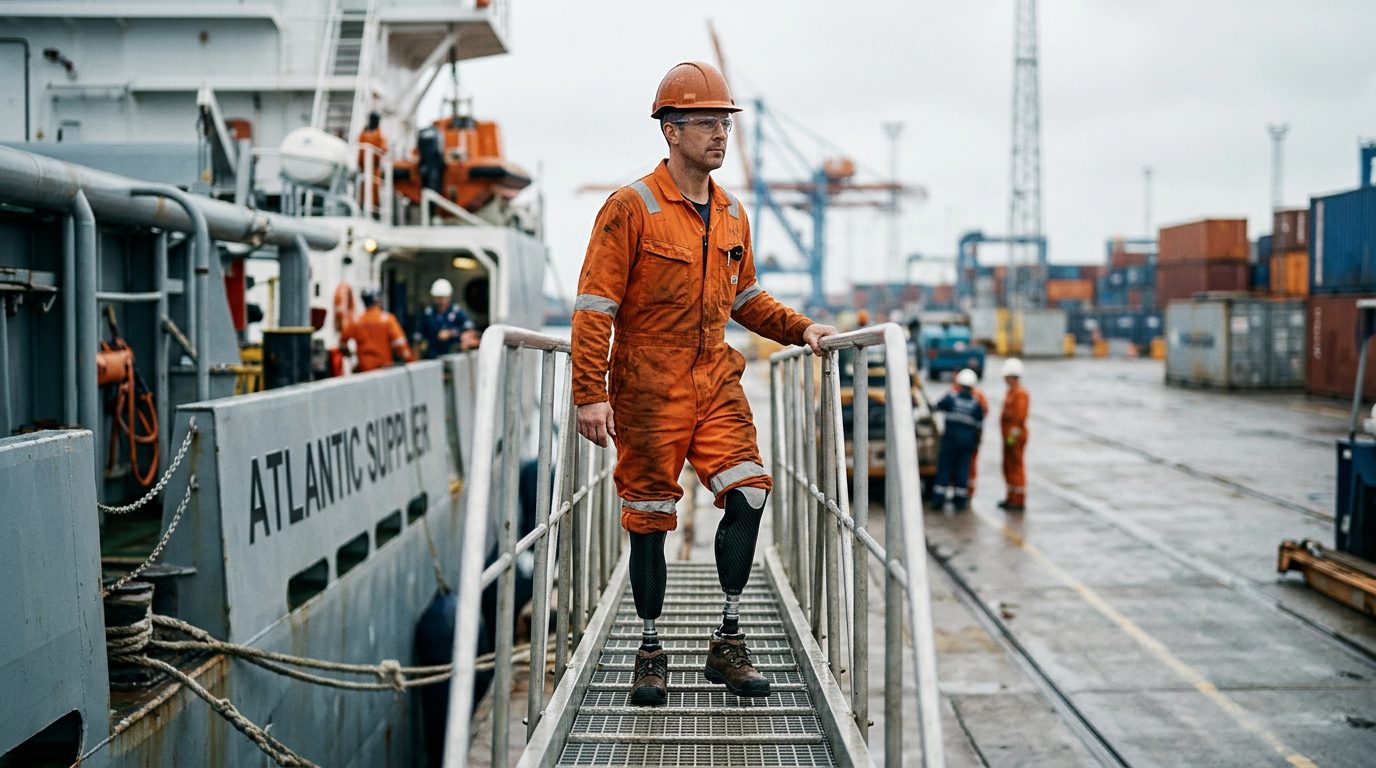
Maritime & Offshore Injuries
Jones Act & Longshore Claims for Injured Seamen
If you were hurt working on a vessel or offshore platform, you may have the right to pursue a claim. We focus exclusively on maritime injuries and help injured workers understand their options.
By CHG Lawyers · Published September 02, 2026
Offshore Injury Lawyer: Jones Act & Longshore Claims Explained
If you’ve been seriously injured working at sea or in a port facility, federal maritime law may give you the right to sue for damages. This includes pain and suffering, lost wages, and future medical costs. It’s different from ordinary workers’ compensation.
An offshore injury lawyer can help you understand which federal maritime law applies to your situation. Two key federal laws protect maritime workers:
- The Jones Act (for seamen)
- The Longshore and Harbor Workers’ Compensation Act, or LHWCA (for dock workers and port employees)
Understanding which law applies to you is the first step toward recovery.

If you were hurt working on a vessel or offshore platform, you may have the right to pursue a claim. Talk it through with our team — the first consultation is free, confidential, and carries no obligation.
What Is a Jones Act Claim?
The Jones Act is a federal law that lets seamen sue their employers for negligence. Most workers can only claim workers’ compensation benefits.
Passed in 1920, the Jones Act created an important exception. If you’re a seaman—someone whose job requires significant time on a vessel at sea—you can sue your employer directly for negligence. You can recover medical bills, lost wages, pain and suffering, permanent disability, and future medical costs.
Who qualifies as a seaman? You’re generally considered a seaman if your job relates substantially to a vessel and you spend meaningful time on that vessel. This includes:
- Crew members on cargo ships, tankers, and container vessels
- Workers on oil rigs and offshore platforms
- Fishing vessel crew
- Tugboat and barge operators
- Ship repair workers employed on vessels
- Offshore construction workers
Real-world covered injuries include spinal cord injuries from falls on slippery decks, traumatic brain injuries from head trauma or explosions, amputations from machinery or crush injuries, severe burns from fires or chemical exposure, and paralysis from equipment failures or negligent training.
Key difference from workers’ compensation: Jones Act claims let you recover full damages for pain and suffering. Workers’ compensation does not. If your injury prevents you from ever working again, you can seek compensation for permanent disability. You can also pursue punitive damages in cases of gross negligence.
What Is an LHWCA Claim?
The Longshore and Harbor Workers’ Compensation Act (LHWCA) protects dock workers and maritime workers not covered by the Jones Act.
The LHWCA protects you instead. This federal law covers:
- Longshoremen and cargo handlers
- Ship repair workers in shipyards
- Port equipment operators
- Warehouse workers at maritime facilities
- Divers and underwater workers
- Workers loading or unloading vessels
What LHWCA covers: – Medical expenses (all treatment related to your injury) – Disability benefits (temporary or permanent) – Vocational rehabilitation (retraining and job placement) – Death benefits for your family if you’re killed
How LHWCA differs from Jones Act claims: LHWCA is an insurance-based system. Your employer carries insurance that pays your benefits. You don’t sue your employer directly. However, if a third party—such as a vessel owner, equipment manufacturer, or contractor—caused your injury, you may have a separate claim against them. This third-party claim can include pain and suffering. LHWCA itself does not cover pain and suffering.
What Injuries and Accidents Are Covered?
Maritime injury law covers catastrophic, life-altering injuries from negligence, unsafe conditions, or defective equipment.
The injuries we handle include:
- Spinal cord injuries and paralysis from falls on deck, vessel collisions, or equipment failures
- Traumatic brain injuries from head trauma, explosions, or negligent safety practices
- Amputations and limb loss from machinery, crush injuries, or failure to guard dangerous equipment
- Severe burns from fires, chemical exposure, or equipment malfunction
- Catastrophic back and neck injuries with permanent nerve damage or loss of function
- Wrongful death when a maritime worker is killed due to negligence or unsafe conditions
Common accident scenarios:
- Falls from height due to missing railings, slippery surfaces, or inadequate safety equipment
- Equipment failures or defective machinery not properly maintained or guarded
- Vessel collisions or groundings causing trauma
- Explosions or fires from negligent maintenance or safety violations
- Negligent training or supervision leading to serious injury
- Unseaworthy vessels (vessels not fit for their intended use)
- Accidents on oil rigs, cargo ships, fishing vessels, tugboats, barges, and in port facilities
How Jones Act and Longshore Claims Work
Understanding the claims process helps you know what to expect.
Step 1: Initial consultation and case evaluation. We review your injury, employment status, job duties, and accident circumstances. We determine whether the Jones Act, LHWCA, or both apply.
Step 2: Investigation. We gather evidence: – Accident reports filed with the Coast Guard or your employer – Vessel maintenance logs – Safety protocols and training records – Witness statements – Photographs of the accident scene – Your medical records
We identify any safety violations or industry standards your employer failed to meet.
Step 3: Determining liability. We identify who was negligent: your employer, the vessel owner, a third-party contractor, an equipment manufacturer, or multiple parties. We build a case showing how their negligence caused your injury.
Step 4: Demand and negotiation. We prepare a detailed demand letter explaining your injury, damages, and legal basis for the claim. We present this to the responsible party’s insurance carrier and negotiate a settlement.
Step 5: Settlement or litigation. If a fair settlement is not reached, we prepare your case for trial. We work with maritime medical experts, vocational specialists, and other witnesses to prove your claim in court.
Timeline: Most maritime claims take 1 to 3 years, depending on complexity and whether the case settles or goes to trial. LHWCA claims may move faster because they follow an administrative process. Jones Act cases often take longer if litigation is necessary.
Your role: Provide complete medical records, employment records, and testimony about your injury and how it has affected your life, work, and family.
If your employer or a fellow crew member's negligence caused your injury, you may have a claim. Talk it through with our team — the first consultation is free, confidential, and carries no obligation.
What Damages Can You Recover?
Maritime injury claims can include far more than workers’ compensation benefits.
- Medical expenses: All past, present, and future treatment related to your injury, including surgery, hospitalization, rehabilitation, medications, and ongoing care
- Lost wages: Income you’ve lost due to time away from work and reduced earning capacity
- Pain and suffering: Compensation for physical pain, emotional distress, loss of enjoyment of life, and psychological trauma
- Permanent disability benefits: Ongoing compensation if your injury prevents you from returning to maritime work or any work
- Vocational rehabilitation: Retraining, job placement assistance, and support for transitioning to a new career
- Wrongful death benefits: For families of workers killed in maritime accidents, including loss of financial support and loss of companionship
- Punitive damages: In Jones Act cases involving gross negligence or willful misconduct, you may recover additional damages to punish the wrongdoer
The amount you recover depends on the severity of your injury, your age and earning capacity, the strength of the evidence of negligence, and whether the case settles or goes to trial.
Why Choose a Maritime Injury Lawyer Who Focuses on These Claims?
Maritime injury law requires deep knowledge of federal statutes, industry practices, and litigation strategy that general personal-injury lawyers often lack.
Deep knowledge of Jones Act and LHWCA law. These are complex federal statutes with unique rules, case law, and procedural requirements. We stay current on maritime law developments and understand how courts interpret these statutes.
Experience investigating maritime accidents. We know how to obtain vessel records, maintenance logs, safety protocols, crew training records, and expert testimony. We understand what reasonable safety practices look like in the maritime industry and when they are violated.
Relationships with maritime medical experts and vocational specialists. We work with doctors, neurologists, orthopedic surgeons, and vocational counselors who understand catastrophic offshore injuries. They can testify credibly about your prognosis and future needs.
Understanding of maritime industry standards and negligence. We know the regulations, best practices, and industry customs that apply to your type of vessel or facility. We can identify when your employer or another party fell short.
National reach. We handle maritime injury cases nationwide, not just in Florida or the Gulf Coast.
Trial experience. We are prepared to take your case to court if settlement negotiations do not result in fair compensation. We have the resources and experience to litigate complex maritime cases.
No upfront attorney’s fee. We work on contingency, meaning you pay no attorney’s fee unless we recover compensation for you. Clients may still be responsible for certain case costs, which we explain upfront.
Common Questions About Offshore and Dock Worker Injury Claims
Can I sue my employer under the Jones Act?
Yes—the Jones Act specifically allows seamen to sue their employers for negligence. This is different from most employment relationships and workers’ compensation rules.
What if I was partially at fault for my injury?
Maritime law allows for comparative negligence. You may still recover even if you were partly responsible, though your award may be reduced proportionally under Florida’s comparative fault statute.
How long do I have to file a claim?
It is critical to act quickly to preserve evidence and witness testimony.
What if my employer says I violated safety rules?
Violating a safety rule does not automatically bar your claim. We evaluate whether the rule was reasonable and whether your employer was also negligent in training, supervision, or maintenance.
Do I have to go to trial?
Most cases settle before trial, but we are prepared to litigate if the other side will not offer fair compensation for your injuries.
What if I was injured on a foreign vessel?
Maritime law can apply to injuries on foreign vessels under certain circumstances. We evaluate your specific situation to determine which law applies and where you can file a claim.
Why This Firm
We are licensed Florida attorneys who focus exclusively on catastrophic maritime injuries and Jones Act and Longshore Act claims. We bring deep experience in offshore and dock worker injury litigation, combined with compassionate, plain-language communication about your rights and options.
We serve maritime workers and their families nationwide, offering bilingual resources (English/Spanish) and contingency representation. You pay nothing unless we recover compensation for you. We understand the catastrophic nature of serious maritime injuries and the impact they have on your life and family. We are here to help you navigate the legal process and fight for the full compensation you deserve.

Not sure what your next step is?
Talk it through with our team — the first consultation is free, confidential, and carries no obligation.
What to Do Now
If you’ve suffered a serious maritime injury, take these steps to protect your claim:
- Gather documentation: Collect medical records, incident reports, employment records, and any photos or videos of the accident scene
- Preserve evidence: Do not discard equipment, clothing, or other items involved in the accident
- Document your injury: Keep detailed records of medical treatment, medications, and how your injury affects your daily life and work capacity
- Avoid recorded statements: Do not give a recorded statement to an insurance company or employer representative without legal counsel
- Contact us: Reach out for a free case evaluation to discuss your situation and understand your legal options
If you’ve suffered a serious injury at sea or in a port facility and aren’t sure whether you have a claim, reach out to learn more about your rights and what may be possible in your situation.
Why Choose CHG for Your Maritime Claim
Maritime Law Focus
We focus exclusively on Jones Act claims, Longshore and Harbor Workers' Compensation Act (LHWCA) cases, and other maritime injuries. Maritime law is distinct and complex—we know the rules that apply to your situation.
Florida Bar Admitted
Our attorneys are licensed to practice in Florida and handle maritime cases nationwide, bringing local knowledge and national reach to your claim.
Plain-Language Guidance
We explain maritime law in straightforward terms so you understand your rights, the claims process, and what happens next—without the legal jargon.
Empathetic Representation
Maritime work is dangerous. We treat your injury with the seriousness it deserves and advocate for fair compensation on your behalf.
Common Maritime Injury Claims We Handle
Jones Act Claims
If you are a seaman injured due to negligence by your employer or a fellow crew member, the Jones Act may allow you to sue for damages—unlike most employment relationships.
Longshore & Harbor Workers' Compensation (LHWCA)
If you work on shore at a port, dock, or maritime facility and suffer a work-related injury, LHWCA may provide benefits and the right to sue a negligent third party.
Unseaworthiness Claims
Shipowners have a duty to maintain a seaworthy vessel. If a defect, unsafe condition, or poor maintenance caused your injury, you may have a claim for unseaworthiness.
Comparative Negligence in Maritime Cases
Maritime law recognizes comparative negligence (Fla. Stat. § 768.81(6)). Even if you were partly at fault, you may still recover damages—reduced by your percentage of fault.
Time Matters in Maritime Claims
Maritime injury claims are subject to strict deadlines and procedural rules that differ from ordinary personal-injury lawsuits. The sooner you reach out, the sooner we can protect your rights and gather critical evidence.
Frequently Asked Questions
Can I sue my employer under the Jones Act?
Yes—the Jones Act specifically allows seamen to sue their employers for negligence. This is different from most employment relationships and workers' compensation rules. If your employer or a fellow crew member's negligence caused your injury, you may have a claim.
What if I was partially at fault for my injury?
Maritime law allows for comparative negligence (Fla. Stat. § 768.81(6)). You may still recover even if you were partly responsible. Your recovery would be reduced by your percentage of fault, but you are not barred from seeking compensation.
What is the difference between a Jones Act claim and an LHWCA claim?
The Jones Act applies to seamen working aboard vessels. LHWCA covers workers at maritime facilities on shore (docks, ports, shipyards). The two laws have different benefits, procedures, and deadlines. We can help you determine which applies to your situation.
How long do I have to file a maritime injury claim?
Maritime claims are governed by federal law and have specific time limits. Waiting too long can cost you your right to recover. Contact us immediately so we can review your situation and ensure your claim is filed within the required window.
Ready to Discuss Your Maritime Injury?
Related practice areas
- Spinal Cord Injuries: A Guide for Victims and Families Facing Paralysis
- Miami Construction Zone Accident Lawyer