

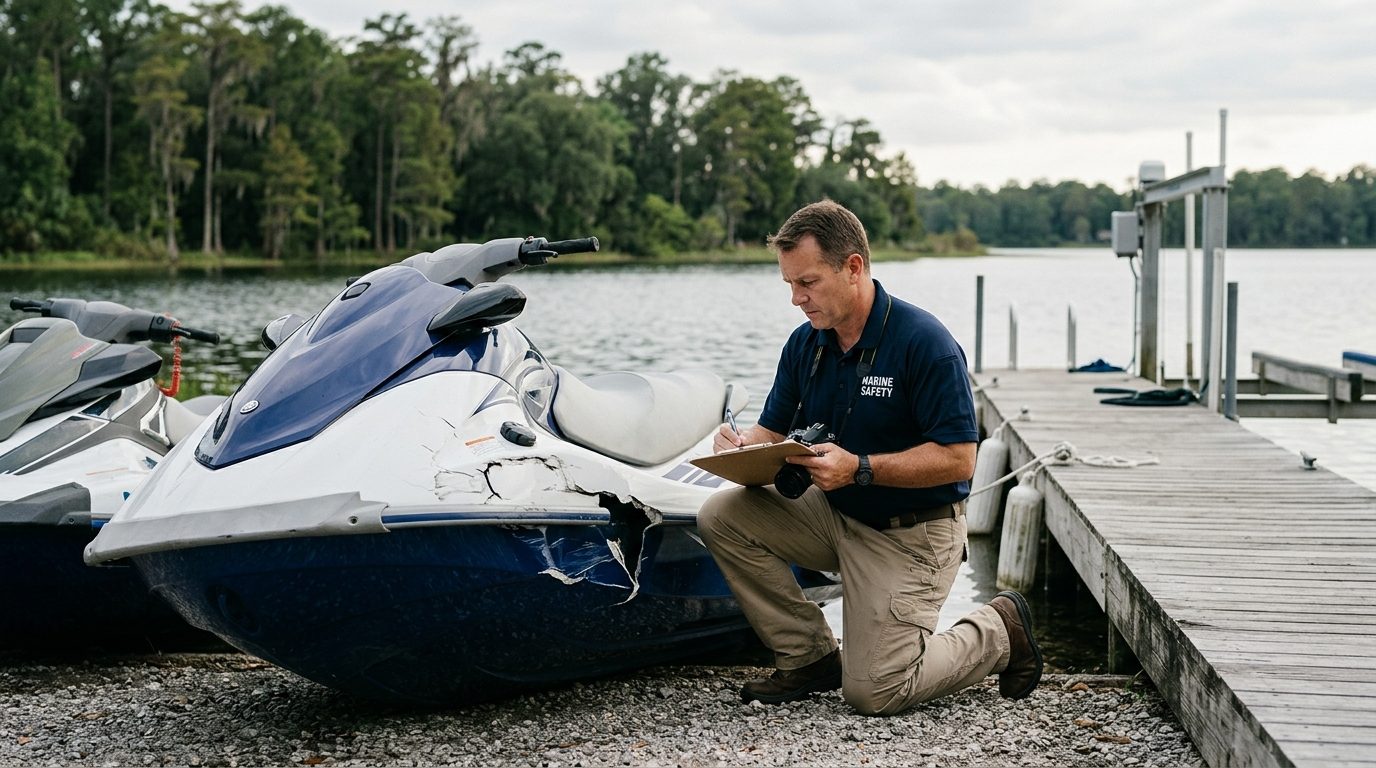
Jet Ski Accidents in Orlando
Injured in a Jet Ski Accident? Know Your Rights
If you or a loved one was hurt in a jet ski collision or accident on Florida waters, you may have a claim for compensation. CHG Personal Injury Lawyers focuses exclusively on catastrophic injury cases and can help you understand your options.
By CHG Lawyers · Published September 27, 2026
Jet Ski Accidents in Orlando: Liability, Insurance & Your Recovery
If you’ve been in a jet ski accident in Orlando, the first hours matter. Understanding Florida’s liability system also matters. Central Florida’s lakes and waterways draw thousands of riders yearly. Whether it’s a collision on Lake Eustis or a high-speed impact on the St. Johns River, what you do right away shapes your claim.
This guide explains liability and insurance for jet ski accidents in plain language. It walks you through critical steps after an accident. It tells you when legal guidance becomes essential.
If you or a loved one was hurt in a jet ski collision or accident on Florida waters, you may have a claim for compensation. Talk it through with our team — the first consultation is free, confidential, and carries no obligation.
Immediate Actions After a Jet Ski Accident in Orlando
Safety first. If anyone is injured, call 911 immediately. Get to safety if you’re in the water. Signal for help if the jet ski is disabled.
Exchange information with the other operator: – Full name, phone number, and address – Driver’s license or ID number – Jet ski registration and hull identification number (HIN) – Insurance company name and policy number – Witness contact information
Document the scene: – Photograph both jet skis from multiple angles, showing damage – Capture water conditions, visibility, weather, and time of day – Take photos of your injuries, even minor ones – Note the location, water depth, and any hazards
Get witness information. Ask anyone who saw the accident for their name and phone number. Witnesses often leave. Their contact information is irreplaceable.
Report to authorities. Florida law requires reporting jet ski accidents involving injury, death, or significant property damage to the Florida Fish and Wildlife Conservation Commission (FWC). An FWC officer will document the incident. Request the report number and officer information.
How Jet Ski Accident Liability Works in Florida
Unlike car accidents, jet ski accidents are not governed by Florida’s no-fault insurance system. Instead, liability is determined by negligence and fault.
Here’s what it means in plain language:
The operator who caused the accident is responsible for damages. You must prove that the other operator was negligent—that they failed to operate safely or violated boating laws.
Examples of negligent jet ski operation: – Operating at excessive speed in congested waters – Operating under the influence of alcohol or drugs – Failing to maintain a proper lookout – Operating recklessly or performing dangerous maneuvers – Violating boating safety regulations – Operating without proper lighting at night – Colliding with another vessel or person due to inattention
The catch: You must prove the other operator was at fault. Unlike no-fault auto insurance, there is no automatic coverage for your medical bills and lost wages. You pursue a claim against the at-fault operator’s liability insurance or file a lawsuit.
Comparative Fault in Jet Ski Accidents
Under Florida Statute § 768.81, Florida follows comparative negligence. You can recover damages even if you are partially at fault. Your recovery is reduced by your percentage of fault.
If you are 51% or more at fault, you generally cannot recover damages.
Example: You and another jet ski operator collide. You were operating at an unsafe speed. You’re deemed 30% at fault. The other operator is 70% at fault. You can pursue a claim. Any settlement or judgment is reduced by 30%. If you win $100,000, you receive $70,000.
Serious Injury in Jet Ski Accidents
Jet ski accidents often cause catastrophic injuries. High speeds, lack of protective barriers, and collision impact create severe harm.
Real-world examples of serious jet ski accident injuries:
-
Spinal cord injury causing paralysis. A high-impact collision damages your spinal cord, resulting in paraplegia or quadriplegia. You lose the ability to walk, work, or live independently. Lifetime medical care, assistive equipment, and home modifications are permanent.
-
Traumatic brain injury. A collision causes a TBI resulting in cognitive changes or memory loss. You can no longer perform your job or manage daily tasks without help. Rehabilitation may take years.
-
Amputation. A collision with a propeller or entanglement results in limb loss. You undergo amputation surgery and require a prosthetic, ongoing medical care, and vocational retraining.
-
Severe burns. A fuel leak or fire causes third-degree burns over significant body surface area. You undergo multiple surgeries and skin grafts. Scarring is permanent.
-
Drowning or near-drowning. Submersion causes brain damage, organ failure, or death. Survivors may face permanent cognitive or physical disability.
When your injury is serious—causing permanent disability or medical expenses exceeding $10,000—you can pursue a claim for:
- Pain and suffering
- Permanent disability
- Loss of quality of life
- Loss of earning capacity (past and future)
- Future medical costs
- Assistive equipment and home modifications
- Emotional distress
- In wrongful death cases, funeral expenses and loss of companionship
These damages can far exceed what liability insurance covers.
The Financial Reality of Catastrophic Jet Ski Injury
A catastrophic jet ski accident isn’t just a medical event. It’s a permanent change to your life and your family’s future.
Consider the lifetime costs of spinal cord injury. According to the National Spinal Cord Injury Statistical Center, the average lifetime cost of care for a person with paraplegia is approximately $1.3 million. For quadriplegia, it’s approximately $4.7 million.
These figures include hospitalization, rehabilitation, medical equipment, home modifications, attendant care, and lost earning capacity.
A 35-year-old earning $60,000 per year who cannot work has lost 30 years of earning capacity. That’s $1.8 million in gross income. Add the cost of a wheelchair-accessible vehicle, home modifications, ongoing medical care, and assistive technology. The financial impact is staggering.
Families often face impossible choices. One parent leaves work to provide care. Medical debt accumulates. Savings are depleted. A claim against the at-fault operator exists because the law recognizes that liability insurance alone cannot address this reality.
If you have a valid claim, you may recover compensation for medical expenses, lost wages, pain and suffering, permanent disability, and other losses. Talk it through with our team — the first consultation is free, confidential, and carries no obligation.
How to Document Your Claim
Immediately after the accident: – Photograph your injuries and repeat as they heal – Keep all medical records, test results, and imaging – Save all receipts for medical treatment, medications, and equipment – Document lost wages with pay stubs and employer statements – Keep all communications with insurance companies – Write down what you remember about the accident – Preserve the jet ski and any equipment for inspection
Ongoing: – Follow all medical treatment recommendations – Keep a journal of your symptoms and how the injury affects your daily life – Note any permanent changes – Save receipts for out-of-pocket expenses related to the accident
This documentation becomes the evidence in your claim. Insurance companies and juries will rely on it.
The Timeline: Jet Ski Accident Claims
Investigation (weeks to months): Your attorney and the at-fault operator’s insurer gather evidence. This includes FWC reports, medical records, witness statements, and expert opinions.
Demand letter (1–3 months): Your attorney sends a detailed claim to the at-fault operator’s insurer. It explains the accident, your injuries, and the damages you’re seeking.
Negotiation (1–6 months): The insurer responds with a counteroffer. Back-and-forth negotiation occurs. Many claims settle at this stage.
Lawsuit (if necessary, 6 months to 2+ years): If settlement fails, your attorney files a lawsuit. Discovery occurs. Expert witnesses may be retained. The case may go to trial or settle before trial.
Statute of limitations: You have 2 years from the date of the accident to file a lawsuit. Do not wait. Delay weakens your claim. Memories fade, evidence is lost, and witnesses become harder to locate.
When to Reach Out for Legal Guidance
You should consider consulting with a personal injury attorney if:
- Your injuries are serious or permanent
- Medical expenses exceed $10,000
- You’ve lost time from work or cannot return to your job
- The at-fault operator’s insurance company is disputing fault
- You’re unsure whether your injury qualifies for a claim
- The accident involved multiple jet skis, commercial operators, or unclear liability
- You or a family member has suffered a wrongful death
An attorney can help you understand what you’re entitled to. They can navigate negotiations with insurance companies and protect your rights.
Frequently Asked Questions
What should I do immediately after a jet ski accident in Orlando?
Check for injuries and call 911 if anyone is hurt. Move to safety if possible. Exchange information with the other operator. Take photos of the jet skis and the scene. Get witness contact information. Report the accident to the FWC if required and request the report number.
How is liability determined in a jet ski accident?
Liability is based on negligence and fault. You must prove that the other operator failed to operate safely or violated boating laws. Examples include excessive speed, operating under the influence, failure to maintain a proper lookout, or reckless maneuvers.
What is comparative fault in jet ski accidents?
Under Florida’s comparative fault law, you can recover damages even if partially at fault (Fla. Stat. § 768.81(6)). Your recovery is reduced by your percentage of fault. If you are 51% or more at fault, you generally cannot recover from the other operator.
When can I sue the other jet ski operator?
If your injuries are serious—causing permanent disability or medical expenses exceeding $10,000—you can pursue a claim. You have 2 years from the date of the accident to file a lawsuit.
What damages can I recover in a jet ski accident claim?
You can recover pain and suffering, permanent disability, loss of quality of life, lost earning capacity (past and future), future medical costs, assistive equipment, home modifications, and emotional distress. In wrongful death cases, you can recover funeral expenses and loss of companionship.
How long does a jet ski accident settlement take in Florida?
Claims can take several months to over a year, depending on the complexity of the accident, the parties’ positions, the severity of injuries, and whether a lawsuit is filed.
Are jet ski accident reports public record in Florida?
Yes, FWC incident reports are generally available. You can request yours from the Florida Fish and Wildlife Conservation Commission using the incident number and date.
Not sure what your next step is?
Talk it through with our team — the first consultation is free, confidential, and carries no obligation.
What Comes Next
If a jet ski accident has left you with serious injuries—spinal cord damage, brain injury, permanent disability, or the loss of a loved one—you likely have a claim. The financial and emotional reality of catastrophic injury is permanent. You deserve to understand what you’re entitled to and what your options are.
People in your situation reach out regularly to discuss what happened and what comes next. Contact us for a free case evaluation. We’ll listen to your story, explain how Florida’s liability system works in your case, and tell you what you can do.
What to Do After a Jet Ski Accident
Immediate Safety & Emergency Response
Check for injuries and call 911 if anyone is hurt. Move to safety if possible and stay calm. If you're able, move the jet skis out of the water traffic lane to prevent further collisions.
Gather Information at the Scene
Exchange names, contact information, and insurance details with the other operator. Take photos of both jet skis, any visible damage, the accident location, and water conditions. Get the names and contact information of any witnesses.
Report & Document
Report the accident to the Florida Fish and Wildlife Conservation Commission (FWC) if required and request a report number. Seek medical attention even if you feel fine—some injuries appear hours or days later. Keep all medical records and receipts.
Contact an Attorney
Do not give a recorded statement to the other party's insurance company without legal counsel. Contact CHG Personal Injury Lawyers for a free case evaluation before speaking with adjusters.
Why CHG Personal Injury Lawyers for Your Jet Ski Accident Claim
Focused on Catastrophic Injury Cases
We focus exclusively on serious and life-altering injuries—including spinal cord damage, traumatic brain injury, amputation, and severe burns—that result from accidents like jet ski collisions.
Thorough Investigation & Evidence
We investigate the full circumstances of your accident, including operator negligence, equipment failure, unsafe water conditions, and violations of boating safety laws.
Florida-Based, Nationwide Reach
Compassionate, Plain-Language Guidance
We explain your rights and options in clear terms, never legal jargon. We understand the physical, emotional, and financial toll of a serious accident.
Important: Time Matters
Accident scenes fade, witnesses move away, and evidence can be lost. The sooner you contact an attorney, the sooner we can preserve critical evidence and begin building your case. Contact us right away for a free, confidential case evaluation.
Common Questions About Jet Ski Accidents
How is liability determined in a jet ski accident?
Liability depends on who was at fault. Common causes include operator negligence (speeding, reckless operation, or operating under the influence), failure to maintain a proper lookout, equipment failure, or violation of boating safety rules. We investigate all factors to identify all responsible parties.
What damages can I recover?
If you have a valid claim, you may recover compensation for medical expenses, lost wages, pain and suffering, permanent disability, and other losses. Each case is unique; we evaluate your specific injuries and circumstances.
What if I was partially at fault?
Florida law allows recovery even if you share some responsibility, as long as you are not more than 50% at fault (Fla. Stat. § 768.81(6)). Your recovery is reduced by your percentage of fault. We work to minimize any comparative fault assigned to you.
Do I need a lawyer?
Insurance companies and other parties have their own counsel. An attorney protects your rights, handles negotiations, and ensures you are not pressured into a settlement that undervalues your claim. A free consultation costs nothing and can clarify your options.