

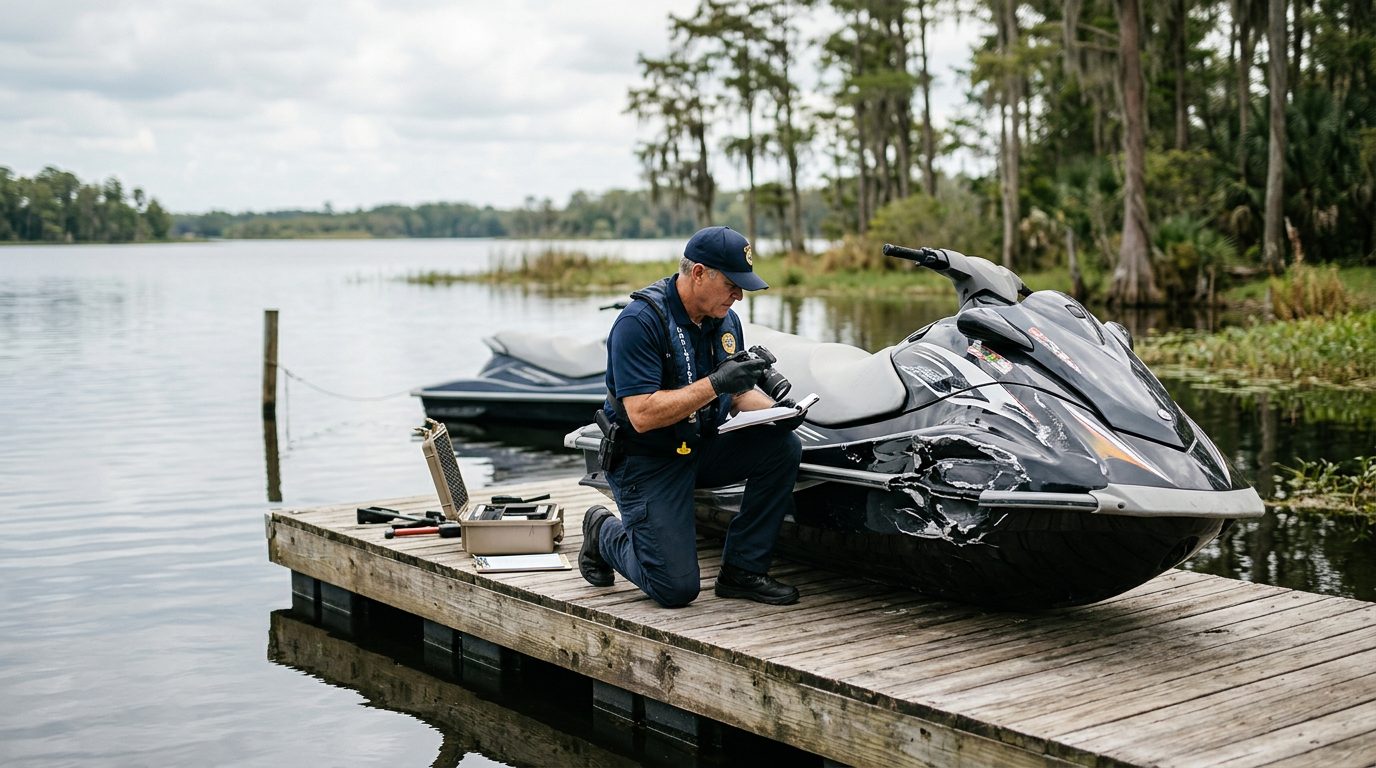
Jet Ski Accidents
Jet Ski Accidents in Florida: Know Your Rights After a Crash
Serious injuries from jet ski collisions, operator negligence, and unsafe water conditions happen fast. If you or a loved one was hurt, you may have a legal claim. Get answers about what happened and what comes next.
By CHG Lawyers · Published September 20, 2026
Jet Ski Accidents in Florida: Causes, Statistics, and Your Legal Rights
Miami’s warm waters and year-round boating culture make jet skis popular for recreation and tourism. But Florida’s waterways see many jet ski accidents—many causing catastrophic, life-altering injuries that change families forever. If you or someone you love was seriously hurt in a jet ski crash, you need to understand what caused it, who may be responsible, and what legal options exist.
Not sure what your next step is?
Talk it through with our team — the first consultation is free, confidential, and carries no obligation.
Jet Ski Accidents in Florida: A Growing Concern
Jet ski accidents in Florida happen far more often than most people realize. The state’s warm climate, extensive coastline, and popularity as a vacation destination mean millions of hours of jet ski operation annually—and a high rate of serious crashes.
In 2020, the Florida Fish and Wildlife Conservation Commission (FWC) recorded 227 personal watercraft accidents. These resulted in 183 injuries and 15 fatalities. These aren’t minor fender-benders. Many accidents cause catastrophic, permanent injuries: spinal cord damage leading to paralysis, traumatic brain injury, amputation, severe burns, and wrongful death. When a jet ski accident happens at high speed—and most do—the human body absorbs tremendous force. The difference between a broken bone and a life-altering injury is often just angle and impact.
This page addresses serious, catastrophic outcomes. If you’re looking for information about minor scrapes or soft-tissue injuries, this isn’t the right resource. But if you or a family member suffered a spinal cord injury, paralysis, brain injury, amputation, severe burns, or lost a loved one in a jet ski crash, keep reading.
What Is the Leading Cause of Jet Ski Accidents?
Operator error and inexperience are the primary causes of jet ski accidents in Florida. Jet skis are powerful machines—some produce over 300 horsepower—and many operators lack adequate training or judgment to handle them safely.
The most common causes include:
- Excessive speed and loss of control. Operators push jet skis to maximum speed in crowded waterways, then lose control when they encounter waves, other vessels, or obstacles.
- Alcohol and drug impairment. Impaired operators have slower reaction times, poor judgment, and reduced balance—a dangerous combination on the water.
- Failure to maintain a proper lookout. Operators don’t see other watercraft, swimmers, or fixed objects until it’s too late.
- Reckless behavior and racing. Competitive riding, showing off, and deliberate risk-taking lead to collisions and ejections.
- Mechanical failure and poor maintenance. Defective equipment, worn brakes, or failed steering systems can cause loss of control.
- Inexperience and inadequate training. Many renters receive minimal safety briefing before operating a powerful watercraft.
Collisions with other vessels, swimmers, docks, or the shoreline often follow. At high speed, even a minor collision can be catastrophic.
How Many Jet Ski Accidents Occur Per Year in Florida?
Florida consistently ranks among the highest states for jet ski and boating accidents. The data is sobering.
According to the Florida Fish and Wildlife Conservation Commission, in 2020 there were 227 personal watercraft (PWC) accidents in Florida. These resulted in 183 injuries and 15 fatalities. That’s more than one serious accident every other day on average.
Broward County and Miami-Dade County report the highest volumes of jet ski accidents in the state. Miami-Dade County alone has recorded over 10,000 jet ski accidents in recent years. Broward County follows with nearly 8,000. These numbers reflect the popularity of jet skiing in South Florida—but also the frequency of serious crashes.
It’s important to note: these statistics capture reported accidents. Many minor incidents go unreported. What is reported tends to be serious—injuries requiring medical attention, property damage, or fatalities. The data shows that catastrophic jet ski injuries are not rare edge cases. They happen regularly.
What Is Lucy’s Law in Florida?
Lucy’s Law is Florida’s mandatory boating safety education requirement. Named after a young girl killed in a boating accident, the law aims to reduce operator error through mandatory training and certification.
Under Florida Statute 327.73, any operator born on or after January 1, 1988, must complete an approved boating safety course and carry a Boating Safety ID Card before operating a jet ski or boat. The course covers navigation rules, safety equipment, emergency procedures, and responsible operation.
Violation of Lucy’s Law—operating without a valid Boating Safety ID Card—is a civil infraction. But more importantly for accident litigation, it can establish negligence or recklessness. If an operator caused a jet ski accident and was not in compliance with Lucy’s Law, that violation strengthens a personal injury claim against them.
Common Causes of Boating and Jet Ski Accidents in Florida
Beyond operator error, several environmental and systemic factors contribute to jet ski accidents:
- Operator inattention and distraction. Texting, talking, or looking away from the water for even a few seconds can be fatal.
- Speeding in crowded waterways. Florida’s popular boating areas—Miami Beach, Tampa Bay, the Keys—are crowded. High-speed operation in these zones dramatically increases collision risk.
- Alcohol impairment. Alcohol is a leading factor in fatal boating accidents nationwide. It impairs judgment, balance, and reaction time.
- Failure to follow navigation rules. Right-of-way violations and improper passing lead to collisions.
- Inadequate safety equipment. Missing or non-functional life jackets, fire extinguishers, and first-aid kits mean injuries are worse when accidents occur.
- Poor visibility and night operation. Dusk, dawn, and night-time boating reduce visibility and increase collision risk.
- Defective or poorly maintained equipment. Rental jet skis may not be properly inspected or serviced between uses.
- Collision with swimmers or divers. Swimmers and divers are often invisible to jet ski operators until impact.
Many accidents involve a combination of these factors. A speeding, impaired operator in a crowded waterway at dusk, operating an inadequately maintained jet ski, is far more likely to cause a catastrophic crash.
Have questions about what happened?
Ask our team directly. The first conversation is free, confidential, and there is no obligation to continue.
Catastrophic Injuries from Jet Ski Accidents
Jet ski accidents can cause permanent, life-altering injuries. The high speed, blunt-force impact, and water environment create conditions for severe trauma.
Spinal cord injuries and paralysis occur when the spine is fractured or the spinal cord is damaged. Paraplegia (paralysis of the lower body) and quadriplegia (paralysis of all four limbs) are common outcomes. A jet ski operator ejected at high speed into the water or striking a fixed object can suffer catastrophic spinal damage in an instant.
Traumatic brain injury (TBI) results from head trauma during the crash or upon impact with water, debris, or other objects. According to Mayo Clinic, TBI can cause permanent cognitive, physical, and behavioral changes—memory loss, difficulty concentrating, mood changes, and loss of independence.
Amputation and limb loss occur when a jet ski operator or passenger contacts the propeller or is crushed between vessels or against a fixed object. Propeller injuries are particularly severe and often result in partial or complete limb loss.
Severe burn injuries can result from fuel ignition, contact with hot engine components, or fire following a collision. Burns covering large body areas require extensive hospitalization, skin grafts, and lifelong scar management.
Catastrophic back and neck injuries cause permanent impairment and chronic pain, even without complete spinal cord damage.
Wrongful death is the most catastrophic outcome. A fatal jet ski accident leaves families grieving and facing financial hardship. Families may have a legal claim for the wrongful death of a loved one.
All of these injuries require lifetime medical care, rehabilitation, assistive technology, home modifications, and ongoing support. The costs are staggering—often millions of dollars over a lifetime.
Legal Liability After a Jet Ski Accident in Florida
After a jet ski accident, the question becomes: who is responsible?
Jet ski operators have a legal duty to operate safely and follow boating laws. If an operator acts negligently—speeding, operating while impaired, failing to maintain a lookout, or violating navigation rules—they can be held liable for injuries they cause.
But liability doesn’t stop with the operator. Other parties may also bear responsibility:
- Jet ski manufacturers may be liable if a defect in design or manufacturing caused or contributed to the accident.
- Rental companies may be liable for inadequate maintenance, failure to inspect the jet ski, poor safety briefing, or renting to an operator they knew or should have known was unsafe.
- Property owners may be liable if an accident occurs on their waterfront property due to negligent security, unsafe conditions, or failure to warn of hazards.
- Other operators involved in a collision may share liability.
Under Florida Statute 768.81 (comparative negligence), you can recover damages even if you were partially at fault—as long as you were not more than 50% responsible for the accident. This means even if you contributed to the crash, you may still have a claim against a more-negligent party.
Wrongful-death claims can be brought by a spouse, children, parents, or other family members when a jet ski accident is fatal. These claims seek compensation for the loss of the loved one and the financial and emotional impact on surviving family members.
What to Do After a Jet Ski Accident in Florida
If you or a family member is injured in a jet ski accident, take these steps immediately:
-
Seek medical attention. Even if injuries seem minor, get evaluated by a doctor. Some serious injuries (like internal bleeding or spinal damage) aren’t immediately obvious.
-
Report the accident. If required by law, report the accident to the Florida Fish and Wildlife Conservation Commission (FWC). Obtain a copy of the accident report.
-
Document the scene. Take photographs and video of the jet skis, the water, the weather, visibility, and any damage. Get the names, phone numbers, and addresses of all witnesses.
-
Gather operator and vessel information. Record the names, addresses, phone numbers, insurance information, and boating license numbers of all operators and vessel owners involved.
-
Preserve evidence. Do not allow the jet skis to be repaired or disposed of. Preserve maintenance records, safety equipment, and any video or audio recordings.
-
Do not admit fault. Do not say “I’m sorry,” “It was my fault,” or anything that could be interpreted as an admission of responsibility.
-
Do not sign documents. Do not sign any settlement offers, liability waivers, or insurance documents without legal review.
-
Contact an attorney. Before speaking with insurance companies or the other party’s attorney, consult with an attorney experienced in catastrophic jet ski injuries. Insurance adjusters are trained to minimize payouts. An attorney protects your rights.
-
Gather medical records and documentation. Collect all medical bills, hospital records, prescriptions, physical therapy records, and documentation of lost wages and ongoing care needs.
Why You Need an Attorney After a Catastrophic Jet Ski Injury
Jet ski accident cases are complex. Insurance companies often undervalue catastrophic injury claims, especially when the injured person is partially at fault or when liability is unclear.
Here’s why attorney representation matters:
Insurance companies prioritize their bottom line. They employ adjusters trained to minimize payouts. An initial settlement offer often covers only a fraction of actual damages. Catastrophic injuries require lifetime medical care, rehabilitation, assistive technology, and home modifications. The true cost is often millions of dollars. Without an attorney, you’re negotiating alone against a corporation with vast resources.
Liability questions are often complicated. Was the operator negligent? Was the jet ski defective? Did the rental company fail to maintain it? Did the property owner create an unsafe condition? Multiple parties may share responsibility. Identifying all responsible parties and proving their negligence requires investigation, expert analysis, and legal knowledge.
Damages calculations are complex. Medical experts must testify about future medical needs. Economists must calculate lost earning capacity. Life-care planners must estimate the cost of ongoing care. Without this expert support, damages are underestimated.
Wrongful-death cases require sensitivity and experience. Losing a loved one in a jet ski accident is devastating. Families need compassionate guidance through the legal process and help recovering the compensation their loved one’s death warrants.
Evidence must be preserved and analyzed. Jet skis may be repaired, scrapped, or lost. Witnesses’ memories fade. An attorney acts quickly to preserve evidence, interview witnesses, and build a strong case.
In the catastrophic-injury cases our attorneys handle, many injured people and families didn’t know they had a legal claim until they spoke with an attorney. They thought the accident was their fault, or they didn’t understand that a rental company or manufacturer might be liable. An attorney can clarify your rights and pursue the compensation you deserve.
Want to know where you stand?
Tell us what happened and our team will walk you through the options available to you, at no cost.
Frequently Asked Questions
How long do I have to file a lawsuit after a jet ski accident in Florida?
Under Florida Statute 95.11, you have 2 years from the date of the accident to file a personal injury or negligence lawsuit. For wrongful-death claims, the deadline is also 2 years. Do not wait—evidence fades, witnesses move away, and memories become unreliable.
Can I bring a wrongful-death claim if someone dies in a jet ski accident?
Yes. A spouse, children, parents, or other family members can bring a wrongful-death claim if a loved one dies in a jet ski accident. The claim seeks compensation for the loss of the loved one and the financial and emotional impact on surviving family members.
Are jet ski rental companies liable for accidents?
Yes, rental companies can be liable if they fail to maintain the jet ski, provide inadequate safety briefing, rent to an operator they knew was unsafe, or fail to verify that the operator had required boating safety certification.
What if I was partially at fault for the jet ski accident?
Under Florida’s comparative negligence law, you can still recover damages if you were less than 50% at fault (Fla. Stat. § 768.81(6)). Your recovery is reduced by your percentage of fault, but you’re not barred from suing.
What damages can I recover in a jet ski accident case?
Damages may include medical expenses (past and future), lost wages, loss of earning capacity, pain and suffering, disability, disfigurement, loss of enjoyment of life, and in wrongful-death cases, the loss of the loved one’s companionship and financial support.
If you or a family member suffered a catastrophic injury in a jet ski accident—spinal cord damage, paralysis, brain injury, amputation, severe burns, or the loss of a loved one—you may have a legal claim against the operator, rental company, manufacturer, or property owner. People in your situation reach out regularly, and many discover they have rights and options they didn’t know existed. Contact us for a free case evaluation to discuss what happened and what comes next.
Common Causes of Jet Ski Accidents in Florida
Operator Negligence
Speeding, reckless maneuvering, operating under the influence, or failure to maintain safe distance from other watercraft or swimmers.
Equipment Failure
Defective engines, steering systems, brakes, or fuel systems that malfunction during operation, often due to poor maintenance or manufacturing defects.
Unsafe Water Conditions
Hidden obstacles, shallow water, rocks, or debris that operators fail to avoid; inadequate warnings or markers in dangerous areas.
Rental or Third-Party Negligence
Rental companies failing to maintain equipment properly, provide safety instruction, or warn renters of known hazards or mechanical issues.
Why Jet Ski Accident Claims Matter
Serious Injuries Are Common
Jet ski crashes often result in spinal cord injuries, traumatic brain injuries, amputations, severe lacerations, and drowning. Recovery is costly and life-altering.
Evidence Disappears Quickly
Witness memories fade, water conditions change, and rental records may be altered. Early investigation and documentation are critical.
Time Limits Apply
Florida law sets strict deadlines for filing claims. Waiting too long can bar your right to recover entirely.
You Deserve Compensation
Medical bills, lost wages, pain and suffering, and long-term care costs add up fast. A claim can help cover what insurance won't.
Do Not Delay
If you were injured in a jet ski accident, contact a personal injury attorney as soon as possible. The sooner you act, the sooner evidence can be preserved and your claim can be investigated thoroughly.
What to Do After a Jet Ski Accident
Seek Medical Attention Immediately
Even if you feel okay, get checked by a doctor. Some injuries—especially head and spinal injuries—may not be obvious right away. Medical records are also crucial evidence.
Report the Accident
File a report with the Florida Fish and Wildlife Conservation Commission (FWC) if required. Report to local law enforcement if there was a collision or injury.
Document Everything
Take photos of the accident scene, the jet ski, any visible injuries, and weather conditions. Write down names and contact information for witnesses.
Preserve Evidence
Keep all medical records, receipts, repair estimates, rental agreements, and communications with insurance companies. Do not sign anything without legal review.
Injured in a Jet Ski Accident? We Can Help.
Related practice areas
- Jet Ski Accidents in Miami
- Jet Ski Accidents in Orlando
- Spinal Cord Injuries: A Guide for Victims and Families Facing Paralysis
- Tetraplegia