

Catastrophic Spinal Injuries
What Is the Permanent Damage of Cauda Equina Syndrome?
Cauda equina syndrome is a spinal emergency. When it isn't treated fast enough, the damage to the nerves at the base of your spine can last a lifetime. Here's what that can mean — and how our attorneys can help.
Serious Injuries. Serious Advocacy.
Nationwide
Cases accepted across the U.S.
FL Bar
Licensed, Florida Bar-admitted attorneys
Free
Confidential case evaluations
EN/ES
Bilingual client resources
By CHG Lawyers · Published August 06, 2026
What Is the Permanent Damage of Cauda Equina Syndrome?
The permanent damage of cauda equina syndrome can include leg weakness or paralysis, lifelong bladder problems that need a catheter, loss of bowel control, loss of sexual and genital sensation, numbness in the “saddle” area, and long-term nerve pain.
How much of this becomes permanent depends on two things: how fast the pressure on the nerves is relieved, and whether the syndrome is “incomplete” or “complete” when treatment starts.
This page explains, in plain language, what “permanent damage” means day to day for someone with cauda equina syndrome (CES) — which functions can be lost, what those losses feel like in real life, why the timing of surgery matters so much, and the difference between incomplete and complete CES that many pages skip. This is educational information, not medical or legal advice.

Not sure what your next step is?
Talk it through with our team — the first consultation is free, confidential, and carries no obligation.
Cauda equina syndrome in plain language
Your spinal cord does not run the whole length of your back. In most adults it ends near the first lumbar vertebra (L1) — roughly the top of your lower back. Below that point, a bundle of loose nerve roots continues down through the spinal canal. That bundle resembles a horse’s tail, so doctors named it the cauda equina — Latin for “horse’s tail.”
Those nerve roots carry signals for your legs, bladder, bowel, and sexual function. Cauda equina syndrome happens when something squeezes or damages that bundle. According to Mayo Clinic, it most often results from a large lumbar disc herniation, but it can also follow trauma such as a truck crash or a fall, or arise from a spinal tumor, infection, or bleeding in the canal.
Doctors treat CES as a surgical emergency — not something to “watch and see.” The reason is simple: the longer those nerve roots stay compressed, the more likely the loss becomes permanent.
Complete vs. incomplete CES — the distinction that predicts recovery
Many pages list CES symptoms but skip the one difference clinicians care about most: is the syndrome incomplete (CES-I) or complete/retention (CES-R)? This strongly shapes your chances of recovery.
- Incomplete CES (CES-I): You still have some function. For example, you may sense that your bladder is full or feel some urgency, even if control is weak. You may keep some feeling in the saddle area. Because the nerves still work in part, the outlook after prompt surgery is usually better.
- Complete CES / painless urinary retention (CES-R): You can no longer feel your bladder filling and cannot empty it on your own. Urine backs up and overflows with no urge to go. This “painless retention” stage points to more severe nerve injury and a worse outlook.
Here is the practical point. Symptoms that look “mild” — some leaking, tingling in the groin, a weaker leg — may still be an incomplete stage where fast surgery can save function. If you wait until you cannot urinate at all, the syndrome has often moved toward complete.
This mirrors how spinal cord injuries are graded internationally. Clinicians use the International Standards for Neurological Classification of Spinal Cord Injury (ISNCSCI) and the ASIA Impairment Scale, published by the American Spinal Injury Association. On that scale, “incomplete” injuries carry more recovery potential than “complete” ones.
What is the permanent damage of cauda equina syndrome?
CES can permanently change movement, control, and feeling below the waist. Here is what each loss actually means in daily life — not just the clinical label.
- Leg weakness or paralysis (mobility). You may struggle to lift your foot, climb stairs, balance, or stand for long. Some people manage with an ankle-foot orthosis (a brace); others rely on a walker or a wheelchair. Everyday tasks change — getting to a bathroom in time, carrying a child, or driving.
- Bladder problems (catheter use). You may not feel when your bladder is full, or you may be unable to empty it. Many people drain the bladder with a thin tube several times a day, a routine called intermittent self-catheterization; others use an indwelling catheter. Poorly managed retention raises the risk of repeated urinary infections and kidney damage.
- Bowel problems (accidents and routines). You may lose the urge that normally tells you to go, or the muscle control that holds it — meaning unexpected accidents. Many people follow a scheduled bowel program to stay in control.
- Loss of genital and sexual sensation. Nerve damage can dull or erase genital feeling and change sexual function — a deeply personal loss many people are never warned about.
- Saddle numbness. You may lose feeling in the area that would touch a saddle — the groin, buttocks, and inner thighs. This “saddle anesthesia” is often the red-flag sign that sends doctors toward emergency MRI.
- Chronic nerve pain. Burning, electric, or aching pain in the legs, lower back, and pelvis is common and can last indefinitely, even after other symptoms settle.
These rarely arrive one at a time. When several occur together and do not resolve, CES becomes a life-altering, permanent impairment — the same core losses of movement, feeling, and bladder/bowel control seen across serious spinal cord injuries, as Mayo Clinic explains.
Have questions about what happened?
Ask our team directly. The first conversation is free, confidential, and there is no obligation to continue.
Why timing matters: how nerve damage becomes permanent
Compressed nerve roots lose their blood supply. Without enough oxygen and nutrients, the nerve fibers begin to die, and the longer the pressure lasts, the more are injured beyond repair. Unlike a cut on your skin, badly damaged nerve roots often do not grow back to normal — which is why some losses simply stay.
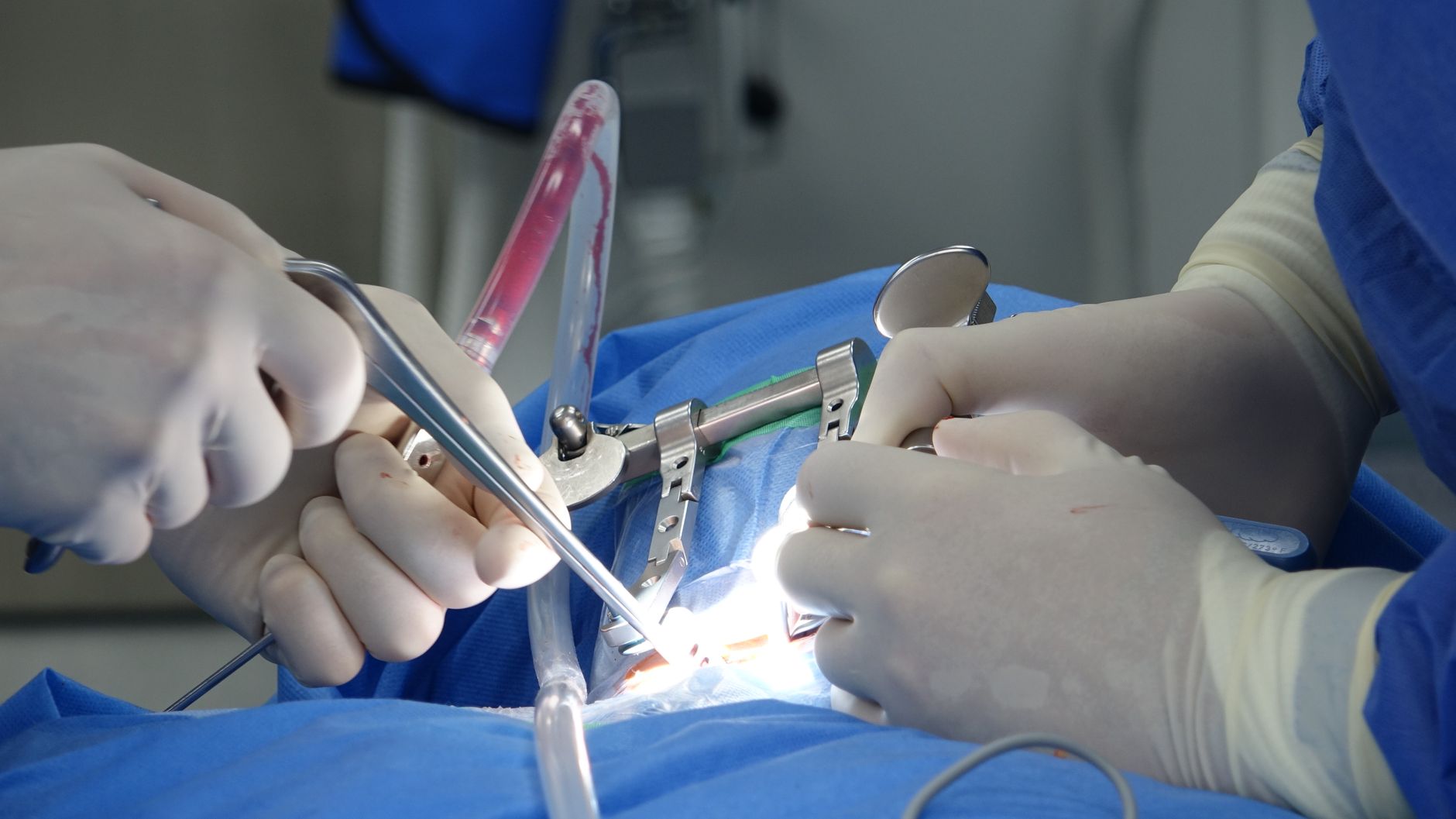
Emergency decompression surgery aims to take the pressure off those roots before damage sets in. Common procedures include a lumbar laminectomy or discectomy. This is why hospitals rush CES patients to the operating room instead of scheduling surgery for another day.
In the catastrophic-injury cases our attorneys handle, we see the same pattern again and again: a delay. A red flag missed in an emergency room. An MRI not ordered soon enough. A patient sent home with painkillers. That delay can turn an incomplete, treatable syndrome into permanent loss. When warning signs are dismissed — new saddle numbness, loss of bladder control, weakness in both legs — the window to prevent lasting harm can close.
Living with the long-term effects
Life after permanent CES damage usually means new daily routines and ongoing care, often managing several effects at once — mobility aids, catheterization several times a day, a scheduled bowel program, medicine for nerve pain, and regular physical therapy.
The emotional toll is real. Depression and anxiety often follow a sudden, permanent injury, and mental-health support is part of good care.
There are financial effects, too: rehabilitation, home modifications (ramps, grab bars, a roll-in shower), assistive equipment, and lost income if you can no longer work. The Christopher & Dana Reeve Foundation estimates roughly 5.4 million Americans live with some form of paralysis — and lifelong care can be very costly.
Coordinated care helps. Many patients work with a team spanning neurosurgery or neurology, urology, physical medicine and rehabilitation, and pain management. Long-term data on serious spinal cord injuries in the U.S. is tracked by the National Spinal Cord Injury Statistical Center (NSCISC).
When CES is a catastrophic injury after an accident or delayed care
Sometimes CES follows a serious accident or a preventable delay in treatment. When it does, the permanent damage can count as a catastrophic, life-altering injury — different from an unavoidable medical event.
In plain terms: someone else’s carelessness may have caused the injury, such as a truck crash, or a preventable delay in diagnosing or operating may have made the damage permanent. In these situations, families usually have one central question: Who pays for a lifetime of catheters, therapy, equipment, and lost income? CES-related claims commonly arise from vehicle and truck crashes, falls, or medical negligence such as a missed or delayed diagnosis.
Florida law sets deadlines and rules that can affect these questions:
- Filing deadline. For most negligence claims that accrue on or after March 24, 2023, the deadline to file is generally two years under Fla. Stat. § 95.11. Medical-malpractice claims have their own separate timing rules.
- Shared fault. Florida uses a modified comparative-negligence rule under Fla. Stat. § 768.81. A person found more than 50% at fault generally cannot recover damages.
Deadlines are strict and vary by state and type of claim, so it is worth asking early. Our attorneys are licensed and admitted to The Florida Bar and handle catastrophic-injury cases nationwide. You can request a free case evaluation — no pressure and no obligation, and help is available in English and Spanish. For any medical questions, always talk with your doctor.
Frequently asked questions
Is cauda equina syndrome a permanent disability?
It can be. When the nerve roots don’t heal, CES can cause permanent leg weakness or paralysis, catheter-dependent bladder problems, loss of bowel control, and lasting nerve pain that limit daily life.
Can you completely recover from cauda equina syndrome?
Some people regain a lot of function after fast surgery, especially when the syndrome was still incomplete. Others are left with permanent damage. Outcomes vary from person to person, and full recovery cannot be promised.
What’s the difference between complete and incomplete CES?
With incomplete CES you keep some function and feeling, so recovery odds after quick surgery are usually better. Complete CES means losing bladder control and the ability to empty the bladder, and the outlook is usually worse.
Why does surgery timing matter so much?
Compressed nerves lose blood flow and are injured more the longer the pressure lasts. Fast decompression surgery gives the best chance to stop the damage before it becomes permanent.
Can a delayed diagnosis of cauda equina syndrome lead to a legal claim?
Sometimes. When a preventable delay in care turns a treatable injury into permanent harm, families may have legal questions. A free case evaluation can help you understand your options.

Want to know where you stand?
Tell us what happened and our team will walk you through the options available to you, at no cost.
Related terms and resources
- Glossary of injury terms
- What is a straight leg test for cauda equina?
- Paraplegia
- Tetraplegia
The Lasting Impacts of Cauda Equina Syndrome
Leg Weakness or Paralysis
When the nerve roots don't heal, CES can cause permanent weakness or paralysis in the legs, limiting the ability to walk or stand.
Bladder Dysfunction
Many survivors are left with catheter-dependent bladder problems, requiring ongoing medical management for life.
Loss of Bowel Control
Damage to the sacral nerves can cause lasting loss of bowel control and related complications.
Sexual Dysfunction
CES can cause permanent changes in sexual function, an often-overlooked and deeply personal loss.
Chronic Nerve Pain
Lasting numbness, tingling, or severe nerve pain in the legs, saddle area, and lower back can limit daily life.
Time Is Everything With CES
Cauda equina syndrome is a medical emergency. Delayed diagnosis or delayed surgery can turn a treatable condition into permanent paralysis. If a doctor or hospital missed the warning signs, that delay may be the cause of lasting harm.
Common Questions About Permanent CES Damage
Is CES a permanent disability?
It can be. When the nerve roots don't heal, CES can cause permanent leg weakness or paralysis, catheter-dependent bladder problems, loss of bowel control, and lasting nerve pain that limit daily life.
Can you fully recover from CES?
Some people regain significant function after fast surgery, but outcomes vary widely. The longer treatment is delayed, the more likely damage becomes permanent.
How is CES caused by negligence?
CES may follow a serious accident, or it may become permanent because a provider failed to diagnose it or delayed emergency surgery. Both may support a claim.
What can a claim cover?
A catastrophic-injury claim may seek compensation for medical care, lost income, home and mobility modifications, and the profound life changes CES brings.