
Electrocution Injuries | Key Biscayne, Florida
Electrocution Injuries in Key Biscayne: What to Know After a Serious Shock
An electrical injury can change your health, your work, and your family's life in an instant. CHG Personal Injury Lawyers helps injured people across Florida understand what happened and what options they may have.
By CHG Lawyers · Published October 23, 2026
Electrocution injuries can happen in seconds. They happen to Key Biscayne residents and visitors on a dock, on a boat, or inside a home or condo. Between the Cape Florida Lighthouse and the marinas along Biscayne Bay, much of daily life happens near the water.
If someone else’s carelessness contributed to a shock, you or your family may have a claim under Florida law. This guide explains what a shock can do to the body. It also explains where these accidents happen and the steps that protect your rights.
CHG Personal Injury Lawyers is a Florida-based firm. It handles personal injury cases of every severity.
What an Electrical Shock Can Do to the Body
An electrical shock can burn the skin. It can disrupt the heart’s rhythm. It can also damage muscles and nerves.
Electrical current often enters the body at one point and exits at another. Burns can appear at both spots.
A shock can knock a person off their feet. A fall can cause injuries of its own.
Some symptoms take hours or days to appear. This can happen even when a person feels fine at the scene. That is why anyone who was shocked should see a doctor promptly.
Tell your doctor exactly how the shock happened. Say what you touched and whether you lost consciousness (passed out). Doctors often need to track changes over time, so keep every follow-up appointment.
This section is general information, not medical advice. Follow your doctors’ care and treatment instructions.
Not sure what your next step is?
Talk it through with our team — the first consultation is free, confidential, and carries no obligation.
How Electrocutions Happen in Waterfront Communities Like Key Biscayne
On Key Biscayne, shocks often start where water, wiring, and outdoor equipment meet.
Boats and docks near saltwater are common settings. This is especially true where shore power and wiring run to a boat slip.
Pool and pump equipment can cause shocks. So can outdoor lighting and electrical work at homes and condos. These risks grow when wiring is damaged or poorly installed.
Construction zones and rental properties may hold electrical hazards that are not clearly marked.
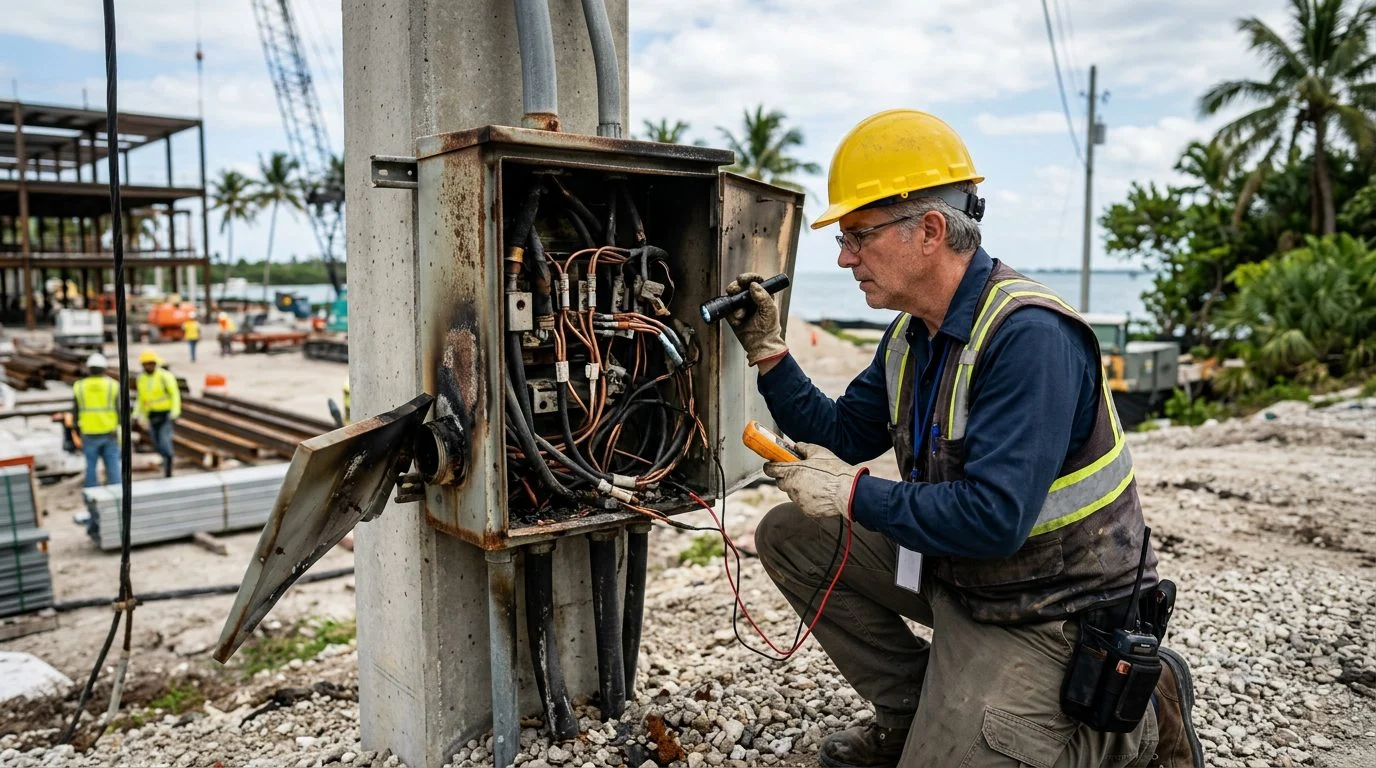
Storm damage adds risk too. A downed line or a damaged electrical box can look harmless. It may still be live.
The danger is often not obvious to a visitor, a contractor, or a new tenant.
When Someone Else May Be Responsible
A property owner, marina operator, contractor, or landlord may be responsible. This can happen when they fail to keep people safe from electrical hazards.
They have a duty to fix or warn about hazards they know about. They also have a duty to fix or warn about hazards they should have found through reasonable inspection.
Lawyers call this negligence. Every case is different, and whether a claim exists depends on the specific facts of what happened.
Florida treats boats with special seriousness. Fla. Stat. § 327.32 says all vessels are dangerous instrumentalities. This legal term means the law treats boats as capable of serious harm. The statute also says operators must use the highest degree of care to prevent injuries to others. Fla. Stat. § 327.32 reads: “Liability for reckless or careless operation of a vessel shall be confined to the operator in immediate charge of the vessel and not imposed upon the owner of the vessel, unless the owner is the operator or is present in the vessel when any injury or damage is occasioned by the reckless or careless operation of such vessel, whether such recklessness or carelessness consists of a violation of the provisions of the statutes of this state, or disregard in observing such care and such operation as the rules of the common law require.”
Owners are generally not liable for an operator’s careless operation. Fla. Stat. § 327.32 reads: “Liability for reckless or careless operation of a vessel shall be confined to the operator in immediate charge of the vessel and not imposed upon the owner of the vessel, unless the owner is the operator or is present in the vessel when any injury or damage is occasioned by the reckless or careless operation of such vessel, whether such recklessness or carelessness consists of a violation of the provisions of the statutes of this state, or disregard in observing such care and such operation as the rules of the common law require.” There is an exception if they were the operator or were aboard.
Florida also divides fault among the parties. Under Fla. Stat. § 768.81, in a negligence action, a court enters judgment against each liable party. The judgment is based on that party’s percentage of fault.
A person found more than 50 percent at fault for their own harm may not recover damages in a negligence action, except in personal injury or wrongful death actions arising out of medical negligence under chapter 766.
Whether a claim exists depends on the facts. Key questions include who controlled the equipment, what was maintained or repaired, and what warnings were given.
Life-Altering Injuries and Fatal Electrical Accidents
Electrocution injuries can change a family’s life. Some of these injuries are fatal.
Severe burns, amputation, nerve injury, and long-term disability can change work, income, and daily life for years.
Families who lose someone deserve clear answers. Here is the basic legal framework.
Florida’s wrongful death laws, sections 768.16 through 768.26, are called the Florida Wrongful Death Act.
Under Fla. Stat. § 768.20, the decedent’s personal representative brings the action. The decedent is the person who died. The personal representative is the person who manages the decedent’s estate. They bring the case for the survivors and the estate.
Survivors can include a spouse, children, and parents. Fla. Stat. § 768.18 defines who counts as a survivor.
Under Fla. Stat. § 768.21, a surviving spouse may recover for lost companionship and mental pain and suffering. Minor children of the decedent, and all children of the decedent if there is no surviving spouse, may recover for lost parental companionship, instruction, and guidance and for mental pain and suffering from the date of injury, but adult children cannot recover these damages in claims for medical negligence as defined by s. 766.106(1).
These claims center on the family left behind. They focus on the support and services the survivors lost. A surviving spouse may also recover for loss of the decedent’s companionship, and minor children may recover for lost parental companionship, instruction, and guidance.
Have questions about what happened?
Ask our team directly. The first conversation is free, confidential, and there is no obligation to continue.
Florida Deadlines and Evidence to Preserve
Florida sets time limits for filing these claims. Deadlines apply.
Under Fla. Stat. § 95.11, the time limit for a negligence claim is two years.
Fla. Stat. § 95.031 explains when the clock starts. A cause of action starts when its last element occurs. In plain terms, the timing of the injury matters.
Because the clock may be running, contact us promptly.
Start preserving evidence now. Evidence is anything that shows what happened.
- Take photos of the scene, the equipment, and any damaged wiring.
- Write down the names of witnesses.
- Keep incident or repair reports, medical records, and bills.
- Keep messages with owners, managers, or employers.
- Do not delete texts. Do not throw away damaged equipment or clothing before speaking with a lawyer.
For workers, OSHA’s employer responsibilities guidance describes employer duties. Workplace injuries often raise questions about safety conditions and training, and each situation should be reviewed on its own facts.

Talk With Our Team About Your Key Biscayne Electrical Injury
Igor Hernandez is the responsible lawyer for this page. Our team can review the facts of your shock or your family’s loss.
The first consultation is free and confidential. It carries no obligation to continue.
CHG charges no attorney’s fees and no case costs unless there is a recovery.
Common Questions
Can I file a claim after electrocution injuries on Key Biscayne?
You may be able to. This is possible if someone else’s failure to use reasonable care contributed to your injury.
How long do I have to file?
Florida gives two years for most negligence claims under Fla. Stat. § 95.11. Deadlines apply.
Who brings a wrongful death claim?
The decedent’s personal representative brings the claim.
If a shock on a dock, boat, or rental property left you or someone you love hurt, do not wait to learn where you stand. Contact our team today for your free, confidential first consultation.
Want to know where you stand?
Tell us what happened and our team will walk you through the options available to you, at no cost.
How Our Firm Can Help
Focus on Serious Injuries
Our practice focuses on personal injury cases of every severity, including electrical injuries that cause lasting harm, such as burns, nerve damage, cardiac problems, and amputation.
Investigating the Cause
We work to identify who controlled the equipment, wiring, or property where the shock happened, and whether reasonable care was followed.
No Fees Unless There Is a Recovery
Our firm charges no attorney's fees and no case costs unless there is a recovery.
A Free, Confidential Consultation
Your first consultation is free, confidential, and comes with no obligation to continue.
Safety Warning: Stay Away From Downed Power Lines
If you see a downed power line, treat it as live. Stay at least 35 feet away, keep others back, and call 911 and the utility company right away. Do not try to move a person who is still in contact with a power source. If someone has been shocked, seek emergency medical care, even if they seem to be okay.
Steps to Take After an Electrical Injury
Get Medical Care
Electrical injuries can affect the heart and nerves in ways that are not always visible right away. Follow your doctors' care and keep every appointment and test result.
Document the Scene
If you are able, take photos of the location, equipment, wiring, and any warning signs. Note the date, time, and names of anyone who saw what happened.
Keep Your Records
Save medical bills, pay stubs, and written work notices. These records help show how the injury has affected your health, income, and daily life.
Talk With Our Team
Contact CHG Personal Injury Lawyers for a free, confidential consultation. We can explain your situation in plain language and discuss the next steps.