

Truck Accidents · Florida & Nationwide
When 40 Tons Meets a Passenger Car, the Injuries Are Rarely Minor
The physics of a large truck crash help explain why survivors so often face spinal cord damage, traumatic brain injury, amputation, and other permanent, life-altering harm. Here is what makes these collisions so severe — and how we can help.
By CHG Lawyers · Published August 06, 2026
Why Truck Accidents Cause Severe Injuries (Not Just More of Them)
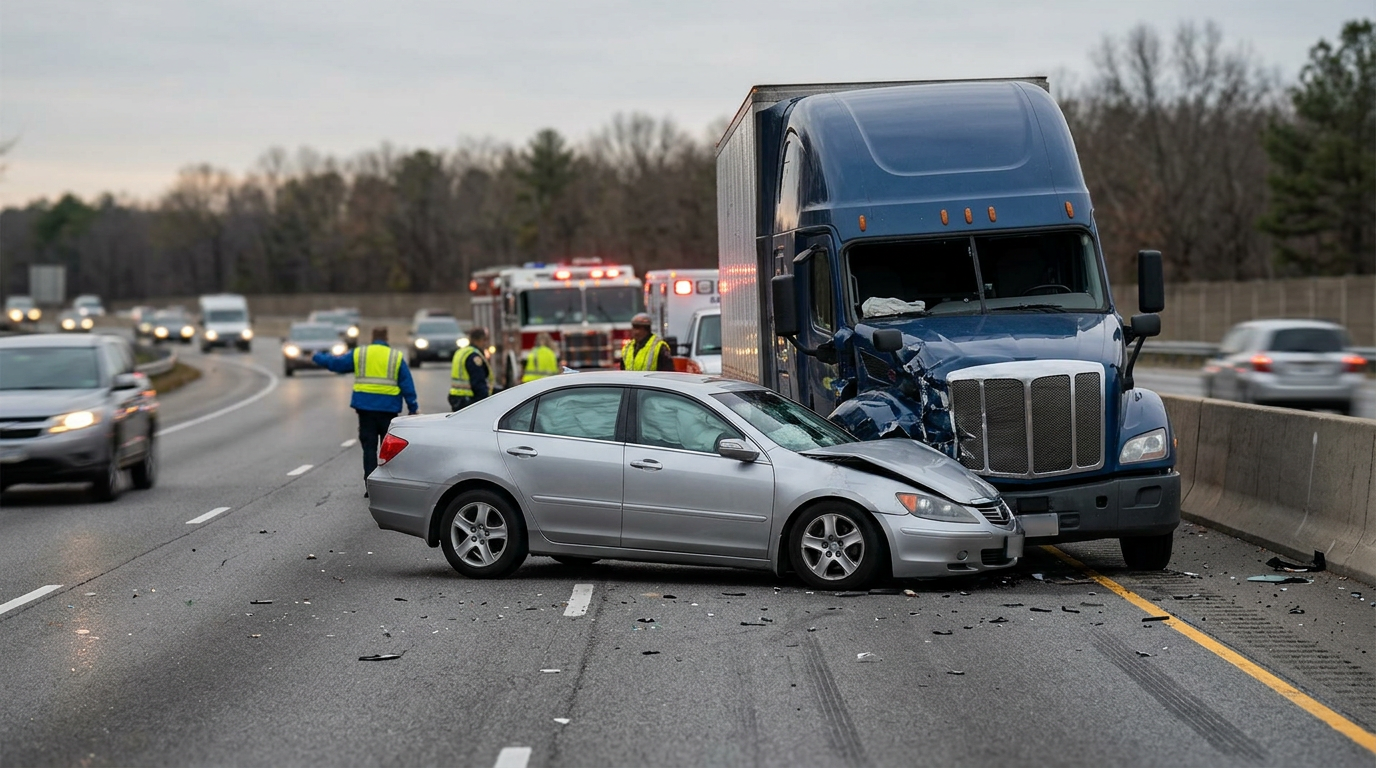
Why do truck accidents cause such severe injuries? It comes down to one fact. A fully loaded commercial truck can weigh up to 80,000 pounds. That is the federal gross-weight limit under 23 U.S.C. §127. A typical passenger car weighs around 4,000 pounds. That is a mismatch of about 20 to 1. It is the single biggest reason a truck crash so often leaves people in the smaller vehicle with permanent, life-altering injuries. The same crash that leaves a car occupant shaken can leave a truck-crash victim facing paralysis, brain injury, or the loss of a limb.
This is not meant to alarm you. It is honest physics. And it explains why these cases differ from ordinary accidents. Below, we walk through what makes truck crashes so devastating. We answer the question people actually ask — “do trucks cause more accidents?” — honestly and without inventing numbers. And we explain what a family can do next.
Not sure what your next step is?
Talk it through with our team — the first consultation is free, confidential, and carries no obligation.
The short answer
A truck’s huge mass sends overwhelming energy into whatever it hits. Crash force grows with weight and speed. When an 80,000-pound tractor-trailer meets a 4,000-pound car, the car and the people inside absorb the worst of it. A car’s steel frame, airbags, and crumple zones were built for car-on-car crashes. They were not built for the force of a semi. This is well-established physics, not a prediction about any one case.
Here is what makes these crashes catastrophic:
- Size and weight (mass and momentum)
- Underride and height mismatch
- Longer stopping distances and blind spots
- Cargo, fuel, and hazardous loads
- The severe crash forces the human body must absorb
Size and weight: the physics behind the harm
Weight is the root cause. A loaded tractor-trailer can reach the 80,000-pound federal limit. A sedan sits near 4,000 pounds. In a crash, energy has to go somewhere. It flows into the smaller vehicle and the people inside.
That is why the car almost always takes the most damage. The truck may keep moving with little visible harm. In the catastrophic truck-crash cases our attorneys handle, this mismatch comes up again and again. The injuries are not really bad luck. They are basic energy transfer.
Underride and height mismatch: why cars fare so badly
Trucks ride much higher off the ground. So a car can slide under a trailer in a crash. This is called underride. It is one of the most dangerous things that can happen in a truck crash.
Underride defeats a car’s protection. Crumple zones and airbags sit low, near bumper height. An underride crash strikes higher, at head and neck level. So the safety features built to protect you never meet the actual point of impact.
The result is a direct path to catastrophic head, neck, and upper-body harm. That includes traumatic brain injury, spinal cord damage, and catastrophic back and neck injuries. The Insurance Institute for Highway Safety has shown for years that underride guards on the rear and sides of trailers reduce these injuries. That is one reason underride stays a focus of federal safety rules.
Longer stopping distances and reduced maneuverability
A loaded truck needs far more distance to stop than a car at the same speed. All that weight builds momentum that brakes cannot cancel quickly. So when traffic slows suddenly, a truck may not stop in time.
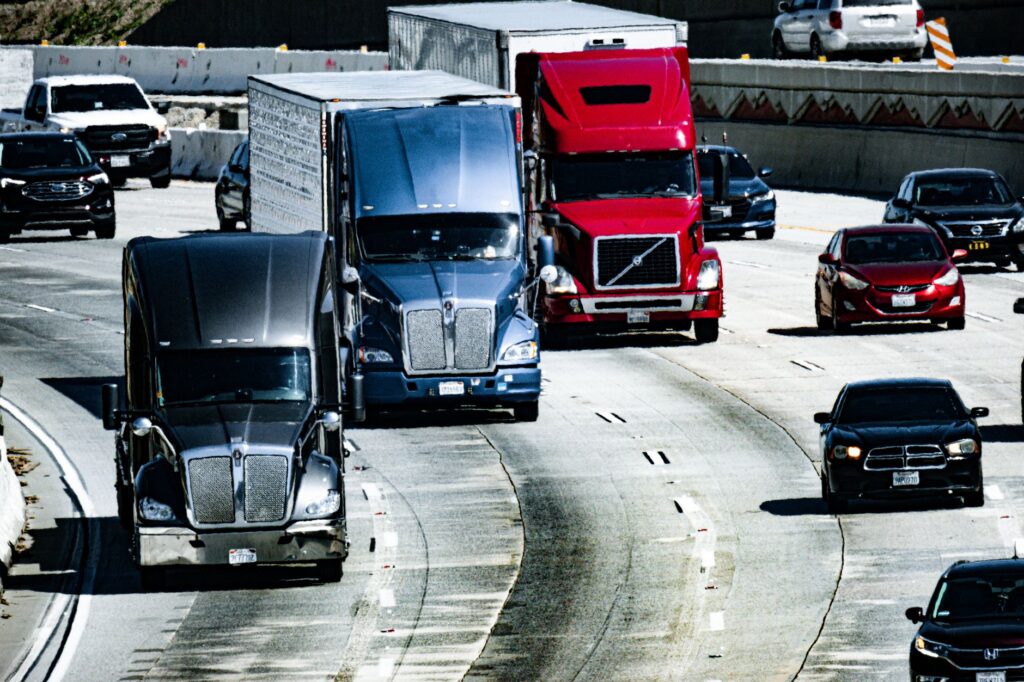
Trucks also have large blind spots on all four sides. These are called “no-zones.” A driver may simply not see a nearby car. Wide turns and slow acceleration add to the risk. Together, these factors raise the odds of high-speed rear-end and override crashes. In an override, a truck rides up and over a smaller vehicle. Like underride, it defeats the car’s safety design completely.
Cargo, fuel, and hazardous loads
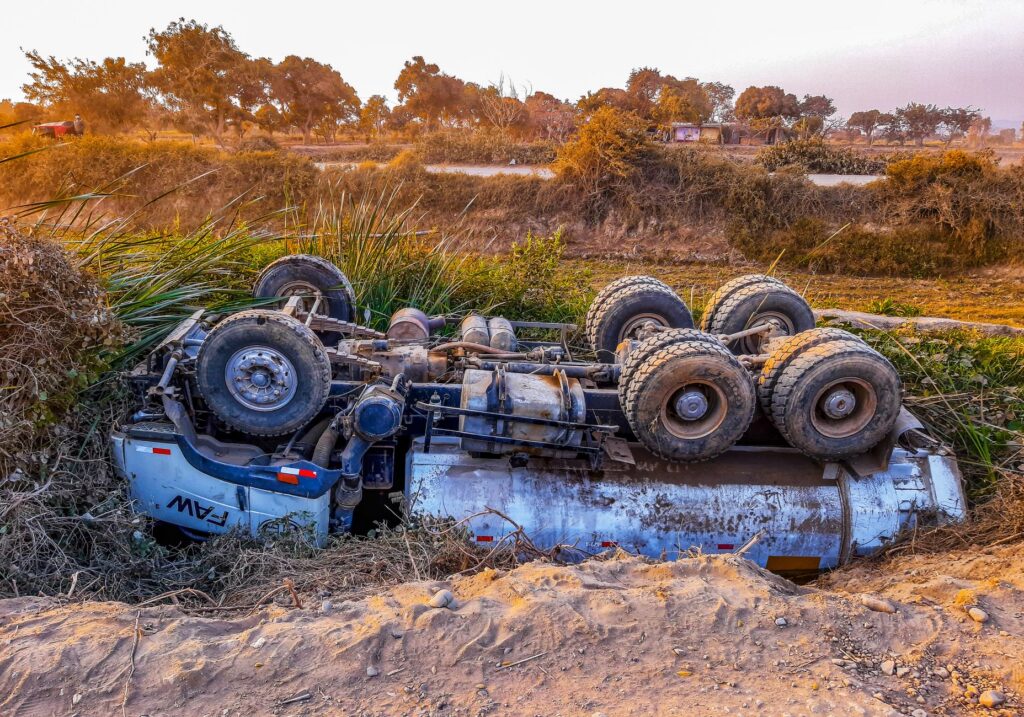
The load a truck carries can make a crash worse. It can even cause a second crash. Cargo that is not secured properly can shift or spill. Shifting weight can make a truck tip, jackknife, or roll. Spilled cargo can trigger chain-reaction crashes across several lanes.
Fuel is a separate danger. Commercial trucks carry large tanks, often well over a hundred gallons. A rupture can lead to fire. Some trucks haul hazardous materials that raise the risk of severe burn injuries. Rollovers and jackknifes often block several lanes and pull other drivers into the wreck.
Have questions about what happened?
Ask our team directly. The first conversation is free, confidential, and there is no obligation to continue.
The severe injuries these crashes cause
Because of the forces involved, truck crashes often cause permanent, life-altering injuries. Here are the ones we see most often.
Spinal cord injuries and paralysis. A high-force impact can damage the spinal cord. That causes loss of movement and feeling below the injury. The Mayo Clinic names motor-vehicle crashes as a leading cause of spinal cord injury. Depending on the level and how complete the injury is, this can mean paraplegia or quadriplegia. Doctors rate how severe it is using the ASIA Impairment Scale. This is a standard A–E scale that runs from “complete” to “normal.” The National Spinal Cord Injury Statistical Center keeps the main U.S. dataset on how often these injuries happen and their lifetime costs. The Christopher & Dana Reeve Foundation estimates that about 5.4 million Americans live with some form of paralysis. See our spinal cord injury and paralysis pages.
Traumatic brain injury (TBI). The violence of a truck crash can injure the brain, even with a seatbelt and airbag. The Mayo Clinic notes that TBI can affect memory, thinking, speech, and movement. Sometimes the effects are permanent.
Amputation and limb loss. Crushing forces can cause a traumatic amputation. Or the damage can be so severe that surgeons cannot save a limb.
Severe burns. Fuel fires can cause deep burns. These may need years of surgery, skin grafting, and rehab.
Catastrophic back and neck injuries. These can cause chronic pain and lasting loss of function.
Fatal outcomes. Sometimes a crash takes a life. This is the most catastrophic outcome of all. When it does, the surviving family may bring a wrongful-death claim. Nothing undoes that loss. But a claim can help a family cover expenses and hold responsible parties accountable. We handle these cases with care, always centered on the family left behind.
Do trucks cause more accidents? Separating frequency from severity
This is the question people search for. The honest answer has two parts.
Frequency: No, trucks do not cause more crashes overall. Passenger vehicles far outnumber large trucks on U.S. roads. So cars are involved in far more total crashes. If you are asking which vehicle type is in more collisions, it is not the truck.
Severity: This is where truck crashes stand apart. Because of a truck’s mass, the harm falls on the people in the smaller vehicle. The National Highway Traffic Safety Administration’s Fatality Analysis Reporting System (FARS) and the agency’s annual Traffic Safety Facts reports are the authoritative public datasets on this. They consistently show that in fatal crashes involving a large truck and a passenger vehicle, people in the passenger vehicle bear the huge majority of deaths.
So the accurate framing is not “trucks crash more.” It is “when a large truck is involved, the consequences for everyone else are far worse.” We will not cite a specific figure here, because those numbers are updated yearly. If you want current data, the FARS query tool linked above is the primary source.
Common factors cited in truck crashes include driver fatigue, speeding, equipment failure, and poor road conditions. Long hours behind the wheel are a documented industry problem. That is one reason federal hours-of-service rules exist. These factors do not change the physics. They help explain why the crashes happen in the first place.
Why truck claims are more complicated
Truck-crash claims involve more parties and more rules than an ordinary car accident. That complexity matters when someone faces a lifetime of medical needs.
Several parties may share responsibility:
- The truck driver
- The trucking company that employed the driver
- The company that loaded or secured the cargo
- A maintenance contractor
- A parts manufacturer
Trucking is also heavily regulated. The Federal Motor Carrier Safety Regulations set binding rules for driving hours, vehicle maintenance, and inspections. An ordinary two-car crash has no equivalent to these standards. Breaking those rules can be powerful evidence of negligence (a failure to use reasonable care).
Critical evidence disappears fast. A truck’s electronic control module — its “black box” — records data like speed, braking, and throttle in the seconds before impact. Driver logbooks (often electronic logging device, or ELD, records) and inspection reports tell the rest of the story. This data can be overwritten or lost within weeks. Acting early to send a legal preservation demand can make a real difference.
Florida deadlines. Most negligence claims must be filed within two years under Fla. Stat. §95.11. Florida also follows modified comparative negligence under Fla. Stat. §768.81. This means a person found more than 50% at fault generally cannot recover damages. And any recovery is reduced by the injured person’s share of fault.
What to do if you or a loved one was catastrophically hurt in a truck crash
Get medical care first. Serious injuries need fast treatment and steady follow-up. Your health comes before anything legal.
Preserve what you can. Keep photos, medical records, and the names of any witnesses. Be careful about giving a recorded statement to an insurance company before you understand your rights. Adjusters often move quickly after a severe crash.
Talk to a licensed attorney early. An attorney can investigate the crash and find every responsible party. They can also act to secure the black-box data, ELD logs, and inspection records before they are gone.
CHG Personal Injury Lawyers is a Florida-based firm with Florida Bar–admitted attorneys. We handle catastrophic truck-crash cases nationwide. We cannot promise a specific result — no ethical lawyer can. But we can give you a clear, honest read on your options. Request a free case evaluation to talk through what happened.
For more on how these cases work, see our main truck accident resource page.
Want to know where you stand?
Tell us what happened and our team will walk you through the options available to you, at no cost.
Frequently asked questions
Do trucks cause more accidents than cars?
No. Cars are involved in far more crashes overall because they far outnumber trucks. But truck crashes are far more severe. When a large truck hits a passenger vehicle, people in the smaller vehicle bear most of the serious and fatal injuries, according to NHTSA’s FARS data.
How much more does a commercial truck weigh than a car?
A fully loaded commercial truck can reach the 80,000-pound federal gross-weight limit. A typical passenger car weighs about 4,000 pounds. That is a difference of roughly 20 to 1.
What is truck underride and why is it so dangerous?
Underride happens when a car slides beneath a truck in a crash. It bypasses the car’s airbags and crumple zones. It strikes at head and neck height. That is why it so often causes brain and spinal cord injuries.
Who can be held responsible in a truck accident claim?
Possibly the driver, the trucking company, the cargo loader, a maintenance contractor, or a parts maker. More than one party can share fault. That is one reason these cases need early investigation.
How long do I have to file a truck accident claim in Florida?
Most Florida negligence claims must be filed within two years under Fla. Stat. §95.11. Deadlines vary by situation, so ask an attorney early.
Can a family file a claim if a loved one died in a truck crash?
Yes. When a crash takes a life, surviving family members may bring a wrongful-death claim. It can seek accountability and help cover their losses.
Why Truck Crashes Produce Catastrophic Injuries
Overwhelming Weight Difference
A fully loaded commercial truck can weigh 20 to 30 times more than a passenger car. In a collision, that mass transfers to the smaller vehicle — and to the people inside it.
The Smaller Vehicle Bears the Harm
According to NHTSA data, when a large truck strikes a passenger vehicle, occupants of the smaller vehicle suffer most of the serious and fatal injuries.
Life-Altering Damage
The forces involved can cause spinal cord injury and paralysis, traumatic brain injury, amputation, severe burns, and catastrophic back and neck injuries — harm that can last a lifetime.
The Most Severe Outcome
A death is the most catastrophic outcome of all. Families who lose a loved one in a truck crash may have a wrongful-death claim, and you do not have to face what comes next alone.
Evidence Can Disappear Quickly After a Truck Crash
Trucking companies often move fast to gather their own information — and physical evidence like the truck's data recorder, logbooks, and maintenance records can be lost or overwritten. If you or a loved one was seriously hurt, it is worth speaking with an attorney early to help preserve what matters.
Common Questions About Truck Crash Severity
Do trucks cause more accidents than cars?
No. Cars are involved in far more crashes overall because they vastly outnumber trucks. But truck crashes tend to be far more severe. When a large truck hits a passenger vehicle, people in the smaller vehicle bear most of the serious and fatal injuries.
Why are truck injuries so serious?
It comes down to physics. A commercial truck's enormous mass and momentum mean the smaller vehicle absorbs the force of the impact, often producing permanent injuries rather than minor ones.
Who may be responsible?
Depending on the facts, responsibility may extend beyond the driver to the trucking company, a maintenance provider, or others. Determining this requires a careful review of the evidence.
What if a family member died?
Fatal truck crashes are the most catastrophic outcome there is. Surviving family members may be able to bring a wrongful-death claim. We handle these cases with care and dignity.
If a Truck Crash Changed Your Life, We're Here to Listen
Related practice areas
- Catastrophic Truck Accident Injuries: A Guide for Victims and Families
- How Federal Trucking Regulations Affect Your Injury Claim
- Spinal Cord Injuries From Truck Accidents: What Families Need to Know
- Losing a Loved One in a Truck Crash: Wrongful Death Claims Explained
- Tetraplegia
- Lesiones Catastróficas de Espalda y Cuello | CHG