
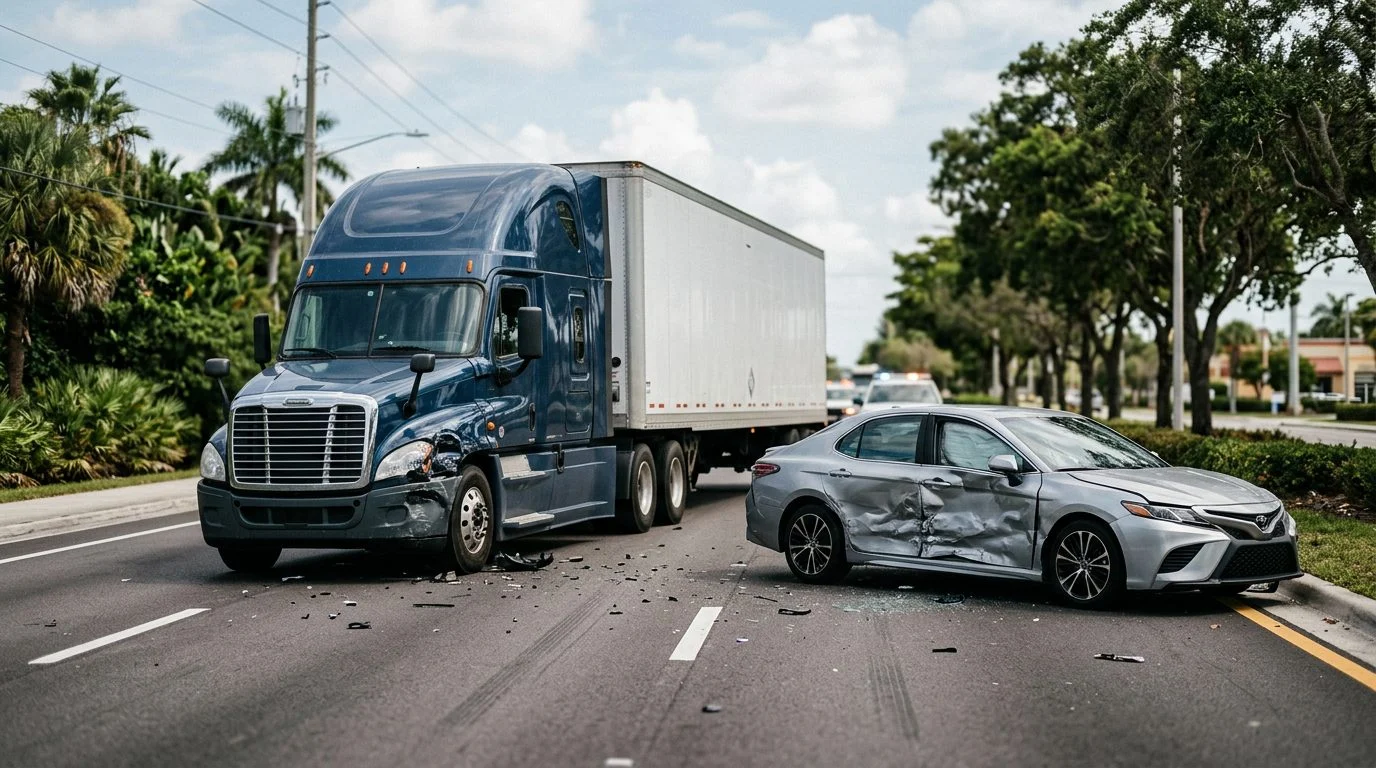
Truck Accidents | Palmetto Bay, Florida
Hurt in a Truck Crash in Palmetto Bay? You Don't Have to Sort It Out Alone
A large truck can change your life in a single moment. Here is a clear, plain-language guide to what happens next and how a Florida injury firm can help you take the next step.
Why Families Contact CHG
Florida
Florida-based personal injury firm serving Palmetto Bay and communities statewide
Free
Confidential first consultation with no obligation to continue
Licensed
Attorneys admitted to The Florida Bar
By CHG Lawyers · Published November 10, 2026
If a Truck Hit You or Someone You Love in Palmetto Bay
If a truck crash hurt you or someone you love in Palmetto Bay, you may have a claim for the harm it caused. Truck crashes on local roads can cause serious injuries, and the people hurt in them often have many questions about what comes next. It is written for injured people and for families trying to make sense of a crash.
Truck crashes can change a life in a moment. A hospital stay, a damaged car, or a loved one who can’t work can leave you with many questions at once. You don’t have to answer all of them today.
Some steps help protect your health and your case. Get medical care right away, even if you feel you can walk it off, because some injuries take days to show. Follow your doctors’ care. Keep every bill, prescription, and appointment record. While the details are fresh, write down what you remember: the time, the lane, the weather, and what the driver said.
CHG Personal Injury Lawyers is a Florida-based personal injury firm. Our team handles truck accident cases throughout Florida. Igor Hernandez, one of the firm’s lawyers, is the responsible lawyer for this page.
If a truck crash in Palmetto Bay left you or a family member facing hospital bills and insurer calls, you may have a claim worth reviewing with our team. Talk it through with our team — the first consultation is free, confidential, and carries no obligation.
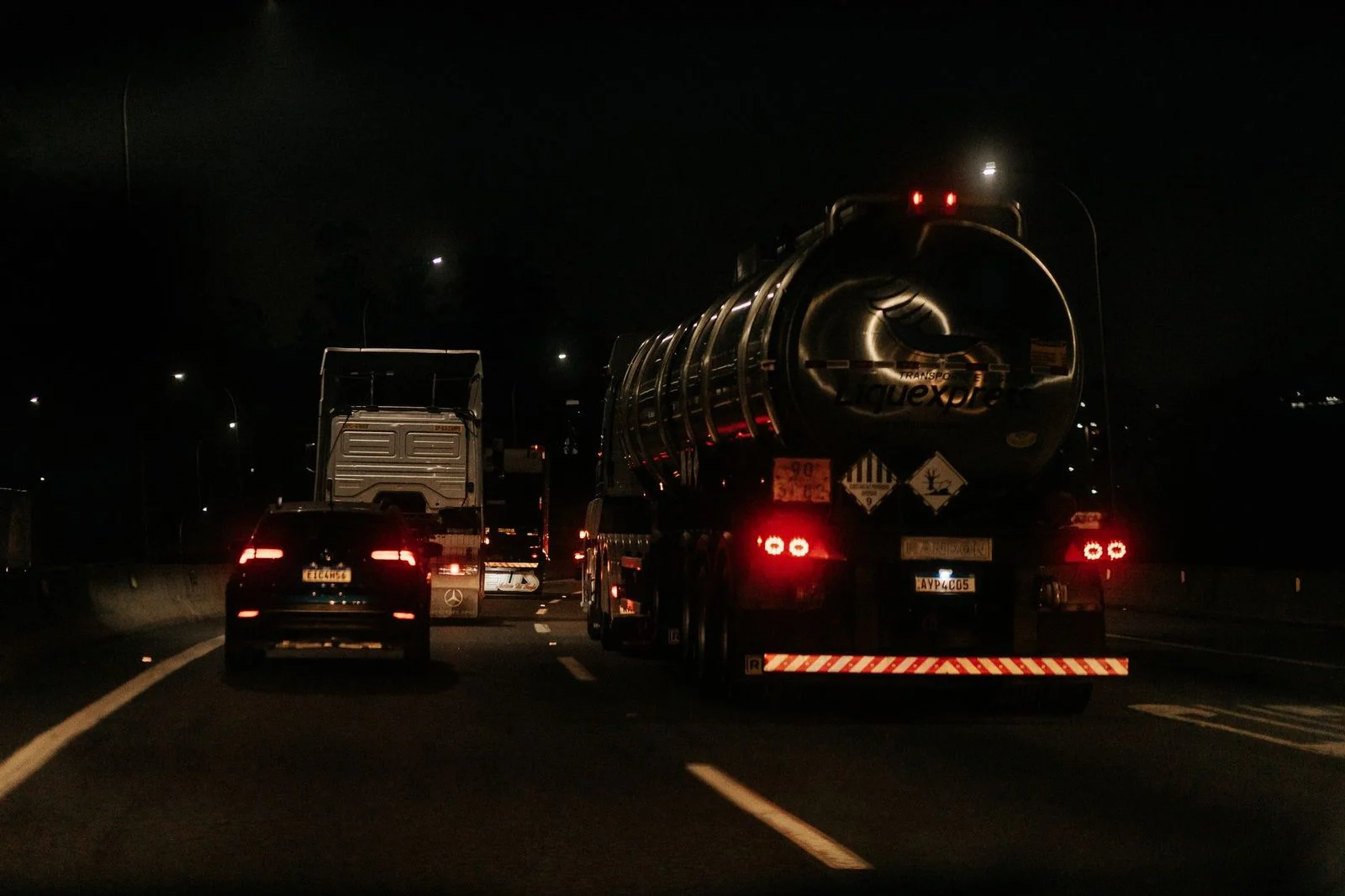
Truck Crashes on the Roads Through Palmetto Bay
Truck crashes around Palmetto Bay often involve the busy roads that move people across Miami-Dade County. The Palmetto Expressway (State Road 826) carries heavy traffic through the area, with many ramps and interchanges. South Dixie Highway (U.S. 1) and Old Cutler Road also carry trucks and delivery vehicles alongside everyday commuter traffic.
Merging and lane changes raise the risk on routes like these. A tractor-trailer needs more room to slow down and more distance to turn. When a car cuts in close to a large truck, or changes lanes across its path, a crash can happen fast. Ramps add risk too, because some drivers slow to exit while others speed up to merge.
Local news outlets report crashes on these roads often. This guide keeps the focus on facts and what they mean for your claim. The exact road, direction, and nearby landmark matter. They appear in the crash report, and they help investigators and attorneys rebuild what happened.
Why Truck Crashes Often Cause Catastrophic Injuries
A loaded tractor-trailer weighs far more than a passenger car. The same impact can cause far more harm to the people in the smaller vehicle. That size gap is one reason truck cases so often involve injuries that change daily life.
Families most often ask about these injuries:
- Spinal cord injuries and paralysis, including paraplegia and quadriplegia
- Traumatic brain injuries
- Amputations and limb loss
- Severe burn injuries
- Serious back and neck injuries
Florida law uses the term “serious bodily injury” for injuries that create a substantial risk of death, serious personal disfigurement, or long-term loss of function.
Some injuries show up days or weeks after a crash. Early medical checkups help document what happened to the body. This page does not give medical advice. Your doctors and medical team guide your care.
Who Could Be Responsible in a Florida Truck Crash
Responsibility in a truck crash can reach beyond the driver. Depending on the facts, the trucking company, the vehicle owner, a company that hired or supervised the driver, or a company that arranged the load may each play a role. Trucking companies often have insurers and lawyers ready early. Facing them alone can feel like playing the Miami Heat on their home court, with the other team holding every advantage.
Federal law says a carrier or broker providing transportation or service subject to federal jurisdiction is liable for damages a person suffers because of an act or omission that violates this part of federal transportation law (49 U.S.C. § 14704). On May 14, 2026, the U.S. Supreme Court held that a state-law claim that a broker negligently hired an unsafe motor carrier is not preempted (Montgomery v. Caribe Transport II).
Florida’s comparative fault rules matter too. Under Florida’s comparative fault law, contributory fault chargeable to the injured person diminishes proportionately the amount awarded as economic and noneconomic damages for an injury attributable to that person’s contributory fault, but does not bar recovery, subject to subsection (6) (Fla. Stat. § 768.81). In a negligence case, the court also enters judgment against each liable party based on that party’s percentage of fault, not joint and several liability.
Fault is decided on the facts of each case. Deadlines also apply. Florida generally gives two years to file a lawsuit based on negligence, so anyone hurt in an accident should contact the firm promptly (Fla. Stat. § 95.11(5)(a)).
Evidence That Often Matters After a Truck Crash
The Florida Traffic Crash Report is the official record of many crashes. The law requires a long-form report within 10 days after an investigation is completed of a crash that involves death, personal injury, or any indication of complaints of pain or discomfort, a violation of s. 316.061(1) or s. 316.193, or other listed conditions (Fla. Stat. § 316.066). Under Fla. Stat. § 316.066, a crash report held by the agency may be made immediately available to the parties involved in the crash, their legal representatives, and their insurers.
Families and injured people often preserve several kinds of evidence:
- Photos of the scene, the vehicles, and visible damage
- Names and phone numbers of witnesses
- Medical records and bills
- Dashcam or nearby video, which can be overwritten quickly
- The trucking company’s name and the DOT number on the truck
Federal rules also create records that matter. Drivers operating a commercial motor vehicle must record their duty status, and for each change of duty status the name of the city, town, or village with the State abbreviation must be recorded; if a change of duty status occurs at a location other than a city, town, or village, show one of the following: the highway number and nearest milepost, the highway number and the name of the service plaza, or the highway numbers of the nearest two intersecting roadways, each followed by the name of the nearest city, town, or village and State abbreviation (49 C.F.R. § 395.8). Carriers must keep a driver qualification file that includes the driver’s application and motor vehicle record (49 C.F.R. § 391.51). After a crash involving loss of human life, the employer must, as soon as practicable, test each surviving driver who was performing safety-sensitive functions with respect to the vehicle for alcohol and controlled substances under federal rules (49 C.F.R. § 382.303).
Trucking companies may start gathering their own records quickly after a crash. Acting early helps protect the evidence that matters most.
Cyclists, Pedestrians, and Smaller Vehicles Near Truck Routes
Cyclists and pedestrians near truck routes face different risks than people inside vehicles. They have no metal frame around them and no airbag. Florida’s crash statute defines the term “vulnerable road user,” which includes pedestrians.
Trucks have large blind spots. Their wide turns can also swing into a lane where a smaller vehicle is riding. When a truck turns or changes lanes, a motorcycle or bicycle can disappear from the driver’s view. These are general traffic-safety points, not findings about any particular crash.
Claims involving vulnerable road users follow the same basic Florida rules as other truck claims. We keep the details of injuries private and avoid graphic descriptions, because the people involved deserve dignity.
Not sure what your next step is?
Talk it through with our team — the first consultation is free, confidential, and carries no obligation.
When a Truck Crash Is Fatal: What the Family Can Do Next
When a truck crash causes a death, the family faces grief and hard decisions at the same time. Funeral plans, lost income, and questions about what happened can all arrive at once. Losing a loved one is life-altering, and the people left behind deserve care and clear information.
Florida law allows a wrongful death claim when a death is caused by a wrongful act or negligence. The party that would have been liable if the death had not happened can be liable for damages (Fla. Stat. § 768.19).
Official data helps show how common fatal crashes are. The National Highway Traffic Safety Administration’s Fatality Analysis Reporting System (FARS) tracks fatal crashes. Any figure quoted from FARS should be cited to its source and year.
Wrongful death claims also carry deadlines. Florida lists wrongful death among its two-year actions, but notwithstanding that rule, an action for wrongful death brought against a natural person for an intentional tort resulting in death from acts described in s. 782.04 or s. 782.07 may be commenced at any time (Fla. Stat. § 95.11). Families should act promptly.
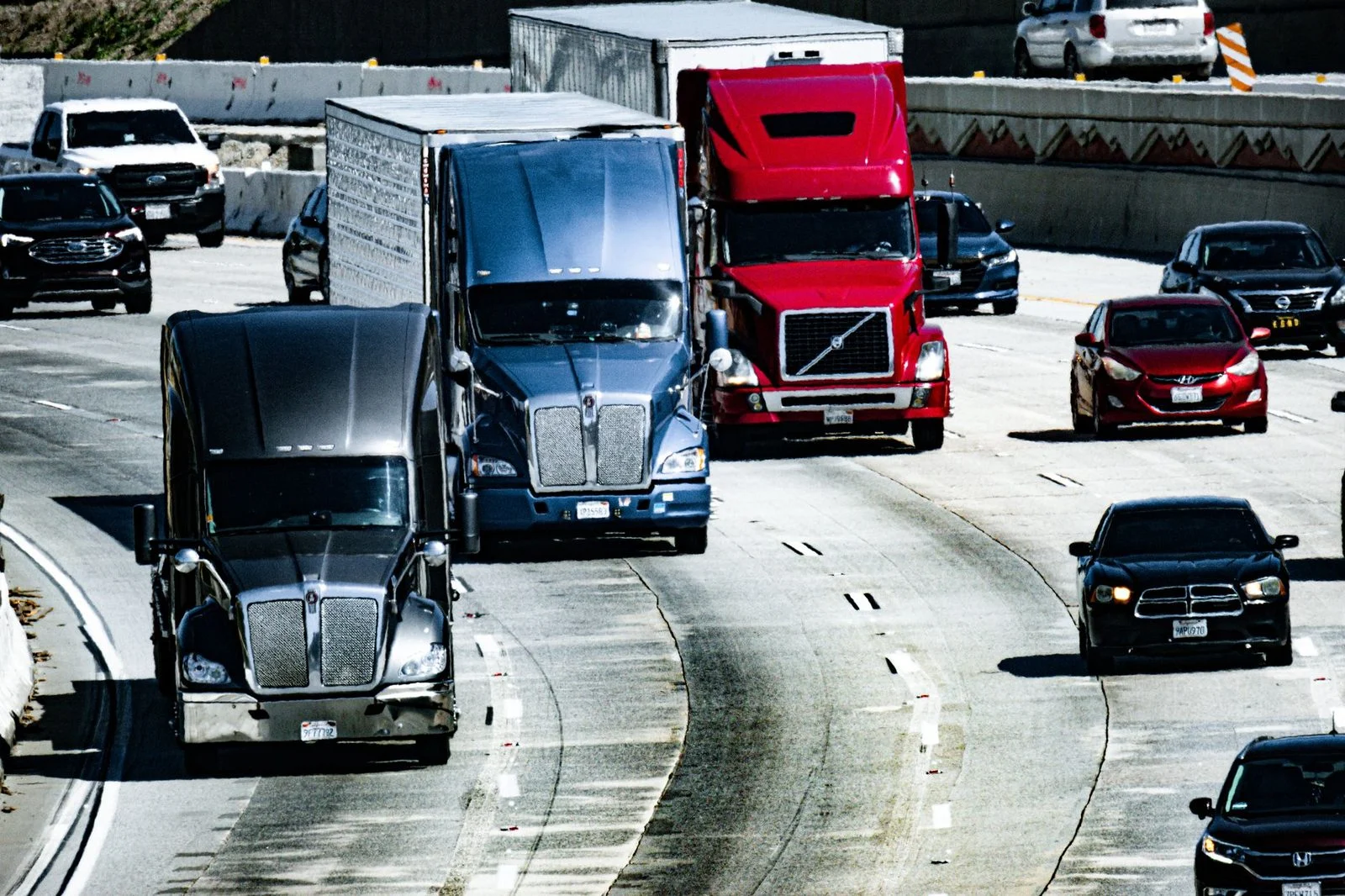
Talk With Our Team About Your Truck Crash in Palmetto Bay
Most people who ask about truck crashes want to know two things: whether they may have a claim, and what to do first. The answers depend on the facts of each case.
How long do I have to file a truck accident claim in Florida?
For most negligence claims accruing after March 24, 2023, Florida gives two years to file a lawsuit. Deadlines apply to each claim, so early action matters.
Can I recover compensation if I was partly at fault?
Under Florida law, an injured person’s damages are generally reduced by their percentage of fault, and someone found more than 50 percent at fault for their own harm generally cannot recover any damages (Fla. Stat. § 768.81(6)).
How can I get a copy of a Florida crash report?
After the agency holds the report, it may be made immediately available to the parties involved, their legal representatives, and their insurers, and other persons the statute permits may access it 60 days after filing.
If a truck crash in Palmetto Bay has left you or a family member facing hospital bills, lost work, or calls from an insurer, you don’t have to sort it out alone. CHG Personal Injury Lawyers offers a free, confidential first consultation with no obligation to continue. CHG charges no attorney’s fees and no case costs unless there is a recovery. Igor Hernandez, the responsible lawyer for this page, and our team are ready to listen. Contact us here.
How CHG Can Help After a Truck Accident
We Listen First
Our team takes the time to hear what happened, who you are, and how the crash has affected your work, your family, and your daily life.
We Look at the Evidence
Crash reports, driver logs, maintenance records, and witness statements can disappear quickly. We focus on preserving the facts that matter to your case.
We Stand Up for You
Trucking companies and their insurers have legal teams working for them. Our lawyers work to protect your rights so you can concentrate on recovering.
We Keep You Informed
You will hear from us in plain language about where your case stands, what decisions are ahead, and what you can expect at each stage.
Before You Speak With an Insurance Company
Adjusters for trucking companies may contact you soon after a crash. Be cautious about giving recorded statements or signing papers until you have talked with a lawyer about your situation. Follow your doctors' care and keep every medical record.
Steps to Take After a Truck Crash
Get Medical Care Right Away
Some serious injuries, including head, back, and spinal injuries, may not show symptoms for hours or days. Follow your doctors' recommendations and keep all appointments.
Document the Scene
If you are able, take photos of the vehicles, the road, skid marks, and visible injuries. Note the truck's company name, unit number, and license plate.
Write Down What You Remember
Record the time, weather, and how the crash happened while the details are still fresh. Include names and contact information for any witnesses.
Speak With a Lawyer
Trucking cases often involve several parties and complex records. Contact CHG for a free, confidential consultation to learn how we can help you move forward.