

Truck Accidents · Florida & Nationwide
When a Trailer Folds Into a "V," the People Nearby Pay the Price
A jackknife crash can turn an ordinary drive into a life-altering event. This plain-language guide explains what these crashes are, why they cause catastrophic injuries, and what your family can do next.
Focused on Catastrophic Truck Crash Cases
Licensed
Florida Bar–admitted attorneys
Nationwide
We take serious cases across the U.S.
Bilingual
English & Spanish support
Free
No-cost case evaluation
By CHG Lawyers · Published August 08, 2026
Jackknife Truck Accidents and the Catastrophic Injuries They Cause
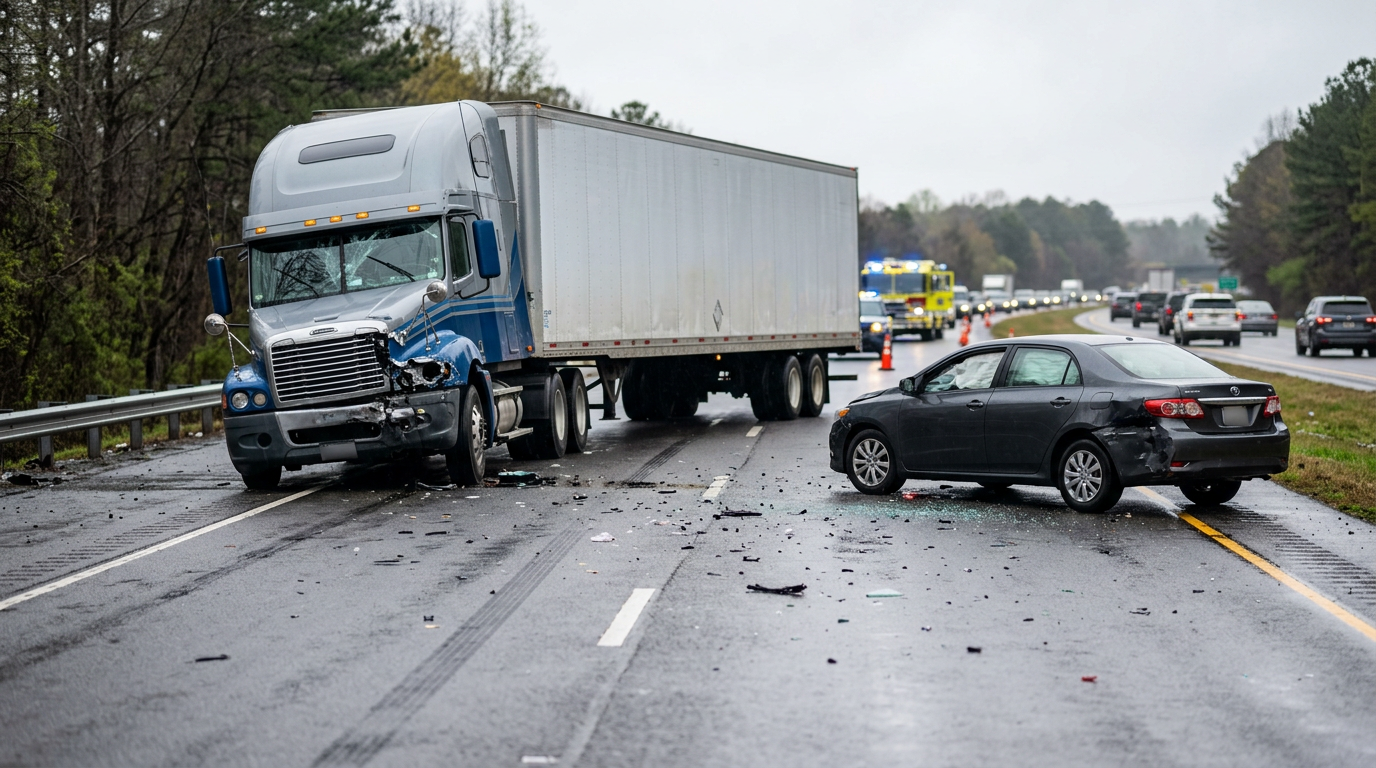
A jackknife truck accident happens when a big truck’s trailer swings out of line. It folds toward the cab and forms a sharp “V” — like a pocketknife snapping shut.
The physics are brutal. A fully loaded tractor-trailer can weigh up to 80,000 pounds. That is the federal weight limit set by the Federal Highway Administration. The average car weighs about 4,000 pounds. When that much weight swings sideways, people in nearby cars rarely walk away unhurt.
Were you or someone you love hurt in one of these crashes? Then you have urgent questions. This guide answers the ones people ask most. How much damage do these crashes cause? Who is legally responsible? Does “accident” mean no one is at fault? Is recovery possible? It’s part of our larger resource on catastrophic truck accident injuries.
If your family lost someone in a jackknife or other serious truck accident, you may be able to bring a wrongful-death claim. Talk it through with our team — the first consultation is free, confidential, and carries no obligation.
What is a jackknife truck accident?
In a jackknife crash, the trailer of a semi-truck slides sideways. It swings toward the cab and folds at the fifth wheel. The fifth wheel is the point where the cab and trailer connect. The name comes from the bent shape it makes.
When the trailer swings, the driver loses steering control almost at once. A 53-foot trailer can sweep across a highway. It can block three or more lanes in seconds. It strikes cars beside and behind the truck. Smaller vehicles have no crumple zone big enough to soak up that force. The motion is fast and hard to predict. That’s why nearby drivers often can’t react in time.
What causes a truck to jackknife?
Most jackknife crashes come from a preventable choice or failure. They rarely “just happen.” Common causes include:
- Sudden or hard braking. This is the leading trigger. It’s worse when the trailer is empty or lightly loaded. There is less weight holding the wheels’ grip.
- Speeding for conditions. Taking curves, ramps, or wet roads too fast breaks the trailer’s grip.
- Slippery roads. Rain, standing water, and oil cut traction. Florida’s afternoon storms make this a real risk on I-95, I-4, I-75, and I-10 near Miami, Orlando, Tampa, and Jacksonville.
- Equipment problems. Worn brakes, brakes that grab unevenly, and bald tires can all start a jackknife.
- Driver fatigue. A tired driver reacts slowly and brakes late. Learn more about truck driver fatigue and hours-of-service crashes.
- Improper loading. Cargo that shifts or isn’t balanced can throw the trailer off line.
Since 2017, the National Highway Traffic Safety Administration has required electronic stability control on most new heavy trucks. This technology spots and corrects the loss of grip that leads to jackknifing. A company might disable, ignore, or fail to maintain that system. That failure can matter in a legal claim.
How much damage can a jackknife accident cause?
A jackknifing trailer can cause huge damage. It sweeps across many lanes and hits several vehicles at once. That turns one crash into a chain-reaction pileup.
These crashes also raise the risk of the worst types of collision on the road. A car can slide beneath the trailer. This is called an underride crash. Federal safety regulators have long flagged it as especially deadly. The impact hits at the height of a passenger’s head and chest. The truck itself can roll over. In a multi-vehicle wreck, people in smaller cars take crushing force.
That’s why the injuries are so severe. These are not scrapes and bruises. They are permanent, life-changing harms.
Common jackknife truck accident injuries
Our attorneys handle catastrophic-injury cases. These are the harms we see most often after a jackknife crash.
Spinal cord injuries and paralysis
The violent force can damage the spinal cord and cause paralysis. This may be paraplegia (loss of function in the legs and lower body) or quadriplegia (loss of function in all four limbs). The Mayo Clinic explains that a spinal cord injury can cause permanent loss of strength, feeling, and function below the injury.
Doctors grade that injury using the ASIA Impairment Scale from the American Spinal Injury Association. It tells a “complete” injury from an “incomplete” one. That difference shapes the outlook and the lifetime cost of care.
The National Spinal Cord Injury Statistical Center says vehicle crashes are the leading cause of spinal cord injury in the U.S. The Christopher & Dana Reeve Foundation reports that about 1 in 50 people in the U.S. — nearly 5.4 million — lives with some form of paralysis.
Traumatic brain injuries
A hard impact or a violent whipping of the head can cause a traumatic brain injury (TBI). This can change how a person thinks, moves, feels, and remembers. Serious brain injuries often need lifelong care and supervision.
Catastrophic back and neck injuries
These crashes go beyond routine strains. They can crush or fracture the back and neck. This causes chronic pain and permanent disability.
Amputation and crush injuries
Crushing force can destroy limbs. It can also make surgical amputation necessary. Losing an arm or leg reshapes daily life forever.
Severe burns
A fuel tank can rupture and a vehicle can catch fire. People inside can suffer severe burns. These often need many surgeries, skin grafts, and long rehab.
Fatal injuries and wrongful death
Sometimes a jackknife crash takes a life. That is the most catastrophic outcome of all. NHTSA’s Fatality Analysis Reporting System (FARS) records the thousands of people killed each year in crashes with large trucks. It shows again and again that most of those killed are in the other vehicle, not the truck.
When a family loses someone, Florida law lets certain surviving relatives bring a wrongful-death claim. This is under the Florida Wrongful Death Act, Fla. Stat. §768.16–§768.26. Nothing can undo the loss. A claim exists to help a grieving family find stability. It also holds the responsible parties accountable.
Is a jackknife considered an accident or negligence?
The word “accident” does not mean no one is at fault. People use it for any crash. But it does not decide legal responsibility.
Most jackknife crashes come from a preventable failure. A driver speeds in the rain. A company skips brake maintenance. A loader stacks freight unevenly. These are choices. When someone’s carelessness causes harm, the law calls it negligence. A legal claim looks at fault, not the label. So even though people call it an “accident,” you may still have the right to seek compensation.
Not sure what your next step is?
Talk it through with our team — the first consultation is free, confidential, and carries no obligation.
Who can be held liable for a jackknife truck accident?
Several parties may be legally responsible — not just the driver. In catastrophic cases, naming every liable party matters. More than one may share the fault. Each may carry separate insurance.
Possible responsible parties include:
- The truck driver, for speeding, fatigue, or unsafe braking.
- The trucking company, for pushing unrealistic schedules or poor training.
- A maintenance contractor, for failing to repair brakes or tires.
- A cargo loader, for unbalanced or unsecured freight.
- A parts manufacturer, if a defective brake or part failed.
Interstate trucking companies must follow the Federal Motor Carrier Safety Regulations (49 C.F.R. Parts 350–399). These rules cover driver hours, vehicle inspection, and cargo securement. When a company breaks those rules, that can help prove your case. Our guide on who is liable for a truck accident explains this further.
Florida also follows a modified comparative-fault rule. Under Fla. Stat. §768.81, a person found more than 50% at fault usually cannot recover damages. That makes proving the other side’s fault essential.
Evidence that helps prove a jackknife crash claim
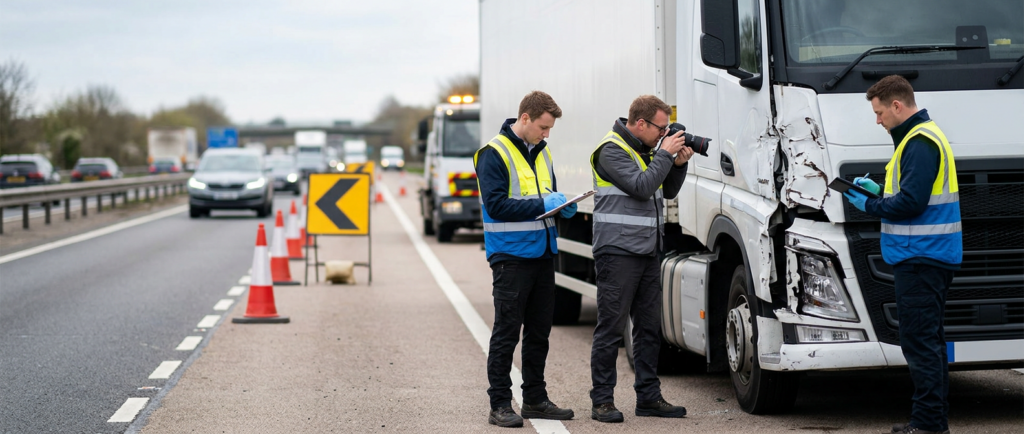
Strong evidence usually comes from the truck itself and the carrier’s records. Much of it can disappear quickly. So acting early matters.
Key evidence often includes:
- The truck’s event data recorder (“black box”) and electronic logging device (ELD) data. These record speed, braking, and hours driven. See our page on truck black box and electronic logs as evidence.
- Hours-of-service logs, which show whether the driver was overtired.
- Maintenance and inspection records, which can reveal ignored repairs.
- The crash report, skid marks, and documented road and weather conditions.
- Witness accounts from people who saw the crash.
Some ELD data can be overwritten within weeks. A preservation (“spoliation”) letter often has to reach the carrier before that happens. That is one reason to contact an attorney soon after a crash.
Is it possible to recover from a jackknife accident injury?
Recovery depends on the injury. For catastrophic harm, it is often a lifelong process. We won’t pretend otherwise. Many victims face permanent impairment even with excellent care.
The Mayo Clinic notes that spinal cord injuries can affect breathing, bladder, and bowel control. They often lead to complications that need long-term management. That care is costly. Families often face:
- Emergency surgery and hospital stays
- Months or years of rehabilitation
- Wheelchairs and assistive equipment
- Home and vehicle changes
- Lost income and reduced earning ability
- Ongoing personal or nursing care
A legal claim aims to help cover these real needs. It cannot restore what was lost. But it can ease the financial weight, so a family can focus on healing. Every case is different, so no lawyer can promise a specific result.
Time limits apply. Under Fla. Stat. §95.11, the deadline to file most Florida negligence claims is two years for causes of action accruing on or after March 24, 2023.
Talk to a catastrophic truck accident attorney
Did a jackknife crash cause serious, life-altering injuries — or take a loved one? You don’t have to face it alone. CHG Personal Injury Lawyers focuses on catastrophic injury cases. These include spinal cord injuries, paralysis, brain injuries, amputations, and severe burns.
Our attorneys are licensed and admitted to the Florida Bar. We handle catastrophic injury cases nationwide. We offer bilingual support in English and Spanish. Your case evaluation is free. Contact us for a free case evaluation.
Have questions about what happened?
Ask our team directly. The first conversation is free, confidential, and there is no obligation to continue.
Frequently asked questions
What is a jackknife truck accident?
It’s a crash where a semi-truck’s trailer swings sideways and folds toward the cab, forming a sharp “V.” The truck’s size and weight make these crashes especially dangerous for people in nearby cars.
What causes a truck to jackknife?
Common triggers include hard braking, speeding for conditions, slippery roads, worn or uneven brakes, driver fatigue, and unbalanced cargo. Most of these causes are preventable.
Who is liable for a jackknife truck accident?
The driver, trucking company, maintenance contractor, cargo loader, or a parts maker may all be liable. Often more than one party shares the fault.
Is a jackknife considered negligence?
The word “accident” doesn’t mean no one is at fault. Most jackknife crashes come from careless choices. A claim looks at fault, not the label.
How long do I have to file a Florida truck accident claim?
Under Fla. Stat. §95.11, most Florida negligence claims must be filed within two years for causes of action accruing on or after March 24, 2023. Deadlines can vary, so confirm yours early.
Understanding Jackknife Crashes
What It Is
A jackknife happens when a semi-truck's trailer swings sideways and folds toward the cab, forming a sharp "V." Because of the truck's size and weight, these crashes are especially dangerous for anyone in a nearby car.
Why They Happen
Common triggers include hard braking, driving too fast for road or weather conditions, slick or wet pavement, and worn or uneven brakes. Improper loading and driver fatigue can add to the risk.
Who Gets Hurt
A folding trailer can sweep across multiple lanes. Occupants of passenger vehicles often absorb the force of a vehicle that weighs many times their own—leading to some of the most serious injuries on the road.
Catastrophic Injuries Jackknife Crashes Can Cause
Spinal Cord Injuries & Paralysis
The violent force of a large truck can damage the spinal cord, sometimes causing paraplegia or quadriplegia and permanent loss of function.
Traumatic Brain Injury (TBI)
A sudden impact can injure the brain, changing memory, thinking, movement, and personality—often for the rest of a person's life.
Amputation & Limb Loss
Crushing forces in a heavy-truck collision can cause the loss of an arm, leg, hand, or foot, requiring lifelong care and adaptation.
Severe Burns & Catastrophic Back/Neck Injuries
Fuel fires and high-energy impacts can lead to severe burns and permanent spine damage that reshape daily life.
If You've Lost a Loved One
A fatal truck crash is the most catastrophic outcome of all. If your family lost someone in a jackknife or other serious truck accident, you may be able to bring a wrongful-death claim. You do not have to sort through this alone—reach out and we will explain your options in plain language.
What to Do After a Serious Truck Crash
Get Medical Care First
Catastrophic injuries need immediate and ongoing treatment. Following your doctors' guidance protects both your health and your recovery going forward.
Preserve What You Can
Truck crash evidence—driver logs, maintenance records, and data recorders—can disappear quickly. Keeping photos, names, and paperwork helps preserve the facts.
Contact a Lawyer Early
Trucking companies and their insurers often act fast. Speaking with an attorney early helps make sure the full picture is investigated before evidence is lost.