

Truck Accidents
Jackknife Truck Accidents: When a Truck's Trailer Swings Out of Control
Jackknife crashes cause catastrophic injuries and death. If you or a loved one was hit by a jackknifing truck, you may have a claim. Get a free case evaluation.
By CHG Lawyers · Published August 30, 2026
Jackknife Truck Accidents: What Happens, Why They Occur, and Your Legal Rights
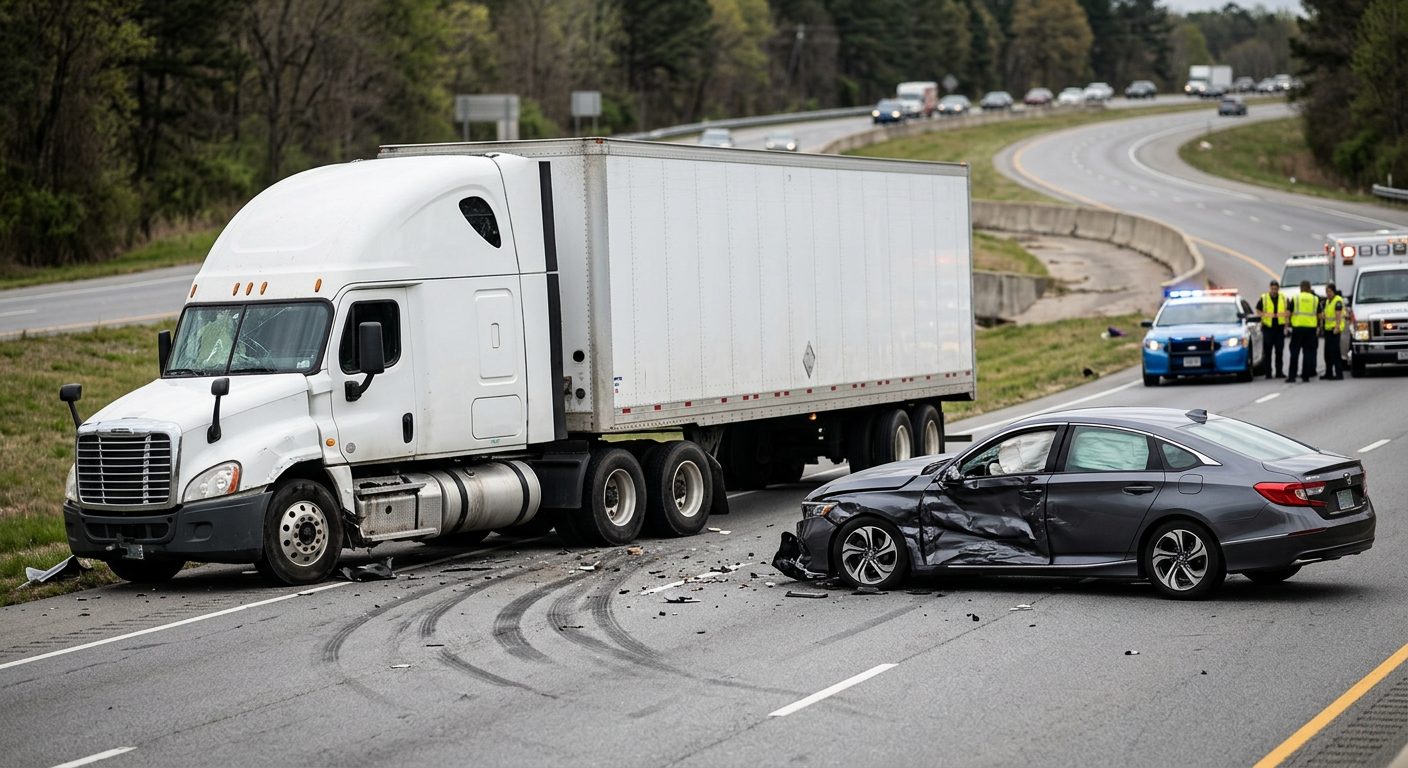
A jackknife truck accident happens when a truck’s trailer swings outward at a sharp angle to the cab. It forms a dangerous V or L shape. At highway speed, the physics are brutal: an 80,000-pound truck swings across multiple lanes in seconds. Vehicles collide. Cargo spills. People suffer spinal cord injuries, traumatic brain injuries, amputations, severe burns, or death.
If you or someone you care for was caught in a jackknife crash, understanding what happened and who bears responsibility is the first step toward recovery and justice.
If you or a loved one was hit by a jackknifing truck, you may have a claim. Talk it through with our team — the first consultation is free, confidential, and carries no obligation.
What Is a Jackknife Truck Accident?
A jackknife happens when the tractor (cab) and trailer lose alignment. The trailer swings outward uncontrollably. The name comes from the shape: the cab and trailer form an acute angle, like a folding pocket knife opening.
The mechanics are straightforward but catastrophic. The truck’s drive axles lock during braking. Or the trailer loses traction on a slick surface. The trailer continues forward due to momentum while the cab slows or stops. The trailer swings sideways.
At 55 mph or faster—typical highway speed—this happens in seconds. The trailer collides with other vehicles, tips over, or blocks multiple lanes. It traps other drivers in the crash zone.
A loaded tractor-trailer weighs up to 80,000 pounds. When that weight swings sideways across multiple lanes, it crushes vehicles and occupants. If the cargo is fuel or hazardous materials, ignition or chemical release makes the disaster worse.
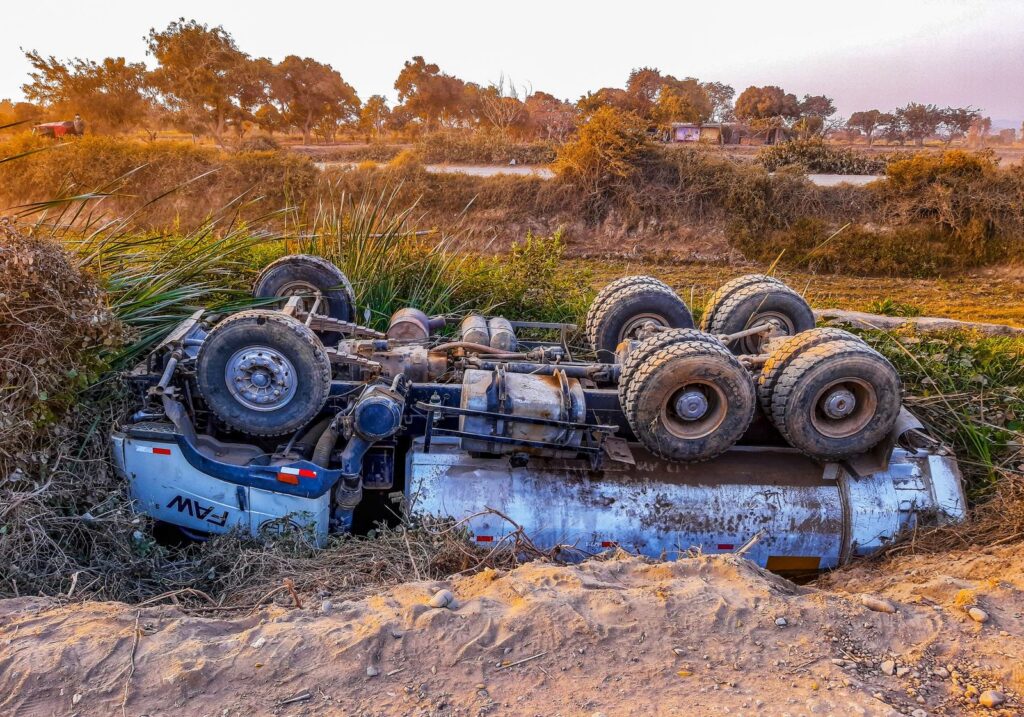
Jackknife crashes differ from other serious truck accidents. A rollover occurs when a truck tips onto its side or roof, often as a result of a jackknife or high-speed turn. An underride occurs when a smaller vehicle slides beneath a truck’s trailer. A jackknife can trigger any of these outcomes.
What Causes a Truck to Jackknife?
Jackknife accidents result from driver negligence, equipment failure, and unsafe conditions. Often all three are involved.
Sudden braking is the most common cause. When a driver brakes hard—to avoid an obstacle, respond to traffic, or in an emergency—the truck’s wheels can lock. If the trailer’s brakes lock before the tractor’s, the trailer loses traction and swings. Brake failure or imbalanced braking systems make this worse.
Federal regulations require trucks to have antilock braking systems (ABS) on trailers manufactured after March 1, 1998, under 49 CFR § 571.135. Yet many older trailers remain in service without them.
Loss of traction on wet, icy, or debris-covered roads reduces the trailer’s grip. Rain, ice, gravel, and potholes all increase jackknife risk. A truck traveling too fast for road conditions is especially vulnerable.
Excessive speed for the situation—whether due to driver pressure to meet deadlines, aggressive driving, or misjudgment of conditions—reduces reaction time. It increases the force of the swing. Federal Hours of Service regulations (49 CFR § 395) limit driving time to prevent fatigue. Yet violations are common. A fatigued driver is more likely to speed and less able to respond to hazards.
Improper cargo loading destabilizes the truck. Uneven weight distribution, overloading beyond the truck’s rated capacity, or unsecured cargo shifts during braking or turning. This throws the truck off balance. Federal regulations (49 CFR § 393.100) require cargo to be properly secured. Yet negligent loaders ignore these rules.
Equipment failure—defective brakes, tire blowouts, coupling failures, or suspension problems—can trigger a jackknife without warning. Trucking companies are required to maintain their vehicles in compliance with federal safety standards (49 CFR § 396). Deferred maintenance is a cost-cutting measure that puts other drivers at risk.
Driver fatigue and impaired driving reduce reaction time and judgment. A tired or impaired driver may brake too hard, fail to adjust speed, or miss warning signs. The National Highway Traffic Safety Administration (NHTSA) estimates that fatigue contributes to approximately 100,000 crashes annually in the United States, with roughly 1,500 resulting in death.
In the catastrophic-injury cases we handle, we often find multiple causes at work. A fatigued driver speeds on a wet road in a truck with failing brakes and improperly loaded cargo. Each factor increases the risk. Together, they make a jackknife crash nearly inevitable—and the negligence nearly impossible to deny.
Cargo Spills and Rollover Crashes
When a trailer swings during a jackknife, it often tips onto its side or roof. As it does, cargo breaks loose and spills across the roadway. If the cargo is hazardous—fuel, chemicals, or other dangerous materials—the spill creates a secondary disaster. Fires, explosions, chemical exposure, and environmental contamination follow.
Other drivers caught in the crash zone face multiple threats. They may collide with the swinging trailer. They may be struck by falling or rolling cargo. They may be exposed to hazardous materials. Or they may be trapped by debris. A single jackknife can involve five, ten, or more vehicles.
Injuries from cargo spills include impact trauma, chemical burns, inhalation injury, and entrapment. People can be crushed by cargo, burned by fuel or chemicals, or trapped in vehicles for hours waiting for rescue.
The consequences extend beyond the immediate crash. Hazardous-material spills close highways for hours or days. Cleanup costs are enormous. And the human cost—permanent disability, death, and the trauma to families—is immeasurable.
Injuries and Catastrophic Outcomes from Jackknife Crashes
The violent forces in a jackknife crash—sudden deceleration, crushing impact, and rollover—cause severe, permanent injuries.
Spinal cord injuries and paralysis result from the violent motion and crushing impact. Spinal cord injuries can cause paraplegia (paralysis of the lower body) or quadriplegia (paralysis of all four limbs). The location and severity of the injury determine the outcome. Victims may require lifelong care, adaptive equipment, and assistance with daily activities. The lifetime cost of care for a person with quadriplegia can exceed $4 million, according to the National Spinal Cord Injury Statistical Center.
Traumatic brain injuries occur from the violent acceleration and deceleration of the head inside the vehicle. These injuries can cause cognitive impairment, memory loss, personality changes, loss of consciousness, and permanent disability. Recovery is unpredictable and often incomplete.
Amputation and limb loss result from crushing or entrapment. Limbs trapped under the truck or crushed by cargo may be severed or require surgical amputation. Survivors face phantom pain, mobility challenges, and the need for prosthetics and rehabilitation.
Severe burns occur when fuel ignites or hazardous cargo catches fire. Burns covering large areas of the body require intensive medical care, skin grafts, and long-term rehabilitation. Scarring and loss of function are common. Inhalation injury from smoke or toxic fumes can cause permanent respiratory damage.
Multiple injuries are the norm in jackknife crashes. A victim might suffer a spinal cord injury, a brain injury, burns, and broken bones—all at once. The cumulative trauma overwhelms the body and complicates recovery.
Wrongful death is the most catastrophic outcome. According to the National Highway Traffic Safety Administration (NHTSA), large trucks were involved in 5,788 fatal crashes in 2022, resulting in 5,975 deaths. Families lose a loved one instantly or after days in intensive care. They face funeral costs, lost income, and a lifetime of grief. In Florida, surviving family members may bring a wrongful-death claim against those responsible under Fla. Stat. § 768.19.
Not sure what your next step is?
Talk it through with our team — the first consultation is free, confidential, and carries no obligation.
Legal Liability in a Jackknife Truck Accident
Multiple parties may be liable for a jackknife crash.
The truck driver bears responsibility if they were speeding, fatigued, impaired, or drove recklessly. Drivers have a duty to adjust speed and following distance to road conditions. They must maintain control of their vehicle. Violations of Hours of Service regulations (49 CFR § 395) are evidence of negligence.
The trucking company is liable if they failed to hire qualified drivers, failed to train drivers properly, or failed to maintain the truck. They may also be liable if they pressured drivers to speed or skip rest breaks, or ignored safety regulations. Federal trucking regulations set strict rules for hours of service, maintenance, and cargo loading. Violations create liability. A trucking company that ignores maintenance schedules or pushes drivers to meet impossible deadlines is knowingly creating danger.
Equipment manufacturers are liable if brakes, tires, couplings, or other safety systems were defective. A defective brake system or tire blowout can trigger a jackknife even if the driver did everything right.
Cargo loaders are liable if they improperly loaded, overloaded, or failed to secure cargo. Improper loading destabilizes the truck and increases jackknife risk.
Road maintenance authorities may be liable if they failed to maintain the roadway, failed to warn of hazards, or allowed debris or potholes to create dangerous conditions.
In a single jackknife crash, the truck driver, the trucking company, the equipment manufacturer, and the cargo loader may all share responsibility. Under Florida law, comparative fault (shared responsibility) applies. If you are found to be more than 50% at fault, you generally cannot recover. But if you are 50% or less at fault, you can recover damages from the other parties. Your recovery is reduced by your percentage of fault.
Why does liability matter? Because it determines who pays for your medical care, lost income, pain and suffering, and lifetime care needs. In catastrophic-injury cases, those costs can reach hundreds of thousands or millions of dollars. Identifying all liable parties maximizes the compensation available to you and your family.
Why Recovery Techniques Rarely Work—and Prevention Is the Real Issue
Once a jackknife begins, recovery is extremely difficult. Trained truck drivers learn techniques—steering into the skid, controlled braking, or accelerating to regain traction. But these maneuvers require split-second timing and precise execution. They often fail at highway speeds with a heavy load.
The physics are unforgiving. A jackknife develops in seconds. By the time a driver recognizes what is happening, the trailer has already swung 20, 30, or 40 degrees. Corrective steering or braking at that point often makes the situation worse. Most jackknife crashes cannot be avoided once they begin.
This is why prevention is far more effective than recovery. Safe speed, proper maintenance, good braking technique, and attention to road conditions prevent jackknives from starting. A driver who maintains safe speed on a wet road operates a truck with functioning antilock brakes and carries properly loaded cargo. This dramatically reduces jackknife risk.
Negligent drivers and trucking companies ignore these basics. They speed. They defer maintenance. They load cargo carelessly. They pressure drivers to skip rest breaks. These choices are not accidents—they are deliberate cost-cutting measures that put other drivers at risk. When a jackknife crash occurs, it is often the result of negligence that could have been prevented.
What to Do After a Jackknife Truck Accident
If you are involved in a jackknife truck accident, your immediate priorities are safety, documentation, and medical care.
Move to safety if you can do so without further injury. Exit the vehicle and move away from traffic if the roadway is safe.
Call 911 immediately. Report the accident, describe injuries, and request emergency responders. Do not move an injured person unless they are in immediate danger.
Document the scene if you are able. Take photos of vehicle damage, road conditions, debris, and the positions of vehicles. Note the weather, time of day, and any visible hazards. Write down the names and phone numbers of witnesses.
Seek medical attention even if you feel fine. Some injuries—internal bleeding, spinal cord damage, brain injury—may not be immediately apparent. A medical evaluation creates a record of your injuries and begins treatment.
Report to police and obtain a copy of the accident report. The report documents the crash and may include the officer’s observations about cause and fault.
Preserve evidence. Keep all medical records, photos, communications with insurance companies, and receipts for expenses. Do not discard damaged clothing or personal items. Request that the truck be preserved for inspection. Ask that the driver’s logbook, maintenance records, and dispatch communications be preserved.
Do not discuss fault or sign any documents without legal guidance. Insurance adjusters and defense attorneys will try to minimize liability. Anything you say can be used against you.
Contact an attorney who focuses exclusively on catastrophic truck-injury cases as soon as possible. Jackknife crashes are complex. They involve federal trucking regulations and require specialized investigation and expert witnesses. Time is critical: evidence disappears, memories fade, and legal deadlines approach.
Why Jackknife Accidents Require Specialized Legal Help
Jackknife truck-accident cases are among the most complex personal-injury claims. They involve multiple parties, federal trucking regulations, equipment standards, and often catastrophic injuries.
Complexity is the first reason. A single crash may involve the truck driver, the trucking company, equipment manufacturers, cargo loaders, and road authorities. Each party has different insurance, different defenses, and different liability exposure. Unraveling who did what requires investigation, expert analysis, and knowledge of federal trucking law.
Catastrophic injuries demand specialized knowledge. Spinal cord injuries, brain injuries, amputations, and severe burns require lifetime medical care, adaptive equipment, and vocational rehabilitation. Calculating the true cost of lifetime care requires medical experts, life-care planners, and economists.
High-value claims attract aggressive defense. Insurance companies and trucking companies hire experienced defense counsel to minimize liability and reduce payouts. You need equally experienced counsel on your side.
Time-sensitive evidence must be preserved immediately. Black box data from the truck, maintenance records, driver logs, and dispatch communications can disappear or be destroyed. Accident reconstruction experts must examine the scene and vehicles within days. Regulatory compliance records must be obtained before they are purged.
Legal deadlines are strict. In Florida, a personal-injury claim must be filed within 2 years of the date the cause of action accrues. A wrongful-death claim must be filed within 2 years. Missing those deadlines means losing your right to sue, no matter how strong your case.
An attorney who focuses exclusively on catastrophic truck-injury cases has the expertise, resources, and network of experts to investigate thoroughly. They can value your claim accurately and fight for the maximum compensation you deserve.
Have questions about what happened?
Ask our team directly. The first conversation is free, confidential, and there is no obligation to continue.
Frequently Asked Questions
What is the difference between a jackknife and a rollover?
A jackknife is when the trailer swings outward at an angle to the cab. A rollover is when the truck tips onto its side or roof. A jackknife often leads to a rollover as the trailer tips during the swing.
Can a jackknife accident be prevented?
Prevention is possible through safe driving practices, proper maintenance, correct cargo loading, and adjusting speed to road conditions. Once a jackknife begins, recovery is extremely difficult.
How long do I have to file a claim after a jackknife accident?
In Florida, you generally have 2 years from the date of the accident to file a personal-injury claim. You have 2 years to file a wrongful-death claim. Do not delay—evidence disappears and memories fade.
Who pays for my medical care and lost income after a jackknife crash?
The liable parties—the truck driver, trucking company, equipment manufacturer, or others responsible for the crash—are required to compensate you. You receive payment for medical care, lost income, pain and suffering, and other damages through their insurance or a court judgment.
What if I was partly at fault for the accident?
Under Florida’s comparative-fault rule, if you are 50% or less at fault, you can still recover damages from the other parties. Your recovery is reduced by your percentage of fault. If you are more than 50% at fault, you generally cannot recover.
If you or a loved one was injured in a jackknife, rollover, or cargo-spill truck crash, you’re likely facing overwhelming medical bills, lost income, and uncertainty about the future. People in your situation reach out to us regularly—and we’re here to help you understand what happened, who is responsible, and what your legal options are. Contact us today for a free case evaluation.
Jackknife Accidents Are Catastrophic
When a large truck's trailer swings outward at a sharp angle to the cab, the result is often a multi-vehicle collision, rollovers, and severe or fatal injuries. These are not minor fender-benders—they are life-altering events that can leave victims paralyzed, permanently disabled, or worse.
Common Causes of Jackknife Accidents
Sudden Braking
When a truck driver brakes hard, the cab slows faster than the trailer, causing the trailer to swing outward and the rig to fold like a jackknife.
Improper Weight Distribution
Cargo that is not properly loaded or secured shifts during transit, making the truck unstable and more prone to jackknifing, especially on curves or during lane changes.
Speeding or Reckless Driving
Drivers who exceed safe speeds for road and weather conditions lose control more easily, especially on wet, icy, or debris-covered roads.
Poor Road and Weather Conditions
Rain, ice, snow, and loose gravel reduce tire grip. A truck traveling too fast for these conditions can jackknife without warning.
Mechanical Failure
Worn brakes, tire blowouts, or failed suspension components can trigger a jackknife. Inadequate maintenance by the trucking company is often to blame.
Driver Fatigue and Distraction
Tired or distracted drivers react slowly to hazards. Hours-of-service violations and inadequate rest increase the risk of catastrophic loss of control.
Injuries and Losses from Jackknife Crashes
Spinal Cord Injuries and Paralysis
Impact and rollover forces can sever or severely damage the spinal cord, leaving victims with paraplegia or quadriplegia—permanent paralysis that changes every aspect of life.
Traumatic Brain Injuries
Violent collision forces cause traumatic brain injuries that may result in cognitive impairment, memory loss, personality changes, or permanent disability.
Amputation and Limb Loss
Crushing forces in a jackknife crash can sever limbs or cause injuries so severe that amputation is necessary, requiring lifelong prosthetics and rehabilitation.
Severe Burns
Fuel leaks and fires following a jackknife accident can cause severe or fatal burns over large portions of the body.
Catastrophic Back and Neck Injuries
The violent forces in a jackknife crash often cause severe, permanent injuries to the spine that leave victims in chronic pain or unable to work.
Wrongful Death
Many jackknife accidents are fatal. Families left behind face devastating loss and may pursue a wrongful-death claim against the negligent parties.
Who May Be Liable in a Jackknife Accident
The Truck Driver
Drivers who speed, brake improperly, drive while fatigued, or fail to adjust for road and weather conditions may be held liable for negligence.
The Trucking Company
Companies that fail to maintain vehicles, enforce safe driving practices, comply with hours-of-service rules, or hire unqualified drivers bear responsibility for crashes their negligence causes.
The Cargo Loader or Shipper
Improper loading, weight distribution, or cargo securement can cause a jackknife. The party responsible for loading may be liable.
Vehicle Manufacturers
Defective brakes, tires, suspension, or other components that fail and cause a jackknife may make the manufacturer liable for a defective-product claim.