

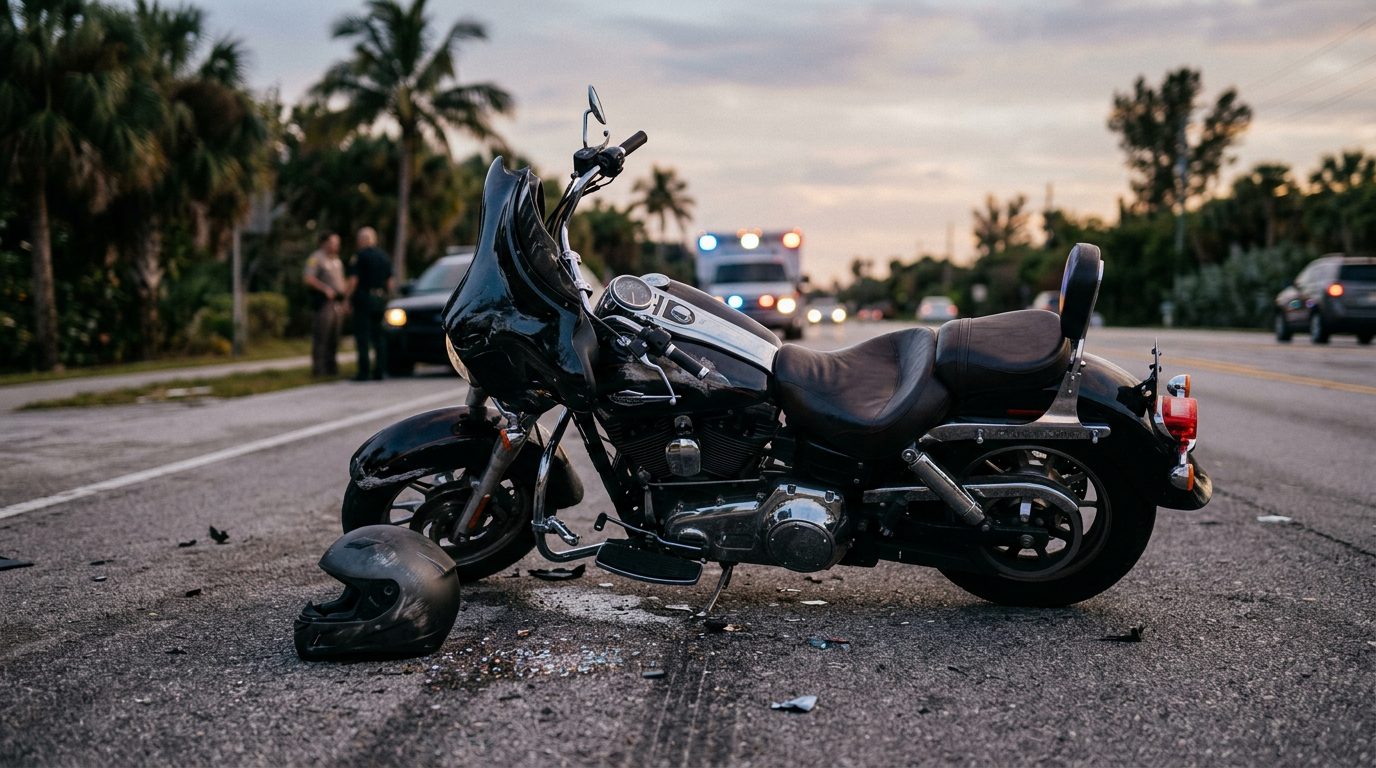
Motorcycle Wrongful Death | Florida
When a Motorcycle Crash Takes a Life, Your Family Deserves Answers and Justice
If a negligent driver, defective vehicle, or unsafe road condition caused a fatal motorcycle accident, CHG Personal Injury Lawyers focuses exclusively on holding the responsible parties accountable and securing the compensation your family needs.
By CHG Lawyers · Published September 03, 2026
Motorcycle Wrongful Death Lawyer in Florida: Your Path Forward After a Fatal Crash
When a loved one dies in a motorcycle accident caused by someone else’s negligence or recklessness, your family has the legal right to file a wrongful death claim in Florida. A motorcycle wrongful death lawyer can help you understand what that claim is, who can file it, what it covers, and how the process works. This knowledge helps you make informed decisions during an incredibly difficult time.

If your family lost a motorcyclist in a crash caused by someone else's negligence, you may have a wrongful death claim. Talk it through with our team — the first consultation is free, confidential, and carries no obligation.
When a Motorcycle Crash Takes a Life: What You Need to Know
Motorcyclists face a much higher risk of fatal injury than car drivers. According to the National Highway Traffic Safety Administration (NHTSA), motorcyclists are about 28 times more likely to die in a crash than people in passenger vehicles. Florida has a large riding population and year-round riding season, so it consistently ranks among the states with the most motorcycle fatalities.
If your family lost a motorcyclist in a crash caused by another driver’s inattention, a defective motorcycle part, a road hazard a municipality failed to repair, or negligence by a rideshare or delivery company, you may have the right to file a wrongful death claim. This firm handles motorcycle fatality cases across Florida and nationwide. We help families pursue accountability and recover the compensation they deserve.
What Is a Wrongful Death Claim in a Motorcycle Accident?
A wrongful death claim is a lawsuit filed by the family or estate of someone who died because of another person’s or entity’s negligence, recklessness, or intentional wrongdoing. In a motorcycle context, it means the rider died because another driver, a property owner, a manufacturer, or another party failed to act safely or responsibly.
Common scenarios include:
- A truck driver who crossed into the motorcycle’s lane without looking
- Another vehicle that ran a red light or failed to yield
- A road hazard (debris, a pothole, or poor maintenance) that a municipality failed to repair or warn about
- A defective motorcycle part that caused a mechanical failure
- A negligent driver in a rideshare or delivery vehicle
- Impaired or reckless driving that caused the fatal collision
The claim does not bring your loved one back. Instead, it holds the responsible party accountable and helps your family recover financially and move forward.
Can You Sue for Wrongful Death in Florida?
Yes. Florida law explicitly permits wrongful death lawsuits when a person dies as a result of another’s wrongful act, negligence, carelessness, or default. The defendant can be an individual driver, a business (a trucking company, a rideshare platform, a delivery service), a government entity (in some cases), or a manufacturer (if a defective product caused the crash).
To win, you must prove by a “preponderance of the evidence”—meaning it is more likely than not—that the defendant owed a duty of care, breached that duty, and the breach directly caused the fatal injury.
Who Can Bring a Motorcycle Wrongful Death Claim in Florida?
In Florida, the wrongful-death claim is filed by the personal representative of the estate on behalf of the survivors, such as the spouse, children and parents (Fla. Stat. § 768.20). Eligible parties typically include:
- The surviving spouse
- Children of the deceased
- Parents (if there is no surviving spouse or children)
- The estate itself
If there is no surviving spouse, children, or parents, siblings may have standing. An attorney can help you determine whether you have standing to file the claim and who should be named as the plaintiff.
What Does a Wrongful Death Claim Cover?
A wrongful death claim can recover three types of damages:
Economic Damages (out-of-pocket losses): – Medical expenses incurred before death – Funeral and burial costs – Lost wages and income the deceased would have earned – Loss of financial support the family depended on
Non-Economic Damages (personal losses): – Loss of companionship and emotional pain and suffering – Loss of guidance and nurturing (for surviving children) – Loss of consortium (for a surviving spouse—the loss of the relationship itself)
Punitive Damages (in cases of gross negligence, recklessness, or intentional misconduct): – Additional damages awarded to punish the defendant and deter similar conduct
Total recovery depends on the crash circumstances, the deceased’s age and earning capacity, the strength of liability evidence, and the defendant’s ability to pay. A young motorcyclist with decades of earning potential may support a higher claim than an older rider. A case involving a commercial truck driver or rideshare company may involve higher insurance limits than a single-vehicle accident.
Not sure what your next step is?
Talk it through with our team — the first consultation is free, confidential, and carries no obligation.
Florida’s 51% Rule: How Comparative Fault Works
One of the most important—and most misunderstood—rules in Florida wrongful death cases is the comparative fault rule. Here’s what it means:
If the deceased motorcyclist was partially at fault for the crash, the family’s recovery is reduced by that percentage. However, the family can still recover as long as the deceased was not more than 50% at fault.
Example 1: The motorcyclist was 30% at fault, and the other driver was 70% at fault. The family recovers 70% of the total damages.
Example 2: The motorcyclist was 51% or more at fault. The family cannot recover anything.
This rule often worries families. An experienced attorney will investigate the crash thoroughly to establish the defendant’s liability and minimize any argument that the motorcyclist bore significant fault. Even if the defendant argues the rider was speeding or not wearing a helmet, that does not eliminate the defendant’s responsibility if the defendant’s own negligence caused the crash.
What Is the Average Settlement for a Wrongful Death Motorcycle Claim?
There is no “average” settlement—each case is unique. Key variables include:
- The deceased’s age and earning potential
- The nature and severity of the defendant’s conduct
- The clarity of liability
- Available insurance coverage
- The strength of the family’s evidence
- Whether the case settles or goes to trial
Some cases settle within 6 to 12 months; others proceed to trial and may result in higher awards if a jury finds the defendant’s conduct particularly egregious. An attorney can review the specifics of your case and provide a realistic range based on comparable cases and the evidence available.
Statute of Limitations: How Long Do You Have to File a Wrongful Death Claim?
In Florida, the statute of limitations for a wrongful death claim is two years from the date of death. This is a strict deadline. If you do not file the lawsuit within two years, under Fla. Stat. §95.11, the claim is barred and you lose the right to recover.
Rare exceptions exist (for example, if the defendant was out of state), but they are narrow. Do not wait. Contact an attorney as soon as possible after a fatal motorcycle crash. The firm can explain the deadline that applies to your specific situation and ensure the claim is filed in time.
How a Motorcycle Wrongful Death Claim Works: Step-by-Step
Investigation and Evidence Gathering
The attorney investigates the crash, obtains the police report, interviews witnesses, collects medical records, and may hire accident reconstruction experts. This establishes liability and the defendant’s negligence.
Determining Damages
The firm calculates the family’s economic and non-economic losses. This includes lost income, funeral costs, and pain and suffering.
Demand and Negotiation
The attorney sends a demand letter to the defendant’s insurance company. It outlines the claim and the damages sought. Negotiations may follow.
Settlement or Litigation
If the parties reach a settlement, the case resolves. If not, the attorney files a lawsuit and prepares for trial.
Discovery
Both sides exchange evidence and take depositions (sworn interviews). They prepare for trial.
Trial (if necessary)
The case goes before a judge or jury. They hear evidence and decide liability and damages.
Resolution
The family receives compensation through a settlement or jury verdict.
Have questions about what happened?
Ask our team directly. The first conversation is free, confidential, and there is no obligation to continue.
Frequently Asked Questions About Motorcycle Wrongful Death Claims
Q: What if the motorcyclist was not wearing a helmet?
Florida does not require helmets for riders over 21. Even if a helmet was not worn, it does not eliminate the defendant’s liability for the crash. The defendant may argue a helmet would have prevented or reduced the injury, but the firm will contest that with medical and accident reconstruction evidence.
Q: What if the other driver does not have insurance?
Florida requires all drivers to carry minimum liability insurance. If the driver is uninsured, you may recover through your own uninsured motorist coverage or pursue the driver’s personal assets. The firm will explore all available sources of recovery.
Q: Do I have to go to trial, or can we settle?
Many cases settle before trial. The firm will pursue a fair settlement if it is in your best interest, but will also prepare for trial if necessary to obtain the compensation you deserve.
Q: How much will it cost to hire an attorney?
The firm typically handles wrongful death cases on a contingency fee basis. You pay no upfront fees. The firm is paid only if you recover, taking a percentage of the settlement or verdict. This aligns the firm’s interests with yours.
Q: How long does a wrongful death motorcycle case take?
Simple cases with clear liability may settle within 6 to 12 months. More complex cases may take 2 to 3 years or longer. The statute of limitations (two years) means the lawsuit must be filed by then, but settlement negotiations can occur at any stage.
Why This Firm for Your Motorcycle Wrongful Death Claim
This firm focuses exclusively on catastrophic, life-altering injuries and fatalities. Motorcycle wrongful death cases are a core part of its practice. The attorneys are licensed in Florida, understand the unique dynamics of motorcycle accidents, and have handled numerous fatality cases. While based in Florida, the firm takes cases nationwide, bringing consistent experience to families across the country.
The firm approaches every case with empathy and respect for your loss. It does not make promises about outcomes—no case is guaranteed—but it brings focused, dedicated experience and a commitment to holding negligent parties accountable.

What Happens Next: Taking Action
Seek immediate legal counsel. Contact an attorney as soon as possible. The two-year statute of limitations will begin to run, and early investigation is critical.
Gather documentation. Collect the police report, medical records, insurance information, and any witness contact information.
Avoid speaking with the defendant’s insurance company without legal representation. Anything you say can be used against your claim.
Focus on your family. Grieving and healing are your priorities. Let the legal team handle the investigation and negotiations.
If your family lost a motorcyclist in a crash caused by someone else’s negligence, you may have a wrongful death claim. Learn more about wrongful death claims in Florida or explore how our personal injury lawyer in Florida can help. Contact us for a free case evaluation. We’ll listen to what happened, explain your rights, and help you decide what comes next.
Important: Helmet Use Does Not Eliminate Liability
Florida does not require helmets for riders over 21. Even if a helmet was not worn, it does not eliminate the defendant's liability for the crash. The defendant may argue a helmet would have prevented or reduced the injury, but we will contest that with medical and accident reconstruction evidence. The focus remains on who caused the crash and the defendant's responsibility for the fatal outcome.
Why CHG Handles Motorcycle Wrongful Death Cases Differently
Aggressive Investigation
We reconstruct the crash scene, obtain police reports, subpoena traffic camera footage, and work with accident reconstruction experts to prove how the other driver's negligence caused the fatal collision.
Comprehensive Damage Claims
Wrongful death claims include funeral and burial costs, lost income, loss of companionship, pain and suffering, and punitive damages when the defendant's conduct was reckless or intentional.
Family-Centered Representation
We guide surviving spouses, children, and parents through the legal process with compassion, handling all communications and negotiations so your family can focus on healing.
Uninsured and Underinsured Driver Coverage
If the at-fault driver lacks adequate insurance, we pursue claims against your own uninsured/underinsured motorist coverage and other available sources of recovery.
Common Causes of Fatal Motorcycle Accidents
Reckless Drivers
Speeding, distracted driving, impaired driving, and aggressive lane changes put motorcyclists at extreme risk. A car's size and weight give it a deadly advantage in a collision.
Defective Motorcycles or Parts
Brake failures, tire defects, steering problems, and manufacturing defects can cause a rider to lose control. We pursue product liability claims against manufacturers and sellers.
Unsafe Road Conditions
Potholes, debris, poor road maintenance, inadequate signage, and dangerous intersections can cause a fatal crash. We hold government agencies and contractors responsible for negligent maintenance.
Visibility and Awareness Failures
Drivers who fail to see motorcycles—especially at intersections or in blind spots—cause devastating collisions. We prove the driver's negligence through witness testimony and expert analysis.
What to Do After a Fatal Motorcycle Accident
Preserve Evidence
Request the police report, photograph the crash scene and vehicle damage, obtain witness contact information, and preserve any video footage. Do not allow the at-fault driver's insurance to control the investigation.
Document Medical Records
Gather all emergency room records, autopsy reports, and medical findings. These documents are critical to proving the severity of injuries and causation.
Report to Insurance
Notify your own motorcycle insurance and any applicable uninsured/underinsured motorist coverage. Provide factual information only; do not admit fault or speculate about the crash.
Contact a Wrongful Death Attorney
Time is critical. Evidence disappears, memories fade, and deadlines apply. An attorney will investigate immediately, identify all liable parties, and protect your family's right to recovery.
No Attorney’s Fees Unless There Is a Recovery
CHG Personal Injury Lawyers handles wrongful death cases on a contingency basis. You pay no attorney fees, costs, or expenses unless we recover compensation for your family. Our goal is to remove financial barriers so you can pursue justice without added burden.