

Catastrophic Injury Guide · Florida
What Is Considered a Catastrophic Injury?
A catastrophic injury changes your life permanently. This plain-language guide explains what counts, why these cases are different, and how a Florida-licensed attorney can help you understand your options.
Focused on Serious, Life-Altering Injury Claims
Nationwide
Cases accepted across the U.S.
FL Bar
Licensed, Florida Bar-admitted attorneys
EN / ES
Bilingual English & Spanish resources
Free
No-cost case evaluation
By CHG Lawyers · Published August 06, 2026
What Is Considered a Catastrophic Injury? A Plain-Language Guide

Not sure what your next step is?
Talk it through with our team — the first consultation is free, confidential, and carries no obligation.
What is considered a catastrophic injury?
What is considered a catastrophic injury? It is an injury that causes permanent, life-altering harm — or death. It changes how a person lives, works, and cares for themselves for life. What matters is not how much it hurt on day one. What matters is what the injury leaves behind after treatment ends.
Most injuries heal. A cut closes. A clean broken bone knits back together. A catastrophic injury is different. The damage is permanent. It reshapes daily life for the injured person and the whole family.
Many people are surprised to learn there is no single legal meaning for “catastrophic injury.” Doctors, insurers, and courts use different words. Florida’s workers’ compensation law gives one narrow meaning. It includes spinal cord injury with paralysis, amputation, severe brain or closed-head injury, and second- or third-degree burns over 25% of the body (Fla. Stat. §440.02(38)). Personal-injury cases do not have to follow that list. But it shows what “catastrophic” usually means. It means permanent, disabling, and costly for life.
Are you trying to understand a serious injury for yourself or a loved one? This page explains it in plain terms — no jargon.
What counts as a catastrophic injury?
An injury counts as catastrophic when it leaves permanent disability, needs lifelong care, or ends someone’s life. Look for these signs:
- Permanent disability that treatment cannot reverse.
- Loss of a body function or limb — movement, feeling, or an arm or leg.
- Lifelong medical care, including surgery, rehab, and assistive devices.
- Being unable to return to work or earn a living as before.
- A fatal outcome — the most catastrophic result of all.
These injuries usually strike a major body system, like the brain or spinal cord. Or they cause a loss that cannot be undone, like an amputation or deep burn scarring.
When doctors say “permanent impairment,” they mean harm that does not fully go away. The person may adapt and rebuild. But the underlying damage stays. So do the costs. Think of medical bills, home changes, lost income, and daily care. These can last for decades.
Types of injuries usually considered catastrophic
The injuries most often called catastrophic damage the brain, spinal cord, or limbs. They also cause permanent disfigurement or end in death.
Spinal cord injuries and paralysis
A spinal cord injury can cause permanent loss of strength, feeling, and body control below the injured area. This is according to the Mayo Clinic. Doctors rate how severe it is using the ASIA Impairment Scale (from the American Spinal Injury Association). A complete injury (ASIA A) removes all movement and feeling below the injury. Incomplete injuries (ASIA B–D) leave some function.
Paralysis often follows. Paraplegia affects the trunk, legs, and pelvic organs. Quadriplegia (tetraplegia) also affects the arms and hands. The National Spinal Cord Injury Statistical Center (NSCISC) estimates about 18,000 new spinal cord injuries happen in the U.S. each year. The Christopher & Dana Reeve Foundation reports that nearly 1 in 50 Americans lives with some form of paralysis.
Traumatic brain injuries
A traumatic brain injury (TBI) is damage to the brain from a blow or jolt. It can cause lasting problems with thinking, memory, movement, and mood. The Mayo Clinic notes that a moderate-to-severe TBI can cause long-lasting or permanent changes in awareness, thinking, and behavior. The most severe TBIs change a person’s abilities forever. They often need lifelong care.
Amputations and limb loss
Losing an arm, leg, hand, or foot is permanent. There is more to it than the loss itself. Amputees must fit and replace a prosthesis (an artificial limb). They may deal with phantom-limb pain. Daily life changes — at work, at home, and behind the wheel.
Severe burn injuries
Severe burns can leave permanent scarring, disfigurement, and loss of function. This is especially true of deep second- and third-degree burns. Many survivors face repeated skin-graft surgeries. They may also need surgery to release tight scar tissue, plus long rehab.
Catastrophic back and neck injuries
Serious back and neck injuries can cause permanent impairment and long-term pain. But a herniated disc that heals with treatment is not catastrophic. The dividing line is lasting, disabling harm. One example is nerve damage that causes permanent weakness. Another is a spinal injury that needs fusion surgery and leaves ongoing problems.
Fatal injuries
Death is the most catastrophic outcome there is. When a loved one dies because of someone else’s negligence, the family may bring a wrongful-death claim. This is a lawsuit the family files after a death. It falls under Florida’s Wrongful Death Act. We handle these cases with dignity. We focus on the family left behind and what they can do next.
For a fuller list, see our guide on examples of catastrophic injuries.
Have questions about what happened?
Ask our team directly. The first conversation is free, confidential, and there is no obligation to continue.
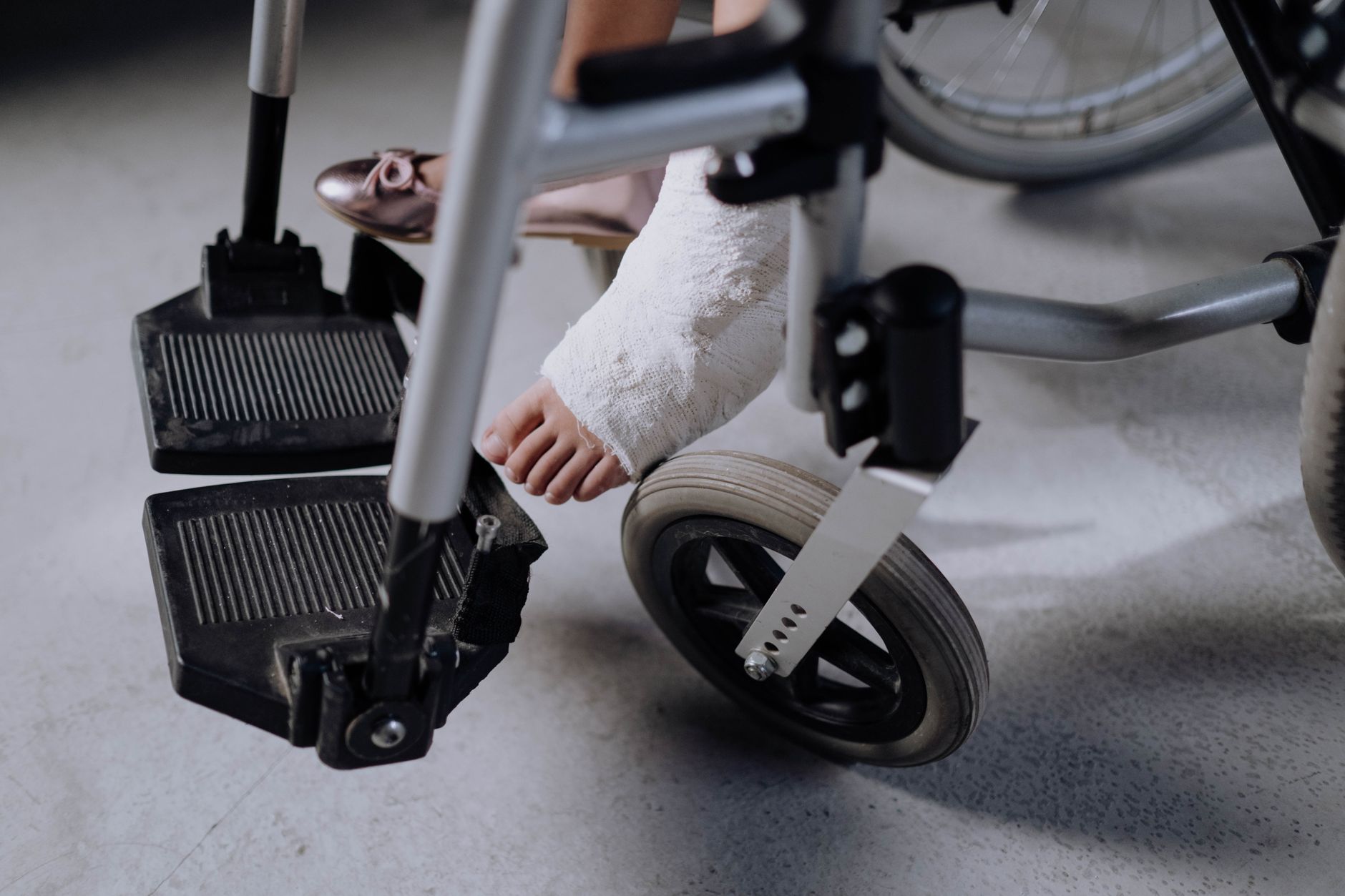
Is a broken arm considered a catastrophic injury?
Usually not. A simple broken arm that heals is a serious injury. But it is typically not catastrophic. The focus is always on lasting impact — not the injury’s name.
A broken bone can become catastrophic, though. That happens when the break causes permanent loss of function. It can also happen if the break leads to amputation. Or the break may damage nerves or blood vessels beyond repair. Or it may cause problems that never fully heal. A shattered arm that leaves someone unable to use a hand for life is very different from a clean break that heals in eight weeks.
So the label depends on the outcome, not the diagnosis alone. Are you unsure where your injury falls? Don’t assume — have it checked. Injuries that look routine at first can turn out to have permanent effects.
How catastrophic injuries typically happen
Catastrophic injuries come from events with huge force or serious wrongdoing.
Truck accidents involve huge vehicles and massive force. A fully loaded tractor-trailer can weigh up to 80,000 pounds under federal limits. That is about 20 to 30 times the weight of a typical car. That mismatch is why truck crashes so often cause the permanent damage this page describes.
Violent attacks on someone else’s property are another common cause. Picture being assaulted, shot, robbed, or attacked. It could happen at an apartment complex, a parking lot or garage, a hotel, a bar, a gas station, or a store. Maybe the property owner failed to provide reasonable security. That means working locks and gates, good lighting, cameras, or guards. If so, you may have a claim against that owner. The law calls this negligent security. You do not need to know the term to have a case. You only need to have been hurt because a property owner ignored a danger they should have fixed.
Other causes include medical negligence and other serious accidents. Whatever the cause, the common thread is permanent, life-altering harm.
Why the “catastrophic” label matters for a legal claim
The label matters because these cases cost far more over a lifetime than ordinary injury claims. Getting that scope right protects the injured person for decades.
Consider everything a catastrophic injury can demand. There is emergency and trauma care, several surgeries, and inpatient rehab. There are home and vehicle changes, wheelchairs, and assistive devices. There is in-home care and years of lost earning power. A life-care plan maps out these needs across the person’s lifetime. Medical and job-training experts help prepare it.
That is also why these claims are harder to prove. You must document not only what happened. You must also show how the injury will affect the person for years to come. Learn more in our guide on the hardest injury to prove. And see how compensation is really assessed in what a settlement really means.
One honest note: no lawyer can promise a specific result. Every case turns on its own facts. Any firm that guarantees an outcome is one to avoid.
What to do if you or a loved one has a catastrophic injury
Get medical care first. Keep detailed records. Act within the legal time limits. The early days matter most.
- Put medical care first and go to every treatment and follow-up visit. Your health comes first, and steady records document the injury.
- Keep records of the crash or incident, your medical care, and how life has changed. Notes, photos, bills, and a symptom journal all help.
- Watch the deadline. In Florida, you generally have two years to file a negligence claim for injuries on or after March 24, 2023, under Fla. Stat. §95.11. Different deadlines can apply to claims against government agencies or in medical-negligence cases.
- Know Florida’s fault rule. Under Fla. Stat. §768.81, a person found more than 50% at fault for their own injury generally cannot recover damages.
A catastrophic injury attorney can investigate the crash or incident and preserve evidence. They can also work with medical and economic experts to project long-term needs.
At CHG Personal Injury Lawyers, our attorneys are licensed and admitted to the Florida Bar. We handle catastrophic injury cases nationwide. Are you unsure whether your injury is considered catastrophic? We are glad to talk it through. Request a free case evaluation — there is no cost to ask.
To go deeper, visit our main guide on catastrophic injury claims.

Want to know where you stand?
Tell us what happened and our team will walk you through the options available to you, at no cost.
Frequently asked questions
What is an example of a catastrophic injury?
Common examples include spinal cord injuries, paralysis (paraplegia and quadriplegia), traumatic brain injuries, amputations, severe burns, and fatal injuries. Each causes permanent, life-altering harm.
Is a broken arm a catastrophic injury?
Usually not — a simple broken arm that heals is not catastrophic. It can become catastrophic if it causes permanent loss of function, damages nerves beyond repair, or requires amputation.
Does a fatal accident count as a catastrophic injury?
Yes. Death is the most catastrophic outcome, and the family may bring a wrongful-death claim under Florida’s Wrongful Death Act.
Can I bring a claim if I was attacked on someone else’s property?
You may be able to. If a property owner failed to provide reasonable security and you were hurt in an attack, you may have what the law calls a negligent security claim.
How long do I have to file a catastrophic injury claim in Florida?
Generally two years for injuries on or after March 24, 2023, under Fla. Stat. §95.11. Because exceptions exist, talk to a lawyer promptly to protect your rights.
Common Examples of Catastrophic Injuries
Spinal Cord Injuries & Paralysis
Damage to the spinal cord can cause paraplegia or quadriplegia, along with catastrophic back and neck injuries that permanently affect movement and independence.
Traumatic Brain Injuries (TBI)
A serious blow to the head can lead to lasting cognitive, physical, and emotional changes that require long-term care.
Amputation & Limb Loss
Losing a limb — or an injury so severe it requires amputation — brings lifelong medical, mobility, and financial challenges.
Severe Burns & Fatal Injuries
Severe burns often require surgery, skin grafts, and ongoing treatment. The most catastrophic outcome of all is a death, which may support a wrongful-death claim brought by the family.
How Catastrophic Injuries Differ From Routine Ones
Permanent, Not Temporary
A simple broken arm that heals is usually not catastrophic. A catastrophic injury causes lasting impairment that reshapes daily life.
Lifelong Costs
These injuries often involve years of medical care, rehabilitation, assistive equipment, home modifications, and lost earning capacity.
The Whole Family Is Affected
Spouses, children, and parents often become caregivers. The impact reaches far beyond the injured person.
Complex Cases
Proving the full extent of future harm takes careful documentation and legal experience — this is not a routine claim.
Hurt by Violence on Someone Else's Property?
If you or a loved one was assaulted, shot, or attacked at an apartment complex, parking garage, hotel, bar, or store — and the owner failed to provide reasonable security like working locks, lighting, cameras, or guards — you may have a claim against that property owner. Lawyers call this a negligent security case.
What Causes Catastrophic Injuries?
Truck & Serious Vehicle Crashes
The size and weight of commercial trucks make these crashes among the most severe — often causing spinal, brain, and fatal injuries.
Negligent Security
Violent crimes on unsafe properties that failed to take reasonable precautions can leave victims with permanent, life-changing harm.
Other Serious Accidents
Falls from heights, workplace incidents, fires, and other catastrophic events can cause the injuries described in this guide.
Medical Negligence
Serious errors in care can lead to permanent impairment or death, potentially supporting a claim on behalf of the patient or family.