

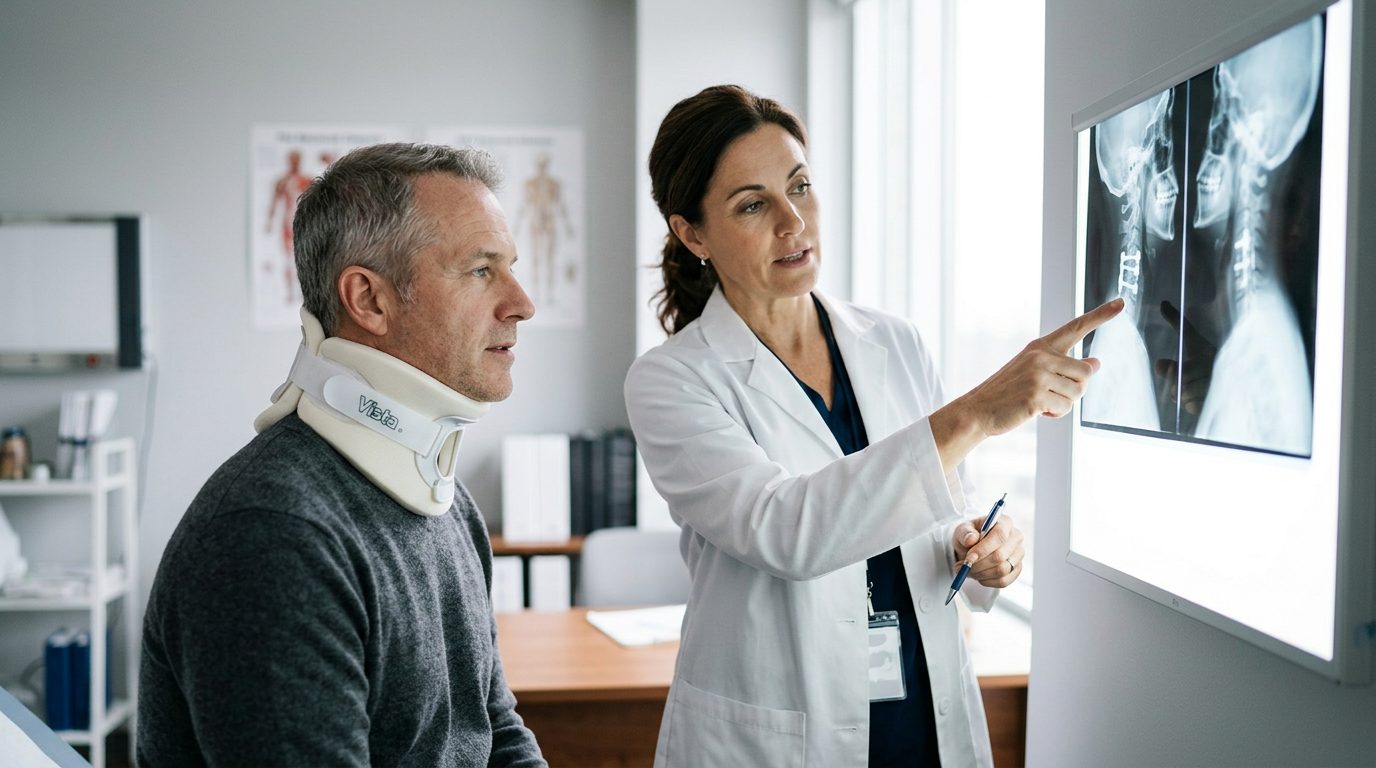
Catastrophic Spinal Injury
Spinal Fusion Injury Claim: Permanent Damage & Your Right to Compensation
When a spinal fusion becomes necessary because of someone else's negligence, the costs—medical, surgical, and lifelong—are staggering. We help injured people and families pursue full compensation for the permanent changes ahead.
By CHG Lawyers · Published August 28, 2026
Spinal Fusion After a Catastrophic Injury: What It Means for Your Claim
A spinal fusion joins two or more damaged vertebrae together. Your surgeon uses bone graft material and metal hardware to stabilize your spine and stop further nerve damage. When you’ve had this surgery because of a serious accident—a truck crash, a fall on an unsafe property, a violent assault, or another catastrophic event—the surgery itself and its permanent effects become central to your injury claim.
This page explains what spinal fusion is, why it becomes necessary after catastrophic injury, what permanent restrictions and complications you’ll face, and how all of this factors into your legal claim for compensation.
Not sure what your next step is?
Talk it through with our team — the first consultation is free, confidential, and carries no obligation.
What Is a Spinal Fusion, and Why Does It Happen After an Injury?
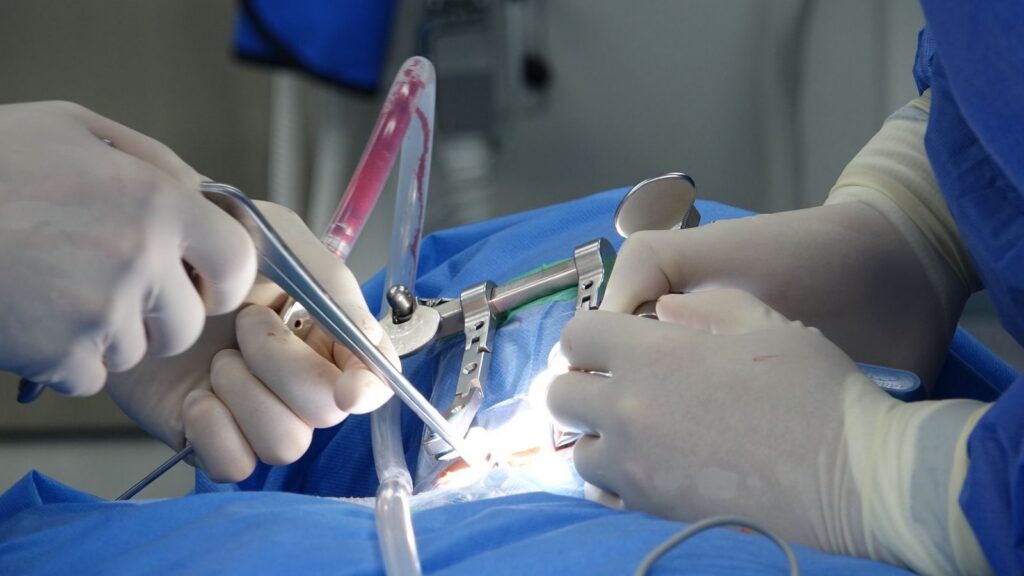
Spinal fusion is major surgery. Your surgeon removes or stabilizes the damaged disc between two vertebrae. Then they use bone graft material (from your own bone, a donor, or synthetic material) and often metal rods, screws, or plates to fuse the vertebrae together. Over months, the graft hardens and the vertebrae become one solid unit.
Doctors recommend fusion when a serious accident causes severe spine trauma:
- Vertebral fractures from truck crashes, falls from height, or violent impacts that crack or shatter bone
- Disc herniation with nerve compression that causes pain, numbness, weakness, or loss of bowel or bladder control
- Spinal instability where vertebrae shift or move abnormally, risking further spinal cord injury
The surgery aims to stop pain, prevent permanent nerve damage, and restore some function. But it is major surgery with lifelong consequences.
Three main types:
- Lumbar fusion (lower back, L5-S1 most common): affects bending, lifting, and prolonged sitting or standing
- Cervical fusion (neck, C5-C6 or C6-C7 common): affects arm function, grip strength, neck mobility, and sometimes breathing
- Thoracic fusion (mid-back): less common but affects core stability and can restrict breathing
The surgery doesn’t always eliminate pain. It creates permanent restrictions that change how you work, move, and live—often for the rest of your life.
Permanent Restrictions and Lifestyle Changes After Spinal Fusion
After spinal fusion, your surgeon will impose restrictions on your activities. These restrictions often last the rest of your life.
Common restrictions include:
- No lifting over 10–15 pounds (sometimes less)
- No bending at the waist or twisting motions
- Limited sitting or standing for extended periods (often 20–30 minutes at a time)
- No heavy labor or physically demanding work
- Caution with driving if pain or medication affects your safety
- No contact sports or high-impact activities
These restrictions mean many people cannot return to their pre-injury job. A construction worker, nurse, delivery driver, factory worker, or anyone in a physically demanding field may find their career impossible. Some must change careers entirely, taking lower-paying work or working part-time.
Daily activities become difficult too. Household chores, childcare, yard work, and hobbies you enjoyed before the accident may now cause pain or be off-limits.
In a legal claim, these permanent restrictions translate to lost earning capacity—the difference between what you could have earned without the injury and what you can earn now. This is a measurable, documentable form of damages that significantly increases your claim’s value.
Complications and Long-Term Effects of Spinal Fusion Surgery
Spinal fusion creates stability, but it also changes how your spine functions. Over time, complications can develop.
Adjacent segment disease is the most common long-term problem. The vertebrae above or below your fusion site experience accelerated wear and degeneration. They absorb extra stress from the fused segment. Some people develop this over time and may need additional surgery. Each surgery increases your medical costs and compounds your permanent impairment.
Nerve damage symptoms may persist or develop after surgery:
- Numbness or tingling in your arms, hands, legs, or feet
- Weakness or difficulty with grip strength or walking
- Radiating pain along nerve pathways
- Loss of bladder or bowel control (a medical emergency)
Fusion failure or non-union occurs when the vertebrae don’t fuse properly. This requires revision surgery—another major procedure with its own risks and recovery time.
Hardware failure or infection is rare but serious, sometimes requiring removal or replacement of the metal implants.
Chronic pain persists in many people despite the surgery. The American Spinal Injury Association (ASIA) Impairment Scale (AIS) is the standard medical tool for classifying spinal injury severity and documenting permanent neurological changes. Combined with loss of independence and the stress of permanent restrictions, depression and anxiety are common and documentable.
What Are the Permanent Restrictions After an L5-S1 Spinal Fusion?
The L5-S1 fusion (joining the lowest lumbar vertebra to the sacrum) is one of the most common and most restrictive.
Typical restrictions after L5-S1 fusion include:
- No lifting over 10–15 pounds
- No bending at the waist; bend at the knees instead
- No twisting or rotating your torso
- Limited sitting: often no more than 20–30 minutes at a time
- Limited standing: similar time restrictions
- No heavy labor or strenuous activity
- Caution with driving: pain or medication side effects may affect safety
These restrictions make many occupations impossible. Construction, nursing, manufacturing, delivery, and any job requiring physical labor become off-limits.
Your surgeon’s written restrictions become evidence of permanent impairment in your claim. They prove that your injury is serious, permanent, and directly caused by the accident. Medical experts and vocational specialists use these restrictions to calculate your lost earning capacity—how much you’ll lose over your lifetime because you can’t work as you did before.
What Happens If You Fall After Spinal Fusion?
A fall or impact after spinal fusion carries serious risks. Your fused vertebrae and hardware are vulnerable to re-injury.
Possible outcomes of a fall include:
- Damage to the fusion site or surrounding vertebrae
- Hardware failure or displacement
- Increased pain or loss of function
- Need for revision surgery
- Worsening of existing symptoms like numbness or weakness
Beyond the physical risk, many people develop fear of falling. You may lose confidence in your mobility and become more isolated or depressed.
If a fall occurs because of someone else’s negligence—an unsafe property with poor lighting or broken stairs, inadequate security at an apartment complex or parking garage, or a subsequent accident—you may have a separate or compounding claim.
Have questions about what happened?
Ask our team directly. The first conversation is free, confidential, and there is no obligation to continue.
How Spinal Fusion Surgery Affects Your Injury Claim
Your spinal fusion surgery is central to your claim because it proves the severity of your injury and creates permanent, measurable damage.
Here’s how it matters:
Medical necessity: The surgery must be proven medically necessary as a direct result of the accident or wrongdoing. Imaging (MRI, CT scans, X-rays), your surgeon’s documentation, and expert testimony establish this link. Without this proof, a defendant may argue the surgery was unnecessary or excessive.
Damages: Surgical costs, hospital bills, anesthesia, physical therapy, medication, and ongoing medical care are all recoverable economic damages. Your settlement can include compensation for anticipated future medical care if medical evidence supports it—such as revision surgery for adjacent segment disease or treatment of chronic complications.
Permanent impairment: Spinal fusion creates documented, permanent impairment. The American Spinal Injury Association (ASIA) Impairment Scale (AIS) is the standard tool used to classify spinal cord injury severity and document neurological changes. Your impairment rating supports higher claim valuations.
Lost earning capacity: Your surgeon’s restrictions directly reduce your ability to work. A vocational expert calculates the difference between your pre-injury earning potential and your post-injury capacity. This is often the largest component of your claim and reflects your lifetime earnings loss.
Quality of life: Pain, restrictions, loss of independence, and lifestyle changes are non-economic damages. They’re harder to measure but are real and significant. Chronic pain, depression, anxiety, and loss of enjoyment of life all factor into the value of your claim.
Expert testimony: Medical specialists (your surgeon, neurologists, physiatrists) and vocational experts help establish the link between the accident, the surgery, the permanent restrictions, and the financial and personal impact on your life.
How Are Spinal Fusion Settlements Calculated?
There’s no fixed formula for spinal fusion settlements. Each case depends on specific facts: the accident, the injury, the surgery, your age and work history, the defendant’s liability, and your state’s laws.
Factors that increase settlement value include:
- Younger age: You have more working years ahead, so lost earning capacity is higher
- Permanent restrictions: Severe limitations on work and daily activities increase value
- Loss of career: If you can’t return to your pre-injury job, the lifetime earnings loss is substantial
- Ongoing pain and complications: Chronic symptoms and the need for future surgery increase value
- Clear liability: Strong evidence that the defendant was at fault increases settlement leverage
- Medical evidence: Detailed surgical records, imaging, physician testimony, and documented restrictions support higher valuations
Insurance companies and defendants often undervalue spinal fusion claims. They may argue the surgery was unnecessary, the restrictions are overstated, or the long-term impact is minimal.
What Are the Symptoms of Nerve Damage After Spinal Fusion?
Nerve damage after spinal fusion can occur during surgery or develop over time as complications arise.
Symptoms include:
- Numbness or tingling in your arms, hands, legs, or feet (depending on fusion location)
- Weakness: difficulty with grip strength, walking, lifting, or fine motor tasks
- Radiating pain: burning or shooting sensations along nerve pathways
- Loss of bladder or bowel control: a medical emergency requiring immediate attention
- Swelling or inflammation around the surgical site or along nerve routes
If you experience these symptoms, report them to your surgeon immediately. They may indicate a complication requiring urgent treatment.
Ongoing nerve symptoms are evidence of permanent injury. They support higher claim values because they prove the surgery didn’t resolve all of your damage and you’ll live with these effects long-term.
Do I Have to Have Surgery to Receive Compensation for a Spine Injury?
No. Compensation is based on the injury itself and its impact on your life, not on whether surgery was performed.
A spine injury managed conservatively (physical therapy, medication, epidural injections) can also be part of a claim, because compensation is based on the injury itself and how it affects your life.
The key is this: in a motor vehicle accident claim, damages for pain, suffering, mental anguish, and inconvenience are recoverable only if the injury meets specific conditions set out in Florida Statute §627.737, and your injury must be linked to the accident or wrongdoing. Florida Statute §768.81 applies comparative fault: if you’re found more than 50% at fault for the accident, you recover nothing. So liability and causation matter.
Want to know where you stand?
Tell us what happened and our team will walk you through the options available to you, at no cost.
How to Prove Medical Necessity for Spinal Fusion Surgery
Proving medical necessity strengthens your claim and prevents the defendant from arguing the surgery was unnecessary or excessive.
Evidence of medical necessity includes:
Imaging: MRI, CT scans, or X-rays showing the fracture, disc herniation, nerve compression, or instability that required fusion.
Physician documentation: Your surgeon’s notes explaining why fusion was necessary, what would happen without it (continued nerve damage, paralysis risk, chronic pain), and why conservative treatment wasn’t sufficient.
Conservative treatment failure: Records showing that non-surgical options (physical therapy, medication, epidural injections) were tried and didn’t work.
Expert testimony: Your treating surgeon or an independent medical expert can testify that fusion was medically necessary given your injury and symptoms.
Without this documentation, the defendant may claim you didn’t need surgery or that a less expensive treatment would have worked. Proving medical necessity protects your claim and supports higher valuations.
Frequently Asked Questions
Q: Will my spinal fusion settlement cover future surgeries?
Settlements can include compensation for anticipated future medical care (like revision surgery for adjacent segment disease), but this requires medical evidence and expert testimony about what’s likely.
Q: How long does it take to recover from spinal fusion?
Initial recovery is typically 3–6 months, but full healing can take a year or more. Many people never fully return to pre-injury function and live with permanent restrictions.
Q: Can I work after spinal fusion?
It depends on your job and your surgeon’s restrictions. Many people must change careers, work part-time, or take lower-paying jobs that don’t require physical labor.
Q: What if the fusion fails?
Fusion failure (non-union) may require revision surgery, which is another serious procedure. This increases your claim value and may support a separate claim if negligence caused the failure.
Q: What is adjacent segment disease?
Adjacent segment disease is accelerated degeneration of vertebrae above or below your fusion site. It develops in many people within 5–10 years and often requires additional surgery, increasing your lifetime medical costs and permanent impairment.

What Comes Next
If you’ve had spinal fusion surgery following a serious accident—a truck crash, a fall on an unsafe property, a violent assault at a location that failed to provide security, or any other catastrophic event—you’re managing permanent restrictions, ongoing pain, and the reality that your life has changed.
You’re likely still in recovery, adapting to your new limitations, and trying to understand what this means for your future and your legal options. The surgery and its permanent effects are central to your claim, but navigating that claim while healing is overwhelming.
An attorney can review your medical records, explain how your fusion affects your claim’s value, connect you with medical and vocational experts, and help you pursue your claim.
Critical: Act Within Your State's Time Limit
Claims for catastrophic spinal injuries are subject to strict filing deadlines that vary by state and the type of accident. Waiting too long can bar your claim entirely. Contact us now to protect your rights.
What Damages May Be Included in a Spinal Fusion Injury Claim
Medical & Surgical Costs
Past and future spinal fusion procedures, revision surgeries, imaging, physical therapy, pain management, and hospitalization—including anticipated care for adjacent segment disease or other complications.
Lost Income & Earning Capacity
Wages lost during recovery and ongoing disability, plus compensation for reduced earning potential if the injury prevents you from returning to your prior work or career.
Pain, Suffering & Permanent Impairment
Compensation for chronic pain, reduced mobility, loss of function, and the permanent changes to your quality of life caused by the injury.
Ongoing Care & Adaptive Needs
Home modifications, assistive devices, personal care assistance, transportation, and other accommodations required because of your spinal injury.
Why Your Spinal Fusion Injury Claim Matters
Accountability for Negligence
Property owners, drivers, employers, and others who fail in their duty to keep you safe must answer for the permanent harm they cause. Your claim holds them responsible.
Comprehensive Damage Documentation
Spinal fusion injuries require detailed medical evidence and expert testimony to establish the full scope of your present and future needs. We work with medical specialists to build a complete picture.
Long-Term Cost Planning
A spinal fusion injury often means decades of ongoing care. Compensation must account for lifelong medical treatment, adaptive equipment, and support—not just the immediate surgery.
Empathetic, Focused Representation
We understand the physical, emotional, and financial toll of catastrophic spinal injury. Our focus is exclusively on cases like yours, so you receive dedicated, informed advocacy.
Common Causes of Spinal Fusion Injuries
Truck & Motor Vehicle Accidents
High-impact collisions that cause severe spinal trauma, often requiring emergency fusion surgery to stabilize the spine and prevent permanent paralysis.
Negligent Security & Violent Assault
Attacks on inadequately secured property (apartments, parking lots, hotels, businesses) that result in spinal injuries. Property owners may be liable for failing to provide reasonable security.
Construction & Workplace Accidents
Falls, equipment failures, and unsafe conditions on construction sites and in workplaces that cause catastrophic spinal damage requiring fusion.
Motorcycle, ATV & Recreational Accidents
High-speed crashes and collisions involving motorcycles, ATVs, and other vehicles that cause severe spinal trauma and the need for surgical fusion.