

Catastrophic Spinal Cord Injuries
Where a Spine Injury Happens Changes Everything
Cervical, thoracic, and lumbar injuries affect the body in very different ways. Understanding the level of injury helps you understand what recovery, care, and a claim may involve.
By CHG Lawyers · Published August 02, 2026
Cervical, Thoracic, and Lumbar Spine Injuries: How Injury Level Affects Your Life and Your Claim
The main difference between cervical, thoracic, and lumbar spine injuries is where the damage happens on the spine. The higher up it is, the more of the body it can affect. A cervical (neck) injury can affect the arms, trunk, and legs. A thoracic (mid-back) or lumbar (lower-back) injury usually affects the trunk and legs. The arms and hands are often spared.
Do your doctors keep saying things like “C5” or “T12”? If you feel lost, you are not alone. Families hear this language during the worst days of their lives. Often it happens in a hospital hallway, in a second language, with no medical background.
This page explains the cervical thoracic lumbar spine injury difference in plain words. We write it in English, with a note for our lectores en español below. First we cover what changes in daily life and independence. Then we explain why the injury level matters for a legal claim.
Una nota para lectores en español: publicamos esta guía en inglés y español. La lesión, el nivel (C5, T12) y sus derechos legales son los mismos en cualquier idioma; un abogado con licencia puede explicárselo en el suyo.
This is general education. It is not medical or legal advice for your specific case.

Not sure what your next step is?
Talk it through with our team — the first consultation is free, confidential, and carries no obligation.
Why the “level” of a spine injury matters more than almost anything else
The level of a spine injury largely decides how much of the body is affected below the injury site. As a rule, the higher the injury sits on the spinal cord, the more of the body it can impact.
Doctors describe the spine in four regions, from top to bottom. These are the cervical (neck), thoracic (upper and mid back), lumbar (lower back), and sacral (base). A number after the letter — like C5 or T12 — tells you the exact spot.
Understanding the level helps you plan for care. It also helps you grasp what a claim may need to cover. In the catastrophic-injury cases our attorneys handle, families feel less powerless once someone explains this in plain language. Every case and body is different. Your care team remains the right source for medical answers.
A quick map of your spine: what the letters and numbers mean
Your spine has two parts. There is the bony column and the spinal cord it protects. The vertebrae are the stacked bones. The spinal cord is the bundle of nerves running through them. It carries signals between your brain and body.
Here is the plain-language map:
- Cervical (C1–C7): your neck. This is the highest level. It protects the most body function. (Doctors count seven cervical bones but eight cervical nerve roots. That is why you may hear “C8.”)
- Thoracic (T1–T12): your upper and mid back, where your ribs attach.
- Lumbar (L1–L5): your lower back.
- Sacral (S1–S5): the base of the spine, near the pelvis.
How can you tell cervical, thoracic, and lumbar vertebrae apart? Mostly by location and job. Cervical bones sit in the neck. They are the smallest and most mobile. Thoracic bones connect to the ribs and hold you upright. Lumbar bones are the largest. They carry the most weight in the lower back.
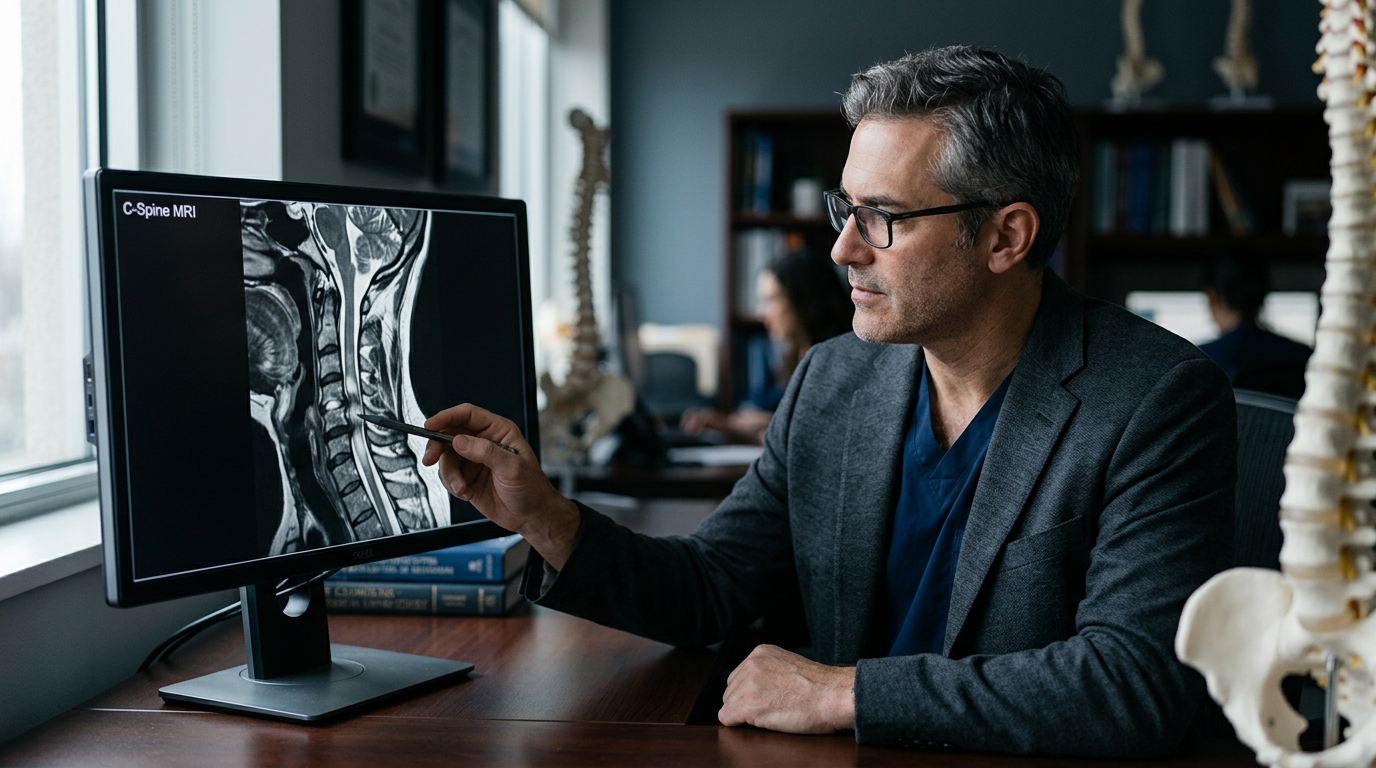
Here is one point most pages blur. A bone (vertebra) injury is not the same as a spinal cord injury. You can break a vertebra without damaging the cord. You can also damage the cord with little bone damage. Both can be catastrophic, but they are not the same thing. Doctors use imaging like X-ray, CT, and MRI to find the exact level and see what is hurt. Mayo Clinic explains that the effects depend on the injury’s location and severity.
Cervical (neck) spine injuries: how serious is a cervical spine injury?
Cervical injuries are the most serious. They sit highest and can affect the most of the body — arms, hands, trunk, legs, and sometimes even breathing. That is why doctors treat neck injuries with such urgency.
Damage to the spinal cord at this level can cause tetraplegia (also called quadriplegia). This means loss of function in all four limbs. Mayo Clinic notes that injuries high in the neck can affect the muscles used to breathe.
Context helps here. The National Spinal Cord Injury Statistical Center (NSCISC) is the federally funded database at the University of Alabama at Birmingham. It reports that incomplete tetraplegia is the most common neurological outcome among new spinal cord injuries in its registry. It also reports that vehicle crashes are the leading cause, followed by falls and acts of violence. In other words, neck-level injuries from crashes and attacks are not rare edge cases.
What is the worst spinal injury? Generally, a high cervical injury is the most life-altering. This is near the top of the neck, around C1–C4. It affects the most of the body and can require breathing support. We share this with dignity, not to frighten anyone. Many people with high injuries live full, meaningful lives with the right care and support.
Can a cervical spine injury heal? It depends on whether the injury is complete or incomplete. That is a medical question for your care team. Mayo Clinic explains that some function may return with an incomplete injury. A complete injury means little or no function below the site. No honest source can promise recovery.
In daily life, a cervical injury often means more help with movement, personal care, and long-term needs. Understanding this early helps families prepare.
Thoracic (upper and mid back) spine injuries
Thoracic injuries sit in the upper and mid back. They usually affect the trunk and legs. The arms and hands are typically spared. This region supports your posture and connects to your ribs.
Damage to the spinal cord here can cause paraplegia — loss of function in the lower body. Many people keep full use of their arms and hands. This supports more independence in daily tasks.
How do I know if I have a thoracic spine injury? Warning signs can include severe mid-back pain, numbness or weakness in the legs, trouble with balance, or changes in bladder or bowel control. Only a medical exam and imaging can confirm it. Please do not wait to get checked. If you are unsure how serious an injury is, our guide on the signs a back or neck injury is serious may help.
Everyday impact often centers on mobility and balance. Wheelchairs, home changes, and therapy help many people regain a strong sense of independence.
Lumbar and sacral (lower back) spine injuries
Lumbar and sacral injuries sit lowest. They can affect the hips, legs, and bladder or bowel function. Because they are lower, they often leave more upper-body function. But they can still be permanently life-altering.
At the lower end of the cord and nerves is an area called the cauda equina (a bundle of nerve roots). Damage here is a surgical emergency. The American Association of Neurological Surgeons notes that it can cause permanent loss of bladder and bowel control and lower-limb function. It also notes that timely decompression surgery is critical. So a lower injury is never automatically “minor.”
To be clear about scope: this page is about serious, permanent spine injuries. It is not about routine back pain or an uncomplicated herniated disc. Those matter, but they are not the catastrophic, life-altering injuries we focus on here.
Have questions about what happened?
Ask our team directly. The first conversation is free, confidential, and there is no obligation to continue.
Complete vs. incomplete: another factor beyond the level
Beyond where the injury is, doctors also look at how much function is lost. This is the difference between complete and incomplete. A complete injury means little or no feeling or movement below the site. An incomplete injury means some function or sensation remains.
That is why two people with the same level can have very different outcomes. Say both have a T10 injury. One may keep some movement. The other may not.
Doctors grade severity using the ASIA Impairment Scale. This is a standard tool from the American Spinal Injury Association. It runs from A (complete) to E (normal). It gives everyone a shared language for describing the injury. That letter often appears in your medical records, which matters later for a claim. Questions about your recovery belong with your treating doctors. They know your case best.
How injury level affects a catastrophic injury claim
Injury level and severity shape the degree of impairment and the lifetime cost of care. Higher-level or complete injuries often mean greater future needs.
Those needs can include ongoing medical care, wheelchairs and equipment, home and vehicle modifications, in-home help, and lost earning capacity. To put scale on it: the NSCISC estimates that average first-year costs for high tetraplegia can exceed $1.3 million. It also estimates substantial recurring costs every year afterward (figures vary by injury and are periodically updated). A serious claim tries to account for all of it — not just today’s bills. That is why the documented injury level, ASIA grade, and prognosis become important evidence. Our pages on spinal fusion surgery and the lifetime cost of a spinal cord injury explain this in more detail.
We handle these injuries when they come from crashes and other negligence. This includes truck accidents, serious falls, and violence on unsafe property. To recover money, someone else’s fault must be established.
Florida law adds two rules that directly affect these cases:
- Deadline to file. Under Fla. Stat. §95.11, most negligence claims must be filed within two years of the injury. (Florida shortened this from four years for causes of action accruing on or after March 24, 2023.) Miss the deadline and the claim is usually barred, no matter how strong.
- Comparative fault. Under Fla. Stat. §768.81, Florida uses modified comparative negligence. A person found more than 50% at fault generally cannot recover damages. Any award is reduced by your share of fault.
These are the kinds of specifics a medical website cannot give you. Every case is different. Deadlines can vary, and no lawyer can guarantee a result. A licensed attorney can review your specific facts.
If violence on someone else’s property caused the injury
Were you or a loved one assaulted, shot, robbed, or otherwise attacked on someone else’s property? You may have a claim against the property owner. This applies at places like apartment complexes, parking lots and garages, hotels, bars, gas stations, and stores.
Here is the key idea in plain words. Property owners are often expected to provide reasonable security. This means things like working locks and gates, good lighting, cameras, or guards. When an owner fails to do that, and a foreseeable attack happens, the injured person or their family may be able to hold the owner responsible.
The legal term for this is negligent security. You did not need to know that phrase to have a case. A spine or neck injury from a violent attack can be every bit as catastrophic as one from a crash. You can learn more on our negligent security page.
When a spine injury is fatal: options for the family
A spine injury can sometimes be fatal. This is especially true for a high cervical injury that affects breathing. There is no gentle way to say that. We are sorry if you are reading this after losing someone.
When another party’s negligence caused a fatal injury, the family may be able to bring a wrongful-death claim. This falls under Florida’s Wrongful Death Act (Fla. Stat. §768.16–768.26). That process can help cover final expenses, lost support and services, and the family’s losses. Nothing undoes the loss. But it can bring some stability and accountability.
If this is your situation, you do not have to figure it out alone. You can contact us for a free case evaluation whenever you are ready.
Want to know where you stand?
Tell us what happened and our team will walk you through the options available to you, at no cost.
Frequently asked questions
How can you tell the difference between cervical, thoracic, and lumbar vertebrae?
By location and job. Cervical bones are the small, mobile bones in the neck. Thoracic bones connect to the ribs in the mid back. Lumbar bones are the large, weight-bearing bones of the lower back.
What is the worst spinal injury?
Generally, a high cervical injury is the most life-altering. This is in the upper neck, around C1–C4. It can affect the arms, trunk, legs, and even breathing.
Can a cervical spine injury heal?
It depends on whether the injury is complete or incomplete. Outcomes vary widely. This is a medical question best answered by your treating care team.
How do I know if I have a thoracic spine injury?
Possible signs include severe mid-back pain, leg numbness or weakness, and balance or bladder changes. But only a medical exam and imaging can confirm it.
Does a lower (lumbar) injury mean a smaller claim?
Not necessarily. The lasting impairment and lifetime cost of care matter far more than the level alone. Lower injuries — especially cauda equina damage — can still be permanently life-altering.

Talk to a catastrophic injury lawyer about your situation
Understanding your injury level is a first step. Understanding your rights is the next one.
CHG Personal Injury Lawyers represents victims of catastrophic spine injuries nationwide. We offer bilingual support in English and Español. Our team includes licensed attorneys admitted to The Florida Bar. We handle these cases with care because we know how much is at stake for your family.
If you want to understand your options, contact us for a free, no-obligation case evaluation. You can also read more on our main guide to catastrophic back and neck injuries.
The Three Regions of the Spine
Cervical (Neck)
The seven small, highly mobile bones in the neck. Because the spinal cord here controls signals to the arms, chest, and legs, a high cervical injury is among the most life-altering, often affecting breathing and all four limbs (quadriplegia).
Thoracic (Mid-Back)
The twelve vertebrae that connect to the ribs and stabilize the upper body. Injuries at this level can affect the trunk and legs, and are a common cause of paraplegia while the arms and hands may be spared.
Lumbar (Lower Back)
The large, weight-bearing bones of the lower back. Injuries here can impair the hips, legs, and bladder or bowel function, with the potential for significant, permanent mobility loss.
The Higher the Injury, the Greater the Impact
As a general rule, the higher up the spine an injury occurs, the more of the body it can affect. A high cervical injury is often the most severe because it can compromise breathing and every limb. Any suspected spinal injury is a medical emergency — seek care first, then protect your legal rights.
How CHG Personal Injury Lawyers Can Help
Focused on Catastrophic Cases
We represent people and families facing life-altering spinal cord injuries and paralysis, not routine claims.
We Build the Full Picture
Cervical, thoracic, and lumbar injuries carry very different lifetime care needs. We work to document the true cost of your injury.
Licensed, Florida Bar Attorneys
Our attorneys are admitted to the Florida Bar and accept catastrophic injury cases nationwide.
Bilingual Support
We provide clear, plain-language guidance in both English and Spanish.