

Negligent Security · Florida & Nationwide
Hurt Your Back in an Attack the Property Owner Should Have Prevented?
If you suffered a serious spine or back injury during an assault, shooting, or robbery on someone else's property, the owner's failure to provide reasonable security may give you a claim. We're here to explain your options.
Why Families Turn to CHG
Nationwide
Cases accepted across the U.S.
Florida Bar
Licensed, admitted attorneys
Catastrophic
Focused on life-altering injuries
EN / ES
Bilingual client resources
By CHG Lawyers · Published August 05, 2026
Hurt in an Attack on Someone Else’s Property? When Poor Security Causes a Catastrophic Spine Injury
If you were attacked on someone else’s property — an apartment complex, a parking garage, a hotel, a store — and a lack of basic security allowed it to happen, you may have a claim against the property owner for your spinal cord injury or paralysis. That claim is separate from any criminal case against the attacker. When a property owner fails to keep people reasonably safe and that failure leads to a permanent spine injury, Florida law may hold the owner accountable.
This page is about catastrophic spine injuries — damage to the spinal cord, paralysis, and fractures involving the cord or major nerves. It is not about temporary back pain, muscle strains, or an ache that heals in a few weeks. If your injury reshaped your life, keep reading.
If your family lost someone, please reach out — we will explain your options with care. Talk it through with our team — the first consultation is free, confidential, and carries no obligation.
You were attacked on someone else’s property, and now your spine is permanently damaged
You went somewhere ordinary — a parking garage after work, your own apartment complex, a hotel, a bar, a gas station. Then someone assaulted, robbed, or shot at you. Now your back or neck is catastrophically hurt, and everything is different.
A spinal cord injury moves fast from the emergency room to surgery to months of rehab, and then to hard questions about work, money, and independence. You did not choose any of this. The question this page answers is simple: could the property owner have prevented it, and can you make them answer for it?
Why the property owner — not just the attacker — may be responsible
A property owner has a legal duty to take reasonable steps to protect people who come onto their property from foreseeable harm. Basic measures matter: working locks and gates, lighting in dark stairwells and lots, functioning security cameras, and guards where a location’s history clearly calls for them. When those are missing and a foreseeable attack follows, the owner may share the blame.
Lawyers call this a negligent security claim — a type of premises liability. You do not need to know those terms to have a case. What matters is what happened to you and whether reasonable security was in place.
Your civil claim against the owner is separate from the criminal case against your attacker. The criminal case aims to punish the person who hurt you. Your civil claim seeks money to help you pay for care and rebuild your life — and, unlike a criminal case, it does not depend on the attacker being caught, charged, or able to pay.
What counts as a catastrophic spine injury
A catastrophic spine injury means permanent, life-altering damage to the spinal cord or nerves — not a temporary strain. This includes:
- Spinal cord injury (SCI)
- Paraplegia and quadriplegia (tetraplegia)
- Vertebral fractures or dislocations that involve the cord
- Severe nerve damage
The Mayo Clinic explains that a spinal cord injury can cause loss of movement, altered or lost sensation, and loss of bladder or bowel control, with effects depending on the injury’s location and severity. Clinicians describe injuries as complete (no motor or sensory function below the injury) or incomplete (some function remains).
Doctors classify the level and completeness of an SCI using the International Standards for Neurological Classification of Spinal Cord Injury (ISNCSCI), the ASIA Impairment Scale published by the American Spinal Injury Association. This grading (AIS A through E) is not just medical — it becomes central legal evidence of how permanent and severe your injury is.
Get emergency care immediately. The Mayo Clinic warns that extreme back pain or pressure in the neck, head, or back after trauma can signal a serious spinal injury — even if you can still walk. Delaying care can worsen the injury and leave a gap in your medical record.
For more, see our guides on catastrophic back and neck injuries, spinal cord injuries, and paralysis, paraplegia, and quadriplegia.
What has to be proven to hold a property owner liable in Florida
A negligent security claim in Florida generally requires proving these elements:
- Duty. The owner owed a duty to keep the property reasonably safe for people like you.
- Foreseeability. The attack was reasonably foreseeable — often shown by prior crimes at or near the location.
- Breach. The owner failed to take reasonable security measures.
- Causation. That failure allowed your injury to happen.
- Damages. You suffered a serious, documented spine injury.
Foreseeability is usually the battleground. Florida courts commonly look at the property’s own crime history — prior assaults, robberies, or police calls at the same location or immediate area. A pattern of past violence can support the argument that the owner should have anticipated the danger and done more.
Fault can be shared. Under Florida’s modified comparative-negligence rule, Fla. Stat. §768.81 (as amended in 2023), a person found more than 50% at fault for their own harm generally recovers nothing. Insurers often try to shift blame onto the injured person, which is one reason early, careful handling of your case matters. Every case turns on its own facts, so no one can promise a result before reviewing yours.
How claims are proven — and why evidence disappears fast
Proving this kind of case means proving two separate things with two kinds of evidence.
Proving the injury relies on medical records: MRI and CT imaging, operative reports, and the ISNCSCI/ASIA classification described above. This objective evidence documents that the injury is real, severe, and permanent.
Proving inadequate security relies on what happened at the property and what came before it. Evidence that helps includes:
- Police reports and incident records
- The property’s history of prior crime and tenant or customer complaints
- Security footage — or proof there was none
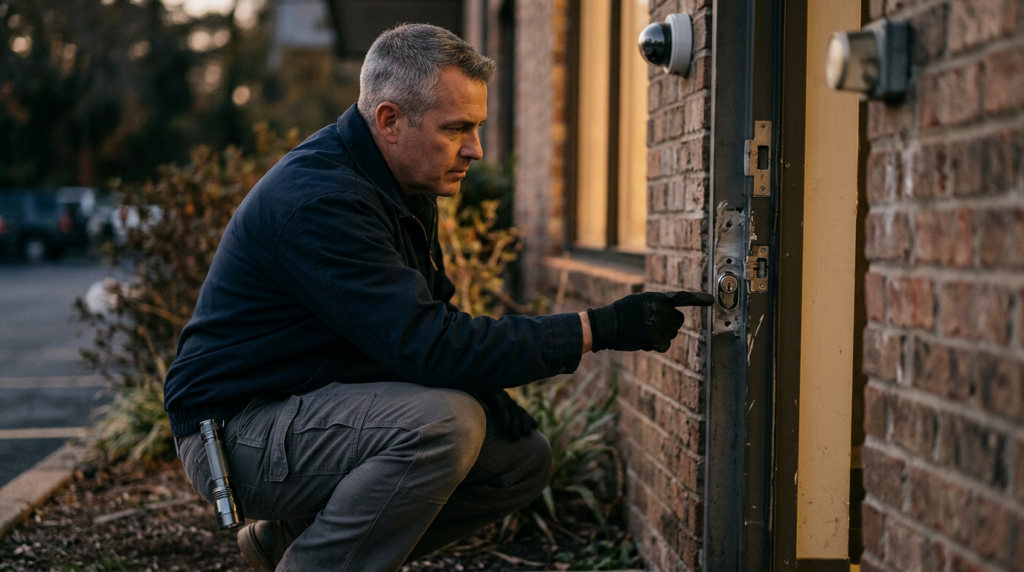
- Photos of broken locks, gates, or dark, unlit areas
- Witness names and statements
Act early. In the catastrophic cases our attorneys handle, security footage is often overwritten within days or weeks, broken locks get repaired, and lighting gets fixed after the fact. A prompt investigation — and, where appropriate, a legal letter demanding that evidence be preserved — can protect proof before it is gone.
Not sure what your next step is?
Talk it through with our team — the first consultation is free, confidential, and carries no obligation.
Where these attacks happen most often
The setting shapes what “reasonable security” should have looked like. Common locations include:
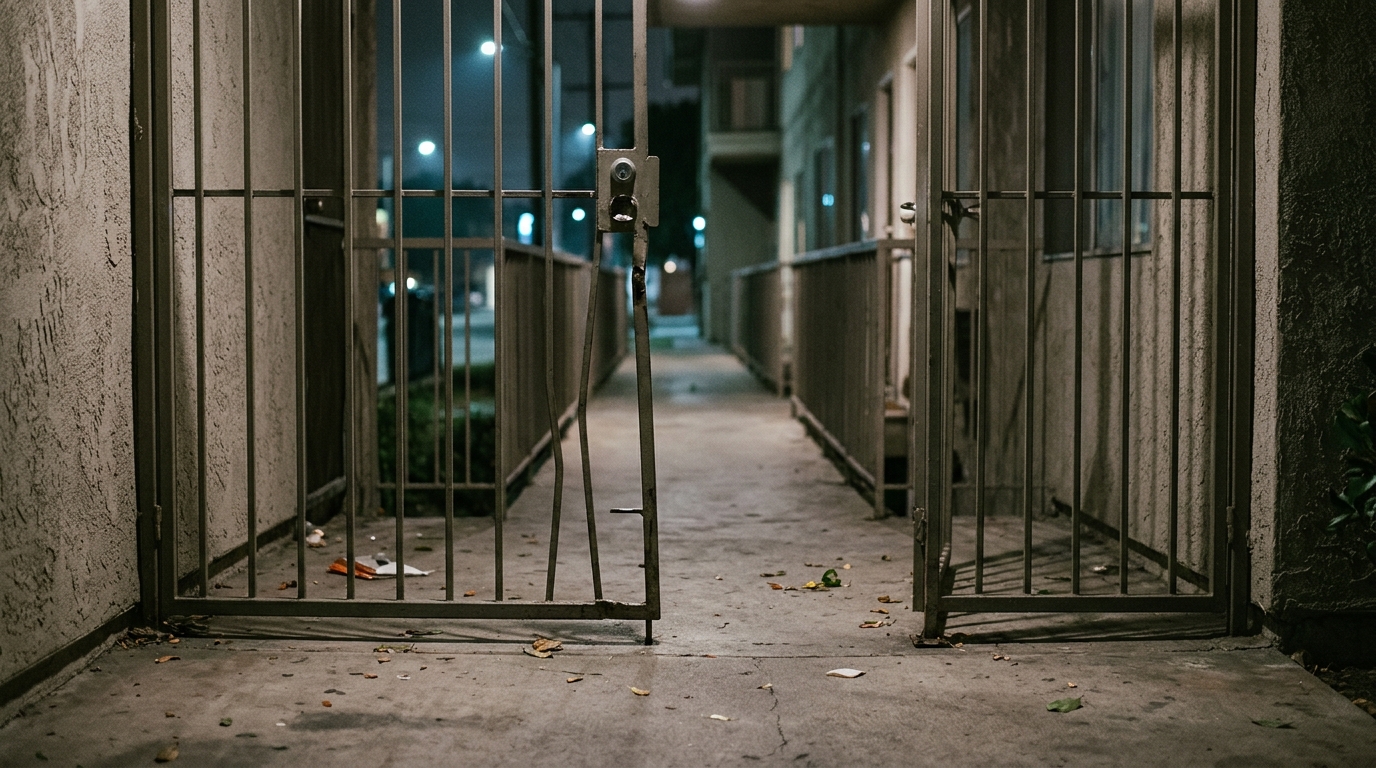
- Apartment complexes and gated communities with broken gates, failed keypad entry, or locks that don’t work
- Parking lots and garages with burned-out lighting or no cameras
- Hotels and motels, bars, and nightclubs without adequate guards or access control
- Gas stations, stores, and ATMs in areas with known crime
If you were attacked at a residential property, see our guide on negligent security.
What compensation may be available
Compensation depends on the injury’s severity, permanence, and impact on your life — so every case is different, and no honest lawyer can quote you an “average” or promise a number. What you may recover reflects your actual losses:
- Medical care, including future surgeries, rehabilitation, and equipment
- Lost income and reduced earning capacity
- Pain and suffering
- Long-term disability costs, such as home and vehicle modifications and daily attendant care
These lifelong costs are why spine cases are treated as catastrophic. The Christopher & Dana Reeve Foundation documents how many Americans live with paralysis and the intensive, ongoing care many require.
When a spine injury is fatal, the family may bring a wrongful-death claim. That is the most catastrophic outcome there is, and the law lets loved ones seek accountability from a property owner whose inadequate security contributed to the loss. If your family lost someone, please reach out — we will explain your options with care.
What to do after a catastrophic spine injury from an attack
- Get and follow medical treatment. Your health comes first, and your records become key evidence.
- Report the incident. Notify police and property management, and keep copies of every report.
- Preserve evidence. Photograph the scene, note lighting and locks before they change, and collect witness names.
- Be cautious with insurers. You do not have to give a recorded statement right away. Adjusters work for the insurer, not for you.
Mind the deadline. In Florida, most negligence claims that accrued on or after March 24, 2023 must be filed within two years under Fla. Stat. §95.11. Deadlines vary by state and situation, so getting guidance early matters. For a step-by-step walkthrough, see catastrophic injury claims.
How CHG Personal Injury Lawyers can help
CHG Personal Injury Lawyers is a team of licensed attorneys admitted to the Florida Bar. We concentrate on catastrophic, life-altering spine injuries and negligent-security cases, and we take cases nationwide.
We serve Florida communities including Miami, Orlando, Tampa, and Jacksonville, and we offer bilingual support in English and Spanish for clients and their families.
We know this is a frightening, uncertain time. We offer a free, confidential case evaluation and plain-language guidance about where you stand. We cannot promise a specific result — but we can help you understand your options.
Request your free case evaluation to talk through what happened and what to do next.
Have questions about what happened?
Ask our team directly. The first conversation is free, confidential, and there is no obligation to continue.
Frequently Asked Questions
Can I sue a property owner if I was attacked on their property?
You may be able to, if a lack of reasonable security allowed a foreseeable attack that seriously hurt you. This civil claim is separate from — and does not depend on — the criminal case against your attacker.
How hard is it to prove a spine injury from an assault?
Proving the injury itself is often straightforward with MRI/CT imaging, operative reports, and the ASIA/ISNCSCI classification. The harder part is usually proving the owner should have foreseen the attack and failed to provide reasonable security.
What is negligent security?
It is a type of premises liability claim that arises when a property owner fails to provide reasonable safety measures — working locks, lighting, cameras, or guards — and someone is hurt as a result.
How long do I have to file a claim in Florida?
Under Fla. Stat. §95.11, most Florida negligence claims accruing on or after March 24, 2023 must be filed within two years. Deadlines vary, so ask a lawyer promptly.
Can my family file a claim if a loved one died from a spine injury after an attack?
Yes. When a spine injury is fatal, the family may bring a wrongful-death claim against a property owner whose inadequate security contributed to the loss.
How much compensation can I get for a catastrophic spinal cord injury?
There is no set amount, because value depends on the injury’s severity, permanence, and impact. Beware any page quoting an “average settlement” — a case-specific evaluation is the only reliable way to understand potential compensation.
Your Civil Claim Is Separate From the Criminal Case
A criminal case punishes your attacker. A civil claim asks whether the property owner failed to provide reasonable security that could have prevented a foreseeable attack. You can pursue this claim even if the criminal case is unresolved or your attacker was never caught.
What a Back-Injury Security Claim Can Involve
A Serious, Permanent Spine Injury
This page is for catastrophic back and neck injuries — vertebral fractures, spinal cord damage, and injuries that cause lasting impairment or paralysis, not minor strains.
An Attack on Someone Else's Property
Assaults, shootings, and robberies at apartment complexes, parking lots and garages, hotels, bars, gas stations, or stores can all form the basis of a claim.
A Security Failure
Broken gates or locks, dark or unmonitored areas, missing cameras, or absent guards where crime was foreseeable may point to negligence by the owner.
Foreseeability
If similar crimes happened before or the area was known to be dangerous, an owner may have had a duty to take reasonable steps to keep visitors safe.
How We Help After a Catastrophic Assault
Preserve the Evidence
Security footage, incident reports, and prior crime records can disappear fast. Acting early helps protect proof that a property owner's negligence played a role.
Establish the Owner's Duty
We examine whether reasonable security measures were in place and whether the attack was foreseeable under the circumstances.
Account for the Full Impact
A spinal cord or catastrophic back injury can reshape your life. We work to document medical needs, lost earning capacity, and long-term care.
Support the Whole Family
In the most severe outcomes, including wrongful death, we stand with the family and explain what steps they can take next.