

Negligent Security & Premises Liability · Florida
Hurt on Someone Else's Property? You May Not Be the One at Fault.
If you were seriously injured — or a loved one was killed — because a property owner failed to keep the place reasonably safe, the law may hold that owner responsible. Learn who can be liable and what to do next.
Guidance You Can Trust
Licensed
Florida Bar–admitted attorneys
Nationwide
We take catastrophic cases across the U.S.
Bilingual
English & Spanish resources
Free
No-cost case evaluation
By CHG Lawyers · Published August 07, 2026
Injured on Someone Else’s Property: Who Is Responsible?
If you were injured on someone else’s property, who is responsible is the honest question most pages dodge. Here is the direct answer: it depends. The owner may be responsible — but not automatically. You do not win a claim simply because you were hurt on their land.
Two questions decide it. First, did the owner fail to keep the property reasonably safe? Second, did that failure cause your injury?
This page focuses on catastrophic, life-altering injuries — spinal cord injuries and paralysis, traumatic brain injuries, and catastrophic back and neck injuries. And it explains something most pages blur together: these injuries reach you down two very different legal paths, and knowing which one fits your situation changes everything about how the claim is built.
- Path 1 — A dangerous physical condition. A collapsing balcony, an unlit stairwell, a floor that gave way. This is a property-hazard claim.
- Path 2 — A criminal attack the owner failed to prevent. You were assaulted, robbed, shot, or otherwise attacked on someone else’s property because the owner ignored obvious security failures. This is a negligent-security claim.
Both are forms of premises liability. But they are proved with different evidence, different experts, and different Florida rules. We cover both below.
If you were injured on someone else's property, who is responsible is the honest question most pages dodge. Talk it through with our team — the first consultation is free, confidential, and carries no obligation.
The short answer: it depends on whether the owner kept the property reasonably safe
Being hurt on someone’s property does not, by itself, make them liable. The real question is narrower: did the owner fail to fix or warn about a danger they knew about — or should have known about?
Florida law asks what a reasonable property owner should have done. It does not ask only whether an accident happened. A store that leaves a hidden hazard is in a very different position from one where a customer trips over something plainly in view.
We are not writing about bumps and bruises here. We mean injuries that change a life — or a family — permanently.
Path 1: Hurt in a serious fall — when the owner CAN be responsible
An owner’s basic duty is to keep the property reasonably safe for people allowed to be there. When they know about a danger — a broken stair, a missing handrail, an unmarked wet floor, a failing balcony — and do nothing, they may share the blame for a serious injury that follows.
For businesses, Florida law spells out how you prove the owner knew about a spill or similar hazard, called a transitory foreign substance. Under Fla. Stat. §768.0755, you generally must show either that the condition existed long enough that the business should have caught it, or that it occurred regularly enough to be foreseeable.
Falls that cause catastrophic harm include:
- Falls from height, such as a collapsing balcony railing
- Falls down poorly maintained or unlit stairs
- Heavy objects falling from shelves or overhead
- A structure or floor that gives way
A single fall can cause a spinal cord injury or a serious brain injury. The Mayo Clinic lists falls among the leading causes of spinal cord injury; higher, neck-level injuries can affect the arms, trunk, and legs.
How liability for a serious fall is proved
To hold an owner responsible, you generally have to prove four things:
- A dangerous condition existed on the property.
- The owner knew about it — or should have known.
- The owner failed to fix it or warn you.
- That failure caused your injury.
Point 4 is where serious cases are won or lost. A fall that causes a spinal cord injury or a catastrophic back or neck injury deserves a real investigation — not a quick insurance settlement.
The National Spinal Cord Injury Statistical Center estimates roughly 18,000 new spinal cord injuries occur in the U.S. each year, with falls the second most common cause after vehicle crashes. Many involve permanent loss of movement or feeling.
Florida uses a modified comparative-fault system, so fault can be shared. Under Fla. Stat. §768.81, amended in March 2023, if you are found more than 50% at fault for your own injury, you generally cannot recover damages at all. Below that line, your recovery is reduced by your share of fault, dollar for dollar. This is exactly why insurers work so hard to pin blame on the injured person — and why early legal advice matters.
Path 2: Attacked on someone else’s property — a different claim entirely
This is the path most pages ignore, and it is worth separating clearly. A fall claim is about a physical hazard. A claim after a violent attack is about security — and it is proved differently.
Were you assaulted, robbed, shot, sexually assaulted, or otherwise attacked on someone else’s property? The owner may share responsibility — not just the person who attacked you.
Places where this comes up:
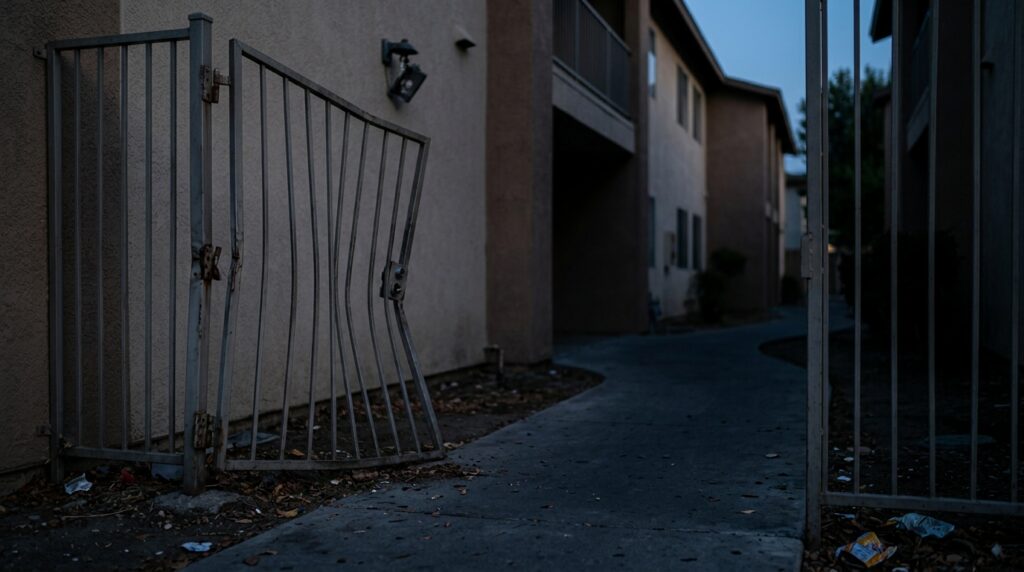
- An apartment complex with broken gates or locks
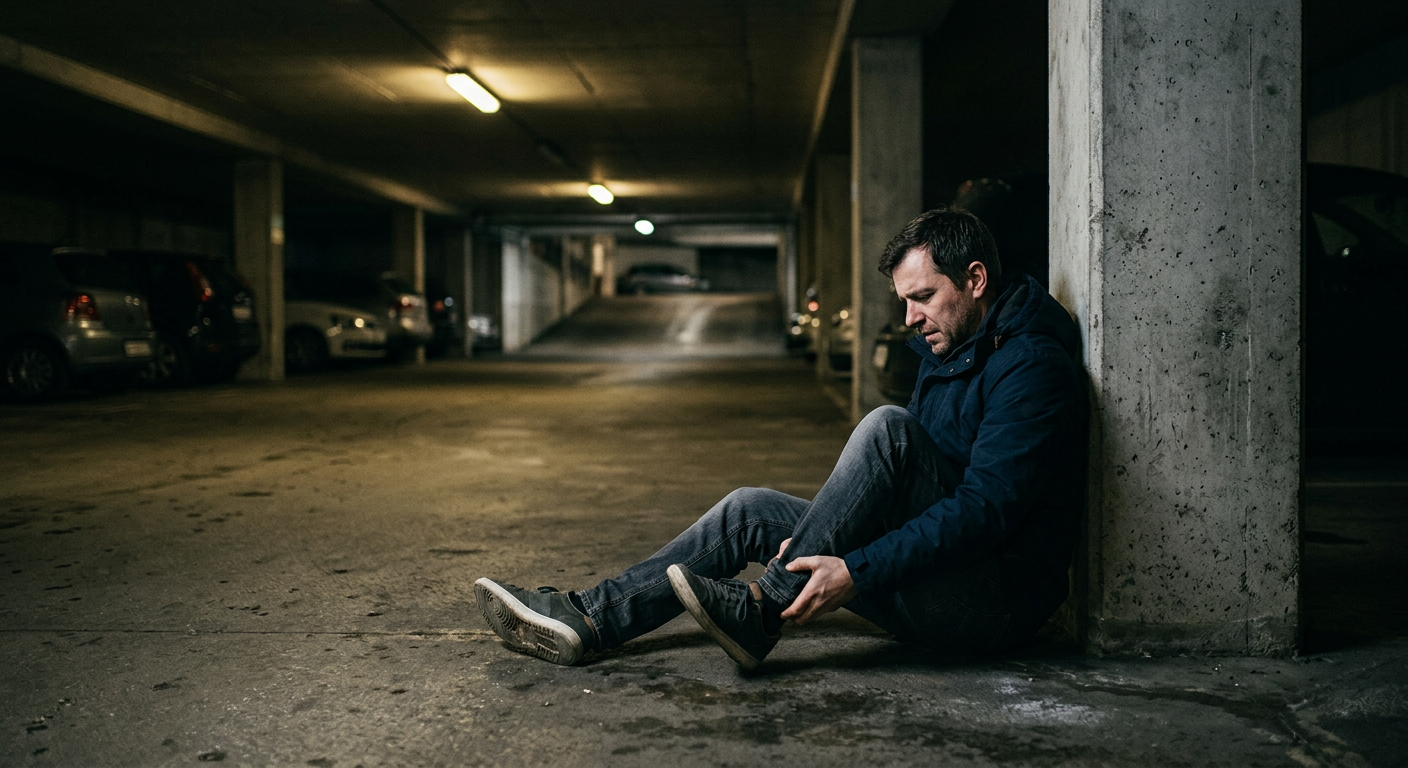
- A dark parking lot or garage with no cameras or guards
- A hotel or motel that ignored a pattern of crime on site
- A bar, nightclub, gas station, store, or ATM area
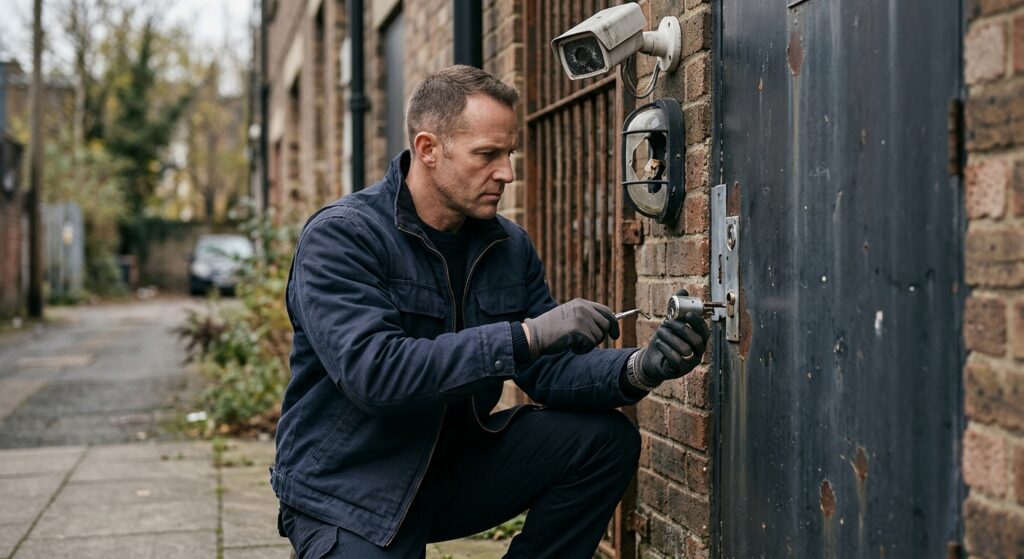
The attacker is responsible for the crime. But the owner may also be responsible if they failed to take reasonable steps to keep people safe — working locks and gates, adequate lighting, functioning cameras, or security staff.
This matters most where earlier crimes made another attack foreseeable — meaning predictable. Florida courts often look at whether similar crimes happened at or near the property before, which is why police reports and prior-incident records are so important. Florida also gives owners of certain apartment communities a presumption against liability in some attacks when they substantially implement specified security measures, under Fla. Stat. §768.0706 — one more reason these cases turn on facts most people cannot investigate alone.
The legal term for this is negligent security. It is a form of premises liability, and these attacks can cause life-altering harm — traumatic brain injuries, spinal cord injuries, and worse. If this is your situation, that path fits you, not the fall analysis above.
Does it matter why you were on the property? Visitor categories explained
Yes. Why you were there can change how much care the owner owed you.
Trespasser — Someone present without permission. Owners owe them the least duty but still cannot deliberately harm them.
This is one factor among many, not the whole case.
If you or a loved one suffered a catastrophic injury from an attack on someone else's property, acting quickly can protect the proof your case may depend on. Talk it through with our team — the first consultation is free, confidential, and carries no obligation.
When the owner is usually NOT responsible
We promised an honest answer. Here is the other side. Owners are usually not responsible for injuries from:
- Open and obvious hazards a careful person would have seen and avoided
- A visitor’s own carelessness, such as ignoring a clear warning sign
- Dangers the owner had no reasonable way to know about — a hazard created moments earlier, with no time to catch it
A lawsuit is not automatic, and not always successful. Before you assume you do or do not have a claim, have a licensed attorney review the facts.
Why serious-injury cases are harder to prove — and worth proving
Catastrophic injuries demand strong medical evidence, expert opinions, and preserved evidence from the scene. Yet that evidence disappears fast: stairs get repaired, floors get cleaned, lighting gets changed, and security footage is often overwritten within days. Once that proof is gone, showing what really happened becomes far harder.
That is why a preservation-of-evidence letter — sent to the owner in the first days, formally asking them to keep footage, maintenance logs, and incident reports — can be decisive.
The stakes are enormous. The Christopher & Dana Reeve Foundation estimates roughly 5.4 million Americans live with some form of paralysis. Doctors grade spinal cord injury severity using the ASIA Impairment Scale, and those records become central evidence in a claim.
What to do if you were injured on someone else’s property
- Get medical care right away. Your health comes first, and records document the injury.
- Report the incident to the owner or manager, and ask for a written incident report.
- Photograph the scene — the broken stair, the dark lot, the missing gate.
- Get witness names and phone numbers before people leave.
- Keep everything — bills, records, and correspondence.
- Don’t give a recorded statement or sign a release before getting legal advice.
Some families face the most catastrophic outcome of all — a fatal injury. For them, Florida’s Wrongful Death Act (Fla. Stat. §§768.16–768.26) may allow the family to bring a claim. We handle these cases with care and dignity, centered on the family left behind. See our resources on first steps after a catastrophic injury.
Frequently asked questions
Can someone sue you if they get injured on your property?
Yes, someone can file a lawsuit — but suing and winning are different things. Liability applies only if the owner failed to keep the property reasonably safe and that failure caused the injury.
Does homeowners insurance cover injuries to someone on your property?
Often yes. Homeowners policies usually include liability coverage that may pay for injuries to guests. In most cases the policy pays the claim, not the owner’s personal savings.
What if a worker gets hurt on my property in Florida?
It depends on the worker’s status and available insurance. Contractors may carry their own coverage; workers’ compensation or liability policies may also apply. A lawyer can review the specific arrangement.
How long do I have to file a claim in Florida?
Florida’s deadline is generally two years for most negligence claims that accrued on or after March 24, 2023, under Fla. Stat. §95.11. Deadlines vary by situation, so confirm yours with an attorney quickly.
Not sure what your next step is?
Talk it through with our team — the first consultation is free, confidential, and carries no obligation.
Talk to a catastrophic-injury attorney about your situation
A life-altering injury changes everything — for you and for the people who love you. You should not have to sort out who is responsible on your own, and you should not have to do it in a language that isn’t your own. We publish these resources in English and Spanish and are ready to talk with you either way.
CHG Personal Injury Lawyers represents people with catastrophic, permanent injuries. Our attorneys are admitted to The Florida Bar, and we handle cases nationwide.
Whether you were hurt in a serious fall or attacked because a property owner ignored obvious security failures, one next step covers both: reach out for a free case evaluation. We cannot promise a specific outcome, but we can help you understand your options.
Explore related resources:
- Catastrophic back and neck injuries
- Spinal cord injuries and paralysis
- Traumatic brain injury claims
- Negligent security claims
Where These Serious Attacks Happen
Apartment Complexes
Broken gate locks, dead security cameras, or missing lighting can leave residents and visitors exposed to violent attacks the owner should have prevented.
Parking Lots & Garages
Dark corners, no patrols, and unmonitored entrances are common settings for assaults, robberies, and shootings that leave lasting, life-altering injuries.
Hotels, Motels & Bars
When a business ignores a known danger and fails to provide reasonable security, the people it invites in can pay the price.
Stores, Gas Stations & ATMs
Places open to the public are expected to take reasonable steps to protect customers from foreseeable crime on their premises.
How Responsibility Is Determined
The owner owed a duty
Property owners must take reasonable steps to keep the people they invite onto their property safe from foreseeable harm.
That duty was breached
A missing security guard, a broken lock, burned-out lights, or ignored prior crimes can show the owner failed to provide reasonable security.
The failure caused serious harm
There must be a real link between what the owner failed to do and a catastrophic injury — a spinal cord injury, brain injury, gunshot wound, or a death in the family.
Others may share fault
A management company, security contractor, or a third party who caused the harm may also be responsible. We help identify everyone accountable.
Evidence Disappears Fast
Security footage is often erased within days, and witnesses move on. If you or a loved one suffered a catastrophic injury from an attack on someone else's property, acting quickly can protect the proof your case may depend on.
Common Questions
Can someone sue if they're hurt on a property?
A lawsuit can be filed — but suing and winning are different. Liability applies only if the owner failed to keep the property reasonably safe and that failure caused a serious injury.
What is 'negligent security'?
It's the legal term for premises liability cases where a property owner failed to provide reasonable protection — working locks, lighting, cameras, or guards — and that failure allowed a foreseeable attack to happen.
Who can I hold responsible?
Depending on the facts, an owner, a property manager, or a hired security company may share responsibility. We investigate to identify every party that may be accountable.
What if a loved one died?
A death is the most catastrophic outcome of all. Surviving family members may be able to bring a wrongful-death claim. We handle these cases with care and dignity.