

Catastrophic Neck & Spinal Injuries · Florida
Life After a Severe Neck Injury: What to Expect
A catastrophic neck injury can change everything about how you move, work, and live. Here's what recovery may look like, and how a legal team can help protect your future.
Catastrophic Injury Representation You Can Rely On
Nationwide
We take catastrophic cases across the U.S.
Florida Bar
Licensed, admitted Florida attorneys
EN / ES
Bilingual English & Spanish support
$0
No fee to speak with our team
By CHG Lawyers · Published August 05, 2026
Life After a Catastrophic Neck Injury: Long-Term Care, Mobility, and Daily Living
A catastrophic neck injury shows up first in the morning routine. Getting out of bed. Bathing. Getting dressed. Getting to work or a child’s school. The ordinary things become the hard things.
That is the real story of a severe cervical (neck) injury. It is not one moment in a hospital. It is a lifetime of adapting. And the whole family adapts too.
This guide is for the person living with a catastrophic neck injury. It is also for the family and caregivers beside them. It focuses on what daily life really looks like: mobility, care, home, money, and grief. Near the end, we explain what to do if someone else’s carelessness caused the injury or the death of a loved one.
Families tell our attorneys the same thing again and again. No one ever explained the “life after” part. This is that part.

Not sure what your next step is?
Talk it through with our team — the first consultation is free, confidential, and carries no obligation.
What we mean by a “catastrophic” neck injury
A catastrophic neck injury is a life-altering neck injury. It causes permanent harm that does not go away. It can be a spinal cord injury in the neck. It can be a break or dislocation of the neck bones (called vertebrae). Or it can be nerve damage that leads to paralysis or lasting loss of function.
This page is not about a muscle strain or whiplash that heals in a few weeks. It is about injuries that change how the body works, for good.
Where the injury sits on the spinal cord matters a lot. Doctors label the neck’s cord segments from C1 (highest) to C8 (lowest). The Mayo Clinic explains that a higher neck injury usually affects more of the body than a lower one.
Care teams also grade how serious the injury is. They use a system from the American Spinal Injury Association. It is called the International Standards for Neurological Classification of Spinal Cord Injury (ISNCSCI). This system rates the injury by level. It also says whether the injury is “complete” or “incomplete.” That grade shapes what daily life is likely to look like.
Some high neck injuries are among the most catastrophic outcomes there are. Some are fatal. That is because an injury high on the cord can affect breathing itself. A death is the most devastating loss a family can face. Families who lose a loved one this way have legal options too. We cover them gently below.
To learn how doctors find and grade these injuries, see our guide on diagnosing a catastrophic spinal injury.
The first months: from hospital to home
The path usually runs through three stages. First comes emergency care to stabilize the body. Then comes surgery or immobilization. Then comes inpatient rehabilitation. Each stage has a different job.
First, the hospital works to stabilize the spine and protect the cord. This may mean surgery, a brace, or traction. Rehabilitation comes next. It focuses on regaining what function is possible. It also teaches new ways to move. And it helps prevent problems like pressure injuries and infections.
Families almost always ask how long a broken neck takes to heal. The honest answer separates two very different things. The neck bones may knit together in weeks to months. But permanent nerve damage is different. That is the loss of signals between the brain and body. It does not “heal” the way bone does.
Recovery is truly unpredictable. No honest attorney or doctor promises a specific outcome. What helps most is planning for the life ahead. But you should still leave real room for progress.
Long-term effects — including years later
The lasting effects depend on the injury’s level and how complete it is. But many people live with a familiar set of challenges:
- Chronic and nerve pain. Nerve pain (called neuropathic pain) can burn, tingle, or ache for years. Sometimes it happens in areas with reduced feeling.
- Loss of mobility, strength, or feeling. Depending on the level, this can mean partial or full paralysis of the arms, hands, trunk, or legs.
- Effects on major body systems. The Mayo Clinic notes that a spinal cord injury can change bladder and bowel control, breathing, and blood pressure. This is especially true with higher neck injuries.
- Muscle tightness and fatigue. Muscles can tighten or spasm on their own (called spasticity).
- Later complications. Pressure injuries, urinary infections, and blood-pressure emergencies (called autonomic dysreflexia) need lifelong watchfulness.
Can a neck injury affect you years later? Yes. Some effects appear or get worse with time. Pain builds. Joints and muscles change with age. New problems develop. This is why doctors treat a catastrophic spinal cord injury as a lifelong condition to manage. It is not a one-time event.
Read more in our overview of the long-term effects of a severe neck injury.
Long-term and lifetime care needs
Care needs usually grow more complex as the injury level rises. And they last for the rest of a person’s life. That care often includes:
- Physical and occupational therapy
- Specialized medical care (help with breathing, pain, bladder, bowel, and skin)
- Mental-health counseling for the injured person and the family
- A personal care attendant — sometimes 24-hour care for the highest neck injuries
- Equipment and supplies (wheelchairs, cushions, catheters) that wear out and must be replaced over decades
Here is the part families most often underestimate. This is a permanent commitment. It reshapes a household’s finances. The National Spinal Cord Injury Statistical Center (NSCISC) at the University of Alabama at Birmingham publishes the leading long-term data on these costs. It also tracks life expectancy after a spinal cord injury. These figures vary sharply by injury level and by the person’s age.
For a fuller breakdown, see our page on the lifetime cost of a catastrophic back and neck injury.
Mobility and assistive technology
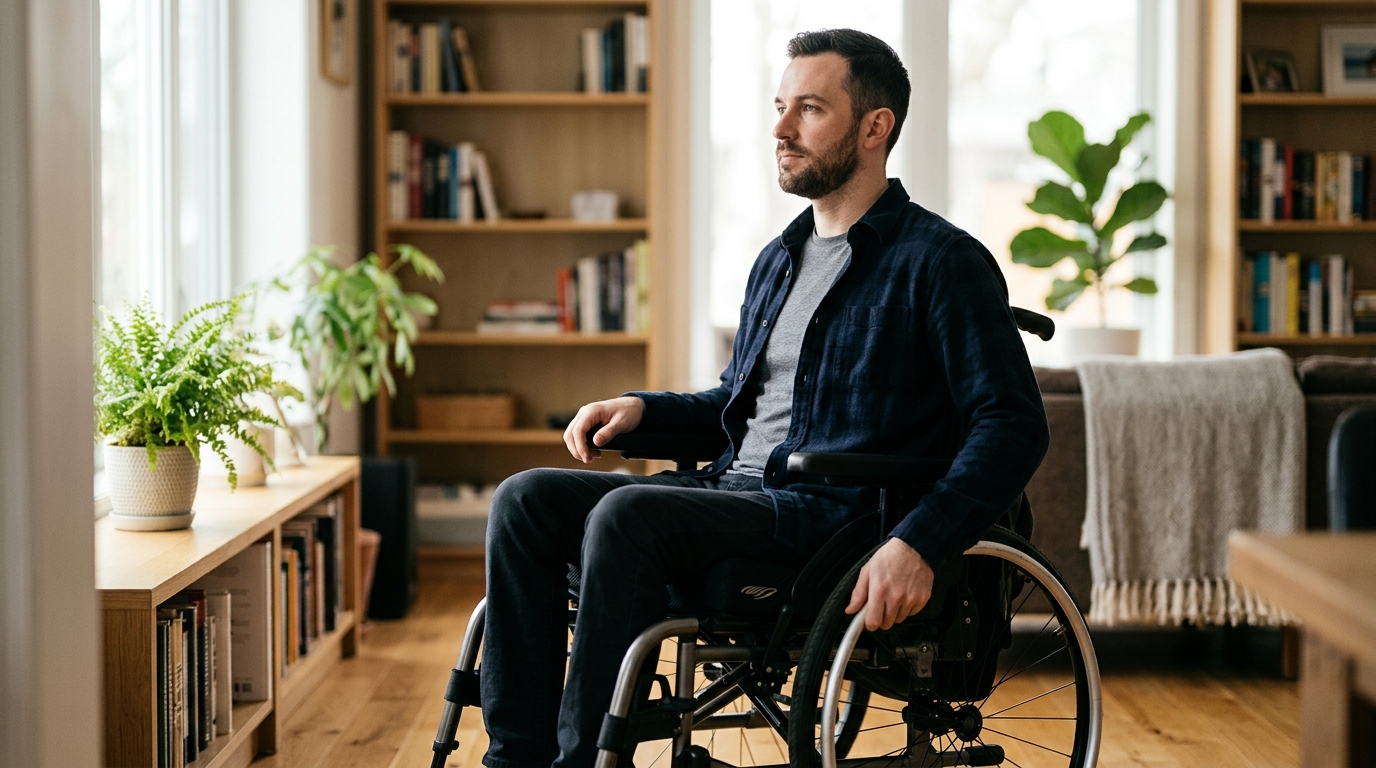
Mobility after a neck injury depends on the level. Modern technology can restore a surprising amount of independence. Someone with more arm and hand function may use a manual wheelchair. Someone with a higher-level injury may use a power chair. That chair can be controlled by hand, head, or breath (a “sip-and-puff” system).
Assistive technology also opens doors. Voice-controlled devices operate phones, lights, and thermostats. Environmental control units let a person run their home with very little movement.
Adapted vehicles restore the freedom to travel. They use hand controls or wheelchair lifts. That matters more than outsiders expect. The ability to reach a doctor, a job, or a friend’s house is what independence is really made of. Physical therapy sets mobility goals. Those goals shift over time as a person adapts and equipment improves.
Have questions about what happened?
Ask our team directly. The first conversation is free, confidential, and there is no obligation to continue.
Daily living and independence at home
Everyday tasks like bathing, dressing, and eating often need new tools and new routines. They also need a more accessible home. Occupational therapists teach adapted ways to do things. They recommend aids like weighted or built-up utensils, dressing sticks, and button hooks. The goal is to help a person do as much as possible, safely, on their own terms.
Home changes remove daily barriers. Common changes include:
- Ramps and stair lifts for entry and moving between floors
- Wider doorways for wheelchair access
- Roll-in showers and grab bars in the bathroom
- Ceiling or floor lifts for safe transfers
Caregivers carry a heavy, mostly invisible load. They give hands-on help, emotional support, and constant care coordination. It is meaningful work, and it is exhausting. Respite care and shared duties protect against caregiver burnout. That protects the whole family’s health.
Emotional, family, and financial realities
A catastrophic neck injury reshapes emotions, relationships, and finances. It is not just the body. Grief, frustration, anxiety, and depression are common and normal. Counseling and peer support help. Connecting with others who have lived through similar injuries eases isolation.
The Christopher & Dana Reeve Foundation offers resources and a peer network for people living with paralysis.
Finances shift at the worst possible time. Household income can fall as a person’s ability to work changes. At the same time, care costs climb. Family roles change too. A spouse becomes a caregiver. A teenager takes on new duties. There is no “right” timeline for adjusting. Naming these realities honestly is the first step to managing them.
When someone else’s negligence caused the injury
Think about how these injuries happen. A large truck crashes into a smaller vehicle. A driver runs a red light. Or a person is attacked on someone else’s property. They may be assaulted, robbed, sexually assaulted, or shot. That could happen at an apartment complex, a parking garage, a hotel, a bar, a gas station, or an ATM.
Sometimes a property owner fails to provide reasonable security. That means working locks and gates, good lighting, cameras, or guards. If someone was seriously hurt because of that failure, the owner may share responsibility. Lawyers call this negligent security (also called inadequate-security premises liability). But you do not need to know the legal name to have a claim.
When another person or company was at fault, a claim can seek money for many losses. That includes medical care, future lifetime care, lost income, home changes, and pain.
You also have to prove the injury came from the accident, not another cause. That is a key part of the process. Our guide on proving a back or neck injury was caused by an accident explains how.
Florida sets deadlines. Most negligence claims that start on or after March 24, 2023 must generally be filed within two years under Fla. Stat. §95.11.
Florida also uses a modified comparative-negligence rule. Under Fla. Stat. §768.81, a person found more than 50% at fault generally recovers nothing. When a loved one dies, the family may bring a wrongful-death claim under Fla. Stat. §768.21.
We can’t promise any specific result. But a free case evaluation with a licensed attorney can help a family understand its options.
Where to get help and next steps
A catastrophic neck injury changes life permanently. But care planning, technology, and support do exist. No family should have to work it out alone.
For the bigger picture, visit our main resource on catastrophic back and neck injuries. It links to diagnosis, lifetime cost, and long-term effects.
Did someone else’s negligence cause your injury or the loss of a loved one? Our licensed attorneys offer a free, confidential case evaluation. We take cases nationwide. We serve clients in English and Spanish. There is no pressure — just clear answers, at your pace. Request your free case evaluation here.

Want to know where you stand?
Tell us what happened and our team will walk you through the options available to you, at no cost.
Frequently asked questions
What is considered a severe or catastrophic neck injury?
It is a spinal cord injury, fracture, dislocation, or nerve damage in the neck that causes permanent paralysis or lasting loss of function. It is not a temporary strain or whiplash.
Can a neck injury affect you years later?
Yes. Chronic pain, muscle tightness, and later complications can appear or get worse over time. So a serious neck injury is often a lifelong condition to manage.
How long does it take for a broken neck to heal?
The neck bones may heal in weeks to months. But permanent nerve damage does not heal the same way. So lasting harm can remain even after the bone recovers.
What kind of long-term care is needed after a catastrophic neck injury?
It can include physical and occupational therapy, pain and breathing care, personal care attendants, mental-health support, and replacement medical equipment over a lifetime.
Who pays for lifelong care after a neck injury caused by an accident?
If someone else’s negligence caused the injury, a legal claim may seek money for lifelong care, lost income, and other losses. A free case evaluation can explain your options.
How long do I have to file a claim in Florida after a serious neck injury?
Most Florida negligence claims that start on or after March 24, 2023 must generally be filed within two years under Fla. Stat. §95.11. Because deadlines and exceptions vary, confirm your specific timeline with an attorney.
A Severe Neck Injury Is Not the Same as a Strain
If your neck injury involved a spinal cord injury, fracture, dislocation, or nerve damage that caused paralysis or lasting loss of function, this is a catastrophic injury, not a temporary whiplash. Symptoms can also worsen years later, so keep every medical record and get a full evaluation before settling anything.
What Life After a Severe Neck Injury Can Involve
Long-Term Medical Care
Surgery, physical therapy, pain management, and follow-up care can continue for years. Some complications appear long after the original accident.
Changes to Daily Living
Loss of function, chronic pain, and reduced mobility can affect work, driving, sleep, and independence, sometimes permanently.
Financial Strain
Ongoing treatment, lost income, and home or vehicle modifications add up quickly. These costs are part of what a claim can seek to recover.
Emotional Impact
Serious injuries affect the whole family. Support for mental health and caregiving needs is a real part of the road ahead.
How Our Firm Helps After a Catastrophic Neck Injury
We Build the Full Picture
We gather medical records, expert opinions, and life-care projections so future needs are accounted for, not just today's bills.
We Handle the Legal Side
You focus on recovery while our attorneys deal with insurers, at-fault parties, and paperwork.
Licensed & Accountable
Our attorneys are admitted to the Florida Bar and take catastrophic-injury cases nationwide.
Empathy, in Plain Language
We explain your options clearly, in English or Spanish, without legal jargon or pressure.