
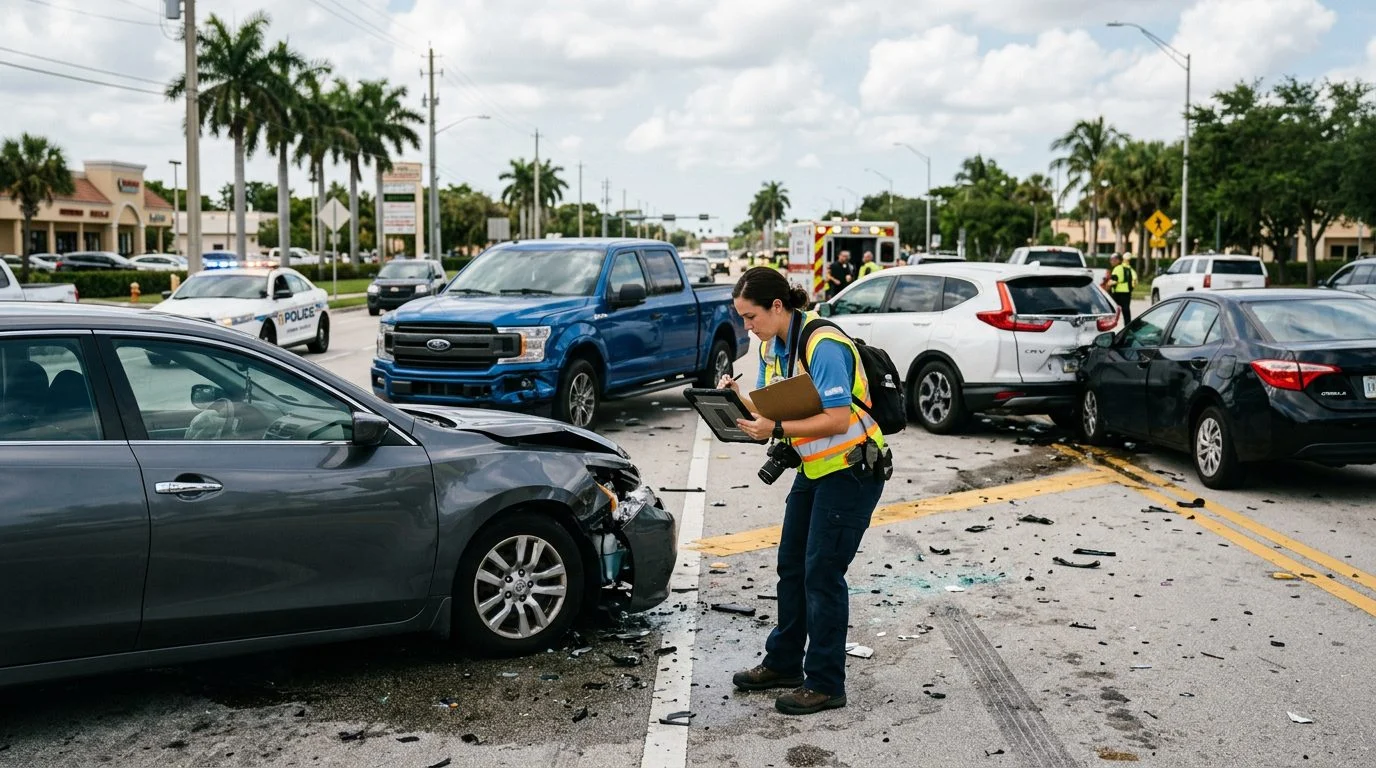
Car Accidents in Deerfield Beach, Florida
Understanding Car Accident Settlements in Deerfield Beach
Every crash leaves its own mark on a family's finances, health, and daily routine. Here is how to think about what a fair resolution can look like, and how to take a clear next step.
By CHG Lawyers · Published November 23, 2026
What Are the Average Settlement Amounts for Car Accidents in Deerfield Beach?
What are the average settlement amounts for car accidents in Deerfield Beach? The honest answer is this: no single average is reliable. Each settlement depends on one person’s injuries, one crash, and the insurance that applies.
This page explains what shapes the number. It covers the Florida rules that matter. It also explains what a $25,000 or $30,000 offer can mean after bills and repayment claims are paid.
CHG Personal Injury Lawyers is a Florida-based firm serving Deerfield Beach and communities throughout Florida. Igor Hernandez is the responsible lawyer for this page.
Not sure what your next step is?
Talk it through with our team — the first consultation is free, confidential, and carries no obligation.
Why There Is No Single Average Settlement Amount for Car Accidents in Deerfield Beach
No single average tells you what your own claim is worth. A settlement reflects one person’s injuries and one crash.
Online figures for Florida car accident settlements vary widely. Some sites publish broad ranges. Others describe what a typical case might look like.
These numbers were not built from your medical records, your bills, or the insurance on the vehicles involved.
Consider two people hit at the same intersection in Deerfield Beach. One has a sprain that heals in a few weeks. The other has a fractured leg that needs surgery and months of therapy.
Their claims are not the same, even though the crash was the same.
This page does not give you one number. Instead, it explains:
- How a settlement is built
- What moves the value up or down
- The Florida rules that shape the outcome
- How to read a specific offer
How a Car Accident Settlement Is Built
A car accident settlement usually combines two kinds of money. The first is money for economic losses. The second is money for non-economic losses.
Economic losses are the costs you can count, like bills and wages. They are the money losses that flow from the injury.
Non-economic losses are harder to count. They include pain and suffering, mental anguish, and inconvenience. In Florida car crash cases, certain damages are available only if the injury meets a minimum requirement set by state law.
Property damage works differently. Vehicle repair or a total loss is usually handled as a separate claim from injury compensation. An offer for your car is not an offer for your injuries. Keep the two apart when you compare numbers.
Negotiation is the last piece. A settlement is not a formula. Insurers make offers, and the parties negotiate. An early offer can arrive before doctors know how long recovery will take.
Factors That Raise or Lower the Value of a Claim
The biggest factors are three things. How serious and lasting the injury is matters most. Next is how consistently treatment was followed. Last is how clearly fault and insurance limits can be shown.
Severity comes first. Injuries such as a spinal cord injury, a traumatic brain injury, or a fracture needing surgery usually involve longer treatment and larger future costs. These injuries can also affect work and daily life for a long time.
Treatment consistency matters too. Follow your doctors’ care and keep your appointments. Gaps in treatment give insurers a reason to question how serious an injury was.
Liability evidence shows who caused the crash. Useful evidence includes:
- The police report
- Photos of the vehicles and scene
- Witness names
- Any dashcam or traffic camera footage
Save them early.
Insurance limits set the ceiling for many claims. The at-fault driver’s liability limits matter. If a commercial truck was involved, the owner’s coverage may matter too.
Florida requires each insurer that does or may provide liability insurance coverage to provide, within 30 days of the claimant’s written request, a sworn statement of known policies (Fla. Stat. § 627.4137). A sworn statement is a written statement signed under oath. A corporate officer or the insurer’s claims manager or superintendent signs it. It lists each known policy’s insurer, each insured, the liability limits, any policy defense the insurer reasonably believes is available, and a copy of the policy. Wage loss records round out the picture.
Florida Rules That Shape Car Accident Settlements
Under Florida’s comparative fault rule, a person found more than 50 percent at fault for their own harm may not recover any damages in a negligence action to which this section applies (Fla. Stat. § 768.81(6)). That bar does not apply to medical negligence claims under chapter 766. The reduction is proportionate. It does not bar recovery in a negligence action, subject to subsection (6) of Fla. Stat. § 768.81. That is why the early facts matter.
Personal Injury Protection (PIP) is Florida’s no-fault coverage. It pays certain medical bills and lost income for people injured in a car crash, no matter who caused it.
Your share of blame lowers the award in proportion. It does not bar recovery, subject to subsection (6) of the statute.
So who caused the crash is a central question.
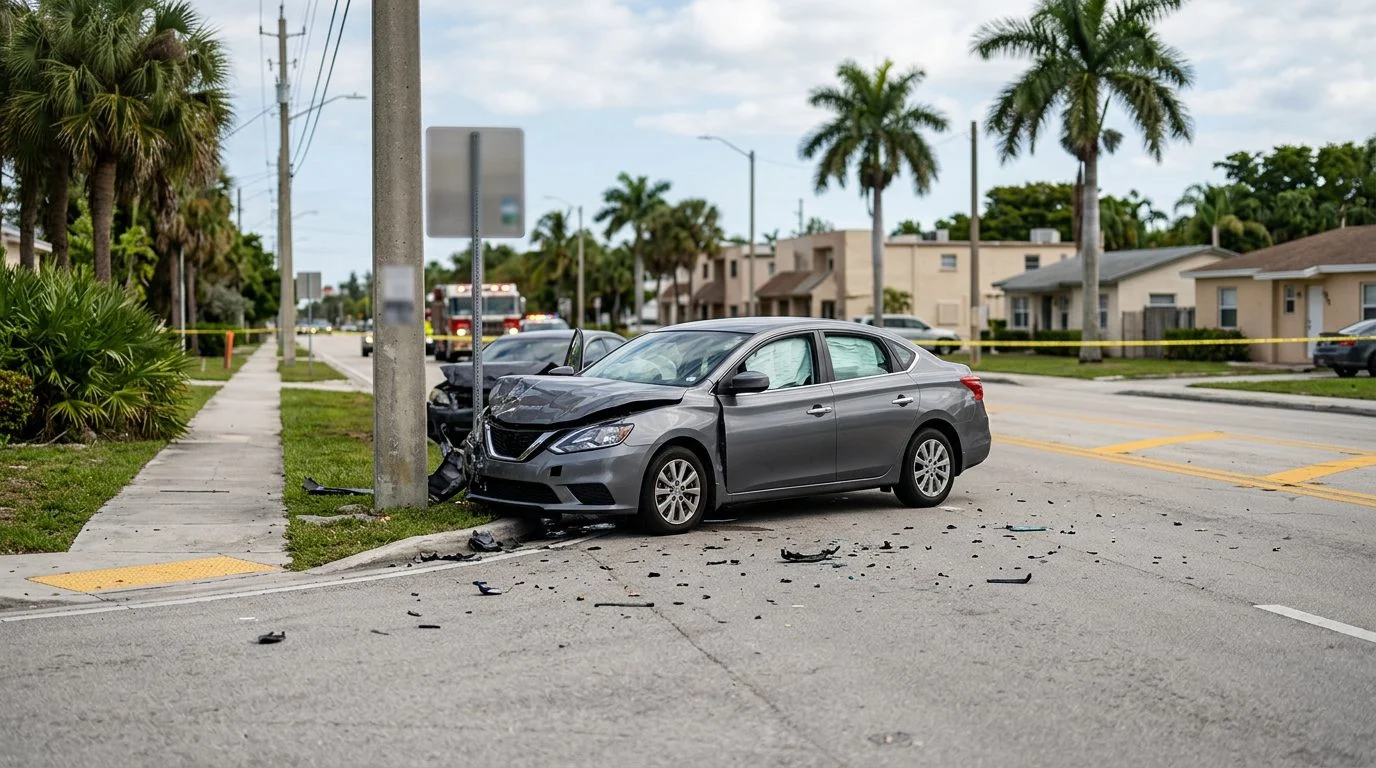
What a $25,000 or $30,000 Offer Can Mean in Practice
A $25,000 or $30,000 offer is a gross number. Gross means the total before anything is subtracted. The amount you keep can be much smaller once bills and repayment claims are addressed.
Medical bills come first. For medical treatment that has already been paid, Florida law limits the evidence of those expenses to the amount actually paid, whatever the payment source was (Fla. Stat. § 768.0427).
Some care may be given under a letter of protection. This is a promise to be paid from your settlement or judgment.
Florida reduces an award by amounts available from collateral sources, such as some health coverage, in any action to which this part applies in which liability is admitted or is determined by the trier of fact and damages are awarded, but there is no reduction for sources that hold a subrogation or reimbursement right (Fla. Stat. § 768.76). Collateral sources are other places the bills may be paid from.
There is no reduction for sources that hold a subrogation or reimbursement right. A reimbursement right is the right to be paid back. A source with a qualifying reimbursement right may seek repayment from your recovery. That repayment is limited to the actual amount of collateral sources it paid that the claimant recovered from the at-fault party. The source must also deduct its pro rata share of costs and attorney’s fees.
Consider a $30,000 offer where a health plan paid $12,000 in bills. If that plan holds a qualifying reimbursement right, it may seek repayment from the settlement, but only up to the actual amount it paid that the claimant recovered from the at-fault party, minus its pro rata share of costs and attorney’s fees. Liens and repayment claims may reduce the gross figure. A lien is a legal claim against money owed to you.
An offer may also cover bills you already have. It may not cover future treatment, therapy, or equipment. Ask whether the number includes future care.
CHG charges no attorney’s fees and no case costs unless there is a recovery.
Before you accept any offer, ask:
- Which liens exist?
- Does the number cover future care?
- Has the insurer confirmed its limits?
Not sure what your next step is?
Talk it through with our team — the first consultation is free, confidential, and carries no obligation.
Settlement Versus Litigation, and Florida’s Deadline
Most car accident claims resolve through negotiation with insurers. Some must go to a lawsuit. A filing deadline applies either way.
Filing deadlines are set by Florida’s limitations statute (Fla. Stat. § 95.11).
If the other driver has no insurance, your own uninsured motorist (UM) coverage may apply (Fla. Stat. § 627.727). UM coverage is your own policy coverage for injuries caused by a driver who cannot pay.
In a hit-and-run, report the crash to police promptly. That report helps document the claim.
Next Steps After a Crash in Deerfield Beach
The first steps after a crash are safety, a police report, and medical follow-up.
- Get a copy of the police report and write down the report number.
- Get medical evaluation and follow your doctors’ care. Keep every record, bill, and receipt.
- Be careful with recorded statements to insurers. You can ask for time before giving one.
- Keep a simple log of symptoms, missed work, trips to appointments, and expenses.
For local crash claims, see our Deerfield Beach car accident page.
How much is the average car accident settlement in Florida?
There is no single reliable average. Broad published ranges describe general cases. They do not describe your injuries or your claim.
Is $30,000 a good settlement for a car accident?
Whether an offer is fair depends on your injuries, bills, future care, and any liens. One number cannot answer that alone.
How much of a $25,000 settlement will I get?
The amount you keep is usually less than the gross offer. Liens and repayment claims may be paid from it.
Talk With CHG Personal Injury Lawyers About Your Deerfield Beach Crash
After a crash you did not choose, you may be looking for answers. That may be for yourself or for a family member. You do not have to work through these numbers alone.
Every crash and every set of medical records is different. The details shape what matters for your claim.
Igor Hernandez is the responsible lawyer for this page. CHG Personal Injury Lawyers is a Florida-based firm serving Deerfield Beach and communities throughout Florida.
Contact CHG Personal Injury Lawyers to schedule a free, confidential initial consultation, with no obligation to continue.
How CHG Personal Injury Lawyers Can Help
Protecting Your Claim
Our team works to document your injuries, bills, and lost income so that your claim reflects the full impact of the crash on your life.
Handling the Insurance Companies
We communicate with insurers and other parties on your behalf, so you can focus on your recovery instead of paperwork and phone calls.
Looking Ahead to Future Needs
Our attorneys consider future medical care, rehabilitation, and changes to your work or daily life, not only the bills you have today.
Support for Your Family
We explain each step in plain language and make sure you understand your options before any decision is made.
A Quick Offer Is Not Always a Fair One
Insurance adjusters may contact you soon after a crash with an offer. Before you respond or sign anything, talk with a lawyer about your medical care, future treatment, and any liens that may affect what you receive.
Steps That Help Protect Your Claim
Get Medical Care Right Away
Seek evaluation after a crash, even if you feel fine at first, and follow your doctors' care plans closely.
Keep Every Record
Save medical bills, prescriptions, pay stubs, repair estimates, photos, and notes about how the injury affects your daily life.
Be Careful With Recorded Statements
Speak with a lawyer before giving a recorded statement or signing a release with an insurance company.
Reach Out Promptly
Deadlines apply to injury claims in Florida. Contacting our firm early gives us more time to investigate and preserve evidence.