

Car Accidents in Tampa
What to Do After a Crash: A Step-by-Step Guide
The moments after a car accident are critical. Here's what you need to do to protect yourself and your claim.
By CHG Lawyers · Published September 28, 2026
Car Accident in Tampa: What to Do After a Crash & How to Pursue Your Claim
Tampa’s rush-hour traffic on I-4 and I-275 is intense. Thousands of drivers merge, brake, and navigate busy intersections daily. Crashes happen constantly in Tampa and across the Bay area. Most are minor fender-benders. But many cause real injury—and some change lives forever.
If you’ve been in a car accident in Tampa, the steps you take right now matter. This guide walks you through what to do immediately after an accident, how Florida’s insurance system works, and when you may have a legal claim for damages.

If you've been hurt in a Tampa car crash—whether it's a minor fender-bender or a serious injury—our team is here to help. Talk it through with our team — the first consultation is free, confidential, and carries no obligation.
Immediate Steps After a Car Accident in Tampa
Check for injuries and call 911 if anyone is hurt. Move to a safe location if possible, away from traffic. If you’re on a highway like I-4 or I-275, stay in your vehicle with your seatbelt on until help arrives—unless you’re in immediate danger.
Call the Tampa Police Department (non-emergency: 813-231-6130) or Florida Highway Patrol if the crash occurred on a state highway. You need an official police report. Ask for the report number at the scene or call back later to get it.
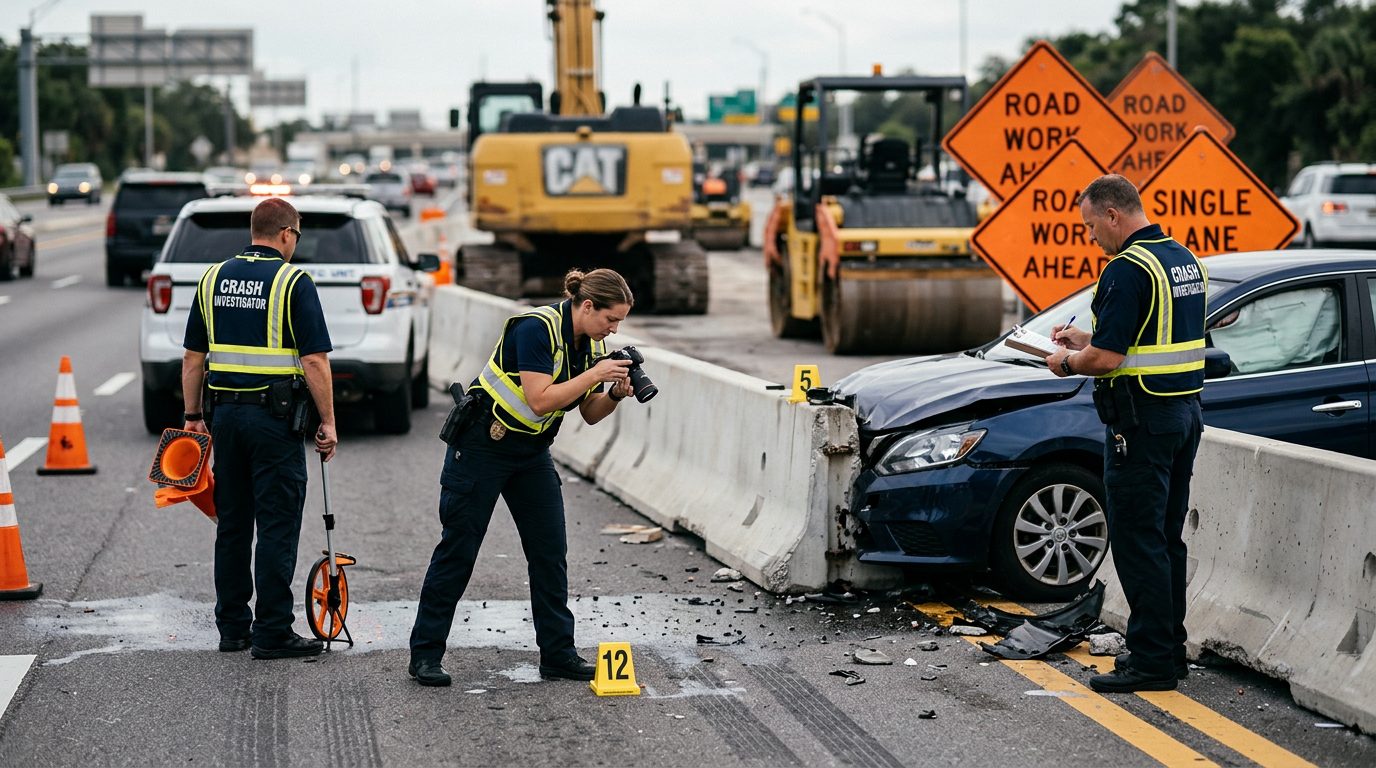
Document everything at the scene. Take photos of vehicle damage, road conditions, traffic signs, skid marks, and the other vehicle’s license plate.
Get the other driver’s information: name, phone number, address, insurance company, and policy number. Write down contact information from any witnesses—they may be important later.
Do not admit fault or apologize for the accident. Even if you think you caused it, let the police and insurance companies determine who is responsible. Statements you make at the scene can be used against you later.
Request a copy of the police report. You’ll need it for your insurance claim and any legal case. The report includes the officer’s assessment of what happened, which is important evidence.
Common Types of Car Accidents in Tampa
Rear-end collisions are frequent during rush hour on I-4 and I-275, especially when traffic suddenly slows.
Intersection crashes happen when drivers run red lights or fail to yield.
Highway merging accidents occur when drivers don’t check blind spots or misjudge speed.
Multi-vehicle pile-ups can happen in seconds, involving three or more cars.
Parking-lot collisions and hit-and-run incidents also occur regularly.
Each type of accident may involve different liability questions and injury patterns.
Injuries from Tampa Car Accidents: From Minor to Catastrophic
Some injuries appear immediately. Others develop over days or weeks.
Whiplash and neck strain are common in rear-end collisions but are often underestimated.
Back injuries and herniated discs can cause chronic pain and disability.
Broken bones and fractures require surgery and extended recovery.
Traumatic brain injuries (TBI) result from impact or sudden deceleration. Symptoms may not show right away. Watch for confusion, headaches, memory loss, or personality changes—these can emerge hours or days later.
Spinal cord injuries resulting in paraplegia (paralysis of the lower body) or quadriplegia (paralysis of all four limbs) are life-altering.
Internal injuries and organ damage may not be visible but are serious.
Severe burns can occur if a vehicle catches fire.
Amputation or limb loss happens in catastrophic multi-vehicle crashes.
Wrongful death—the loss of a loved one—leaves surviving family members facing medical bills, lost income, and profound grief.
Even if you feel “okay” after a crash, see a doctor immediately. Some injuries are hidden.
Why You Should See a Doctor After a Tampa Car Accident
Get a medical evaluation right away. Some injuries—internal bleeding, traumatic brain injury, spinal cord damage—don’t show symptoms right away.
A medical record created soon after the crash is crucial evidence. It proves a direct link between the accident and your injuries.
Insurance companies use delays in seeking care to argue that injuries aren’t serious or weren’t caused by the crash. If you wait days or weeks to see a doctor, the insurer may claim your injuries are unrelated. Your doctor’s notes become the foundation of your case.
Insurance Claims After a Tampa Car Accident
Learn more about Florida no-fault insurance explained.
But no-fault insurance has limits. If your injuries are serious enough, you may step outside the no-fault system and sue the at-fault driver for additional damages. This is where the “serious injury threshold” comes in.
Not sure what your next step is?
Talk it through with our team — the first consultation is free, confidential, and carries no obligation.
What “Serious Injury” Means in Florida Car Accident Cases
This includes:
- Permanent injury
- Significant and permanent scarring or disfigurement
- Death
Catastrophic injuries, such as spinal cord damage, paralysis, traumatic brain injury, amputation, or severe burns, can meet this threshold when they cause a permanent injury, a significant and permanent loss of an important bodily function, significant and permanent scarring or disfigurement, or death.
But even non-catastrophic injuries can qualify. Chronic back pain, ongoing headaches, limited range of motion, or persistent nerve damage may meet the threshold if the injury is permanent, or if it causes a significant and permanent loss of an important bodily function.
An attorney can evaluate your specific injury and explain whether you meet the threshold and what damages you may recover.
Damages You May Recover in a Tampa Car Accident Claim
Under Florida law (Fla. Stat. §627.737), damages for pain, suffering, mental anguish, and inconvenience from bodily injury may be recovered in tort only if the injury meets the serious injury threshold.
In wrongful-death cases, surviving family members may recover funeral expenses, lost financial support, and loss of companionship.
Learn more about car accident injury damages.
Why You Need an Attorney for a Serious Tampa Car Accident
Insurance adjusters are trained to minimize payouts. They are not on your side. Going up against them alone puts you at a disadvantage.
An attorney investigates the crash, gathers evidence, interviews witnesses, and builds a strong case. Legal representation levels the playing field against insurance companies and their lawyers.
An experienced attorney negotiates on your behalf and knows when a settlement offer is too low. If a fair settlement cannot be reached, your attorney can file a lawsuit and represent you in court.
Most personal injury attorneys work on contingency—you pay nothing upfront. Attorney fees come from your recovery, so your lawyer has every incentive to fight for the maximum compensation.
Early legal consultation protects your rights, ensures critical deadlines are met, and prevents you from making mistakes that could harm your claim.
Catastrophic Car Accidents in Tampa: When Injuries Change Everything
Some Tampa crashes result in life-altering injuries: paralysis, severe brain damage, amputation, or death. These injuries require immediate specialized medical care and long-term rehabilitation. Families face enormous medical bills, home modifications, ongoing care, and lost income.
Catastrophic injury claims involve larger damages and more complex legal issues. An attorney with experience in catastrophic cases understands the full scope of your needs—from immediate emergency care to lifetime care planning—and fights for compensation that reflects the true cost of your injury.
Wrongful Death from a Tampa Car Accident
If a loved one was killed in a car crash, surviving family members may bring a wrongful-death claim. Wrongful-death damages include funeral and burial expenses, lost financial support the deceased would have provided, and loss of companionship.
In Florida, the wrongful-death claim is filed by the personal representative of the estate on behalf of the survivors, such as the spouse, children and parents (Fla. Stat. § 768.20).
Wrongful-death cases are emotionally difficult and legally complex. Experienced representation is essential. Families who have lost someone in a crash often find that pursuing a claim honors the deceased and helps secure the family’s financial future.
Time Limits for Filing a Car Accident Claim in Florida
Florida’s statute of limitations generally allows 2 years from the date of the crash to file a lawsuit (Fla. Stat. §95.11). However, insurance claims and settlement negotiations often move faster.
Waiting too long can result in lost evidence, faded witness memories, and missed opportunities.
If you’ve been injured in a Tampa car accident, contact an attorney as soon as possible—even if you’re still in treatment.
Have questions about what happened?
Ask our team directly. The first conversation is free, confidential, and there is no obligation to continue.
What to Expect When You Contact a Car Accident Attorney
A free initial consultation gives you a chance to discuss your crash, injuries, and questions with an experienced attorney. The attorney will review your case, explain your options, and answer your questions—with no obligation to hire them.
If you decide to move forward, the attorney handles all communication with insurance companies and the other party. You’ll receive regular updates and be involved in all major decisions.
Most cases settle without trial. If settlement talks fail, your attorney will prepare for court. You pay nothing upfront. Attorney fees come from your recovery.

Frequently Asked Questions
What should I do immediately after a car accident in Tampa?
Check for injuries, call 911 if needed, move to safety, call Tampa Police (813-231-6130) or FHP, document the scene with photos, get the other driver’s information and witness contact details, and request the police report number.
How much can I recover from a car accident claim in Florida?
Damages depend on your injury severity, medical expenses, lost income, and whether your injury meets Florida’s serious injury threshold. An attorney can evaluate your specific case.
What is the statute of limitations for a car accident lawsuit in Florida?
You generally have 2 years from the date of the crash to file a lawsuit. Early action protects your evidence and rights.
Do I need an attorney for a car accident claim in Tampa?
For serious injuries or disputes with insurance companies, an attorney protects your rights and maximizes your recovery. Most work on contingency, so there’s no upfront cost.
How does Florida’s no-fault insurance system work?
If your injury is serious enough, you can sue the at-fault driver for additional damages.
If you’ve been hurt in a Tampa car crash—whether it’s a minor fender-bender or a serious injury—our team is here to help. People in your situation contact us regularly to understand their options and protect their rights. Get a free case evaluation today.
Immediate Steps After a Tampa Car Accident
Check for Injuries & Call for Help
Your safety comes first. Check yourself and passengers for injuries. If anyone is hurt, call 911 immediately. Even if injuries aren't obvious, some symptoms appear hours or days later—don't assume you're fine.
Move to Safety
If your vehicle is drivable and traffic allows, move it out of the roadway to prevent further collisions. Turn on hazard lights. If you can't move the car safely, stay inside with your seatbelt on and wait for police.
Contact Police
Call the Tampa Police Department (813-231-6130) or Florida Highway Patrol if the accident happened on a highway. Request a police report number—you'll need this for your insurance claim and any legal action.
Document the Scene
Take photos and video of vehicle damage, road conditions, traffic signs, and the overall accident scene from multiple angles. Photograph the other driver's vehicle, license plate, and any visible injuries. These details matter.
Gather Critical Information
Get the Other Driver's Details
Record the other driver's name, phone number, address, driver's license number, license plate, vehicle make and model, and insurance company name and policy number. Stay calm and factual—don't admit fault or apologize for the accident.
Collect Witness Information
Ask anyone who saw the accident for their name, phone number, and email address. Witnesses can be crucial if the other driver disputes what happened. Get their account while memories are fresh.
Note the Police Report Details
Write down the officer's name and badge number, the police report number, and the date and time of the report. This document will be essential when you file an insurance claim or pursue a legal claim.
Do Not Delay Medical Care
Some injuries—like traumatic brain injuries, internal bleeding, or spinal cord damage—may not cause immediate pain. Seek medical attention even if you feel okay. A medical record created soon after the accident strengthens your claim and protects your health.
After You Leave the Scene
Report to Your Insurance Company
Notify your insurance company promptly. Provide factual information about what happened, but don't speculate or accept blame. Stick to what you know. Keep copies of all correspondence.
Preserve Evidence
Keep your damaged vehicle as-is if possible—don't repair it yet. Save all medical records, receipts for expenses, pay stubs showing lost wages, and any communication with the other driver or their insurance company.
Seek Legal Guidance Early
If you've suffered serious injury—spinal cord damage, traumatic brain injury, amputation, severe burns, or permanent impairment—or if the accident involved a truck, rideshare vehicle, or negligent security issues, contact a personal injury attorney. Early consultation protects your rights.
Track Your Recovery
Keep a journal of your injuries, pain levels, medical appointments, medications, and how the accident affects your daily life and work. This record is valuable if your case goes to trial or settlement negotiations.
Why You Need Legal Help After a Serious Car Accident
Protection Against Insurance Companies
Insurance adjusters work to minimize payouts. An attorney advocates for fair compensation and handles negotiations so you don't have to.
Proper Claim Documentation
We ensure all evidence—medical records, police reports, witness statements, and damage assessments—is organized and presented correctly.
Understanding Your Rights
Florida law allows recovery for medical bills, lost wages, pain and suffering, and permanent disability. We explain what you may be entitled to pursue.
No Attorney’s Fees Unless There’s a Recovery
We work on contingency: you pay no attorney fees unless we recover compensation for you. That aligns our interests with yours.
Catastrophic Injuries Require Immediate Action
If the accident caused a spinal cord injury, paralysis, traumatic brain injury, amputation, severe burns, or other life-altering damage, the stakes are high. CHG Personal Injury Lawyers handles catastrophic injury claims, along with other car accident cases. Contact us right away to discuss your case and your options.