
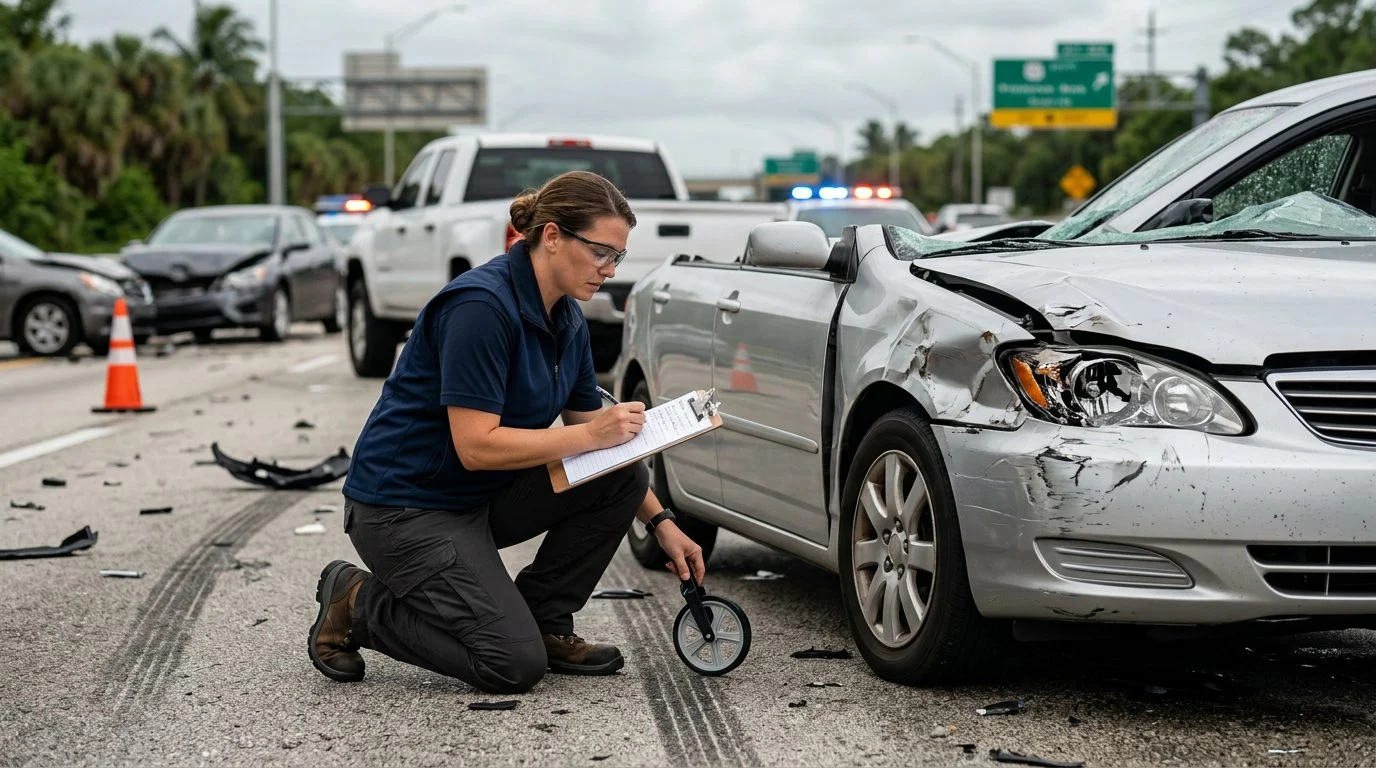
Florida Car Accident Guide
Feel Fine After a Crash? Why a Neurologist Evaluation May Matter
Some brain and nerve injuries from a car accident don't show up right away. Here is what Florida families should know about symptoms, medical follow-up, and protecting your health and your rights.
By CHG Lawyers · Published October 21, 2026
Should You See a Neurologist After a Car Accident?
Yes, it is often worth asking your doctor about a neurologist evaluation. A neurologist is a doctor who treats the brain and nerves.
Ask about this if you have headaches, dizziness, memory or focus problems, numbness, tingling, weakness, or changes in sleep or mood after a crash. Your primary doctor can help decide whether a referral makes sense.
Some symptoms don’t show up right away. A concussion is a brain injury caused by a blow or sudden jolt. It can cause headaches, confusion, or trouble thinking. These symptoms can appear hours or even days after the impact.
Many people feel fine at the scene. They notice changes later.
Family members often see the change first. A spouse, parent, or adult child may notice repeated questions, unusual sleepiness, or irritability. Write those observations down. They help build an accurate medical record.
Decisions about your care belong to you and your doctors. Follow their advice. Keep recommended appointments, even if you start to feel better.
Not sure what your next step is?
Talk it through with our team — the first consultation is free, confidential, and carries no obligation.
Neurological Injuries That Can Follow a Car Crash
A car crash can affect the brain, the spinal cord, or the nerves that branch out from the spine.
The spinal cord sits inside three layers of protective tissue. Cerebrospinal fluid, a clear fluid, surrounds it and acts as a cushion (NINDS spinal cord injury overview).
Nerves leave the spinal cord at many levels. Nerves in the neck help control the arms, hands, and diaphragm. The diaphragm is the muscle you use to breathe. That is one reason neck injuries after a crash deserve careful medical review.
Common causes of nerve damage in crashes include:
- Sudden impact forces that stretch or bruise nerve tissue.
- Whiplash-type neck and back injuries.
- Compression from a displaced bone or disc pressing on a nerve.
The same symptom can have several possible causes. For example, tingling in a hand can come from a nerve problem in the neck, a problem in the wrist, or another condition. A neurologist’s full workup, meaning the complete set of tests and exams, helps sort out which one is involved.
How Long Symptoms Can Take to Appear or Improve
Symptoms can start days or weeks after a crash. Recovery times vary widely.
Nerves and brain tissue heal at different rates. The type and severity of the injury also matter. No single timeline fits everyone.
A symptom that appears days later still belongs in your medical record. Tell your doctor as soon as you notice it. Dates matter. A clear note of when a symptom began helps your doctors and any future claim.
Recovery timelines should come from your treating doctors. An online article or a lawyer cannot predict how your body will heal.
Some symptoms last long after the crash. If that happens, keep good records. Keep every follow-up visit and every test result. Do this even when the news is not what you hoped for.
Why Your Medical Records Matter for Your Claim
Your medical records create a dated timeline. They link the crash to your symptoms, diagnoses (the names of your conditions), and treatment. Clear records make it easier to show what happened and when.
Objective findings carry weight. These are results that can be measured or seen. Imaging, such as MRI or CT scans, neurologist notes, and test results show what doctors can measure. These findings support what you report about your pain and limits.
Florida law sets a threshold for certain car accident claims. A threshold is a minimum requirement. Under Fla. Stat. § 627.737, pain and suffering damages are available only if the injury includes a significant and permanent loss of an important bodily function, a permanent injury within a reasonable degree of medical probability (other than scarring or disfigurement), significant and permanent scarring or disfigurement, or death.
Your doctors’ records help show whether those conditions apply.
Consistency also matters. Describe your symptoms the same way at each visit. Gaps in treatment can be used to argue that an injury was not serious. If you had a condition before the crash, records that document a real change can still matter.
Have questions about what happened?
Ask our team directly. The first conversation is free, confidential, and there is no obligation to continue.
Florida Rules That Affect Your Records and Deadlines
Florida’s no-fault system uses Personal Injury Protection (PIP) coverage to pay certain medical bills. PIP is the insurance that pays those bills.
PIP has its own timing rules for starting care. Ask your doctor and your insurer about your PIP status early.
Insurers may request their own exams.
Under Fla. Stat. § 95.11, actions other than for recovery of real property must be commenced within the period set for their type, and each type of claim has its own deadline. Negligence means carelessness that causes harm.
Filing deadlines depend on when a claim arose and on the type of case involved. Other deadlines can apply depending on the facts. Deadlines apply, so prompt action protects your options.
Florida also uses comparative fault, also called shared fault. Under Fla. Stat. § 768.81, a person found more than 50 percent at fault for their own harm may not recover damages in a negligence case, except an action for personal injury or wrongful death arising out of medical negligence under chapter 766. Damages are money awarded for losses.
Keep copies of discharge papers (the papers you receive when you leave the hospital), referrals, and billing statements. Under Fla. Stat. § 768.0427, past medical expenses that have been paid are measured by the amount actually paid. Organized bills make that proof easier.
Protecting Your Records and Talking With a Florida Injury Lawyer
Start a symptom journal. Write down dates, times, and what you felt.
Attend every appointment. Tell each doctor about every symptom, even small ones. Keep one folder for records, bills, and insurance letters.
On medical forms, describe what happened in plain facts. Avoid guessing about how the crash occurred. Let the records speak for what you can confirm.
CHG Personal Injury Lawyers is a Florida personal injury firm serving Miami and communities throughout Florida. Igor Hernandez is the responsible lawyer for this page.
CHG charges no attorney’s fees and no case costs unless there is a recovery.
If you’re helping a family member through a Florida crash, you may not be sure how neurologist visits and records will affect a claim. Reach out to our team for a free, confidential initial consultation with no obligation to continue.

Frequently Asked Questions
Should I see a neurologist after a car accident if I feel fine?
Yes. Some brain and nerve injuries, such as concussions, can cause headaches, dizziness, memory trouble, or numbness. These can appear hours or days after a crash. Follow your doctor’s advice on whether a neurologist evaluation is right for you.
How soon should I see a neurologist after a car accident in Florida?
Getting prompt medical evaluation after a crash is important for your health, and you should follow your doctors’ recommended care. This matters for certain no-fault (PIP) benefits and non-economic damages. Because symptoms can take time to show, see a doctor as soon as possible. Keep up with the care plan your doctors recommend.
Can a neurologist’s records be used in an injury claim?
Yes. A neurologist’s notes, test results, and diagnoses document your symptoms. They can be important evidence when a claim is made after a crash. Keep copies of your appointment notes and bills. Tell your attorney about every provider you see.
How long do I have to file a claim after a car accident in Florida?
For most negligence claims arising after March 24, 2023, Florida law generally allows two years. Other deadlines can apply. Other deadlines can apply. Contact CHG Personal Injury Lawyers promptly. Your first consultation is free, confidential, and carries no obligation.
Want to know where you stand?
Tell us what happened and our team will walk you through the options available to you, at no cost.
Symptoms to Raise With Your Doctor
Headaches that are new or getting worse
Headaches after a crash, especially ones that build over hours or days, are worth describing in detail to your doctor.
Dizziness or balance problems
Feeling unsteady, lightheaded, or off-balance can be a sign that the brain or inner ear needs a closer look.
Memory or concentration trouble
Trouble remembering things, following conversations, or focusing at work or school should be reported, even if it seems minor.
Numbness, tingling, or weakness
Changes in feeling or strength in an arm, leg, hand, or foot may point to a nerve problem that a neurologist can evaluate.
Important
Call 911 right away for a seizure, fainting, confusion, slurred speech, vision loss, or sudden severe headache. Follow your doctors' care plan, and do not skip recommended follow-up visits because you feel better.
Protecting Your Health and Your Options
Get checked early
A prompt medical evaluation creates a record of how you felt after the crash and gives your doctors the information they need.
Keep every record
Save discharge papers, test results, prescriptions, referral letters, and bills. Keep a simple journal of symptoms and how they affect daily life.
Ask a lawyer to review your claim
Our team can explain how Florida law may apply to your situation, answer your questions, and help you understand your options.