

Florida Car Accident Injuries
Neck or Back Pain After a Car Accident? You Don't Have to Sort It Out Alone
Pain that surfaces days after a crash is more common than many people realize. Here is how to protect your health and your options while you recover.
By CHG Lawyers · Published November 21, 2026
Neck and back pain after a car accident can be a real injury, and in Florida it can support a claim for damages. Whether a claim moves forward depends on your medical records, your treatment, and the facts of the crash. If you’re hurting right now, you may not know how serious the pain is or what it means for your bills and your job.
This guide explains the common neck and back injuries from car crashes. It covers why symptoms can appear days later, how Florida’s no-fault system works, and which deadlines matter. It is general information, not medical advice. Your treating doctor’s care comes first.
Neck and Back Pain After a Car Accident: Where to Start If You Are Hurting Now
Start by following your doctor’s care plan and telling your doctor about every symptom from the crash. Don’t wait for pain to fade on its own.
This page is general information about neck and back injuries and Florida injury claims. It is not medical advice and does not replace the care of your treating doctor. It was written by Igor Hernandez, attorney, CHG Personal Injury Lawyers. CHG is a Florida-based firm that represents people hurt in accidents throughout Florida.
Igor Hernandez is one of the firm’s licensed attorneys and is the responsible lawyer for this page. He is admitted to practice in Florida.
Below, you’ll find what a crash can do to the spine, the common injuries, warning signs, why pain can be delayed, Florida’s no-fault rules, what a claim can cover, the deadlines, and steps to keep good records. Read what fits your situation. If you’re helping a parent, spouse, or friend, the same steps apply.
If neck or back pain started after your crash, we can talk through what Florida PIP, a possible injury claim, and the deadlines may mean for your situation. Talk it through with our team — the first consultation is free, confidential, and carries no obligation.
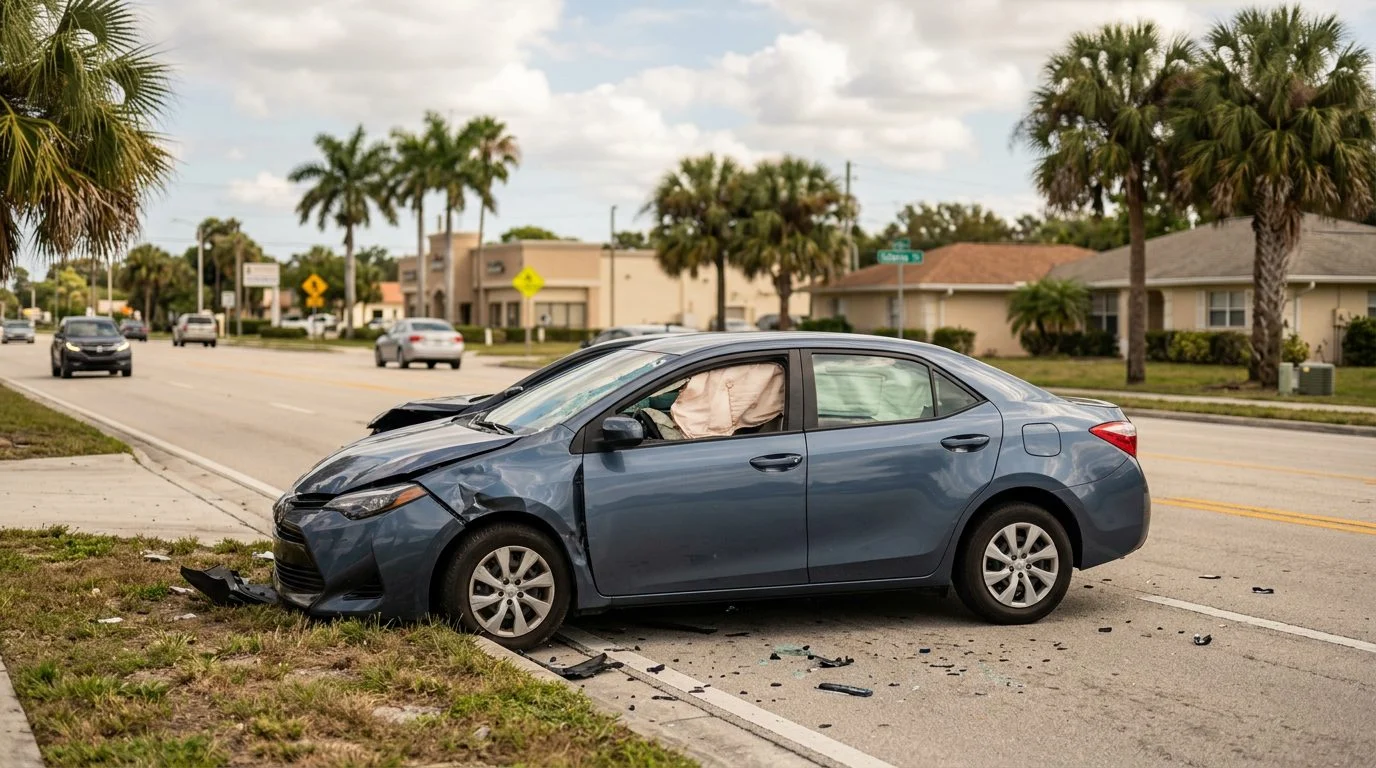
What Can Happen to Your Neck and Spine in a Car Crash
A crash can throw the head and upper body forward and back in a fraction of a second. That sudden motion can push the neck and back past their normal range of motion, even at moderate speeds.
Your spine is a stack of bones called vertebrae, with discs between them. Ligaments and muscles hold it together. The spinal cord runs through the middle. According to the NINDS spinal cord overview, the cord has three layers of protective tissue and is surrounded by fluid that acts as a cushion. Nerves in the neck, called C1 to C7, send signals to the back of the head, the neck and shoulders, and the arms and hands.
When the neck or back is stretched or pinched, nearby muscles, ligaments, discs, and nerves can be hurt. Pain often spreads, because the same area sends signals along shared pathways.
What can happen to your neck after a car accident? Possible outcomes include:
- A sprain or strain of the ligaments and muscles
- Stiffness that makes turning your head hard
- Irritation of a disc or nerve that causes pain, numbness, or tingling
- Headaches that start at the base of the skull
Common Neck and Back Injuries After a Car Accident
The most common injuries after a crash are neck sprains (often called whiplash), muscle strains in the neck and low back, and disc injuries. Each one feels different. A doctor’s exam and imaging show what is actually present.
Whiplash is a neck sprain or strain caused by a sudden back-and-forth motion. People often describe stiffness, a dull ache, headaches, and less movement when turning the head. Symptoms can take time to develop.
What are the symptoms of a pulled neck muscle? Most people describe soreness, tightness, and pain that gets worse with movement. Muscle spasms and trouble sitting or standing for long periods are also common.
Disc injuries are different. A disc can bulge or herniate, which may press on a nearby nerve. Pain can travel into an arm or leg, and some people feel numbness, tingling, or weakness there. Those symptoms need prompt medical review.
Facet joints and ligaments can also be hurt. These small joints and tissues guide movement in the spine. Injuries there often cause localized pain and stiffness. Your doctor decides which diagnosis fits your case. Don’t try to name it yourself.
Warning Signs That Need Prompt Medical Attention
Numbness or weakness in the arms or legs, trouble walking, or loss of balance needs urgent medical evaluation. Don’t wait to see whether these signs go away.
Other signs that call for prompt care include a severe or worsening headache, changes in bladder or bowel control, and pain that spreads down an arm or leg. For sudden or severe symptoms, call 911 or go to the nearest emergency room, following standard emergency guidance.
Prompt evaluation protects your health. It also creates a clear medical record of what happened after the crash. Tell the medical team exactly how the crash happened and where you hurt.
If you feel mostly fine but still have pain, a checkup is still worth it. Mild symptoms can change over time. If you’re watching over someone else, speak up on their behalf when something seems off. Follow the instructions your doctors give you.
Why Neck and Back Pain Can Show Up Days Later
Neck and back pain can appear hours or days after a crash, even when you felt fine at the scene. A delay does not automatically mean the crash didn’t cause the injury.
Pain from a strain or sprain is often not at its worst right away. Stiffness can build over the next day or two. Many people only notice the full pain once they try to get out of bed, drive, or sit at a desk.
The real problem with delay is treatment. When days pass before a doctor visit, it becomes harder to connect symptoms to the crash. Gaps in care can also raise questions from insurers and others.
If you notice new pain, see your doctor promptly. Describe the accident and every symptom honestly. Don’t leave out details because they seem minor. Physical therapy is a common part of recovery for many people with neck and back strain. Your doctor decides whether it fits your case.
How Florida’s No-Fault PIP System Affects Your Early Medical Bills
Florida’s no-fault law requires car insurance that includes personal injury protection, known as PIP, to help pay certain crash-related costs. The statutes call this the Florida Motor Vehicle No-Fault Law, found in § 627.730.
Vehicle owners must keep required security in effect, which is usually an insurance policy (§ 627.733).
In plain terms, PIP comes through insurance that is part of the vehicle coverage. It is different from a claim against the other driver. Keep these two paths separate in your mind as you read on.
Not sure what your next step is?
Talk it through with our team — the first consultation is free, confidential, and carries no obligation.
What a Florida Injury Claim Can Cover for Neck and Back Injuries
A Florida injury claim can seek money for medical bills, lost income, and, in some cases, pain and suffering. Each part of a claim has its own rules.
Economic losses are the costs you can count. These include past and future medical bills, imaging, therapy, medication, lost wages, and lost ability to earn in the future. Non-economic losses are harder to count. They include pain and suffering, mental anguish, and loss of enjoyment of life.
Florida sets a threshold for pain and suffering damages from vehicle crashes. Section 627.730 only names the Florida Motor Vehicle No-Fault Law; § 627.737(2) provides that, in a tort action brought against the owner, registrant, operator, or occupant of a motor vehicle for which security has been provided as required by ss. 627.730-627.7405, or against any person or organization legally responsible for her or his acts or omissions, a plaintiff may recover damages in tort for pain, suffering, mental anguish, and inconvenience because of bodily injury, sickness, or disease arising out of the ownership, maintenance, operation, or use of that motor vehicle only in the event that the injury or disease consists in whole or in part of: (a) significant and permanent loss of an important bodily function; (b) permanent injury within a reasonable degree of medical probability, other than scarring or disfigurement; (c) significant and permanent scarring or disfigurement; or (d) death.
Medical records matter here.
Medicare can also be part of the picture. According to Medicare.gov coordination guidance, if an insurer does not pay promptly, providers may bill Medicare, which can pay and later seek repayment. Under CMS Medicare secondary payer guidance, a conditional payment must be repaid from a settlement or judgment.
Some providers treat patients on a letter of protection, which promises payment from a future settlement or judgment. Florida requires a claimant in a personal injury or wrongful death action, as a condition precedent to claiming medical expenses for treatment rendered under a letter of protection, to disclose a copy of the letter of protection, the dollar amount for which the factoring company or other third party purchased such accounts, the health coverage they had at the time, and any referral, under § 768.0427.
The value of any claim turns on medical records, treatment history, the crash facts, and insurance. No one can promise a specific amount.
Florida Deadlines and Fault Rules to Know
Florida generally gives two years to file a negligence lawsuit, but other deadlines can apply. Under § 95.11, an action founded on negligence must be commenced within two years.
Chapter 2023-15, Laws of Florida amended Fla. Stat. § 768.81, which governs comparative fault and the apportionment of damages in negligence actions. Under Chapter 2023-15, Laws of Florida, except as otherwise expressly provided in the act, the act applies to causes of action filed after its effective date.
Deadlines apply to your case. Don’t wait to learn which ones may apply to you.
Florida also uses a fault rule called comparative fault, or shared fault. Under § 768.81, in a negligence action the court enters judgment against each party liable on the basis of that party’s percentage of fault and not on the basis of the doctrine of joint and several liability. In a negligence action to which this section applies, a party found more than 50 percent at fault for his or her own harm may not recover any damages, except in an action for personal injury or wrongful death arising out of medical negligence under chapter 766.
Insurers and other parties may argue over who caused what. Keep this rule in mind when you read the crash report and talk about the accident.
Steps That Help Document Your Neck and Back Injury
Organized records are one of the most useful things you can do after a crash. Start the file the same week you are hurt.
Keep every medical record, bill, imaging report, prescription receipt, and therapy note in one folder. Use paper or digital, whichever you’ll keep up with. Write down the date of each visit and who you saw.
Keep a simple daily journal. Note your pain level, sleep, work limits, and everyday tasks that became hard, such as lifting groceries, driving, or playing with children. Be specific and honest.
Save photos of the vehicles, the scene, and any visible injuries. Write down the police report number and the names of any witnesses.
Be careful with recorded statements and quick insurer offers. A fast offer may not reflect your full treatment. Speak with our team before you accept or sign anything.
Follow your doctor’s care plan and keep scheduled appointments. Missed visits can make it harder to show how the injury affects your daily life.
Talk With CHG About Your Situation
If your neck or back pain began after a crash, you may be juggling sore muscles, appointments, missed paychecks, and bills you didn’t expect. You don’t have to sort out Florida’s rules alone.
A short conversation can help you understand how PIP, a possible injury claim, and the deadlines might apply to your situation. CHG Personal Injury Lawyers represents people hurt in accidents throughout Florida, and Igor Hernandez is the responsible lawyer for this page.
The initial consultation is free, confidential, and without obligation to continue. CHG charges no attorney’s fees and no case costs unless there is a recovery.
If your injuries are severe or lasting, the firm also handles catastrophic back and neck injury claims, spinal cord injury claims, and traumatic brain injury claims. Contact CHG to talk about your situation.

Frequently Asked Questions
Why do neck and back pain sometimes show up days after a car accident?
Adrenaline can mask pain at the scene, and muscle, ligament, and disc injuries often become more noticeable over the next few days. If your neck or back hurts after a crash, even if it felt fine at first, tell your doctor and follow the care plan they recommend.
Does Florida’s no-fault insurance pay for medical bills after a car accident?
Under Florida’s no-fault (PIP) law, Florida Statutes section 627.736(1)(a) generally requires that initial medical care be received within 14 days after the accident for PIP benefits to be payable, so deadlines apply and you should contact our firm promptly.
How long do I have to file a car accident injury lawsuit in Florida?
Florida law generally allows two years from the date of a car accident to file a negligence lawsuit for personal injuries, though some exceptions apply. Because deadlines can be strict, contact a Florida personal injury firm as soon as possible after a crash.
Can I still pursue a claim for neck or back pain if I had back problems before the crash?
Often, yes. Your doctors can explain how your condition has changed, and a lawyer can review your situation confidentially during a free consultation.
What to Do After a Florida Crash
Get Checked by a Doctor
Some neck and back injuries are not obvious at the scene. Seeing a doctor promptly gives you a medical record and the care you need, and it is important to follow your doctors' care plan.
Track Your Symptoms
Write down where it hurts, how often, and what makes it better or worse. Clear notes help your doctors and can help explain your injuries later.
Keep Your Records
Save accident reports, photos, medical bills, pharmacy receipts, and time missed from work. Organized records make it easier to understand what you have been through.
Talk to Our Attorneys
Our team can review what happened, explain how Florida's rules may apply to your situation, and answer your questions in a free, confidential consultation.
Why Florida Families Turn to CHG Personal Injury Lawyers
Florida-Based Firm
We represent people injured across Florida, from Miami and Fort Lauderdale to Orlando, Tampa, and Jacksonville.
Licensed Florida Attorneys
Our attorneys are licensed and admitted to The Florida Bar.
No Fees Unless There Is a Recovery
We charge no attorney's fees and no case costs unless there is a recovery.
Confidential, No-Obligation Consultation
La consulta inicial es gratuita, confidencial y sin compromiso de continuar. Our first consultation is free, confidential, and carries no obligation to continue.
Focused on Injured People
We handle car accident and other personal injury claims of every severity, and we work with you in plain language at every step.
Don't Wait to Get Checked
Neck and back symptoms can appear days after a crash, even if you felt fine at first. Delaying medical care can make it harder to document your injuries. See a doctor as soon as you can and follow the care plan they recommend.