
Car Accidents | Throughout Florida
What Is a Car Accident Settlement Worth in Florida?
Every settlement depends on the facts of your crash and your injuries. Here is how Florida families can understand the process, and how CHG Personal Injury Lawyers can help you take the next step.
Why Florida Families Contact Us
Free
Confidential first consultation with no obligation to continue
Florida
Serving people hurt in crashes throughout Florida
Licensed
Attorneys admitted to The Florida Bar
By CHG Lawyers · Published October 21, 2026
Minimum Settlement Car Accident Florida: How Long It Takes
By Igor Hernandez, CHG Personal Injury Lawyers, Florida
If you were in a car accident and are working through the settlement process, we can help. Talk it through with our team — the first consultation is free, confidential, and carries no obligation.
How Long Does a Car Accident Settlement Take With a Lawyer in Florida?
How long a minimum settlement car accident Florida claim takes depends on your case. Three main things affect the timeline:
- How serious your injuries are
- How much medical treatment you need
- How the insurance company responds
This guide walks you through each phase. You will know what to expect.
What Counts as a “Settlement” in a Car Accident Claim
A settlement is a deal. The at-fault driver’s insurance company pays you a lump sum. This ends your claim without a trial.
Here is how it usually works:
- You sign a release. A release is a document that ends your right to ask for more money later.
- The insurer issues a check.
- The case closes.
Florida has two types of claims.
Personal Injury Protection (PIP) claims are faster. PIP is insurance that pays your own medical bills and part of your lost income. These claims cover up to $10,000 in medical and disability benefits. They usually resolve within weeks.
Third-party liability claims take longer. These claims seek payment from the other driver’s insurer. Fault is often a central question in a car accident claim, and the facts of each crash matter. You must also negotiate with that insurer.
Your settlement should cover medical expenses, lost income, pain and suffering, and other documented losses. Pain and suffering means the physical and emotional harm the injury caused.
Phase 1: Right After the Crash and Medical Treatment (Weeks 1–8)
Get medical care right away. Do this even if you feel fine. Some injuries, like spinal cord damage, traumatic brain injury, or internal bleeding, can show up hours or days later. Follow your doctors’ care plan.
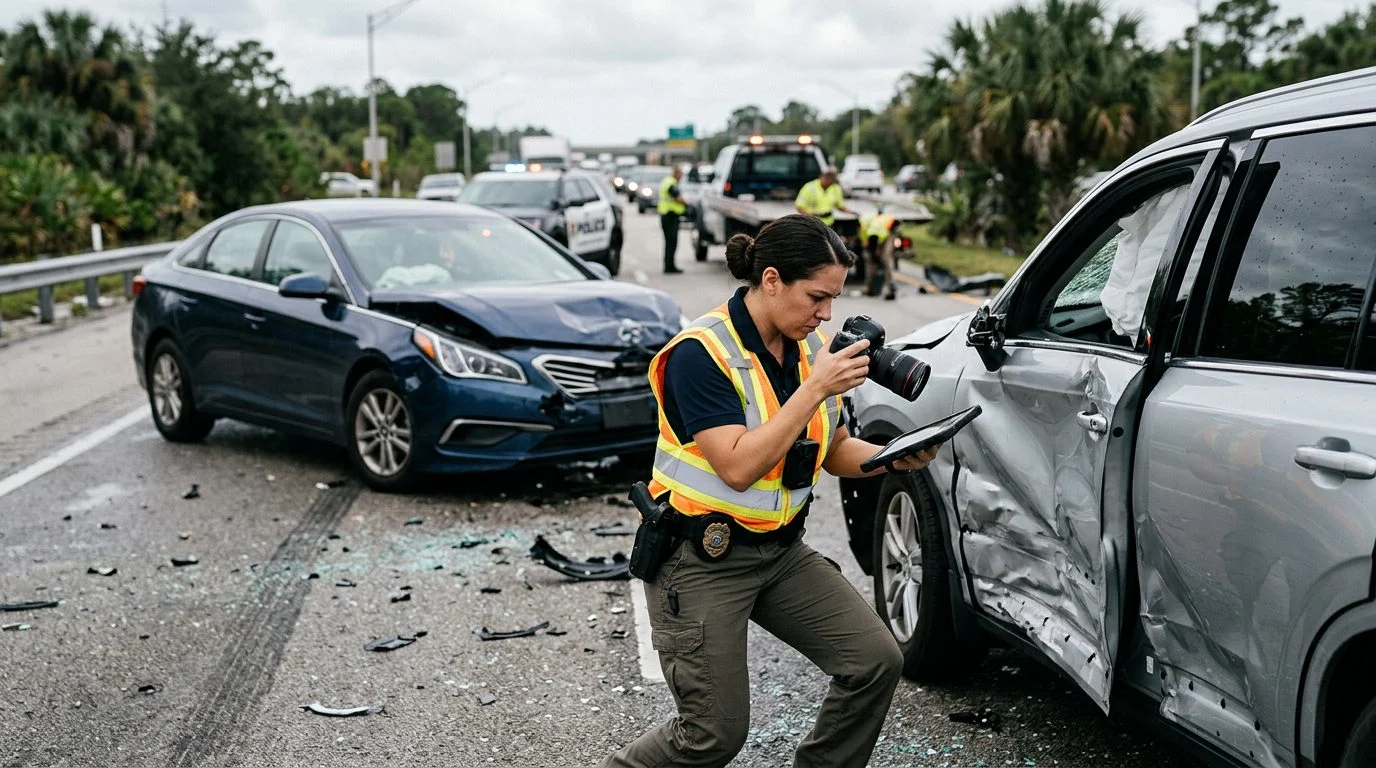
Document everything. Take photos of:
- Vehicle damage
- Road conditions
- Visible injuries
Write down witness names and phone numbers. Get the police report number. Your attorney will use this evidence when negotiating with the insurance company.
Why timing matters: If you wait more than 14 days after the crash to get medical treatment, you may lose PIP medical benefits.
Incomplete medical records also lower settlement value. They take longer to resolve. The insurance company will ask for more paperwork before it makes an offer.
Phase 2: Investigation and Medical Records (Weeks 8–16)
Keep up with treatment until you reach maximum medical improvement (MMI). MMI means your condition has stabilized. More treatment will not improve it.
Do not rush this phase. You cannot settle fairly while you are still treating.
Your attorney investigates fault during this time. They:
- Get the police report
- Interview witnesses
- Request accident reconstruction if needed
- Review your medical records
You gather your paperwork. This includes:
- All medical bills and provider statements
- Lost wage letters from your employer
- Proof of out-of-pocket costs, such as transportation, medical equipment, and home care
This phase is critical. Missing paperwork causes delays. The insurance company will not make a serious offer until it has a complete medical file. It must also understand all your damages.
Phase 3: Demand Letter and First Offer (Weeks 16–24)
The insurance company usually responds within 2 to 4 weeks. Its first response is often a counteroffer, not an acceptance. This is where negotiation starts.
How long this takes depends on two things:
- How fast the insurer reviews your file
- How far apart your demand and its offer are
If fault is clear, this phase moves faster. For example, the other driver rear-ended you at a red light. If fault is disputed, the insurer may ask for more investigation. That adds time.
Phase 4: Settlement Negotiations (Weeks 24–52)
Now your attorney and the insurance adjuster trade offers and counteroffers. An adjuster is the insurance company’s claims worker. Your attorney bases these talks on three things:
- How strong your case is
- Settlements for similar injuries
- Your documented damages
Some cases settle quickly when both sides agree on fault and damages. Others take months. This happens when the insurer is unreasonable. It also happens when injuries are catastrophic, such as spinal cord injury, traumatic brain injury, amputation, or severe burns.
Catastrophic injuries need expert testimony and more medical evaluation. They also need more complex damage calculations. All of this takes longer.
Litigation, which means a lawsuit, typically adds 6 to 24 months or more. However, many cases settle during litigation. Often the settlement is more than the offer made before the lawsuit. The insurer faces the risk of a jury verdict.
Phase 5: Settlement Agreement and Payment (Weeks 52–60)
Once both sides agree on an amount, your attorney drafts a settlement agreement and release. You review it and sign. The insurance company then issues a check. This usually happens within 2 to 4 weeks after the signed agreement.
When the check reaches your attorney’s office, the office pays any medical liens. A medical lien is a bill owed to a healthcare provider. The office also deducts attorney fees and costs. Then it sends your share to you.
You usually receive your funds 1 to 2 weeks after the check arrives.
Not sure what your next step is?
Talk it through with our team — the first consultation is free, confidential, and carries no obligation.
What Affects How Long Your Settlement Takes
Injury severity. Minor injuries, such as soft-tissue damage or small medical bills, settle faster. Soft-tissue damage means injuries to muscles, ligaments, or tendons. Catastrophic injuries are different. They include spinal cord injury, traumatic brain injury, amputation, and severe burns. These injuries need extensive medical records, expert testimony, and higher settlement amounts. That makes negotiation longer.
Fault clarity. Clear fault settles faster. A rear-end collision or running a red light are examples. Disputed fault takes longer. This happens when both drivers claim the other was at fault. It needs more investigation.
Insurance company cooperation. Some insurers respond quickly and negotiate fairly. Others delay. Some make unreasonably low offers. Others demand unnecessary investigation.
Medical treatment completion. You cannot settle until you finish treatment or reach maximum medical improvement. Ongoing treatment extends the timeline.
Whether a lawsuit is filed. If negotiations stall, your attorney may file a lawsuit. Litigation adds 6 to 24+ months. It sometimes speeds settlement, because the insurer faces jury risk.
Demand reasonableness. If your first demand is far above comparable cases, negotiation takes longer. The insurer will reject it outright.
How a Lawyer Changes the Settlement Timeline
An attorney does not always make the process faster. But they can make it more valuable. They also protect you from mistakes.
Your lawyer handles all communication with the insurance company. Insurers often make lower offers to people without a lawyer. They know those people may not understand what their claim is worth.
Attorneys know what a claim is worth. They use comparable settlements, medical evidence, and Florida law. Insurance companies handle claims every day. An attorney can handle those talks for you. That lets you focus on your recovery.
Your attorney also tracks key deadlines. These include:
- The statute of limitations, which is the time limit for filing a lawsuit
- Medical lien deadlines
- Insurance response deadlines
This helps keep anything from slipping through.
If talks stall, your attorney can file a lawsuit. This can speed up settlement. The insurer then faces jury risk and litigation costs.
Why Some Settlements Take Longer Than Others
Catastrophic injuries need expert testimony from physicians, vocational rehabilitation specialists, and life-care planners. Vocational rehabilitation helps people return to work. Life-care planners estimate future medical and daily care needs. These cases typically take 12 to 24 months or longer.
Multiple defendants or insurance policies make fault harder to sort out. If three vehicles were involved, you may need to negotiate with three insurers. That extends the timeline.
Disputed medical causation needs independent medical exams and expert opinions. Causation means what caused the injury. If the insurer claims your injury was pre-existing, settlement takes much longer.
Insurance company bad faith or unreasonable offers can force litigation. How an insurance company handles a claim can raise questions that are worth discussing with a lawyer. Some insurers deliberately undervalue claims. They hope to pressure injured people into accepting low offers.
Ongoing medical treatment means you cannot settle while still treating. If you are in rehabilitation for a spinal cord injury or traumatic brain injury, settlement waits. It waits until treatment is complete or reaches a plateau. A plateau means your recovery has leveled off.
Minimum Settlement Car Accident Florida: Is There a Floor?
Florida’s PIP law requires $10,000 in medical coverage. That is insurance coverage. It is not a settlement floor.
A settlement must reasonably reflect your documented losses. Anything less may not be fair.
An attorney can judge whether an offer is reasonable for your injuries. They will look at your medical bills, lost wages, and pain and suffering. If the offer is too low, your lawyer can reject it. Your lawyer can keep negotiating or file a lawsuit.
Can You Speed Up a Car Accident Settlement?
You cannot control how fast the insurance company responds. But you can help:
- Complete your medical treatment promptly. You cannot settle while still treating. Finish treatment or reach maximum medical improvement as soon as possible.
- Gather and organize documentation early. Have all medical records, bills, pay stubs, and receipts ready before your attorney sends the demand letter.
- Respond quickly to insurance company requests. If they ask for more records or information, provide it promptly.
- Have an attorney handle negotiations. This often speeds resolution. Insurers take attorney-represented claims more seriously.
- Be realistic about your demand. Inflated demands slow negotiation. The insurer rejects them outright.
- Consider mediation if negotiations stall. Mediation means a neutral third party helps both sides reach agreement. This can help both sides reach agreement faster.
What Happens if You Don’t Settle?
If settlement talks fail, your attorney may file a lawsuit. Litigation adds 6 to 24+ months.
During a lawsuit, both sides exchange evidence. This is called discovery. Depositions are recorded interviews given under oath. Trial preparation takes time. A jury or judge decides the outcome. No one can promise the result.
However, many cases settle during litigation. Often they settle for more than the pre-lawsuit offer. The insurer now faces jury risk and litigation costs.
Evidence fades. Witnesses become hard to find. Memories blur. The sooner you hire an attorney, the stronger your case.
Have questions about what happened?
Ask our team directly. The first conversation is free, confidential, and there is no obligation to continue.
Key Takeaways: Settlement Timeline and Expectations
- How long a car accident claim takes depends on the facts of each case and the injuries involved.
- The timeline depends on injury severity, fault clarity, medical treatment completion, and insurance company responsiveness.
- An attorney can negotiate with the insurance company on your behalf and advocate for your rights. Every case is different. A prospective client may not obtain the same or similar results.
- If you have suffered a catastrophic injury (spinal cord injury, traumatic brain injury, amputation, or severe burns), your case may take longer to resolve.

Frequently Asked Questions
How long after signing a settlement agreement do I receive the money?
Typically, the insurance company issues a check 2 to 4 weeks after you sign the settlement agreement. Your attorney’s office then processes it. The office pays liens and fees. It sends your share to you within 1 to 2 weeks.
Can I settle a car accident claim without a lawyer?
Yes. But people without a lawyer usually receive lower settlements. Insurance companies know they may not understand what their claim is worth. A lawyer can handle negotiations with insurance companies so you can focus on your recovery.
What if I’m partially at fault for the accident?
Florida’s comparative fault statute, Fla. Stat. § 768.81, explains how fault is divided among the people who contributed to an accident. Comparative fault means each person’s share of blame reduces how much they can recover, and in a negligence action a person found more than 50 percent at fault for their own harm may not recover any damages; this bar does not apply to an action for personal injury or wrongful death arising out of medical negligence under chapter 766. An attorney can review how that statute applies to your accident. They can also explain your options.
Do I have to go to trial if we don’t settle?
Not necessarily. Many cases settle during litigation, before trial. However, if both sides refuse to settle, the case goes to trial. A jury or judge then decides the outcome.
What if the other driver has no insurance?
You may have an uninsured motorist (UM) claim under your own policy. Your attorney can help you file this claim. It typically takes as long as a third-party liability claim.
If you were in a car accident and are working through the settlement process, we can help. Maybe you are waiting on an offer. Maybe you are unsure whether a settlement is fair. Maybe you are facing a serious injury, such as a spinal cord injury, traumatic brain injury, or amputation. Our team can review your case and explain what comes next.
Contact us for a free initial consultation. It is confidential and carries no obligation to continue. CHG charges no attorney’s fees and no case costs unless there is a recovery.
How We Help After a Car Accident
We Listen First
We start by hearing what happened, how you are feeling, and what questions are weighing on you and your family.
We Gather the Facts
Our team works to collect crash reports, medical records, and bills so your claim is built on a clear, complete record.
We Deal With the Insurance Company
You do not have to negotiate with the adjuster alone. Our attorneys handle communication with insurers on your behalf.
We Keep You Informed
We explain each step in plain language so you know where your case stands and what decisions are in front of you.
Before You Sign Anything
An insurance company may offer a quick payment soon after a crash. Before you accept an offer or sign a release, talk with a lawyer about what the paperwork means and whether it covers your future medical needs. Follow your doctor's care plan throughout your recovery.
Factors Often Discussed in Car Accident Claims
Medical Treatment
Emergency care, follow-up visits, therapy, and future treatment recommended by your doctors are commonly part of the discussion.
Lost Income
Time away from work, reduced hours, or changes to your ability to earn a living may be part of your claim.
Vehicle and Property Damage
Repairs or replacement of your vehicle and personal belongings are often reviewed alongside injury losses.
Daily Life and Well-Being
Pain, limited mobility, and changes to family life and activities can be important parts of the full picture.