

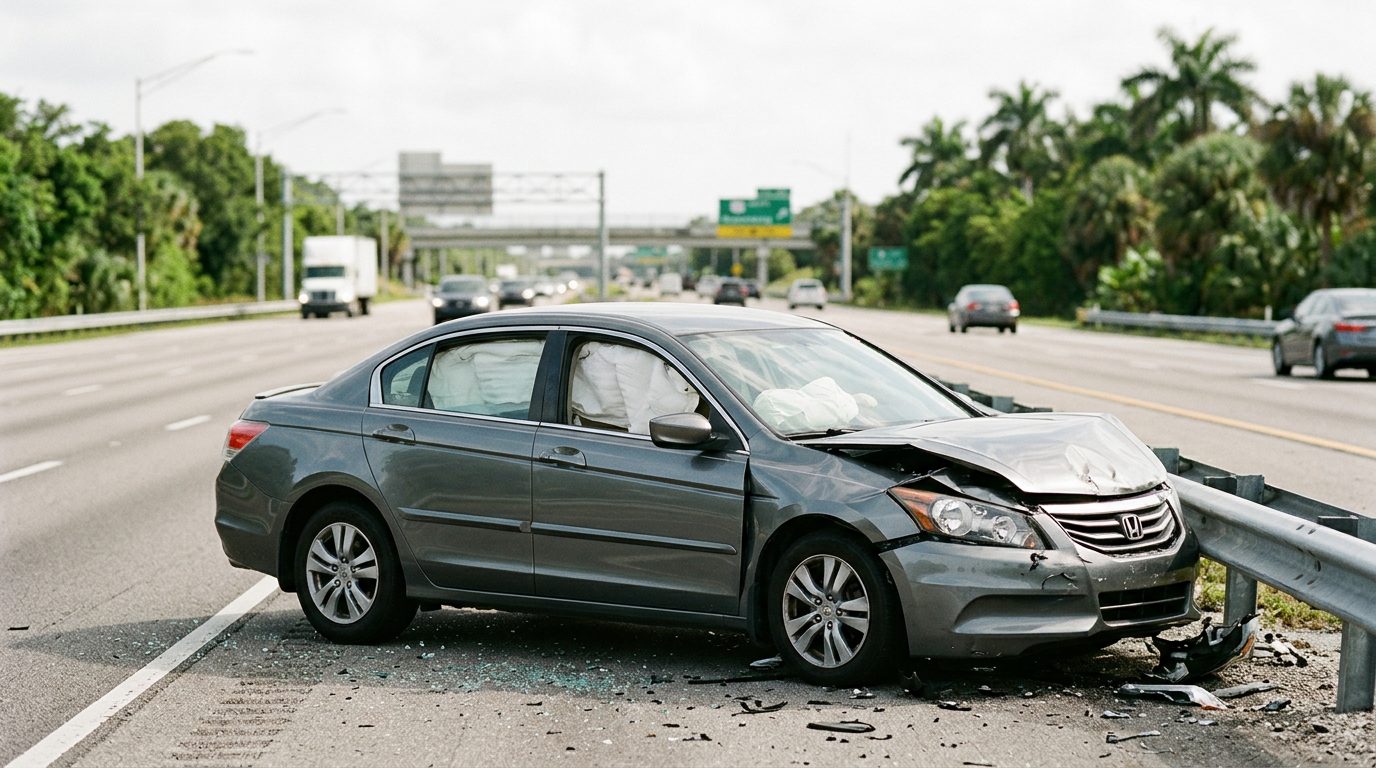
Car Accident Injuries | Florida
Back Pain After a Car Accident? Know Your Records, PIP, and Fault Rules
Plain-language guidance for Florida drivers and passengers on medical evaluations, PIP coverage, and how fault can affect a claim. Responsible lawyer: Igor Hernandez, CHG Personal Injury Lawyers.
By CHG Lawyers · Published October 14, 2026
Back Pain After a Florida Car Accident: Your Rights and Next Steps
You were in a crash. A few days later, your lower back aches, and you wonder whether a pain that doesn’t look serious really counts. It can. Whether lower back pain after a crash reflects an injury is a medical determination, and such pain may become part of a claim when a medical provider documents it and connects it to the accident. Pain may start right away or appear hours or days later. Whether a claim exists depends on the facts of your case, and no result can be promised.
This page explains, in plain language, what back pain may mean, which symptoms need urgent care, and how Florida law sorts out the paths open to you.
Not sure what your next step is?
Talk it through with our team — the first consultation is free, confidential, and carries no obligation.
Can Back Pain After a Crash Count?
Back pain doesn’t always show up at the scene. Delayed pain can happen, and it does not by itself mean the crash didn’t cause the problem. Whether a crash caused a specific condition is a medical question that your treating physicians are best placed to answer, based on your exam and imaging.
How Long Does Lower Back Pain Last After a Car Accident?
Some people with a lower back strain or sprain improve over time, but there is no fixed timeline. Soft-tissue injuries, which affect muscles, ligaments, and tendons, may heal at different speeds. Age, health, impact force, and how early treatment starts may all be relevant. Your physicians should discuss your own likely course with you.
Some pain fades with rest and care. Other pain lingers. A herniated disc (a spinal cushion that bulges or tears), a facet joint injury (damage to the small joints along the spine), or nerve compression (pressure on a nerve) can cause longer-lasting pain. These conditions may require imaging, such as X-ray, MRI, or CT, and a physician’s diagnosis.
If your pain isn’t improving as expected, see a physician for evaluation rather than waiting to see what happens.
Can Whiplash Cause Back Pain?
Whiplash may contribute to back pain. “Whiplash” describes how the body moved during the crash. It is not a diagnosis by itself. A physician decides what injury is actually present.
Every person’s medical situation is different, and questions about symptoms and care are best discussed with the person’s own doctors.
Tell your provider about every area that hurts, even minor aches. Specific notes help more than vague ones. “Pain low on the right side, worse when sitting, began at impact” gives your doctor far more to work with than “back sore.”
Warning Signs That Need Urgent Care
Seek urgent medical care right away if back pain comes with numbness or tingling in the legs, leg weakness, or trouble walking. Symptoms like these can have many possible causes, and a doctor is the right person to determine what is going on.
Three Paths in Florida: PIP Benefits, a Claim Against the At-Fault Driver, and an Insurance Claim
These are separate paths, each with its own rules. Keep them apart in your mind.
PIP benefits. Under § 627.736, an insurance policy that complies with the security requirements of s. 627.733 must provide personal injury protection to the named insured, relatives residing in the same household unless excluded under s. 627.747, persons operating the insured motor vehicle, passengers in the motor vehicle, and other persons struck by the motor vehicle while not an occupant of a self-propelled vehicle. That coverage applies to bodily injury, sickness, disease, or death arising out of the ownership, maintenance, or use of a motor vehicle, subject to the limits, conditions, and exclusions in the statute. Under § 627.736, benefits due from an insurer under the PIP law are primary. Benefits received under a workers’ compensation law must be credited against them. PIP is a benefit under your own coverage, and it is not the same thing as a lawsuit against the other driver.
A claim against the at-fault driver. Under § 627.737, every owner, registrant, operator, or occupant of a motor vehicle for which security has been provided as required by ss. 627.730-627.7405 is exempted from tort liability for damages because of bodily injury, sickness, or disease arising out of the ownership, operation, maintenance, or use of that motor vehicle in Florida, to the extent that the benefits described in s. 627.736(1) are payable for such injury. That exemption does not apply when a person is entitled to maintain an action for pain, suffering, mental anguish, and inconvenience under the statute, and whether that exception applies depends on the facts of each case. The exception matters for back injuries. Under Florida law, a person generally may seek pain, suffering, mental anguish, and inconvenience in a motor-vehicle claim only if the injury meets the permanency threshold in § 627.737(2) and consists in whole or in part of the following, although comparative fault may also limit recovery:
- significant and permanent loss of an important bodily function;
- permanent injury within a reasonable degree of medical probability, other than scarring or disfigurement;
- significant and permanent scarring or disfigurement; or
- death.
For back injuries, permanence is often the central question. In a case brought under the PIP law, a defendant may ask the court to decide whether the plaintiff can meet this requirement. If the court finds the plaintiff will not be able to submit such evidence, the court shall dismiss the claim without prejudice. Ongoing medical documentation is relevant for this reason, and your physicians should guide your care.
Insurance claims. A claim made under an insurance policy is handled differently from a lawsuit against an insurer, and the rules depend on the type of coverage and the facts. A few Florida provisions may matter:
- Under § 627.4137, a liability insurer must provide, within 30 days of a claimant’s written request, a sworn statement that includes the insurer’s name, each insured’s name, the policy limits, and a copy of the policy.
- If you agree to settle with the at-fault driver’s liability insurer for its policy limits, and that settlement would not fully satisfy your claim, § 627.727 generally requires written notice to underinsured motorist insurers, sent by certified or registered mail, which then have 30 days to respond.
- The liability of an uninsured motorist coverage insurer generally does not include pain, suffering, mental anguish, and inconvenience unless the injury fits one of the categories in § 627.737(2).
- Under § 768.041, a release or covenant not to sue with one party generally does not release the liability of another party who may be liable for the same harm. Read any release carefully before you sign, and talk with a lawyer first.
Not sure what your next step is?
Talk it through with our team — the first consultation is free, confidential, and carries no obligation.
Deadlines and Comparative Fault: Two Rules to Read Together
Deadlines depend on the type of claim. Florida sets filing time limits by statute. Under § 95.031, the time within which an action must begin generally runs from the time the cause of action accrues. Different actions have different periods under § 95.11, so there is no single deadline that fits every case. Which one applies depends on the facts. Do not assume you have time. Talk with a lawyer early.
Fault can limit recovery. If you were partly responsible for the crash, Florida’s comparative fault law (§ 768.81) may limit or bar what you can recover, depending on the percentage of fault assigned and when the lawsuit was filed. For negligence actions filed after March 24, 2023, the statute generally bars recovery by a claimant found more than 50% at fault, subject to exceptions set out in the statute. Who was at fault can be disputed in a crash claim, and the answer depends on the facts of each case. Be honest with your lawyer about what happened, including any part you played.
What Medical Records and Treatment History Mean for a Claim
Medical records are central proof of a back injury. They show what was found, when, and how it was treated. Imaging and a physician’s exam notes can document the injury, and dated, detailed records may be especially relevant.
Gaps in treatment can be raised by an insurer as a reason to question how serious the pain was or what caused it. Ask your provider whether they can explain in writing how the crash relates to your diagnosis. Later, a lawyer may ask third-party medical or accident reviewers, sometimes called expert witnesses, to review those records.
Pre-existing conditions may not automatically end a claim, depending on the facts. Many people had some back trouble before a crash. The key question is how the crash changed that condition. Be honest with every provider about your past back history.
Medical information disclaimer. The information on this page is educational. It is not medical advice. Rely on your treating physicians for diagnosis and prognosis, and follow their recommendations.
What to Do If Your Back Hurts After a Crash
- Get evaluated. See a medical provider even if the pain seems mild. Describe every symptom, including ones that started later.
- Follow the plan. Ask about the imaging and tests your provider recommends, keep your appointments, and write down why if you miss care.
- Keep records. Save the crash report number, photos of the vehicles and scene, pharmacy receipts, and medical bills. Track mileage to appointments and days missed from work.
- Keep a pain journal. A simple daily note can show how the injury affects sleep, chores, and work.
- Be careful with insurance calls. An insurer may contact you soon after the crash. Before giving a recorded statement, talk with a lawyer. Avoid guessing about speed, distance, or your injuries, and be careful about social media posts about your activities.
Talking With a Florida Injury Lawyer About Your Back Injury
If back pain is still with you after a crash, you don’t have to sort out your health and your rights alone. Pain, bills, and time away from work can make every choice feel urgent, and talking it through can bring clarity.
CHG Personal Injury Lawyers is a Florida-based firm with its office in Miami. Igor Hernandez is admitted in Florida as a member of The Florida Bar. The firm’s practice focuses on personal injury cases of any severity, including catastrophic injury, truck accident, and negligent security cases, and it serves clients throughout Florida, including Miami, Orlando, Tampa, and Jacksonville. Our team can help you organize your accident and medical records for review.
Request a free, confidential first consultation. Your first consultation is free, confidential, and carries no obligation to continue. CHG charges no attorney’s fees and no case costs unless there is a recovery.

Resumen en español
Si le duele la espalda baja después de un accidente automovilístico en Florida, puede que tenga derechos aunque el dolor parezca leve. El dolor puede aparecer horas o días después del choque. Florida tiene varias vías distintas: los beneficios de protección personal (PIP) bajo la § 627.736, una reclamación contra el conductor responsable y una reclamación de seguro. Cada una tiene reglas propias, y los plazos dependen del tipo de reclamación y de los hechos del caso. Busque atención médica y hable con un abogado pronto. Las decisiones sobre diagnóstico y pronóstico deben basarse en su médico tratante.
CHG Personal Injury Lawyers es una firma con sede en Miami, Florida, que atiende a clientes en todo Florida. Igor Hernandez está admitido en Florida como miembro de The Florida Bar.
Solicite una consulta: consulta inicial gratuita, confidencial y sin compromiso. CHG no cobra honorarios de abogado ni costos del caso si no hay recuperación.
Frequently Asked Questions
Can back pain after a car accident start later?
Yes. Pain can begin hours or days after a crash, and delayed pain can happen. Whether it is related to the crash is a medical and factual question.
Should I see a doctor for mild back pain after a crash?
Yes. A medical evaluation can identify problems that aren’t obvious and creates records that may be relevant to a claim.
How long do I have to file a lawsuit in Florida?
Florida’s time limits are set by statute and depend on the type of claim and the facts. The time generally runs from when a cause of action accrues (Fla. Stat. § 95.031). Talk with a lawyer early so deadlines are not missed.
Can I still have a claim if I had back problems before?
Possibly. Pre-existing conditions may not automatically end a claim, but the records need careful review.
Attorney advertising. CHG Personal Injury Lawyers is responsible for this page. Responsible attorney: Igor Hernandez. Office location: Miami, Florida. Results vary, and no outcome can be promised. CHG charges no attorney’s fees and no case costs unless there is a recovery.
Publicidad de abogados. CHG Personal Injury Lawyers es responsable de esta página. Abogado responsable: Igor Hernandez. Oficina: Miami, Florida. Los resultados varían y no se puede prometer ningún resultado. CHG no cobra honorarios de abogado ni costos del caso si no hay recuperación.
Don't Wait to Get Checked
Back pain after a crash can begin hours or days later. A prompt medical evaluation protects your health and creates records that may be relevant to any claim. Results depend on the facts of your case.
Why Clients Contact CHG
Serving Florida
We focus on personal injury matters for people across Florida, including Miami, Orlando, Tampa, and Jacksonville.
Clear Guidance on Records
We explain which medical and accident records may matter, and why keeping them organized can help.
Florida Law, Explained
We walk you through how Florida PIP coverage and fault rules may apply to your situation.
Free First Consultation
Your initial consultation is free, confidential, and comes with no obligation to continue.
Steps to Consider After a Crash
Get a Medical Evaluation
See a doctor even if your back pain seems mild or started later. Describe every symptom you notice.
Keep Your Records
Save medical bills, visit notes, prescriptions, and insurance letters in one place.
Document the Scene
Write down what happened, photograph vehicles and surroundings if it is safe, and collect witness names.
Talk With a Lawyer
Ask a Florida personal injury lawyer how PIP, fault, and your medical history may apply to your case.