
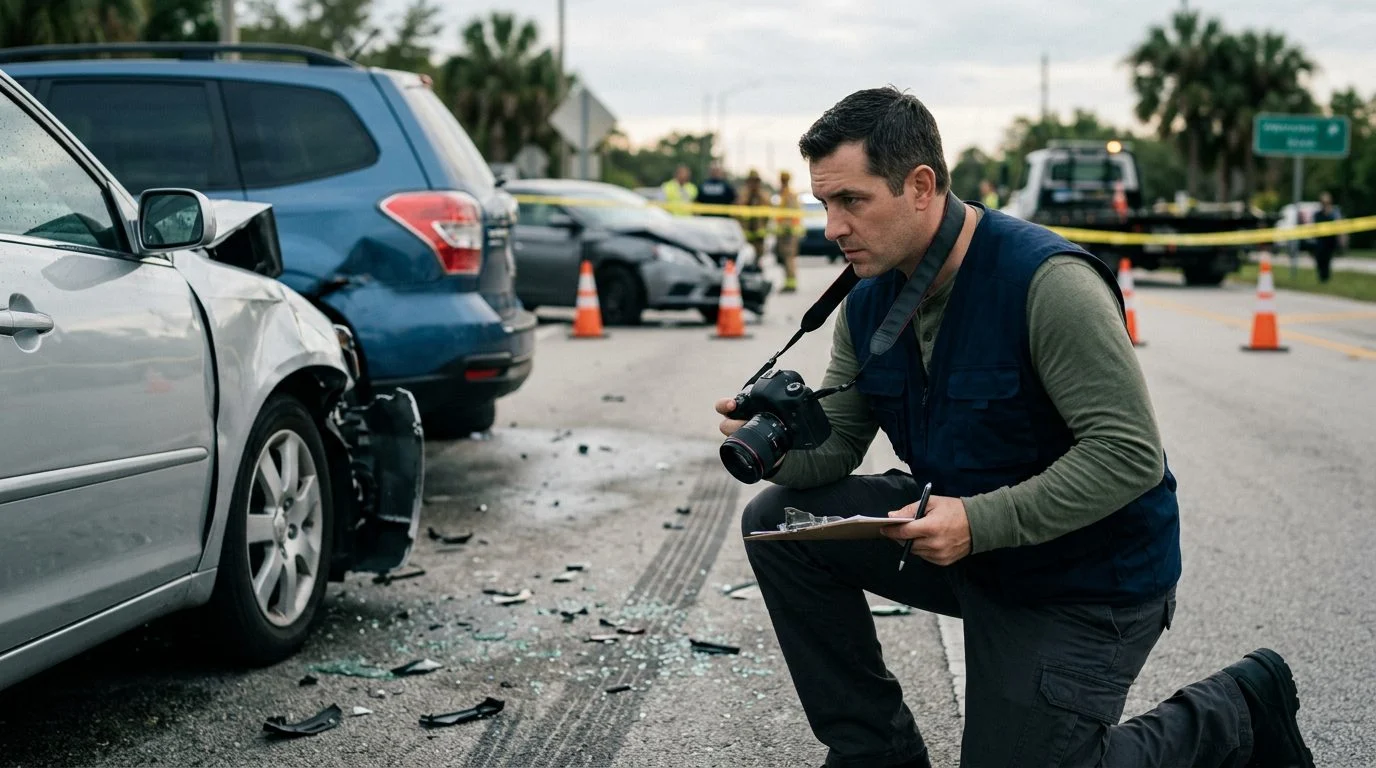
Car Accidents | Serving Florida
Florida Car Accident Deadlines: What You Need to Know Before Time Runs Out
A plain-language guide to Florida's time limits for car accident claims, and the steps that can protect your family's options while you focus on recovery.
By CHG Lawyers · Published October 19, 2026
Why the Deadline Question Matters After a Florida Car Crash
A statute of limitations is a legal time limit for filing a lawsuit. In Florida, many car accident injury claims must be filed within two years, but the start date and exceptions matter. This page offers general information about car accident claims in Florida.
Maybe you are reading this for a parent, a spouse, or an adult child. You may be juggling hospital visits, insurance calls, and bills. That is a hard place to be, and it’s normal to feel overwhelmed.
Here is the key point. If the deadline passes, the right to file that lawsuit may be lost, even when the other driver was clearly at fault. The clock keeps running while you focus on recovery.
This page offers general information about Florida law. Each case is different. The rules here may not fit your facts, and no result can be promised.
Not sure what your next step is?
Talk it through with our team — the first consultation is free, confidential, and carries no obligation.
How Long Do You Have to File After a Car Crash in Florida?
For many negligence claims, Florida law generally gives two years to file a lawsuit under Fla. Stat. § 95.11. That covers many injury claims that come from car crashes.
The clock generally starts when the claim accrues. Florida’s computation of time statute says a cause of action accrues when the last element constituting the cause of action occurs. In plain words, the start date follows the facts of your claim. It isn’t always the day of the crash.
Insurance claims and lawsuits are separate paths. An insurance claim runs on the insurer’s own process. An insurer’s timeline does not change the court deadline.
Keep this in mind. Waiting on an insurance decision can leave the court date closer than it seems.
Florida’s Two-Year Deadline and the March 24, 2023 Date
For most negligence claims that accrued after March 24, 2023, the two-year period in § 95.11 generally applies.
The first is when the claim accrued. The second is what kind of claim it is. A crash that happened near that date does not settle the question by itself.
Why does this matter? A reader who assumes the older four-year period may lose time. A reader who assumes two years when the older rule applies may act too late. Either mistake is costly.
So confirm your date early. Gather the crash date, the medical dates, and any letters from insurers. Then review which rule applies to your situation rather than assume.
The 51% Rule and How Fault Can Affect a Claim
Under Florida’s comparative fault law, a person found greater than 50 percent at fault for their own harm generally may not recover any damages. Under Florida’s comparative fault law, Fla. Stat. § 768.81, in a negligence action to which this section applies, a party found to be greater than 50 percent at fault for his or her own harm may not recover any damages; this does not apply to personal injury or wrongful death actions arising out of medical negligence under chapter 766.
Comparative fault means shared fault (Fla. Stat. § 768.81(6)). The fact-finder weighs what each person did before and during the crash. The fault percentage depends on the facts of each case. It is not a formula that works the same way in every crash.
The statute also says the court enters judgment against each liable party based on that party’s own percentage of fault. Each party’s share is judged separately.
The rule does not apply to personal injury or wrongful death claims arising out of medical negligence under chapter 766. Those claims follow different rules. Because the rule has limits and conditions, its scope for your crash should be reviewed with a licensed Florida attorney.
Early Steps: Reporting the Crash and Getting Medical Care
Reporting a crash and filing a lawsuit are separate steps. This page does not set out crash-reporting rules, and the lawsuit deadline discussed here is measured in years.
Medical care matters for two reasons. It protects your health, and it creates dated records. Some injuries, like concussions or nerve damage, can show up days or weeks after a crash. A prompt evaluation starts a record of what happened.
People often make the same mistakes. They wait weeks to see a doctor. They skip follow-up visits. They throw away receipts or post about the crash online. Each of these can make a claim harder to document later.
Keep a simple file. Save photos from the scene, the crash report number, and the names of any witnesses. Keep every bill and receipt. Write down each call with an insurer, including the date, the name, and what was said.
Wrongful Death Claims and the Family’s Deadline
When a crash causes a death, Florida law generally allows the family to pursue a wrongful death claim. Fla. Stat. § 768.19 provides that the responsible party may be liable for damages even though the injured person has died. The Florida Wrongful Death Act gives these claims their name and structure.
Under the Florida Wrongful Death Act (Sections 768.16-768.26), the claim is brought by the decedent’s personal representative. That person recovers for the benefit of the survivors and the estate, under § 768.20. A personal injury action does not survive the injured person’s death. That is why the family’s claim follows its own path.
Losing someone in a crash is devastating. Families often face funeral plans, bills, and hard questions all at once. Many want to honor their loved one and protect the people who depend on them. Those goals are valid, and they deserve careful planning.
Florida law sets a two-year deadline for an action for wrongful death under Fla. Stat. § 95.11, and other deadlines can apply depending on the type of claim. Because deadlines apply, contact our office promptly to discuss your family’s situation. Our initial consultation is free, confidential, and without obligation. Have the timing reviewed promptly, so that the family’s choices are not limited by a date that passed unnoticed.
Have questions about what happened?
Ask our team directly. The first conversation is free, confidential, and there is no obligation to continue.
Crashes Involving Government Vehicles or Government Roads
Claims against the state or a local government can follow different rules under Fla. Stat. § 768.28. The statute says the state, its agencies, and its subdivisions are liable for tort claims in the same manner as a private individual under like circumstances. Liability generally does not include punitive damages or pre-judgment interest.
The statute also sets limits. For one person’s claim, the government generally cannot be made to pay more than $200,000. Total payments for one incident generally cannot exceed $300,000. Larger amounts may be paid only by further act of the Legislature.
The statute also sets its own clock for handling claims. The statute says that if the Department of Financial Services or the agency does not make final disposition of a claim within six months after it is filed, that “shall be deemed a final denial of the claim.” In medical malpractice and wrongful death actions, the period is 90 days, and the statute of limitations for those actions is tolled while the agency takes time to deny the claim.
A crash involving a county bus or a city vehicle may bring these rules into play. Because the rules have exceptions and steps, a prompt review is wise.
Exceptions That May Extend or Change the Deadline
Some exceptions may change the deadline. They are narrow, and they depend on specific facts.
In medical malpractice actions, § 95.11 generally requires filing within two years from the incident or its discovery, and no later than four years from the incident. Under Fla. Stat. § 95.11(5)(c), an action for medical malpractice must be commenced within 2 years from the time the incident giving rise to the action occurred, or within 2 years from the time the incident is discovered or should have been discovered with the exercise of due diligence, but in no event later than 4 years from the date of the incident, except that the 4-year period shall not bar an action brought on behalf of a minor on or before the child’s eighth birthday. Where fraud, concealment, or intentional misrepresentation of fact prevented discovery of the injury, the period of limitations is extended forward 2 years from the time the injury is discovered or should have been discovered, but in no event to exceed 7 years from the date the incident giving rise to the injury occurred. Fla. Stat. § 95.11 reads: “In those actions covered by this paragraph in which it can be shown that fraud, concealment, or intentional misrepresentation of fact prevented the discovery of the injury the period of limitations is extended forward 2 years from the time that the injury is discovered or should have been discovered with the exercise of due diligence, but in no event to exceed 7 years from the date the incident giving rise to the injury occurred, except that this 7-year period shall not bar an action brought on behalf of a minor on or before the child’s eighth birthday.”
It is a narrow rule. Do not assume it extends a car accident claim.
Special rules also apply in certain medical malpractice cases involving a child. The age of the injured person can matter, so note the date of birth.
The most common mistake is assuming an exception applies. Treat the standard deadline as the working date until someone reviews your facts.
Steps to Protect a Florida Car Accident Claim Now
Start with these steps:
- Write down the exact crash date and the place where it happened.
- Keep every medical record, bill, and receipt in one folder.
- Save photos, the crash report number, and witness names.
- Track every call and letter with insurers.
- Note symptoms, missed work, and daily limits, with dates.
Local court procedures can still vary by county. Timing questions should be reviewed for the county where a case would be filed.
Quick Answers to Common Questions
Is the Florida statute of limitations car accident deadline always two years? No. Two years is the general rule for many claims, but the accrual date, claim type, and exceptions can change the answer.
How does Florida’s greater-than-50-percent fault rule work? Under § 768.81, in a negligence action to which this section applies, any party found to be greater than 50 percent at fault for his or her own harm may not recover any damages. Fla. Stat. § 768.81 reads: “This subsection does not apply to an action for damages for personal injury or wrongful death arising out of medical negligence pursuant to chapter 766.”

Talk With CHG Personal Injury Lawyers About Your Deadline
If you are reading this while a loved one recovers from a crash, you are not alone in worrying about dates. The clock may already be running. That can feel like one more weight on top of everything else.
CHG Personal Injury Lawyers is a Florida-based personal injury firm. The practice focuses on catastrophic injuries, wrongful death, and serious accidents, including car crashes. Igor Hernandez is the responsible lawyer. He is admitted in Florida as a member of The Florida Bar. Support staff assist the practice.
The firm charges no attorney’s fees and no case costs unless there is a recovery.
Our team can review your crash date and which deadline may apply during a free, confidential, no-obligation first consultation (consulta inicial gratuita, confidencial y sin compromiso). Contact the firm here.
Want to know where you stand?
Tell us what happened and our team will walk you through the options available to you, at no cost.
Why Families Contact CHG Personal Injury Lawyers
Florida-Based Practice
Our practice focuses on serious injury and wrongful death cases for people throughout Florida, from Miami and Hialeah to Orlando, Tampa, and Jacksonville.
Compassionate, Plain-Language Guidance
We know a crash changes everything. We explain each step clearly so you can make decisions with confidence.
Licensed Florida Attorney
Attorney Igor Hernandez is admitted to The Florida Bar, and our support staff helps keep your case organized and your questions answered.
No Fees Unless There Is a Recovery
CHG charges no attorney's fees and no case costs unless there is a recovery.
Do Not Wait to Ask Questions
Deadlines apply to car accident claims in Florida, and the start date can depend on the facts of your crash. Evidence also fades over time. Contact our office promptly so we can review your situation.
Steps to Take After a Florida Car Crash
Get Medical Care
Seek medical attention right away and follow your doctors' care plan, even if injuries seem minor at first.
Document the Scene
If you are able, take photos, note the time and location, and write down the names and insurance details of everyone involved.
Keep Every Record
Save medical bills, pharmacy receipts, repair estimates, and notes about missed work or daily challenges.
Speak With Our Office
Contact CHG Personal Injury Lawyers for a free, confidential consultation with no obligation to continue.