

Car Accidents | Serving Florida
Numbness, Tingling, or Pain After a Crash? Know What It Could Mean
Some crash injuries show up slowly. Learn the warning signs, why they matter, and how an injured Floridian can take the next step with support.
Why Injured Floridians Call CHG
Florida
Based in and serving injured people throughout Florida
Licensed
Attorneys admitted to The Florida Bar
By CHG Lawyers · Published November 14, 2026
Can a Car Crash Cause a Trapped Nerve?
Can a car crash cause a trapped nerve? Numbness, tingling, or a sharp pain running down an arm or leg can start after a crash. Many people wonder whether the wreck caused it.
Yes, a car crash can trap a nerve. Doctors often call this a pinched nerve, and it can cause pain, numbness, or weakness.
This guide explains how it happens, why symptoms can appear days later, and which Florida rules may matter. It is general information, not medical advice. Please follow your doctors’ care.
Not sure what your next step is?
Talk it through with our team — the first consultation is free, confidential, and carries no obligation.

Yes, a Car Crash Can Trap a Nerve
A car crash can compress or trap a nerve. The sudden stop, twist, or impact can press on a nerve where it leaves the spine.
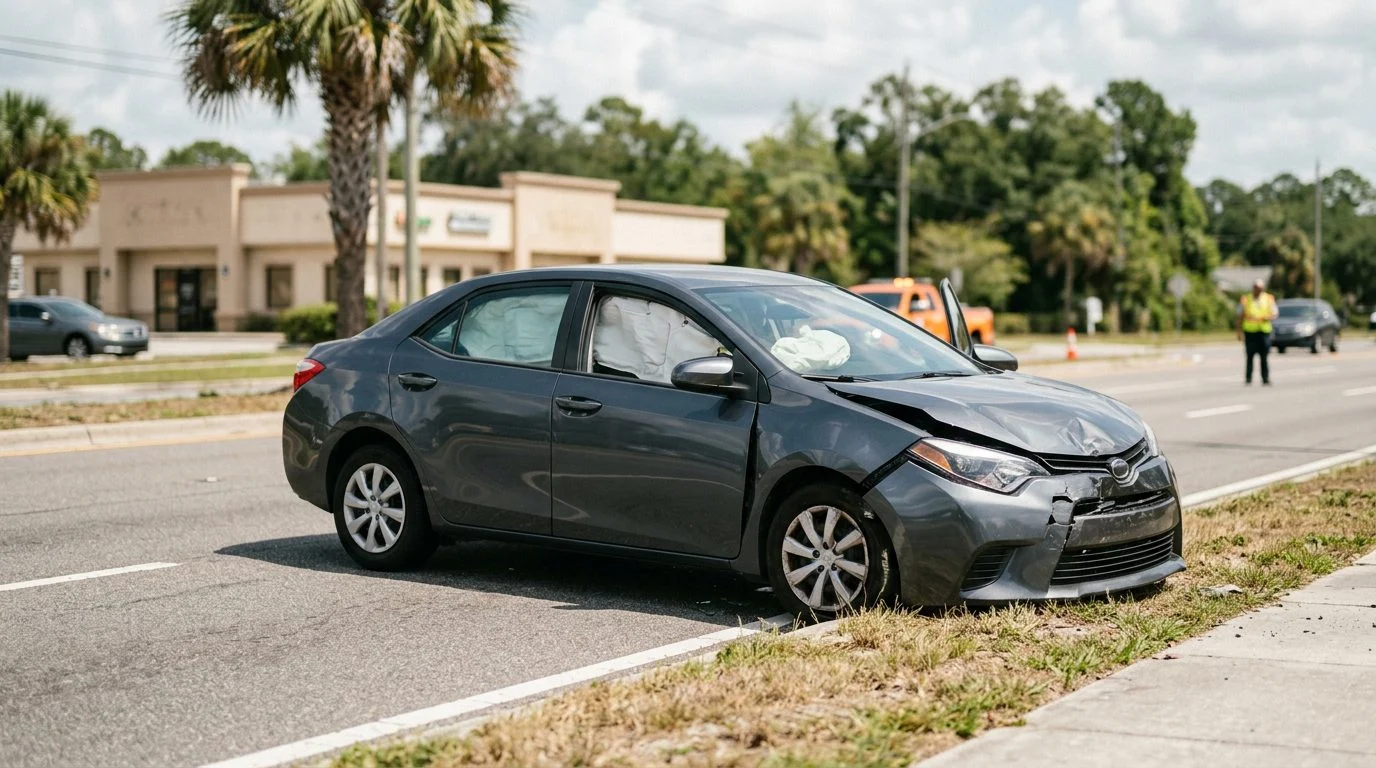
Many people feel sore but otherwise fine right after a crash. Symptoms may not show up until later. That delay is why so many people ask this question days after the wreck.
Drivers, passengers, pedestrians, and cyclists can all be hurt this way. The injury does not depend on how the crash looked from the outside.
If you have numbness, tingling, or weakness after a crash, have a doctor check it. If you have severe weakness or lose control of your bladder or bowels, seek emergency care right away.
Only a doctor can confirm a pinched nerve. Your doctor’s plan should guide your care.
What a Pinched Nerve Is and How a Crash Causes One
A pinched nerve happens when something presses on a nerve or a nerve root. A nerve root is the point where a nerve branches off the spinal cord. Nerves carry signals between the brain, the spinal cord, and the rest of the body. The National Institute of Neurological Disorders and Stroke explains that the spinal cord has protective layers and cerebrospinal fluid that acts as a cushion against shock.
In a crash, the body moves fast and then stops fast. That motion can squeeze a nerve in several ways:
- A spinal disc can bulge or herniate and press on a nearby nerve.
- Bones or joints can shift out of their normal position.
- Swelling and inflammation can build up around the nerve.
- The whiplash-type motion of the neck and back can strain the tissues around the nerves.
Falls can create the same kinds of forces. A fall can also cause a pinched nerve.
A pinched nerve can occur in the neck, the mid-back, or the lower back. Sciatica is pain that follows the sciatic nerve. That nerve runs from the lower back through the hip and down the leg.
Signs a Nerve May Be Involved, and Why Symptoms Can Appear Later
Numbness, tingling, pain that travels into an arm or leg, and muscle weakness are the most common signs. Some people also notice reflexes that feel weaker, which a doctor can test.
Where you feel symptoms matters. The NINDS explains that the cervical nerves (C1 to C7) control signals to the neck and shoulders, the arms and hands, and the diaphragm. The lumbar nerves (L1 to L5) control signals to parts of the legs. The sacral nerves (S1 to S5) control signals to the thighs, lower legs, and feet. A pattern of symptoms can point a doctor toward one part of the spine. It does not give a diagnosis on its own.
Symptoms can start hours or days after a crash. Swelling and inflammation often build over time. A person who feels fine on the day of the wreck should still see a doctor if new numbness or pain appears later.
How long recovery takes depends on the injury and the treatment. Follow your doctor’s plan, and report changes early.
Pinched Nerve vs. Neck Strain: What Is the Difference?
A neck strain involves the muscles and ligaments of the neck. A pinched nerve involves pressure on a nerve. Both can follow a crash, and both can hurt. They feel different, though.
A strain usually causes soreness, stiffness, and tight muscles in the neck or shoulders. A pinched nerve more often causes pain that spreads into an arm or hand. It may also bring numbness, tingling, or weakness. Some people have both problems at the same time.
Only a doctor can tell the two apart. The doctor uses an exam, your history, and sometimes tests. The difference matters for your care. It also matters for a claim, because clear notes about what the doctor found help connect the crash to the injury.
How Doctors Confirm a Trapped Nerve After a Crash
Doctors usually confirm a pinched nerve with a physical and neurological exam and a medical history. The exam checks strength, feeling, and reflexes. The history should include the crash, since the crash may be what caused the problem.
Imaging can show the spine and the tissues around the nerve. An MRI or CT scan is common. Nerve tests, such as an EMG or nerve conduction study, measure how well a nerve carries signals. The doctor decides which tests are needed.
The treating physician chooses treatment. Options may include therapy, medication, injections, or surgery in some cases. Follow the plan your doctor gives you.
Two habits help. Keep a simple symptom journal with dates, where you feel symptoms, and what makes them better or worse. Share the full crash history with every provider, so the records match what happened.
Not sure what your next step is?
Talk it through with our team — the first consultation is free, confidential, and carries no obligation.
Can You Claim Compensation for a Trapped Nerve from a Car Crash?
A person hurt because another driver was negligent may be able to seek compensation. That can include medical bills, lost income, and pain and suffering. Each claim depends on its own facts, and no outcome can be predicted.
Florida has a specific rule for pain and suffering in car crash cases. Under Fla. Stat. § 627.737, subsection (2), a plaintiff may recover pain and suffering only in certain cases. The injury must include significant and permanent loss of an important bodily function. It can also be a permanent injury within a reasonable degree of medical probability, other than scarring or disfigurement.
A nerve injury claim often turns on whether the medical evidence supports that permanence.
Insurers may argue that symptoms come from older wear and tear. Clear records of symptoms before and after the crash help answer those questions.
Florida Rules That Affect a Nerve Injury Claim
Florida sets time limits for filing a lawsuit, and those deadlines apply. Under Fla. Stat. § 95.11, an action founded on negligence must be started within two years. Under Ch. 2023-15, § 28, Laws of Fla., the amendments made by this act to s. 95.11, Florida Statutes, apply to causes of action accruing after the effective date of this act.
Florida also uses comparative fault, which divides fault among the people involved. Under Fla. Stat. § 768.81, in a negligence action to which this section applies, a party found greater than 50 percent at fault for his or her own harm may not recover any damages; this does not apply to personal injury or wrongful death actions arising out of medical negligence.
Florida’s no-fault insurance system also matters. Keeping complete records helps with that process.
Because these rules depend on dates and facts, reach out to our team promptly. Don’t rely on memory of older rules.
Not Sure What Your Next Step Is?
Many readers are caring for a parent, spouse, or child who has a trapped nerve. Others are living with ongoing numbness while trying to keep up with work and bills. You don’t have to sort out the medical and legal questions alone.
CHG Personal Injury Lawyers is a Florida-based personal injury firm. Igor Hernandez is the responsible lawyer for this page. Our team offers a free, confidential first consultation with no obligation to continue. CHG charges no attorney’s fees and no case costs unless there is a recovery.
If a crash has left you with numbness or pain and you want to talk through what it may mean, contact CHG Personal Injury Lawyers today.
Can a fall cause a pinched nerve?
Yes. A fall can press on a nerve in much the same way a crash can.
Can symptoms start days after a car crash?
Yes. Swelling can build over time, so see a doctor if new symptoms appear.
Is there a deadline to file a Florida injury claim?
Yes. Deadlines for filing a claim in Florida can be strict, so contacting a lawyer promptly is important.
How We Can Help
Free, Confidential Consultation
Our first consultation is free, confidential, and comes with no obligation to continue.
No Fees Unless There Is a Recovery
CHG charges no attorney's fees and no case costs unless there is a recovery.
Attorneys Who Listen
Our lawyers take the time to understand how your injury affects your work, your family, and your daily life.
Focused on Florida
Our practice focuses on people injured in Florida, from everyday crashes to serious, life-changing injuries.
Don't Wait to Get Checked
Nerve symptoms can appear hours or even days after a crash. If you notice new numbness, weakness, or pain, see a doctor promptly and follow your doctor's care plan.
Symptoms to Report to Your Doctor
Tingling or Numbness
Pins-and-needles or 'asleep' feelings in an arm, hand, leg, or foot.
Shooting or Burning Pain
Pain that travels along a path from the neck or back into a limb.
Weakness
Trouble gripping objects, lifting, or keeping your balance.
Symptoms That Change
Pain or sensation that spreads, worsens, or comes and goes over time.