

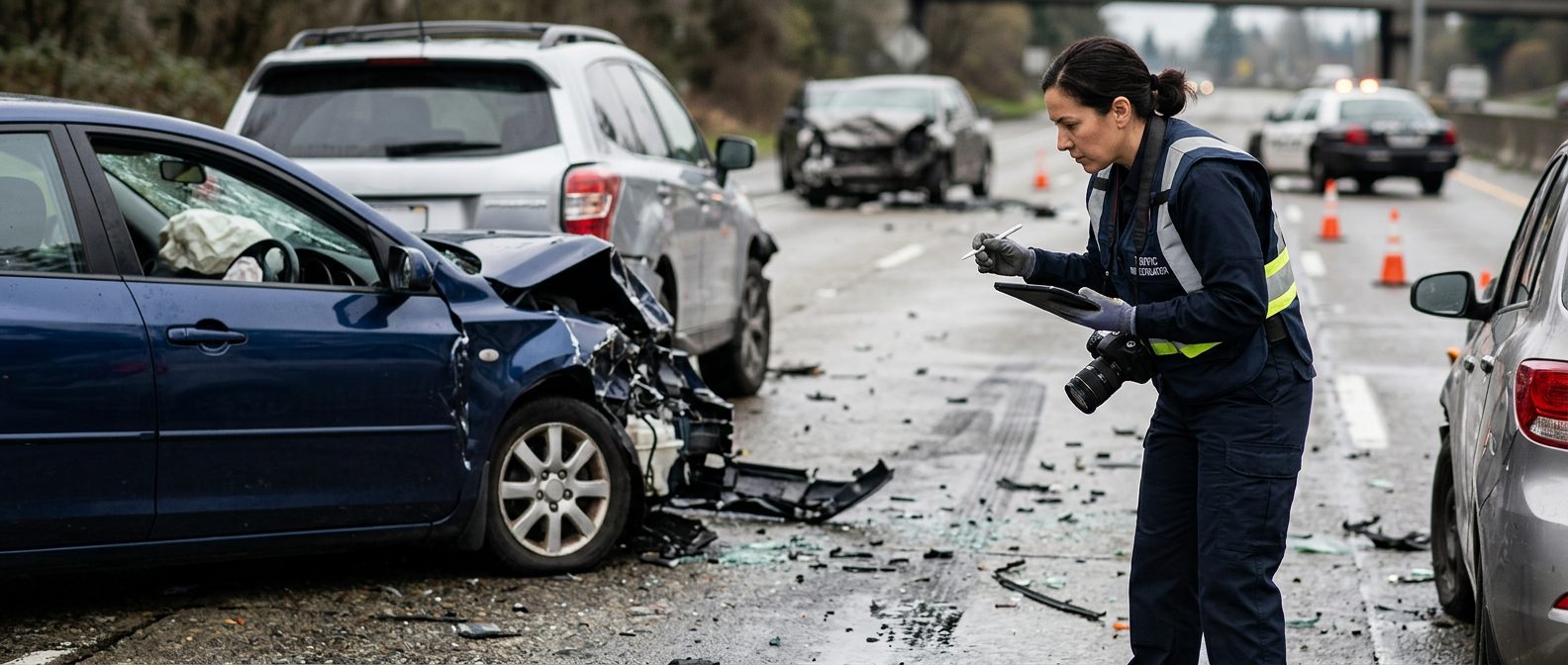
Car Accident Injury
PTSD After a Car Accident: Your Right to Compensation
Psychological trauma from a crash is a real injury. You may have a claim—even without physical harm.
By CHG Lawyers · Published September 16, 2026
Can I Get a Settlement for PTSD After a Car Accident?
Yes—PTSD (post-traumatic stress disorder) and other psychological injuries count as real, compensable damages in Florida car accident settlements. Your mental health injuries matter, even though you can’t see them. They have financial value in a claim.
Many car accident victims experience PTSD, anxiety, depression, or other trauma responses after a crash. These aren’t signs of weakness. They’re medical conditions that can be diagnosed, treated, and valued in a settlement. Florida law recognizes mental anguish, emotional distress, and psychological trauma as valid damages alongside physical injuries—and sometimes as the only injury in a claim.
The challenge isn’t whether PTSD counts. It’s proving it clearly and calculating its worth. This guide explains how psychological injuries are valued, what evidence strengthens your claim, and what to expect.
Not sure what your next step is?
Talk it through with our team — the first consultation is free, confidential, and carries no obligation.
What Counts as PTSD or Psychological Injury After a Car Accident?
PTSD after a car accident is a recognized medical condition, not an overreaction to stress. PTSD can develop when a person experiences or witnesses a traumatic event, and its symptoms may include intrusive memories, nightmares, flashbacks, and avoidance behaviors tied to that event.
In a car accident, PTSD symptoms include:
- Intrusive memories or flashbacks – You suddenly relive the crash, even when you’re not driving.
- Nightmares – Sleep is disrupted by dreams about the accident.
- Hypervigilance – You’re constantly on alert, scanning for danger on the road.
- Avoidance – You stop driving, avoid the accident location, or refuse to ride in cars.
- Emotional numbness or detachment – You feel disconnected from family or activities you once enjoyed.
Other recognized psychological injuries include anxiety disorders, panic attacks, depression, and driving phobias.
How Do Insurance Companies and Courts Evaluate PTSD in a Settlement?
Insurance companies and courts use several tools to assess the value of PTSD damages.
Medical documentation is the foundation. You need a formal diagnosis from a licensed mental health professional—a therapist, psychologist, or psychiatrist. This diagnosis should be documented in writing and tied to the accident. Treatment records, including therapy notes and psychiatric evaluations, show how severe your condition is and how long it lasts.
A multiplier is a rough estimate some insurers use, but Florida juries are told there is no exact standard for measuring pain and suffering. Here’s how it works:
- Add up your economic damages (money you’ve actually spent): therapy bills, psychiatric care, medications, and lost wages if you missed work because of PTSD.
- Some insurers multiply that total by a factor that depends on how severe your injury is.
- The result is only a rough estimate of non-economic damages (pain and suffering), not a set amount.
Example: If you spent $5,000 on therapy and lost $3,000 in wages (totaling $8,000), a multiplier of 2 would yield $16,000 for pain and suffering. A multiplier of 4 would yield $32,000. The multiplier depends on severity: longer-lasting symptoms, ongoing treatment, and greater life disruption push the multiplier higher.
Severity factors that increase settlement value include:
- How long your symptoms last (months vs. years).
- Whether you need ongoing or long-term treatment.
- Impact on your ability to work or earn income.
- Strain on relationships and social functioning.
- Whether the other driver was clearly negligent.
Florida’s comparative negligence rule also applies (Fla. Stat. § 768.81(6)). For example, if you’re deemed 20% at fault and your claim is worth $50,000, you’d recover $40,000.
What Evidence Strengthens a PTSD Claim?
Insurance companies sometimes dispute psychological injuries, claiming they’re not “real” or are exaggerated. Strong evidence counters these arguments and increases your settlement value.
Seek mental health treatment soon after the accident. This means getting help within days or weeks. This creates a clear timeline showing the accident caused your symptoms. If you wait months or years to seek help, insurers may argue your PTSD isn’t connected to the crash.
Specific evidence that strengthens your claim includes:
- Diagnosis and treatment notes from a licensed provider, clearly stating you have PTSD or another recognized psychological condition caused by the accident.
- Ongoing therapy or care over months or years demonstrates your injury is real and lasting, not temporary stress.
- Medical records linking symptoms to the accident – Your provider’s notes should explicitly connect your PTSD to the specific crash.
- Documentation of life impact – Show how PTSD has changed your life: work absences, inability to drive, relationship strain, social withdrawal, or loss of enjoyment in activities.
- Wage loss records – If PTSD caused you to miss work or reduce your hours, pay stubs and employer statements prove financial impact.
- Police report and accident details – A detailed report of the crash severity supports the claim that the accident was traumatic enough to cause PTSD.
Thorough documentation—especially early mental health treatment—is the difference between a settlement that reflects true damages and one that’s artificially low.
What Is a Typical PTSD Settlement Worth?
There’s no single “typical” PTSD settlement because every case is unique. Settlement value depends on:
- The severity of the accident and your injuries.
- The severity and duration of your PTSD symptoms.
- Your treatment costs and lost wages.
- How clear the other driver’s negligence is.
- Whether you also suffered physical injuries.
Settlements for PTSD alone (without physical injury) tend to be lower than those combining physical and psychological trauma. A minor fender-bender that caused anxiety might settle for $5,000–$15,000. A severe multi-vehicle crash causing diagnosed PTSD with ongoing therapy might settle for $30,000–$100,000 or more.
If you also suffered physical injuries—broken bones, spinal cord injury, traumatic brain injury, or severe burns—PTSD damages are added on top of physical injury compensation. For example, a settlement for a broken leg might be $50,000. Add PTSD and ongoing therapy, and the total could reach $75,000–$150,000.
Factors that increase settlement value:
- Long-term or permanent psychological effects.
- Significant lost wages or reduced earning capacity.
- Ongoing therapy costs (months or years of treatment).
- Clear, documented negligence by the other driver.
- Severe accident (high-speed crash, multiple vehicles, injuries to others).
Do not accept an early settlement offer without understanding the full scope of your injuries and their value. Insurance companies often make low initial offers, hoping you’ll accept quickly.
Have questions about what happened?
Ask our team directly. The first conversation is free, confidential, and there is no obligation to continue.
Do I Need to Prove the Other Driver Was at Fault?
Yes. To recover for PTSD, you must prove the other driver’s negligence caused both the accident and your psychological injury.
Negligence has four elements:
- Duty – The other driver owed you a duty to drive safely.
- Breach – The driver breached that duty (speeding, texting, running a red light, reckless driving).
- Causation – The breach caused the accident.
- Damages – You suffered injury (in this case, PTSD).
Evidence that proves negligence includes:
- Police accident report documenting the crash and the other driver’s violation.
- Witness statements.
- Traffic camera footage or dashcam video.
- Accident reconstruction expert analysis.
- Medical records linking your PTSD to the specific crash.
Under Fla. Stat. §768.81(6), if you’re found partially at fault (say, 30%), your recovery is reduced by that percentage. If you’re found more than 50% at fault, you generally cannot recover.
What If the Insurance Company Denies My PTSD Claim?
Insurance companies sometimes deny psychological injury claims outright, arguing that PTSD isn’t a “real” injury or that it wasn’t caused by the accident.
Strong medical documentation rebuts these denials. If you have:
- A formal diagnosis from a licensed mental health professional,
- Treatment records showing ongoing care,
- Clear documentation linking your symptoms to the accident, and
- Evidence of life disruption,
…you have a solid foundation to push back against denial.
If settlement negotiations fail, you can pursue a lawsuit. A jury can award damages for PTSD. A court will hear expert testimony from your mental health provider about your diagnosis, prognosis, and the accident’s impact on your life. Juries often award substantial damages for psychological injuries when the evidence is clear and compelling.
An attorney can advocate for the full value of your claim, challenge the insurer’s arguments, and prepare your case for trial if necessary.
When Should I Seek Help for a PTSD Settlement Claim?
Start mental health treatment as soon as possible after the accident. This creates a clear, contemporaneous record linking your symptoms to the crash. The sooner you seek help, the stronger your claim.
Consult a personal injury attorney early. An attorney can:
- Advise you on the estimated value of your claim.
- Negotiate with the insurance company on your behalf.
- Ensure you don’t accept a settlement that undervalues your injuries.
- Protect your legal rights and preserve evidence.
Do not accept an early settlement offer without legal guidance. Insurance adjusters often contact injured people within days of an accident, offering quick settlements. These offers rarely reflect the true value of your claim, especially if your PTSD symptoms haven’t fully emerged yet.
Time matters. Under Fla. Stat. §95.11(5)(a), the statute of limitations for most Florida personal injury claims is two years from the date of the accident. While you have time, acting sooner preserves evidence, supports your medical record, and strengthens your negotiating position.
Frequently Asked Questions
Can I get a settlement for PTSD if I wasn’t physically injured in the accident?
Under Florida’s impact rule, emotional distress caused by another’s negligence is generally recoverable only when it flows from physical injuries the plaintiff sustained in an impact.
How long does it take to settle a PTSD claim?
It depends on the complexity of your case, the severity of your injuries, and the insurance company’s willingness to negotiate. Simple cases may settle in months; complex cases may take a year or longer. If you file a lawsuit, the process can extend further.
What if I’m partially at fault for the accident—can I still recover for PTSD?
Yes, but your settlement will be reduced by your percentage of fault. If you’re 25% at fault and your claim is worth $40,000, you’d recover $30,000. If you’re more than 50% at fault, you generally cannot recover.
Do I need a lawyer to get compensation for PTSD?
You’re not required to hire an attorney. An attorney can negotiate on your behalf and protect your rights.
Should I start therapy before or after filing a claim?
Start therapy immediately if you’re experiencing PTSD symptoms. Don’t wait for a claim to be filed. Early treatment creates a strong medical record and helps you heal. Your attorney can help coordinate your care with your claim.

Want to know where you stand?
Tell us what happened and our team will walk you through the options available to you, at no cost.
Next Steps
If you’re struggling with anxiety, nightmares, flashbacks, or other trauma symptoms after a car crash, and you’re wondering whether your psychological injuries have real value in a settlement, we encourage you to reach out.
Contact us for a free case evaluation. We focus exclusively on personal injury claims, including those involving PTSD and other psychological trauma. We’ll listen to what happened, explain your options, and help you understand what your claim may be worth—with no obligation.
This article is educational and does not constitute legal advice. Every case is unique. For guidance on your specific situation, consult a licensed Florida personal injury attorney.
PTSD Is a Compensable Injury in Florida
Under Florida’s impact rule, emotional distress is generally recoverable only when it flows from physical injuries you sustained in an impact.
What Affects Your PTSD Settlement
Severity of Your Symptoms
Documented PTSD with ongoing treatment, therapy, and medical records strengthens your claim. The more severe and persistent your symptoms, the stronger your case for compensation.
Impact on Your Life
How the accident has changed your daily life matters. Lost wages, inability to work, damaged relationships, and reduced quality of life all factor into what your claim is worth.
Evidence of the Accident
Police reports, witness statements, photos, and medical records documenting your condition after the crash help establish that the accident caused your PTSD.
Insurance Coverage Available
The at-fault driver's liability limits, your own uninsured/underinsured motorist coverage, and other policies affect how much compensation you can recover.
How We Help PTSD Claimants
Build Your Medical Record
We work with you to document your PTSD diagnosis, treatment, and ongoing care. Strong medical evidence is essential to proving your injury and its cost.
Negotiate With Insurers
Insurance companies often undervalue psychological injuries. We advocate for fair compensation based on your symptoms, treatment, and life impact.
Explain Your Injury in Plain Terms
We help you communicate how the accident has affected your mental health, work, relationships, and functioning—in language that resonates with adjusters and juries.
Handle the Legal Process
From demand letters to negotiation and litigation, we manage the timeline and paperwork so you can focus on your recovery.
Common Questions About PTSD Settlements
Can I get a settlement for PTSD if I wasn't physically injured?
Under Florida’s impact rule, emotional distress caused by another’s negligence is generally recoverable only when it flows from physical injuries the plaintiff sustained in an impact. The strength of your medical evidence and the impact on your life are key factors.
How long does it take to settle a PTSD claim?
Timeline depends on the complexity of your case, the severity of your symptoms, and whether the other side is willing to negotiate. Some cases resolve in months; others may take longer if litigation is necessary.
What kind of damages can I recover?
You may recover compensation for medical and mental-health treatment, lost wages, reduced earning capacity, pain and suffering, and other losses caused by your PTSD. An attorney can evaluate what applies to your situation.
Do I need a therapist or psychiatrist to prove PTSD?
Professional diagnosis and ongoing treatment significantly strengthen your claim. Medical records from a licensed mental-health provider documenting your condition are powerful evidence of your injury.