


Amputation & Limb Loss
Amputation Levels Explained: Below-Knee vs. Above-Knee
Understanding the difference between amputation types, recovery timelines, and lifetime costs—and what you need to know if you or a loved one has suffered limb loss.
By CHG Lawyers · Published August 25, 2026
Amputation Levels Explained: Below-Knee vs. Above-Knee and Your Claim
You’ve lost a limb in a truck crash, workplace accident, or catastrophic event. Now you’re facing prosthetics, rehabilitation, and years of medical care ahead.
Where your limb was lost—the level of your amputation—directly determines your prosthetic needs, lifetime medical costs, and claim value. Understanding this matters for your future and your legal rights.
This page explains amputation levels in plain language, grounded in medical and financial facts. If you’re considering legal action after amputation, this information will help you talk with your medical team and legal representatives.
If you're considering your legal options, we're here to listen and help you understand the path forward. Talk it through with our team — the first consultation is free, confidential, and carries no obligation.
Why Amputation Level Matters
An amputation is permanent loss of a limb or body part. The level determines:
- Mobility and function. Higher-level amputations (closer to your body) mean greater loss of function.
- Prosthetic complexity and cost. Higher-level amputations need more complex, expensive prosthetics.
- Lifetime medical expenses. Rehabilitation, pain management, and prosthetic adjustments add up over decades.
- Earning capacity. Amputation level affects your ability to work and earn income for life.
- Claim value. Medical cost, functional loss, lost income, and pain and suffering directly influence fair compensation.
In a personal-injury claim, amputation level is foundational to calculating damages.
Below-Knee Amputation: Transtibial Amputation
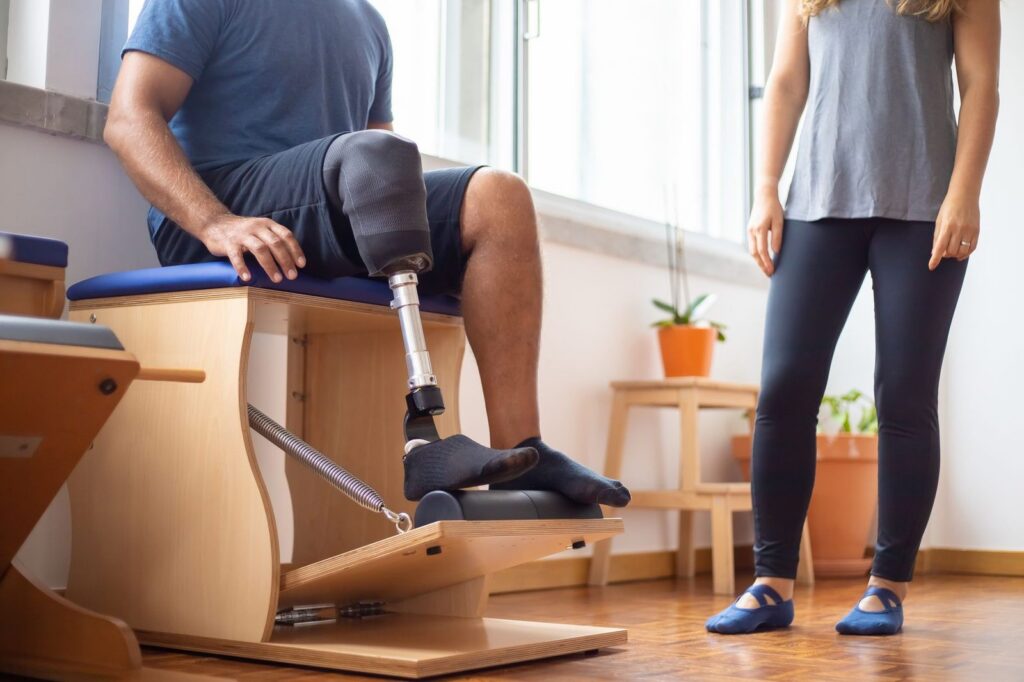
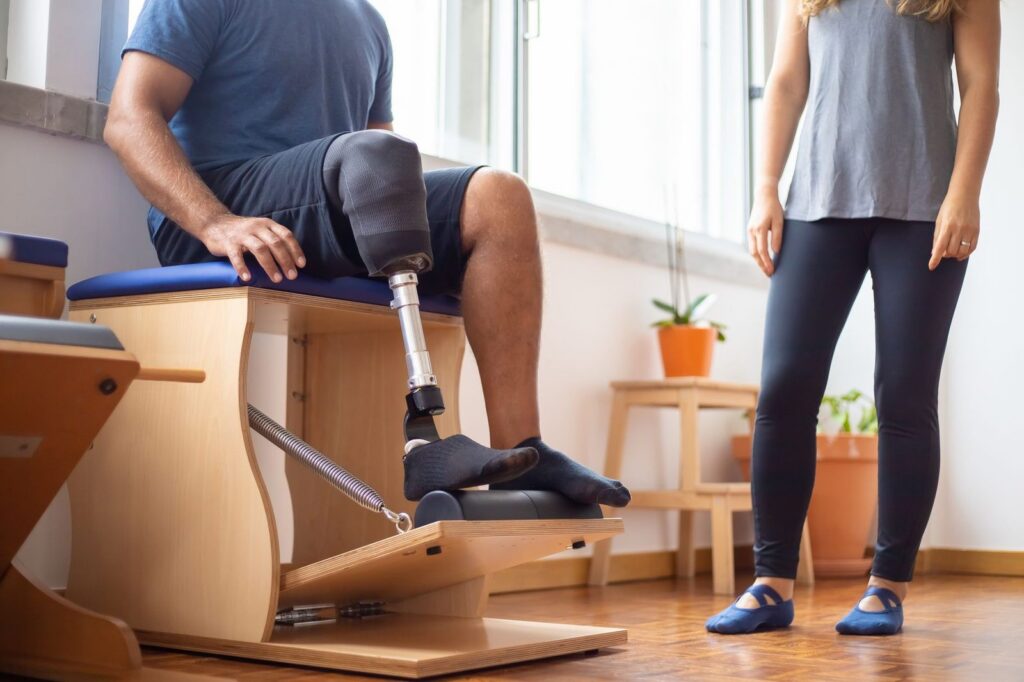
A below-knee amputation, medically called transtibial amputation, removes the lower leg below the knee. The knee joint stays intact.
Why this matters for mobility:
You keep your knee, so you can bend and straighten your leg. You can sit naturally, balance is easier, and walking feels closer to normal. You don’t compensate for a missing joint.
Prosthetic reality:
Below-knee prosthetics are lighter and more natural to walk with than above-knee devices. Research shows walking with a below-knee prosthetic requires significantly less energy than walking with an above-knee prosthetic. Many people walk without a cane or walker after training.
A typical below-knee prosthetic costs $15,000 to $25,000. You’ll need a replacement every 3 to 5 years.
Rehabilitation timeline:
Most people return to walking and daily activities faster than those with higher-level amputations. Rehabilitation typically takes 3 to 6 months.
What this means for your claim:
While a below-knee amputation is catastrophic and life-altering, functional outcomes and lifetime costs are generally better than higher-level amputations. Over a lifetime (roughly 50 years post-amputation), a person typically spends $200,000 to $500,000 on prosthetics, maintenance, adjustments, and related care. This documented figure becomes part of your damages calculation.
Above-Knee Amputation: Transfemoral Amputation
An above-knee amputation, medically called transfemoral amputation, removes the leg above the knee. The knee joint is lost.
Why this is fundamentally different:
Without the knee joint, walking and balance become much more difficult. Your body works much harder to move. Many people need assistive devices (canes, walkers, or crutches) even after years of rehabilitation.
Prosthetic reality:
Above-knee prosthetics are heavier and more complex than below-knee devices. They require greater strength, balance, and physical effort. Walking with an above-knee prosthetic requires substantially greater energy expenditure—your body works harder with every step.
A typical above-knee prosthetic costs $25,000 to $50,000. You’ll need a replacement every 3 to 5 years.
Rehabilitation timeline:
Training takes longer—often 6 to 12 months or more. The adjustment to daily life is more profound. Many people never regain the same mobility level as a below-knee amputation.
What this means for your claim:
Above-knee amputations typically result in higher lifetime prosthetic costs, greater ongoing medical needs, and more substantial impact on earning capacity. Over a lifetime, a person may spend $500,000 to over $1 million on prosthetics, maintenance, adjustments, pain management, and related care. These documented costs are critical to your damages.
Other Amputation Levels
Foot and toe amputations:
Loss of one or more toes or part of the foot. Functional impact varies depending on which part is lost. Many people walk without a prosthetic, though balance may be affected. These are less severe than below-knee or above-knee amputations but still represent permanent loss.
Ankle amputation (Syme’s amputation):
Removal of the foot at the ankle joint. This level allows weight-bearing on the remaining limb, which can reduce prosthetic complexity. Functional outcomes are often better than above-knee amputations.
Hip disarticulation and hemipelvectomy:
These rare, extremely severe amputations involve loss of the entire leg at the hip or partial pelvis removal. They are among the most catastrophic amputations, with profound impact on mobility and independence. Lifetime costs and rehabilitation needs are substantially higher.
Lifetime Prosthetic and Medical Costs: The Real Picture
Prosthetic costs are only part of the story. Here’s what lifetime care looks like:
Prosthetic replacement:
Every 3 to 5 years, your prosthetic wears out and needs replacement. Over 50 years, that’s 10 to 17 replacements. At $15,000 to $50,000 per unit, this is substantial and recurring.
Adjustments and maintenance:
Prosthetics need ongoing adjustments as your residual limb changes shape and weight fluctuates. These adjustments cost $500 to $2,000 per visit and happen multiple times yearly, especially early on.
Physical therapy and rehabilitation:
Ongoing physical therapy, prosthetic training, and rehabilitation are documented medical expenses. Many people need therapy for years after amputation.
Pain management:
Phantom limb pain (pain feeling like it comes from the missing limb) affects many amputees and can persist for years. Treatment may include medications, injections, or other interventions—all documented medical costs.
Mental-health support:
Depression, anxiety, and post-traumatic stress after amputation are recognized medical conditions requiring treatment. Therapy and psychiatric care are documented expenses.
Home modifications:
Wheelchair ramps, accessible bathrooms, grab bars, specialized equipment—these support independence and are legitimate, documented claim expenses.
Lost income:
If amputation affects your ability to work, lost income and reduced earning capacity are core damage components.
Documented lifetime costs by amputation level:
- Below-knee amputation: $200,000 to $500,000 over a lifetime
- Above-knee amputation: $500,000 to over $1 million over a lifetime
- Hip disarticulation or hemipelvectomy: $1 million or more over a lifetime
These are based on documented prosthetic costs, medical care expenses, and rehabilitation needs. Your attorney will work with medical and vocational experts to calculate figures specifically for your situation.
Not sure what your next step is?
Talk it through with our team — the first consultation is free, confidential, and carries no obligation.
How Amputation Level Affects Your Personal-Injury Claim
In a personal-injury case, damages fall into two categories:
Economic damages (documented, quantifiable costs):
- Prosthetic devices and replacements
- Medical care, rehabilitation, and ongoing treatment
- Home modifications and accessibility equipment
- Lost income and reduced earning capacity
- Future medical care and prosthetic replacement
Non-economic damages (pain, suffering, and quality of life):
- Physical pain and suffering
- Emotional and psychological impact
- Loss of enjoyment of life
- Loss of independence and dignity
- Impact on relationships and social life
The amputation level affects both categories. A higher-level amputation typically results in:
- Higher documented medical and prosthetic costs (economic damages)
- Greater functional loss and quality-of-life impact (non-economic damages)
- More substantial impact on earning capacity (economic damages)
An attorney who focuses exclusively on catastrophic injuries understands how to translate medical evidence—amputation level, prosthetic costs, rehabilitation needs, and functional impact—into fair compensation reflecting the true cost of your injury. Learn more about catastrophic injury compensation and how medical care and rehabilitation expenses factor into your claim.
Medical Documentation: The Foundation of Your Claim
Your medical records are the foundation of your claim. They document:
- The level and cause of your amputation
- Your prosthetic prescription and specific devices recommended
- Your rehabilitation plan and progress
- Ongoing treatment, pain management, and mental-health support
- Functional limitations and daily-life impact
- Long-term prognosis and future medical needs
Keep detailed records of all medical appointments, prosthetic fittings, adjustments, and expenses. These records become evidence in your claim.
Phantom Limb Pain and Emotional Impact
Many amputees experience phantom limb pain—pain feeling like it comes from the missing limb—which can persist for years and significantly affect quality of life. This is a real, documented medical condition, not imagined.
Emotional and psychological impact is equally real: depression, anxiety, and post-traumatic stress after amputation are recognized as legitimate damage components. These should be fully documented through mental-health treatment and presented as part of your claim.
What Causes Catastrophic Amputation?
Amputations in personal-injury cases most commonly result from:
- Truck crashes and motor-vehicle collisions: Crush injuries, severe trauma
- Workplace accidents: Machinery, construction site injuries
- Negligent security incidents: Assaults, shootings, or attacks at properties that failed to provide reasonable security
- Severe burns: Thermal injuries requiring amputation
- Crush injuries: Entrapment, heavy machinery, structural collapse
Regardless of cause, any amputation is a life-altering, catastrophic injury warranting serious legal and financial consideration.
Next Steps: Understanding Your Rights After Amputation
If you or a loved one suffered an amputation due to a truck crash, workplace accident, negligent security failure, or other catastrophic event, you have the right to pursue compensation for all documented costs and impacts.
That includes:
- Prosthetics and ongoing prosthetic care
- Medical treatment and rehabilitation
- Pain management and mental-health support
- Lost income and reduced earning capacity
- Pain and suffering
- The permanent change to your life
An attorney who focuses exclusively on catastrophic injuries understands both medical and legal dimensions of amputation. They know how to work with medical and vocational experts to document every foreseeable expense and present the full injury impact to an insurance company or jury. Explore prosthetic devices and costs and lifetime disability benefits to understand the full scope of what you may recover.
Many people in your situation reach out to discuss their case and what comes next. If you’re considering your legal options, we’re here to listen and help you understand the path forward.
Have questions about what happened?
Ask our team directly. The first conversation is free, confidential, and there is no obligation to continue.
FAQ
What is the difference between above-knee and below-knee amputation?
Below-knee amputations preserve the knee joint, allowing lighter prosthetics, more natural walking, and lower lifetime costs ($200,000–$500,000). Above-knee amputations result in knee-joint loss, requiring heavier prosthetics, greater physical effort, and higher lifetime costs ($500,000–$1+ million).
How much does prosthetic care cost over a lifetime?
Below-knee amputations typically cost $200,000 to $500,000 in prosthetics and related care over a lifetime. Above-knee amputations can cost $500,000 to over $1 million. Hip disarticulations and hemipelvectomies often exceed $1 million.
Does amputation level affect my personal-injury claim?
Yes—amputation level directly affects claim value because it determines functional loss, lifetime medical costs, impact on earning capacity, and non-economic damages like pain and suffering.
What is phantom limb pain?
Phantom limb pain is pain feeling like it comes from the missing limb. It’s a real, documented medical condition that can persist for years and is recognized as part of damages in a personal-injury claim.
What body part is most commonly amputated?
Lower extremities (legs and feet) account for approximately 70% of all amputations in the United States. Among lower-extremity amputations, below-knee amputations are more common than above-knee amputations.
What causes catastrophic amputation in personal-injury cases?
Truck crashes, workplace accidents, negligent security incidents (assaults, shootings at unsecured properties), severe burns, and crush injuries are common causes.
If a catastrophic amputation has changed your life or your family’s life, and you’re trying to understand what happens next—both medically and legally—reach out for a free case evaluation. People facing this situation can contact us, and we’re here to help you understand your rights and what fair compensation might look like for you.
Key Differences at a Glance
Below-Knee Amputation (BKA)
The amputation occurs below the knee joint, preserving the knee. This typically allows for lighter prosthetics, more natural walking patterns, and lower energy expenditure during mobility. Lifetime prosthetic and care costs generally range from $200,000 to $500,000.
Above-Knee Amputation (AKA)
The amputation occurs above the knee joint, resulting in loss of the knee. This requires heavier, more complex prosthetics and greater physical effort to walk. Lifetime prosthetic and care costs typically range from $500,000 to $1 million or more.
Partial Foot Amputation
Loss of toes, part of the foot, or the forefoot. Recovery and prosthetic needs vary widely depending on which structures are lost. Many people with partial foot amputations can return to near-normal walking with appropriate prosthetics and rehabilitation.
Hip Disarticulation & Higher
Amputation at or above the hip joint. These are among the most severe amputations, requiring the most advanced prosthetics and extensive rehabilitation. Lifetime costs and functional recovery vary significantly based on overall health and support systems.
What Amputation Survivors Face
Physical Recovery & Rehabilitation
Amputation survivors require extensive physical therapy, prosthetic fitting, and training to regain mobility. Recovery timelines vary, but most people begin prosthetic training within weeks of healing.
Lifetime Prosthetic & Medical Costs
Prosthetics require regular replacement (typically every 3–5 years), ongoing adjustments, maintenance, and specialized care. These costs accumulate significantly over a lifetime and are often not fully covered by insurance.
Vocational & Lifestyle Changes
Many amputees must retrain for different work, modify their homes, and adapt daily routines. The loss of earning capacity and independence can have profound financial and emotional impacts.
Phantom Limb Pain & Psychological Impact
Phantom pain (sensation in the missing limb) affects many amputees and can persist for years. Depression, anxiety, and adjustment challenges are common and require ongoing mental health support.
Amputation Is a Catastrophic Injury
If you or a loved one lost a limb in a truck crash, a workplace accident, a negligent security failure, a rideshare collision, or any other incident caused by someone else's negligence or wrongdoing, you may have a legal claim for compensation. The costs of lifetime care, lost income, and pain and suffering can be substantial—and you should not bear them alone.
Common Causes of Amputation Injuries
Truck Accidents
High-impact collisions, rollovers, and underride crashes frequently result in severe crush injuries leading to amputation. Negligent truck drivers, poor vehicle maintenance, and unsafe road conditions are common factors.
Workplace & Construction Accidents
Machinery, power tools, falls from heights, and unsafe conditions can cause traumatic amputations. Employers have a duty to provide safe equipment and training.
Negligent Security & Violent Crime
Assaults and shootings at apartment complexes, parking lots, hotels, and businesses can result in amputation from gunshot wounds or severe trauma. Property owners may be liable for failing to provide adequate security.
Rideshare & Motor Vehicle Collisions
High-speed crashes involving Uber, Lyft, or other vehicles can cause catastrophic injuries including amputation. Driver negligence and unsafe road conditions are often to blame.