
Florida Wrongful Death | Amazon Truck Accidents
Losing a Loved One in an Amazon Truck Crash? You Do Not Have to Face the Next Steps Alone.
A plain-language guide for Florida families. Learn what a wrongful death claim involves, who may be responsible, and how CHG Personal Injury Lawyers can help you move forward.
Why Families Contact CHG
Florida
Florida-based firm serving families throughout the state
Free
Confidential first consultation with no obligation to continue
Licensed
Attorneys admitted to The Florida Bar
By CHG Lawyers · Published November 5, 2026
If your family is facing an Amazon truck wrongful death claim in Florida, you are likely going through a painful time.
A wrongful death claim is a civil case. That means it is a lawsuit for money. It is not a criminal case.
A family can bring this claim after a fatal crash caused by someone else’s negligence. Negligence means carelessness that causes harm. The claim seeks money for the losses the survivors face.
This guide explains:
- Who may bring a claim
- Who may be responsible when a driver works for a contracted company (a separate business hired to do the delivery work)
- What investigators examine
- Which deadlines apply
What a Wrongful Death Claim Is and Who Can Bring One in Florida
A wrongful death claim is brought by the personal representative. This is the person who manages the deceased person’s estate. The estate is everything the person owned.
The claim is for the survivors’ benefit. Under Fla. Stat. § 768.20, that person files the case for the survivors and the estate.
Florida law defines “survivors.” These are the people left behind. Under Fla. Stat. § 768.18, survivors include the spouse, children, and parents.
Certain blood relatives and adoptive brothers and sisters can also qualify. They qualify if they depended on the person for support or services.
Families may seek several kinds of losses.
- Under Fla. Stat. § 768.18, minor children are children under 25 years of age; the damages they may recover, such as lost parental guidance, are not listed in that section.
The same wrongful death framework can apply to a pedestrian or cyclist struck by a delivery vehicle.
If your family is facing a fatal crash with an Amazon delivery van or truck, you do not have to face the questions alone, and our team offers a free, confidential first consultation. Talk it through with our team — the first consultation is free, confidential, and carries no obligation.
Who May Be Responsible When the Driver Works for a Contracted Company
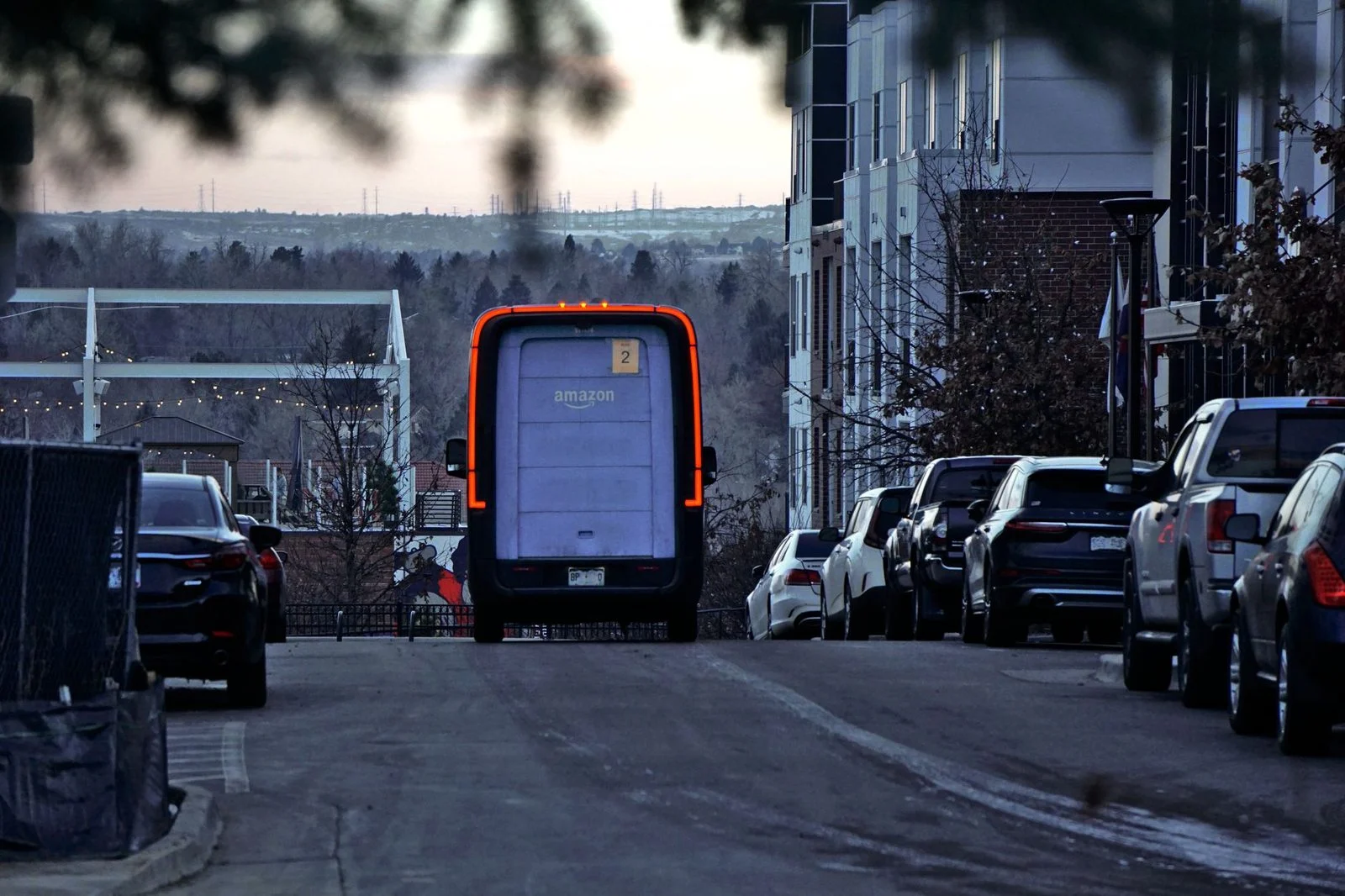
More than one party may be responsible. The company whose logo is on the van is not always the only one to examine.
Many Amazon routes run through contracted delivery companies. Amazon truck wrongful death cases in Florida often turn on practical questions. For example:
- Who hires the driver?
- Who trains, schedules, equips, and supervises the driver?
Every accident is different, so the details matter when a claim is evaluated.
Other parties can also be relevant. These may include:
- The driver
- The company that operates the vehicle
- The vehicle owner
- Any maintenance provider whose work contributed to the crash
Courts also look at how companies choose the businesses they hire. In Montgomery v. Caribe Transport II, LLC, the U.S. Supreme Court stated that a state-law negligent-hiring claim falls within a federal safety exception. Some injury claims examine how a company hired and supervised the people who worked for it.
That case involved a broker, not a delivery van. It shows one legal path. It is not a rule for every case.
Responsibility is found through investigation. It is not assumed from a logo.
Common Causes Investigators Examine in Fatal Delivery Van and Truck Crashes
After a fatal crash, investigators often look at driver conduct, work hours, and vehicle condition. These are questions to test against evidence. They are not findings about any company or driver.
- Phone use. Drivers of commercial motor vehicles may not use a hand-held phone while driving. The rule allows calls to law enforcement or emergency services. 49 CFR 392.82
- Hours and fatigue. Federal rules limit driving time and require breaks. Federal hours-of-service rules limit driving time (49 CFR 395.3); the rule that a driver may not operate a commercial motor vehicle while his or her ability or alertness is so impaired, or so likely to become impaired, through fatigue, illness, or any other cause, as to make it unsafe is in 49 CFR 392.3. 49 CFR 392.3
- Speed and delivery pressure. Investigators ask whether tight delivery windows pushed drivers to rush. This question matters most near school zones and busy neighborhoods.
- Backing and turns. Pedestrians and cyclists face added risk near parking areas, driveways, and turning vehicles.
- Maintenance. Motor carriers must keep vehicles in safe operating condition. 49 CFR 396.3
Every case is different, so the specific facts of the vehicle and the trip matter.
The Insurance Institute for Highway Safety publishes fatality statistics on large-truck crashes. These include deaths of pedestrians and cyclists.
Evidence to Protect and Steps to Take in the First Weeks
The crash report, vehicle records, and maintenance files are often the most time-sensitive evidence. Acting early helps.
Florida requires a Florida Traffic Crash Report, Long Form. It must be completed within 10 days after an investigation of a crash involving death or injury.
The report lists the parties’ insurance companies. The parties and their legal representatives may access it.
Federal rules require carriers (trucking companies) to keep inspection and repair records for each vehicle. These records must be kept for 1 year. They must also be kept for 6 months after the vehicle leaves the carrier’s control. 49 CFR 396.3
Families can also preserve:
- Photos, videos, and any dashcam footage (a camera mounted on the windshield)
- Names and contact details of witnesses
- Medical examiner or coroner records, which answer cause-of-death questions
- Funeral bills, medical bills, and records of lost income
Avoid giving recorded statements to an insurance adjuster (the insurance company’s claims worker) before you speak with a lawyer. Follow the directions of law enforcement and the medical examiner.
How a Florida Wrongful Death Case Typically Moves Forward
Most cases follow the same general steps:
- Initial consultation. The family shares the crash facts. The lawyer explains the options under Florida law.
- Investigation and preservation. Letters may request vehicle data, maintenance records, and driver records. Preservation means keeping evidence from being lost or changed.
- Identifying parties and insurance. Investigators look for every party whose conduct may have contributed. This includes commercial policies (insurance bought by businesses).
- Documenting losses. The family records its economic losses. It also records the loss of the person’s support, services, and companionship.
- Negotiation or lawsuit. Many claims start with insurers. If a fair resolution fails, a lawsuit may be filed. Timelines vary by case.
Florida’s fault rule also matters. Under Fla. Stat. § 768.81, in a negligence action to which this section applies, a party found more than 50 percent at fault for their own harm may not recover any damages; this does not apply to an action for personal injury or wrongful death arising out of medical negligence pursuant to chapter 766.
Florida generally sets a two-year limit for filing most negligence lawsuits. This is the deadline to file. Other deadlines can apply. Timing matters.
Why Families Contact CHG Personal Injury Lawyers
CHG Personal Injury Lawyers is a Florida-based personal injury firm. It serves families throughout Florida, including Miami, Orlando, Tampa, and Jacksonville.
The firm handles personal injury cases of every severity. These include truck accidents, car accidents, catastrophic injuries, and wrongful death.
Our lawyers are licensed in Florida and admitted to The Florida Bar. Igor Hernandez is the lawyer responsible for this page.
The firm also publishes educational content in English and Spanish. Spanish-speaking families can read the same guidance in their language.
CHG charges no attorney’s fees and no case costs unless there is a recovery.
Not sure what your next step is?
Talk it through with our team — the first consultation is free, confidential, and carries no obligation.
Frequently Asked Questions
Can a family sue if the driver was not a direct Amazon employee?
The driver’s employment status is one factor among several. Who hires, trains, and supervises the driver can also affect who may be responsible.
Do we need a police report to make a claim?
A crash report is an important record. Other evidence can also support a claim. This includes photos, video, and witness accounts.
How long do we have to file?
Florida generally sets a two-year limit for most negligence lawsuits. Other deadlines can apply, so families should move quickly.
Who may recover money in a wrongful death case?
Florida law names the survivors and the estate as potential recipients of different types of damages. The details are reviewed during the consultation.
Talk With Our Team About Your Family’s Situation
Planning a funeral while trying to understand a crash you never expected is a heavy load. You do not have to sort through the police report, insurance calls, and legal questions alone.
Our team offers a free, confidential first consultation with no obligation to continue. Contact CHG Personal Injury Lawyers when your family is ready.
Questions Families Ask Us First
Who can bring a wrongful death claim?
In Florida, a wrongful death claim is generally brought on behalf of the deceased person's survivors and estate. Our lawyers can explain how these rules apply to your family's situation.
Is the delivery company always responsible?
Responsibility can involve the driver, the company that employs or contracts the driver, the vehicle's maintenance, and others. Each case depends on its own facts, and we review every possible source.
Do we need a police report?
A crash report is an important record, but it is not the only evidence. Photos, video, witness statements, and vehicle data can all matter, so please keep anything you have.
What does it cost to talk with you?
Your first consultation is free and confidential, with no obligation to continue. CHG charges no attorney's fees and no case costs unless there is a recovery.
How CHG Supports Your Family
Listening First
We take time to hear how the crash happened and how your family has been affected, at a pace that works for you.
Investigating the Facts
Our team looks at the crash, the trucking and delivery records, and the other evidence that may show who should be held accountable.
Protecting Your Rights
We explain the options available under Florida law and handle communications with insurers and other parties on your family's behalf.
Standing With Your Family
Losing someone is life-altering. We aim to keep you informed every step of the way so you can focus on your loved ones.
Important: Act Promptly
Please contact a lawyer as soon as you are able, and follow the advice of your doctors and other medical providers.