

Airplane Crash Injury Lawyers
Fighting for Victims of Catastrophic Airplane Crash Injuries
When an airplane crash leaves you or a loved one with life-altering injuries or death, you need a law firm with the resources and focus to hold responsible parties accountable. CHG Personal Injury Lawyers handles airplane crash cases nationwide from our Florida base.
By CHG Lawyers · Published September 20, 2026
Orlando Airplane Crash Injury Lawyers
An airplane crash is one of the most catastrophic events a person can survive—or lose someone to. If you or a family member was injured in a plane crash or lost a loved one in one, you may have the right to pursue a claim against the airlines, aircraft manufacturers, maintenance contractors, or other parties whose negligence or failure to maintain safety standards caused the crash.
Airplane crash cases are complex. They involve federal regulations, multiple defendants, and often life-altering injuries including spinal cord injuries, traumatic brain injuries, severe burns, amputations, and wrongful death. CHG Personal Injury Lawyers focuses on catastrophic injury cases, including those arising from aviation accidents. We understand the legal and practical challenges crash survivors and grieving families face.
Not sure what your next step is?
Talk it through with our team — the first consultation is free, confidential, and carries no obligation.
Who Can Be Held Liable in an Airplane Crash?
Liability in an airplane crash often extends to multiple parties: the airline, the aircraft manufacturer, maintenance contractors, and sometimes pilots or crew members.
Airlines can be held responsible if they failed to maintain the aircraft properly, hired unqualified crew, or violated safety protocols.
Aircraft manufacturers may be liable if the plane had a design defect or manufacturing flaw that contributed to the crash.
Maintenance contractors can be responsible if they failed to inspect, repair, or service the aircraft to required standards.
The Federal Aviation Administration (FAA) sets and enforces safety standards under 14 CFR Part 121 (commercial airline operations) and 14 CFR Part 135 (charter and on-demand operations). Violations of these regulations can establish negligence in a claim.
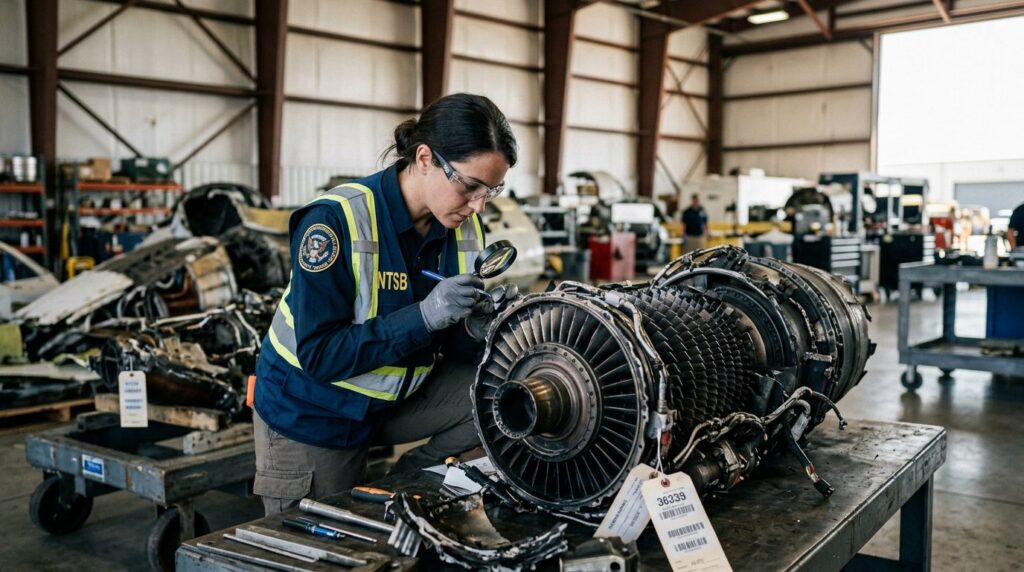
In catastrophic-injury cases we handle, determining which party or parties caused the crash often requires expert analysis. We review maintenance records, design specifications, crew training documentation, and National Transportation Safety Board (NTSB) investigation findings.
Understanding NTSB Investigations and Their Role in Your Claim
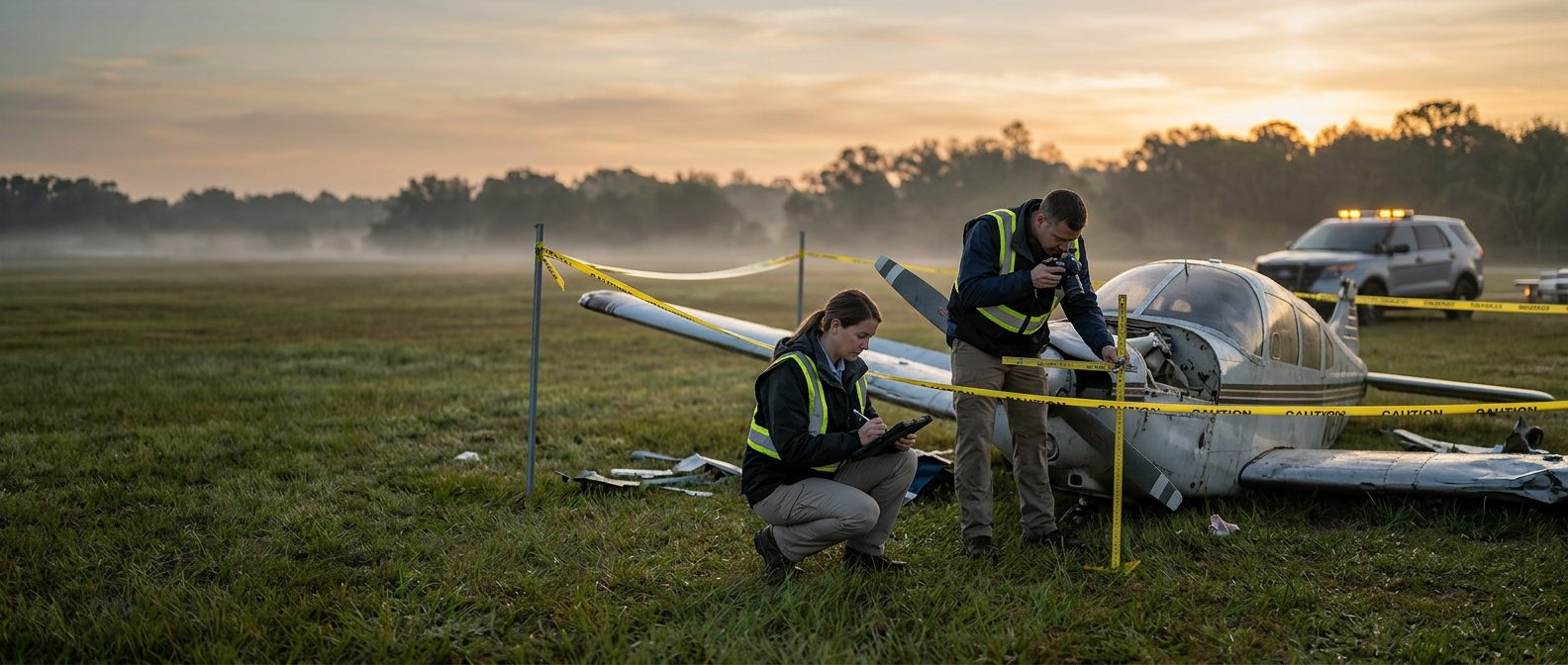
When a commercial airplane crashes, the National Transportation Safety Board (NTSB)—an independent federal agency—conducts a thorough investigation. Here’s what you need to know: the NTSB does not determine fault or liability. That determination happens in civil court. Federal law also provides that no part of the NTSB Board’s report on the accident may be admitted into evidence or used in a civil action for damages, such as a personal-injury or wrongful-death claim.
The NTSB investigates: – The aircraft’s condition and maintenance history – Crew performance and training records – Weather conditions – Air-traffic control communications – Structural or mechanical factors
The agency publishes a detailed accident report—often 100+ pages—with findings, contributing factors, and recommendations. This report can point toward possible negligence or product defects by airlines, manufacturers, or maintenance contractors, although federal law bars any part of it from being admitted into evidence or used in a civil action for damages.
If the report identifies a design flaw, that supports a product-liability claim against the manufacturer.
You do not need to wait for the NTSB investigation to conclude before filing a civil lawsuit. Once the NTSB report is published, it strengthens your case significantly.
Commercial Airlines vs. Charter and Private Aviation
Liability rules and applicable law differ depending on the type of aircraft and operation.
Commercial airline crashes are governed by federal law, including the Warsaw Convention (for international flights) or the Montreal Convention (which replaced the Warsaw Convention in 2003 for most countries). These treaties limit damages in some cases but also establish clear liability frameworks. The NTSB investigates commercial airline crashes.
Charter flights (Part 135 operations under FAA regulations) and private planes (Part 91 operations) operate under different rules. Liability may rest with the charter company, the aircraft owner, the pilot, or a combination. Federal law requires the NTSB to investigate, or have investigated, and establish the probable cause of the aircraft accidents it has authority to investigate. State law may apply to charter or private-aviation claims, depending on where the crash occurred and the parties involved.
If you were injured on a charter flight or private plane, the legal landscape is different. You need an attorney who understands those distinctions.
What Types of Injuries Result from Airplane Crashes?
Airplane crashes produce some of the most severe injuries imaginable. The extreme forces involved—rapid deceleration, impact trauma, fire, and structural collapse—cause catastrophic harm.
Survivors often suffer: – Spinal cord injuries resulting in paraplegia or quadriplegia (partial or complete paralysis) – Traumatic brain injuries that can cause permanent cognitive, physical, or emotional impairment – Severe burns when fuel ignites or fires spread through the cabin – Amputations from crush injuries or thermal damage
Many crash survivors face a lifetime of medical care, rehabilitation, assistive devices, and lost earning capacity.
Families also face the devastating reality of wrongful death. When a loved one is killed in a crash, surviving family members may pursue a claim for funeral expenses, lost financial support, and the loss of companionship and guidance.
Florida’s Statute of Limitations for Airplane Crash Claims
Time is critical in airplane crash cases. Under Florida law, you generally have two years from the date of injury to file a personal-injury lawsuit. For wrongful death claims, the deadline is two years from the date of death.
Fla. Stat. §95.11(5)(a) sets this deadline for negligence actions, and §95.11(5)(e) sets it for wrongful death actions. Missing it means losing your right to sue entirely, regardless of the strength of your case.
If the crash occurred outside Florida, the statute of limitations of that state may apply. This is why prompt legal consultation is essential. If you were injured in an airplane crash in Florida or elsewhere, or if a family member died, contact an attorney as soon as possible to protect your rights.
Have questions about what happened?
Ask our team directly. The first conversation is free, confidential, and there is no obligation to continue.
How Does Comparative Fault Apply to Airplane Crash Cases?
Florida follows a modified comparative-fault rule. If you are found to be more than 50% at fault for the accident, you cannot recover damages. If you are 50% or less at fault, your damages are reduced by your percentage of fault (Fla. Stat. § 768.81(6)).
Fla. Stat. §768.81(6) governs this rule. In airplane crash cases, comparative fault rarely applies to passengers—they are generally not responsible for the crash. However, in cases involving charter flights, private planes, or situations where a passenger’s conduct contributed to the accident, comparative-fault questions may arise. An attorney will evaluate whether this rule affects your claim.
What Damages Can You Recover?
You may recover:
- Medical expenses: emergency care, surgery, hospitalization, rehabilitation, ongoing treatment, and assistive devices
- Lost wages and lost earning capacity: income lost during recovery and lifetime lost earnings if you cannot return to work
- Pain and suffering: compensation for physical pain, emotional trauma, and reduced quality of life
- Permanent disability: damages reflecting the permanent nature of paralysis, brain injury, or amputation
- Wrongful death damages: in fatal crashes, funeral expenses, lost financial support, and loss of companionship (for surviving family members)
Because airplane crashes cause catastrophic, permanent injuries, damages are often substantial. The exact amount depends on the severity of injury, age, earning history, and other factors specific to your case.
Why Airplane Crash Cases Are Complex
Airplane crash litigation involves multiple layers of complexity:
- Federal regulations and jurisdiction: aviation is governed by federal law, FAA standards, and often federal court procedure, not just state law
- Multiple defendants across state lines: airlines, manufacturers, maintenance contractors, and others may be located in different states, requiring nationwide litigation strategy
- Expert testimony: engineers, accident reconstructionists, medical specialists, and aviation experts are typically necessary to establish liability and damages
- Substantial damages: the catastrophic nature of injuries and fatalities means high-value claims that defendants and their insurers vigorously defend
- Insurance and corporate resources: airlines and manufacturers have extensive legal teams and insurance coverage
These cases demand experienced legal representation. You need an attorney who understands aviation law, federal procedure, the medical realities of catastrophic injury, and how to navigate cases that cross state lines.
FAQ
How long do I have to file a claim after an airplane crash in Florida?
You generally have two years from the date of injury to file a negligence lawsuit under Fla. Stat. §95.11(5)(a), and two years to bring a wrongful death action under §95.11(5)(e). Missing this deadline bars your claim entirely.
Can I recover damages if the crash happened outside Florida?
Yes, CHG can review airplane crash cases from outside Florida, although its lawyers are admitted to practice only in Florida. The laws of the state where the crash occurred may apply—or federal law may govern. An attorney will evaluate which law applies, where to file suit, and how to protect your rights across state lines.
What if I was on a charter flight or private plane, not a commercial airline?
Different liability rules and FAA regulations apply to charter (Part 135) and private (Part 91) aviation. The NTSB investigation process may differ as well. Contact an attorney to discuss your specific situation.
Can I file a claim if a family member died in the crash?
Yes. Surviving family members can pursue a wrongful-death claim for funeral expenses, lost financial support, and loss of companionship.
Do I need to wait for the NTSB investigation to finish before filing a lawsuit?
No. You can file a civil claim while the NTSB investigation is ongoing. The NTSB’s findings, once published, strengthen your case by providing independent evidence of what caused the crash.
Want to know where you stand?
Tell us what happened and our team will walk you through the options available to you, at no cost.
What to Do Now
If you or a family member survived an airplane crash with severe injuries—paralysis, brain injury, burns, amputation—or if a loved one was killed in a crash, you’re facing not only physical and emotional recovery but also urgent legal decisions. The two-year deadline under Florida law moves quickly, and the complexity of aviation cases demands prompt, experienced legal guidance.
Contact CHG Personal Injury Lawyers for a free case evaluation. We focus exclusively on catastrophic injury cases and handle airplane crashes nationwide. Let’s talk about what may be possible in your case.
Why Choose CHG for Your Airplane Crash Claim
Focus on Catastrophic Injury Claims
We focus exclusively on severe, life-altering injuries—spinal cord damage, traumatic brain injury, amputation, severe burns, and wrongful death. Airplane crashes demand a firm that understands the full scope of your losses.
National Case Experience
Bilingual Support
We serve clients in English and Spanish, ensuring clear communication and access to justice for all families affected by airplane crashes in the Orlando area and beyond.
Immediate Action Matters
Airplane crash investigations move quickly. Evidence preservation, regulatory filings, and legal deadlines demand prompt attention. We act fast to protect your rights from day one.
What to Know About Airplane Crash Claims
Who Can Be Held Liable
Responsibility may rest with the airline, aircraft manufacturer, maintenance contractor, airport operator, or a combination of parties. We investigate thoroughly to identify every source of compensation available to you.
Damages in Catastrophic Cases
Airplane crash injuries often result in permanent disability, ongoing medical care, lost income, and profound family hardship. Your claim can address medical expenses, rehabilitation, lost wages, pain and suffering, and other losses tied to your injury or loss.
Federal and State Law Apply
Airplane crashes involve federal aviation regulations, the Warsaw Convention (for international flights), state negligence law, and sometimes product liability. Our focus on catastrophic injury means we navigate these overlapping rules.
Time Is Critical
Legal deadlines, evidence preservation, and regulatory processes all move on tight schedules. Early consultation protects your right to pursue compensation and ensures nothing is lost or overlooked.
Act Quickly After an Airplane Crash
Airplane crash investigations involve federal agencies, airlines, and manufacturers—all with their own legal teams. The sooner you contact a personal injury lawyer focused on catastrophic injury, the sooner we can preserve evidence, file necessary notices, and protect your family's rights.