
Wrongful Death | Cooper City, Florida
When a Loved One Dies in an Accident, Your Family Deserves Answers
Grief and questions often arrive together. Here is a plain-language guide to what Florida families can do next, from the Cooper City area and across Broward County.
By CHG Lawyers · Published November 17, 2026
Cooper City families who lose someone in a crash or an attack often have questions. Many ask them before the funeral is even planned. Who can act for the family? Can anyone be held responsible?
Florida law lets certain family members seek damages. Damages are money a court awards for losses. This applies when another person’s wrongful act, negligence, or default causes a death. Default means a failure to do what the law requires.
This page explains who can file. It explains what a claim can cover. It also explains the rules that shape a claim. This is general information. Every family’s situation is different.
When Can a Family File a Wrongful Death Claim in Florida?
A family can file when another person’s wrongful act or negligence causes a death. The person who died must have been able to sue if they had lived.
Florida’s right of action statute keeps the responsible party liable. This is true even after the injured person dies.
Picture a driver who runs a red light and strikes a pedestrian. Or picture a shopper attacked in a parking garage with broken gates and dim lights.
Both cases ask the same core question. Did another party’s wrongful act cause the death?
The answer depends on the facts. Sorting out those facts is often the first real step. It also helps families see which questions the law asks.
If your family is weighing a wrongful death claim after a sudden loss, you don't have to decide alone; reach out for a free, confidential talk. Talk it through with our team — the first consultation is free, confidential, and carries no obligation.
Who Can Bring a Wrongful Death Claim in Florida?
The personal representative of the deceased person’s estate brings the claim. The claim is for the benefit of the survivors and the estate. A personal representative is the person legally appointed to handle the estate.
Florida’s parties statute says the action shall be brought by the decedent’s personal representative. The personal representative acts in court for the family and the estate.
Who counts as a survivor? Florida’s definitions statute says survivors include the decedent’s spouse, children, and parents.
Blood relatives and adoptive brothers and sisters also count. They count when they depended on the person for support or services.
The same law defines “minor children” as children under 25. The age of 25 applies even after a child reaches adulthood.
Many families need a personal representative in place before a case is filed. The firm can explain how that step works for your family. Other relatives may also have rights. It helps to look at everyone who could recover.
What Can a Florida Wrongful Death Claim Cover?
Florida law allows recovery for lost support and services. It also allows recovery for medical and funeral bills. Certain survivors may recover for their mental pain and suffering.
- Support and services. Each survivor may recover the value of lost support and services. This covers the time from the injury to the death. It also covers future losses.
- A surviving spouse. The spouse may recover for loss of companionship and protection. The spouse may also recover for mental pain and suffering.
- Minor children. Minor children, and all children if there is no surviving spouse, may recover for lost parental companionship, instruction, and guidance. Minor children, and all children if there is no surviving spouse, may also recover for mental pain and suffering from the date of injury.
- Parents. A parent of a deceased minor child may recover for mental pain and suffering.
- Expenses. A survivor who paid medical or funeral bills may recover them.
In Ripple v. CBS Corp. (2024), the Supreme Court of Florida made a ruling. A surviving spouse does not bring a separate loss of consortium claim. Consortium means the loss of a spouse’s companionship and marital relationship. Instead, the spouse’s damages are recovered in the wrongful death case.
No amount of money can replace someone you love. The value of any claim depends on the evidence. It also depends on which family members may recover.
Fatal Crashes and Violent Harm in Cooper City and Broward County
Deaths from car, truck, motorcycle, bicycle, and pedestrian crashes can lead to a wrongful death claim. Deaths from attacks on unsafe property can also lead to a claim.
Getting around Broward is part of daily life. You may drive Griffin Road, Stirling Road, or Sheridan Street. You may head to a Florida Panthers game in Sunrise.
Impaired driving is one danger on those roads. The CDC publishes national data. That data shows the share of traffic deaths that involve alcohol-impaired drivers.
Violent harm works differently. Picture a parent walking to a car late at night in an apartment complex. The gate is broken. The lot is dark. The cameras aren’t working. An attack follows, and the parent dies.
The legal term for this is negligent security. It means a property owner failed to provide reasonable locks, gates, lighting, cameras, or guards. That failure contributed to the harm. The family may have a claim against that owner.
When a person lawfully on commercial or real property is hurt by a third party’s crime, Florida’s premises statute applies to a claim against the owner, lessor, operator, or manager of that property. The court must consider the fault of everyone who contributed to the injury.
Whether a property owner’s security steps affect a claim depends on the facts of each case, and a lawyer can review those facts with you. It does not by itself create a right to sue.
What Deadlines and Fault Rules Shape a Florida Wrongful Death Case?
Two Florida rules families should understand early. The first is the filing deadline. The second is the fault bar: under Fla. Stat. § 768.81(6), in a negligence action to which the statute applies, any party found to be greater than 50 percent at fault for his or her own harm may not recover any damages, subject to the statute’s exceptions, including certain actions covered by chapter 766.
The deadline comes from Florida’s limitations statute. It sets a two-year deadline for negligence lawsuits.
Deadlines apply. Families should contact a lawyer promptly rather than waiting.
Fault works differently. Florida’s comparative fault statute says each liable party pays its own percentage of fault. It also says that in a negligence action to which this section applies, a party found more than 50 percent at fault for his or her own harm may not recover any damages, but this does not apply to personal injury or wrongful death arising out of medical negligence under chapter 766.
Under chapter 2023-15, Laws of Florida, except as otherwise expressly provided in that act, the act applies to causes of action filed after its effective date. Timing and strategy require a close look at the case. Families should not rely on a general article alone.
What Evidence Should a Family Gather After a Fatal Accident?
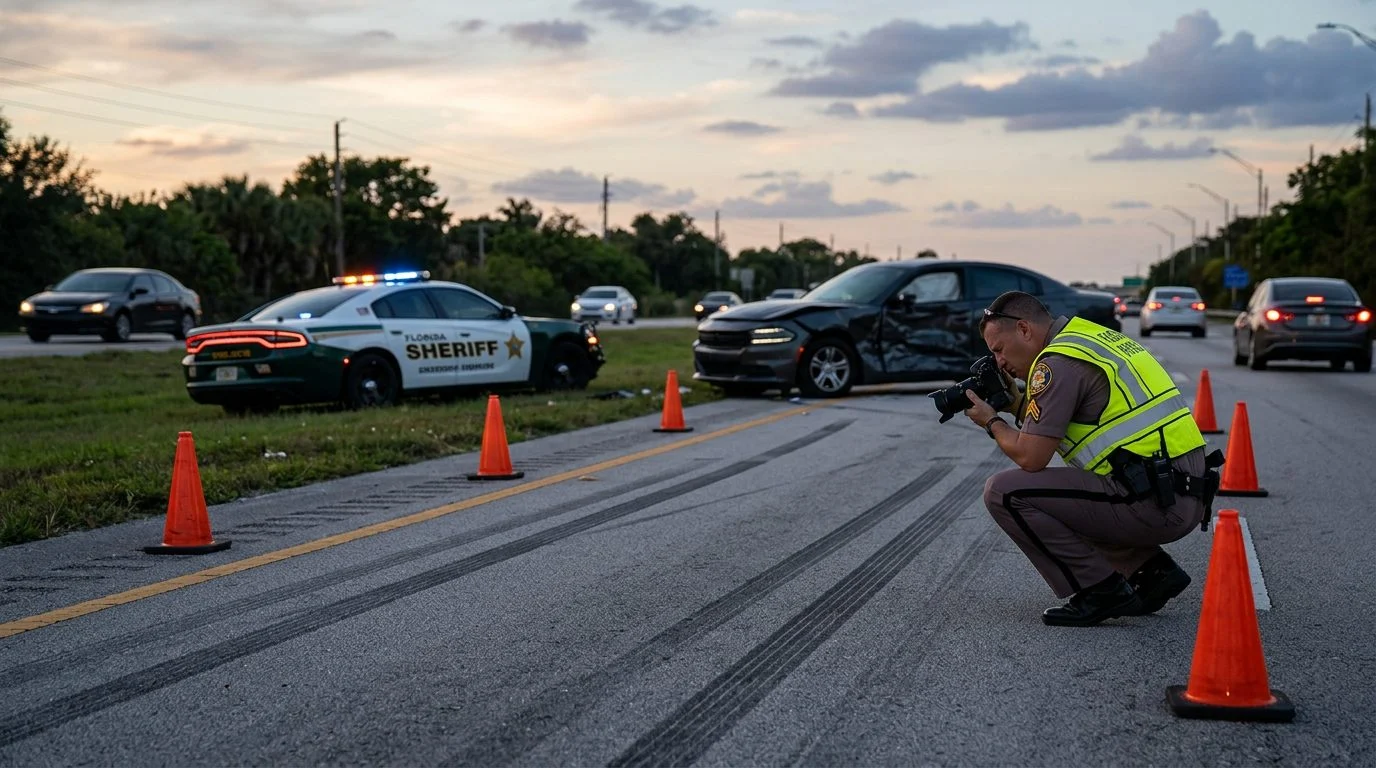
Keep the crash report number, photos, witness names, medical and hospital records, and any video. Share them with your lawyer as early as you can.
Florida’s crash report statute requires a Florida Traffic Crash Report, Long Form for a motor vehicle crash that resulted in death, personal injury, or any indication of complaints of pain or discomfort, or that involved a commercial motor vehicle. The report must be submitted within 10 days after the investigating officer finishes the investigation of a crash involving death or personal injury.
Ask the investigating agency for the report number. Crash reports can be made available to the parties, their legal representatives, and their insurers.
Write down witness names and phone numbers while memories are fresh. Ask nearby businesses about security or traffic video. Footage can be overwritten on a schedule. Asking early matters.
Follow the care plan from your loved one’s doctors. Follow the guidance of law enforcement too. CHG does not give medical advice.
Not sure what your next step is?
Talk it through with our team — the first consultation is free, confidential, and carries no obligation.
How CHG Personal Injury Lawyers Serves Families Throughout Florida
CHG Personal Injury Lawyers is a Florida-based firm. It serves families throughout Florida. That includes Cooper City and Broward County.
Igor Hernandez is the responsible lawyer for this page. The firm’s lawyers are licensed attorneys admitted to The Florida Bar. Our team supports them in handling each matter.
The firm takes personal injury cases of every severity. These range from everyday car crashes and slip-and-falls to catastrophic injuries and wrongful death. Our lawyers focus on wrongful death and serious injury claims. They also handle other personal injury matters.
Some matters may be referred to, or handled together with, another law firm. If that happens, the family will be told.
CHG charges no attorney’s fees and no case costs unless there is a recovery.
Talk With Igor Hernandez About Your Family’s Next Step
Families weighing a wrongful death claim can start with a conversation. You can discuss the facts, the paperwork, and the deadlines.
Bring whatever you already have. That includes the crash or incident report number, the death certificate, hospital records, photos, and insurance letters.
Common Questions
Who can file a wrongful death claim in Florida?
The personal representative files for the survivors and the estate. Survivors include the spouse, children, and parents.
Under Fla. Stat. § 768.81(6), in a negligence action to which this section applies, any party found to be greater than 50 percent at fault for his or her own harm may not recover any damages; this does not apply to personal injury or wrongful death arising out of medical negligence under chapter 766.
How long do families have to file?
Florida’s two-year deadline for negligence lawsuits applies to many of these claims (Fla. Stat. § 95.11(5)(a)). Contact a lawyer promptly.
If your family is weighing a wrongful death claim after a sudden loss, you don’t have to decide alone. Reach out to Igor Hernandez through the CHG contact page. The first consultation is free and confidential, with no obligation to continue.
How We Work With Families
Compassionate, Plain-Language Guidance
We explain each step in clear terms so you always know what is happening and why.
Florida-Based, Serving Cooper City
Our practice focuses on Florida families, including those in Cooper City, Broward County and communities throughout the state.
Licensed Florida Attorneys
Igor Hernandez is the responsible lawyer for this page. Our attorneys are licensed and admitted to practice before The Florida Bar.
No Fees Unless There Is a Recovery
The firm charges no attorney's fees and no case costs unless there is a recovery. Your first consultation is free, confidential and without obligation to continue.
Deadlines Apply
Florida sets time limits for wrongful death claims, and they can be shorter than families expect. Do not wait to get guidance. Contact our team promptly so your options are not lost.
Steps Families Can Take Now
Keep the Evidence
Save photos, crash or incident reports, surveillance footage requests and any physical items connected to the event.
Gather the Paperwork
Collect medical, police and employment records, along with the funeral and expense receipts your family has paid.
Write Down What You Remember
Note the date, place, witnesses and the details of what you were told while they are still fresh.
Reach Out for Guidance
A conversation with a lawyer can help you understand your options. Our team is available to answer your questions.
You Do Not Have to Face This Alone. Talk With a Florida Lawyer Today.
Related practice areas
- Wrongful Death Law in Florida
- Wrongful Death in Fontainebleau: Florida Family Guide