

Truck Accident Data
Why Truck Accidents Are So Much More Severe Than Car Crashes
Large trucks represent a small fraction of accidents but a disproportionate share of fatalities and catastrophic injuries. Understand the numbers—and what they mean for your case.
The Severity Gap: What the Data Shows
10–12%
of fatal crashes involve large trucks
3–5%
of all accidents involve large trucks
80,000 lbs
typical weight of a loaded commercial truck
By CHG Lawyers · Published August 23, 2026
What Percent of Accidents Are Caused by Trucks? Understanding Frequency vs. Severity
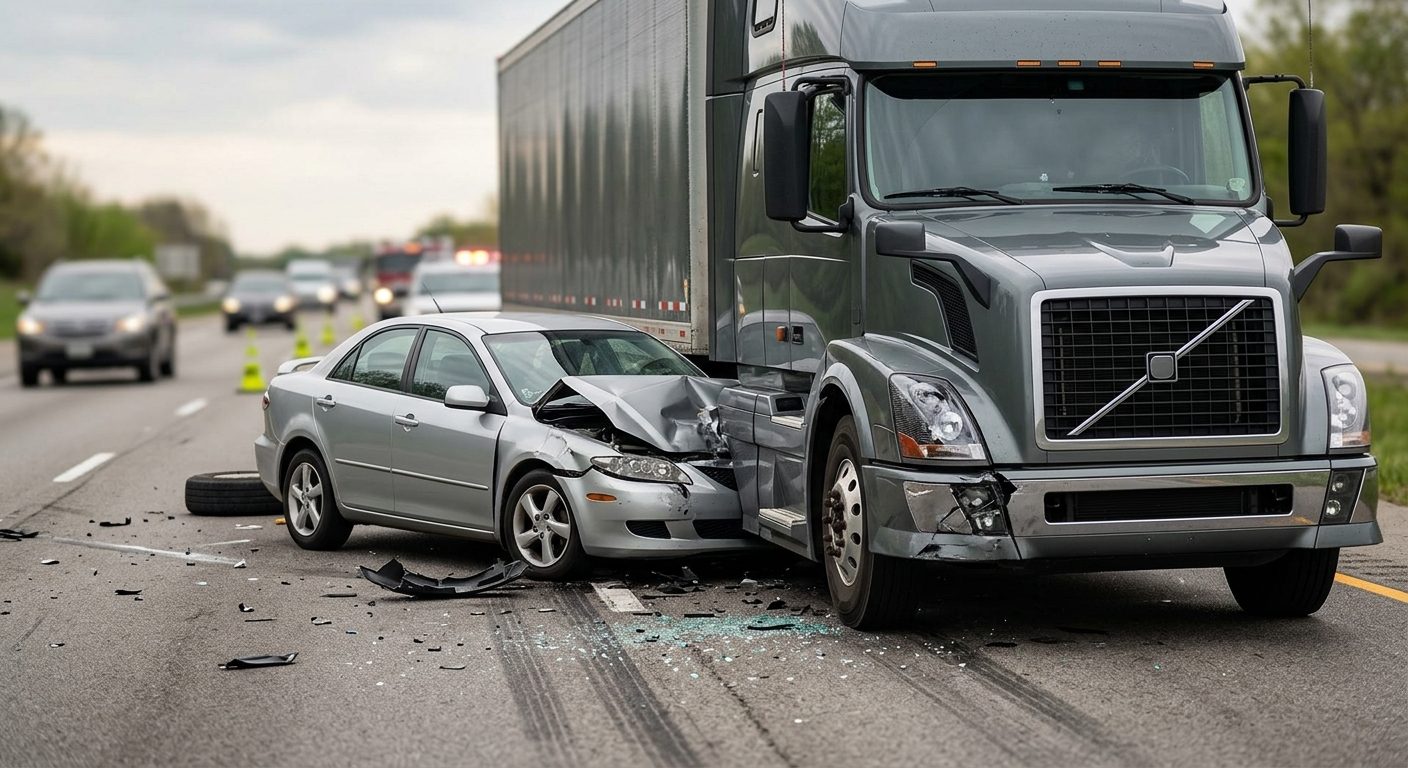
Large trucks are involved in only about 3–5% of all traffic accidents in the U.S., even though they make up just 1.4% of vehicles on the road. But here’s what matters: when a truck crashes, the damage is far more catastrophic than a typical car accident. Understanding the difference between accident frequency (how often they happen) and accident severity (how serious they are) is essential if you’ve been injured in a truck collision.
Not sure what your next step is?
Talk it through with our team — the first consultation is free, confidential, and carries no obligation.
The Short Answer: Trucks Cause a Small Percentage of All Accidents
Large trucks are involved in roughly 3–5% of all traffic accidents, according to data from the National Safety Council and the Federal Motor Carrier Safety Administration (FMCSA). Cars and light vehicles cause more accidents simply because there are far more of them on the road. This statistic surprises many people, because truck accidents feel more serious and memorable—and they are.
Why Frequency Doesn’t Tell the Whole Story
Accident frequency and accident severity are two separate things. While trucks cause fewer total accidents, they cause a much larger share of fatal and catastrophic crashes.
Large trucks are involved in roughly 10–12% of all fatal traffic crashes. That’s a stark difference compared to their involvement in only 3–5% of all accidents. Physics explains this gap: a loaded semi-truck weighs 80,000 pounds or more. A passenger car weighs 3,000–4,000 pounds. When these two vehicles collide, the car’s occupants face a severe disadvantage.
In the catastrophic-injury cases we handle, truck collisions account for a significant share of spinal cord injuries, paralysis cases, traumatic brain injuries, amputations, and wrongful-death claims. A truck accident is far more likely to result in permanent, life-altering harm than a car-to-car collision.
Truck Accidents and Catastrophic Injury: The Real Numbers
In 2024, 5,218 large trucks were involved in fatal crashes—a 3% decrease from 2023 but a 30% increase over the last 10 years. That trend is troubling.
Of approximately 503,000 police-reported crashes involving large trucks in 2022, 5,279 (1%) were fatal crashes and 114,000 (23%) involved injury. One in four truck crashes results in injury. By comparison, fatality rates per accident are 5–10 times higher in large-truck crashes than in passenger-vehicle collisions.
Fifty-eight percent of deaths in large truck crashes in 2024 were in crashes involving tractor-trailers and 37% were in crashes involving single-unit trucks, according to the Insurance Institute for Highway Safety (IIHS). These are not minor fender-benders. These are catastrophic events.
Have questions about what happened?
Ask our team directly. The first conversation is free, confidential, and there is no obligation to continue.
Common Causes of Truck Accidents
Understanding what causes truck accidents helps explain why they’re so severe and why liability often falls on the trucking company, not just the driver.
Driver-related causes: – Fatigue and hours-of-service violations (drivers pushed to work beyond safe limits) – Speeding or unsafe lane changes – Distracted or impaired driving
Vehicle and maintenance issues: – Brake failure or inadequate maintenance – Tire blowouts or coupling failures – Improper loading or cargo shift
Company negligence: – Failure to hire qualified drivers or conduct background checks – Inadequate driver training – Pressure to meet delivery schedules at the expense of safety – Failure to maintain vehicles or enforce safety protocols
When a truck accident occurs, multiple parties may share responsibility: the driver, the trucking company, the vehicle owner, the cargo loader, or the truck manufacturer. That’s why a thorough investigation is critical.
Why Truck Accident Severity Matters in a Legal Context
A low accident frequency does not mean low legal liability or low damages. When a truck crash does occur, the injuries are often permanent and life-altering.
Trucking companies and their insurers carry commercial liability coverage specifically because the potential for catastrophic harm is recognized and substantial. If you or a family member was seriously injured in a truck collision, the rarity of the accident is irrelevant to your claim. What matters is the severity of your injury and whether negligence caused it.
In Florida, injured parties have a limited time to file a claim. Under Florida Statutes § 95.11, most personal-injury claims must be filed within two years of the date of injury. For wrongful-death claims, the deadline is typically two years. Waiting too long can result in losing your right to recover damages entirely.
What to Do If You’ve Been Injured in a Truck Accident
Immediate steps: – Seek medical attention right away, even if you feel okay. Spinal cord injuries, brain injuries, and internal injuries can develop or worsen over hours or days. – Call 911 and report the accident to police. – Document the scene if it’s safe: photograph vehicle damage, road conditions, weather, and the truck’s position.
Information to collect: – The truck driver’s name, company, license plate, and insurance information. – Contact information for any witnesses. – The police report number.
After you leave the scene: – Keep all medical records, imaging (CT scans, MRIs), and doctor’s notes. – Document all lost wages, medical bills, and out-of-pocket expenses. – Do not discuss fault or sign anything other than police reports without legal advice. – Do not post about the accident on social media.
The investigation that follows will determine who is liable and what damages you may recover. In catastrophic cases, damages can include medical expenses, lost wages, loss of earning capacity, pain and suffering, and in wrongful-death cases, funeral expenses and loss of companionship.
Want to know where you stand?
Tell us what happened and our team will walk you through the options available to you, at no cost.
Frequently Asked Questions
What percentage of fatal accidents involve large trucks?
Large trucks are involved in roughly 10–12% of all fatal traffic crashes, despite causing only 3–5% of all accidents. This disparity reflects the severe physics disadvantage smaller vehicles face in a collision with an 80,000-pound truck.
Why are truck accidents more severe than car accidents?
Weight and mass create catastrophic consequences. A truck’s size and momentum make it difficult to stop or maneuver. The impact on a smaller vehicle transfers enormous force to occupants, resulting in spinal cord injuries, paralysis, traumatic brain injury, amputation, and death.
Can I sue a trucking company if I was injured in a truck crash?
Yes. If the company’s negligence—such as inadequate maintenance, negligent hiring, or pressure to violate hours-of-service rules—contributed to the crash, you may have a claim against the company, not just the driver.
How long do I have to file a truck accident claim in Florida?
Under Florida law, you generally have two years from the date of injury to file a personal-injury claim. For wrongful-death claims, the deadline is typically two years. Do not delay.
What damages can I recover in a truck accident case?
Damages may include past and future medical expenses, lost wages, loss of earning capacity, pain and suffering, disability, loss of enjoyment of life, and in wrongful-death cases, funeral expenses and loss of companionship.
What Happens Next
If you’ve been injured in a truck collision and are facing spinal cord injury, paralysis, traumatic brain injury, amputation, severe burns, or another catastrophic, permanent injury—or if you’ve lost a family member in a fatal truck crash—the path forward requires understanding what happened and who is responsible. Many people in your situation reach out to discuss their case, their injuries, and what recovery might look like. We’re here to listen and to help you understand your options.
Why Truck Accidents Cause Catastrophic Injuries
Physics of Impact
An 80,000-pound truck traveling at highway speed creates forces that a passenger vehicle cannot withstand. Occupants of smaller vehicles face severe spinal cord injuries, traumatic brain injuries, amputations, and fatal outcomes that rarely occur in car-to-car collisions.
Underride and Rollover Risks
Smaller vehicles can slide beneath a truck's trailer or become trapped during a jackknife or rollover. These scenarios produce the most catastrophic injuries: crushing injuries, severe burns, and fatalities.
Limited Visibility and Control
Large trucks have significant blind spots and require greater distances to brake. A truck driver's delayed reaction or failure to maintain safe following distance can turn a routine traffic event into a life-altering collision.
Negligence and Liability
Truck accidents often involve driver fatigue, inadequate maintenance, overloading, or violations of federal safety regulations. These failures create liability for the driver, the trucking company, and sometimes equipment manufacturers.
Catastrophic Injuries Require Immediate Action
If you or a family member has suffered a spinal cord injury, paralysis, traumatic brain injury, amputation, severe burns, or other life-altering harm in a truck accident, the decisions you make now—about medical care, evidence preservation, and legal representation—will affect your future. Do not delay.
What Sets Our Approach Apart
Focused on Catastrophic Injury
We focus exclusively on cases involving permanent, life-altering harm—spinal cord injuries, paralysis, traumatic brain injuries, amputations, and severe burns. We understand the medical, financial, and personal stakes.
Thorough Investigation
Truck accident cases demand detailed investigation: driver logs, maintenance records, black box data, and federal safety compliance. We work to uncover the negligence behind the collision.
National Reach
We handle truck accident cases nationwide. No matter where the collision occurred, we bring the same commitment to holding negligent parties accountable.
Empathetic Representation
We recognize that a catastrophic injury transforms your life and your family's future. Our goal is to secure the resources you need to move forward.
If You've Been Injured in a Truck Accident
Related practice areas
- Attacked on Property & Paralyzed: Your Legal Rights