

Negligent Security • Florida & Nationwide
Hurt in an Attack Where the Property Owner Should Have Kept You Safe?
If you or someone you love suffered a traumatic brain injury during an assault on someone else's property—an apartment complex, parking garage, hotel, bar, or store—the owner's failure to provide basic security may make them legally responsible. We're here to explain your options.
Why Families Turn to CHG
Licensed
Florida Bar–admitted attorneys
Nationwide
We take catastrophic cases across the U.S.
Bilingual
English & Spanish resources
$0
Free, no-obligation case review
By CHG Lawyers · Published August 04, 2026
Brain Injury From an Assault on Unsafe Property: Lawyer for Attack Victims
Did you or someone you love suffer a brain injury during a violent attack? Maybe it was an assault, a beating, a shooting, or a robbery on someone else’s property. If so, the attacker may not be the only one legally responsible.
Property owners are supposed to provide reasonable security. When a landlord, business, or manager fails to do this, and a crime happens that they could have expected, that failure can support a claim against the owner.
This is different from a brain injury from a car crash or a fall. Here, a person chose to hurt you. But a property owner may have made it possible by ignoring known risks. This page explains, in plain language, who may be responsible and what your family can do next.
Request a free, confidential case evaluation. We’re a Florida-based firm that takes serious cases nationwide. Our team serves clients in English and Spanish.

Not sure what your next step is?
Talk it through with our team — the first consultation is free, confidential, and carries no obligation.
Attacked on Someone Else’s Property and Left With a Brain Injury?
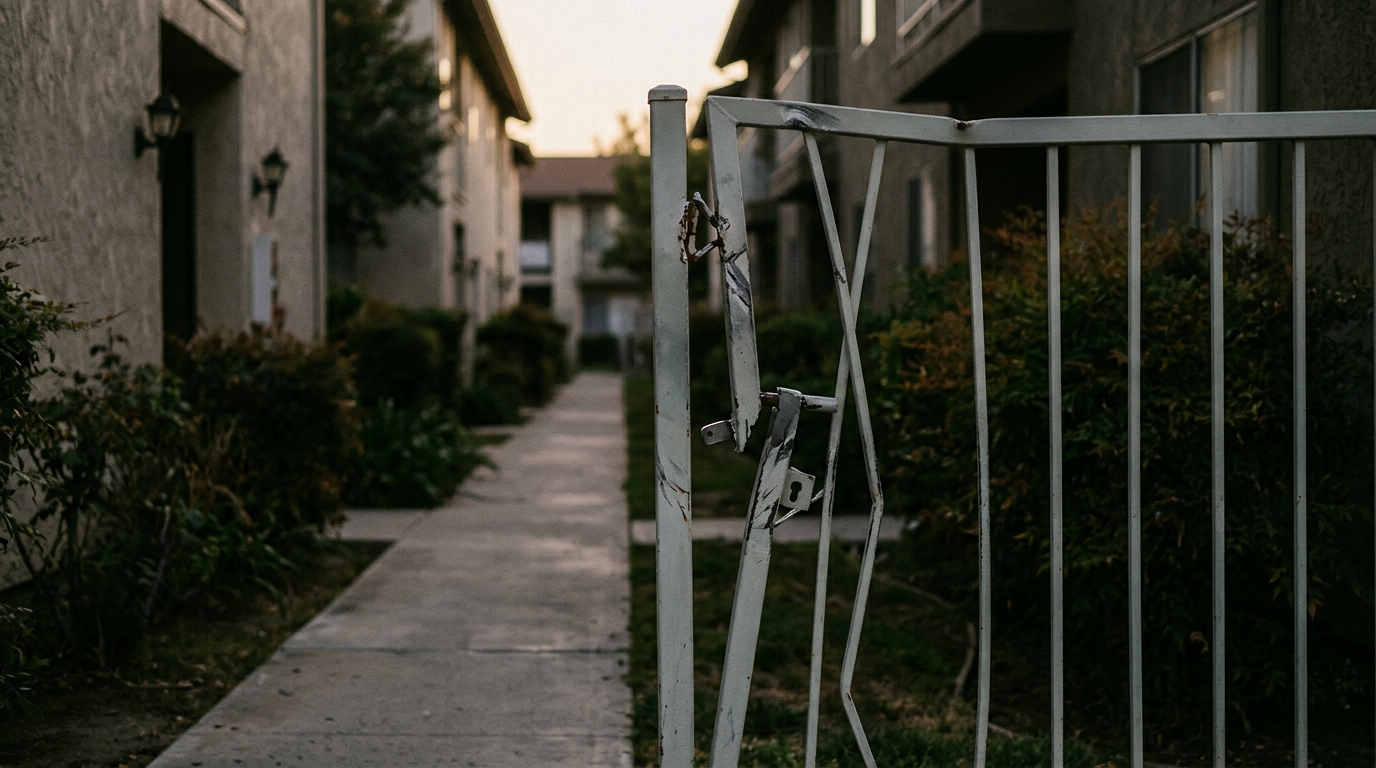
Say you were beaten in a dark apartment parking lot. The gate had been broken for months. Or you were shot outside a store where the cameras hadn’t worked in a year. The attacker is responsible. But so may be the owner who let the property become a target.
This kind of case has a legal name: a negligent security claim. It is a type of premises liability, which means holding a property owner responsible for unsafe conditions. You don’t need to know the term to have a case. You just need to know what happened to you.
We focus only on catastrophic, life-altering traumatic brain injuries from violent crime. We don’t handle routine claims. A brain injury from an attack can affect memory, mood, speech, movement, and the ability to work. These effects often last for the rest of a person’s life. The burden falls on the whole family. You don’t have to carry it alone.
Who This Is For
This is legal help for people and families hurt by a catastrophic brain injury during a violent attack. The attack happened on property that lacked reasonable security. It’s for:
- Survivors of assaults, shootings, robberies, and other attacks who now face lasting harm to the mind, body, or emotions.
- Families pursuing a wrongful-death claim if a loved one died from the attack. A death is the most catastrophic outcome there is. Florida’s Wrongful Death Act (Fla. Stat. §§ 768.16–768.26) lets certain surviving family members bring a claim.
These attacks often happen in predictable places. Think apartment complexes and gated communities, parking lots and garages, hotels and motels, bars and nightclubs, and gas stations, stores, and ATMs.
This page is about serious, permanent brain injuries. It is not about minor bumps or brief concussions that fully heal.
How a Brain Injury From an Attack Changes a Life
A traumatic brain injury (TBI) happens when a violent blow or jolt disrupts normal brain function. It can range from mild to severe, per the Mayo Clinic. Violent assaults are a leading cause. The CDC reports that assaults are among the top causes of TBI-related hospital stays and deaths in the United States (CDC, Traumatic Brain Injury Surveillance).
Common long-term effects include:
- Problems with memory, attention, and concentration
- Changes in personality and mood
- Seizures and chronic (long-lasting) headaches
- Loss of the ability to work
- The need for lifelong care and supervision
Is a TBI a chronic condition? Often, yes. Doctors increasingly see a moderate-to-severe TBI not as a one-time event. Instead, it is the start of a lasting health condition that needs ongoing care. That’s why detailed medical records matter so much. So does a realistic plan for future care.
An attack can cause harm beyond a direct blow. Strangulation or heavy blood loss can starve the brain of oxygen. This causes an anoxic or hypoxic brain injury. Learn more on our traumatic brain injury resource hub.
Have questions about what happened?
Ask our team directly. The first conversation is free, confidential, and there is no obligation to continue.
Can You Sue the Property Owner After an Attack?
In many cases, yes. This is true if you were attacked because the owner failed to provide reasonable security. Florida law generally requires property owners to take sensible steps. They must protect lawful visitors from crime they could reasonably expect.
Reasonable security that may be missing includes:
- Working locks, gates, and controlled access
- Good lighting in lots, stairwells, and hallways
- Working security cameras
- Security guards where the risk calls for them
The key idea is foreseeability. This means whether the danger could reasonably be expected. If crimes happened at or near the property before, an attack may have been foreseeable. If so, the owner may have had a duty to act.
Florida law draws specific lines here. Under Fla. Stat. § 768.0706, some owners of multifamily homes may get a presumption against liability. To qualify, they must meet a set list of security measures. This includes lighting to certain standards, cameras at entries and exits, deadbolt locks, and more. So what an owner did and did not do is central to the case. That’s why early investigation matters.
Under Fla. Stat. § 768.81, Florida follows modified comparative negligence. A person found more than 50% at fault generally recovers nothing. Whether you have a claim depends on your specific facts. A licensed attorney should review your situation. We can’t promise any result.
What Our Representation Covers
Our work covers the full investigation, case-building, and negotiation. The goal is to seek accountability from every responsible party.
- Investigation. We gather the police report, 911 records, and the property’s crime history. This includes nearby calls for service and crime-grid data. We also collect camera footage, lighting and security reviews, and witness statements.
- Identifying responsible parties. These may include the property owner, the management company, a security contractor, and the attacker.
- Building the medical picture. We work with treating doctors, neurologists (brain doctors), and life-care planners. Together we document the brain injury and your future care needs. See our guide to the long-term effects of brain injury.
- Calculating damages. These can include past and future medical care, rehab, lost income, and lost earning ability. They can also include in-home and long-term care, pain and suffering, and wrongful-death damages for families.
- Handling insurers and defense lawyers. We deal with the other side so your family can focus on recovery.
We handle these cases on a contingency-fee basis. That usually means no upfront fee. We explain the specifics during your free evaluation.
How the Process Works
Cases move through five stages. The sooner it starts, the better the evidence can be saved.
- Free case evaluation. It’s confidential, with no obligation, in English or Spanish. We listen and explain your options.
- Investigation and evidence preservation. We act fast to secure footage and records before they’re erased. Surveillance video is often deleted within days.
- Medical documentation. We establish the diagnosis, severity, and long-term outlook of the brain injury.
- Filing and negotiation. We present the case to insurers and defendants and seek fair compensation.
- Litigation if needed. When a fair offer isn’t made, we prepare the case for trial.
Catastrophic cases take time, and every case is different. We can’t guarantee a timeline or a result. But deadlines matter. Under Fla. Stat. § 95.11, the deadline to file most Florida negligence claims is two years. This applies to claims arising on or after March 24, 2023. Contact us early so nothing is missed.
Why Work With CHG Personal Injury Lawyers
We focus on catastrophic, life-altering injuries. This includes brain injuries, spinal cord injuries, and negligent-security cases. We don’t handle routine claims.
- Our attorneys are licensed and admitted to the Florida Bar.
- We’re a Florida-based firm that takes serious cases nationwide.
- We handle the dual challenge of a negligent-security case. We prove both the security failure and the severity of the brain injury.
- Our team is bilingual (English/Spanish) and speaks in plain language.
We can’t promise outcomes. We don’t make win-rate or “best” claims. What we offer is focus, preparation, and respect for what your family is going through. Contact us for a free case evaluation.
Want to know where you stand?
Tell us what happened and our team will walk you through the options available to you, at no cost.
Frequently Asked Questions
How much can you sue for after a brain injury from an attack?
There’s no fixed amount. No honest lawyer can promise a number. Value depends on the injury’s severity, future care needs, lost income and earning ability, and other factors. A lawyer can review your specific facts.
Can a TBI affect you years later?
Yes. A brain injury can cause effects that last for years or a lifetime. That’s why future care must be carefully documented and valued.
Is traumatic brain injury a chronic condition?
Often, yes. Many moderate-to-severe TBIs cause ongoing problems that need lifelong care. That long-term impact is central to a fair claim.
What if the attacker was never caught or can’t pay?
You may still have a claim against the property owner or their insurer. This is true even if the attacker is unknown or has no money to pay.
What if my loved one died from the attack?
Florida’s Wrongful Death Act lets certain surviving family members bring a claim. We handle these cases with care. We can explain who is eligible and what damages may be available.
How much does it cost to hire the firm?
We work on a contingency fee. This usually means no upfront cost. We explain the specifics at your free evaluation.

Talk to a Lawyer for Brain Injuries From Attacks on Unsafe Property
You don’t have to figure this out alone. Did you or someone you love suffer a brain injury from an attack on unsafe property? We’re ready to listen and explain your options.
Your case evaluation is free and confidential. It’s available in English or Spanish, from a Florida-based firm serving clients nationwide. Acting quickly helps preserve the evidence your case may depend on.
Request your free case evaluation now. Or learn more on our negligent security and catastrophic injury claims resource pages.
A Brain Injury Can Get Worse Over Time
A TBI's effects—memory loss, mood changes, headaches, trouble concentrating—can appear or deepen months and years after an attack. Get a full medical evaluation and keep every record. It protects both your health and your claim.
Where These Attacks Happen
Apartment Complexes
Broken gates, dead locks, dark stairwells, or no cameras can leave residents and guests exposed to assaults the owner should have prevented.
Parking Lots & Garages
Poor lighting and no patrols in a lot or garage can create the conditions for a violent attack that causes a life-altering brain injury.
Hotels, Bars & Stores
Businesses that ignore known dangers—prior crimes, missing security staff, unmonitored entrances—may share responsibility when a customer is harmed.
How We Help After a Catastrophic Brain Injury
We Investigate the Property
We look at security history, prior crimes on or near the site, lighting, locks, cameras, and staffing to understand what the owner knew and failed to fix.
We Center Your Recovery
Serious TBIs often mean long-term care, therapy, and lost income. We work to account for the full, lifelong impact—not just today's bills.
We Stand With Families
When an attack takes a life, surviving family members may pursue a wrongful-death claim. We handle these cases with dignity and care.
We Explain Everything Plainly
No confusing legal jargon. We tell you in clear terms what your options are and what a claim against a property owner could involve.