

Negligent Security | Brain Injury
Assaulted on Someone Else's Property? You May Have a Claim.
When a property owner fails to provide reasonable security and you're attacked as a result, they can be held liable. CHG Personal Injury Lawyers focuses exclusively on negligent security cases and fights for the compensation you deserve.
By CHG Lawyers · Published September 27, 2026
Brain Injury from Assault on Unsafe Property: Negligent Security Claim
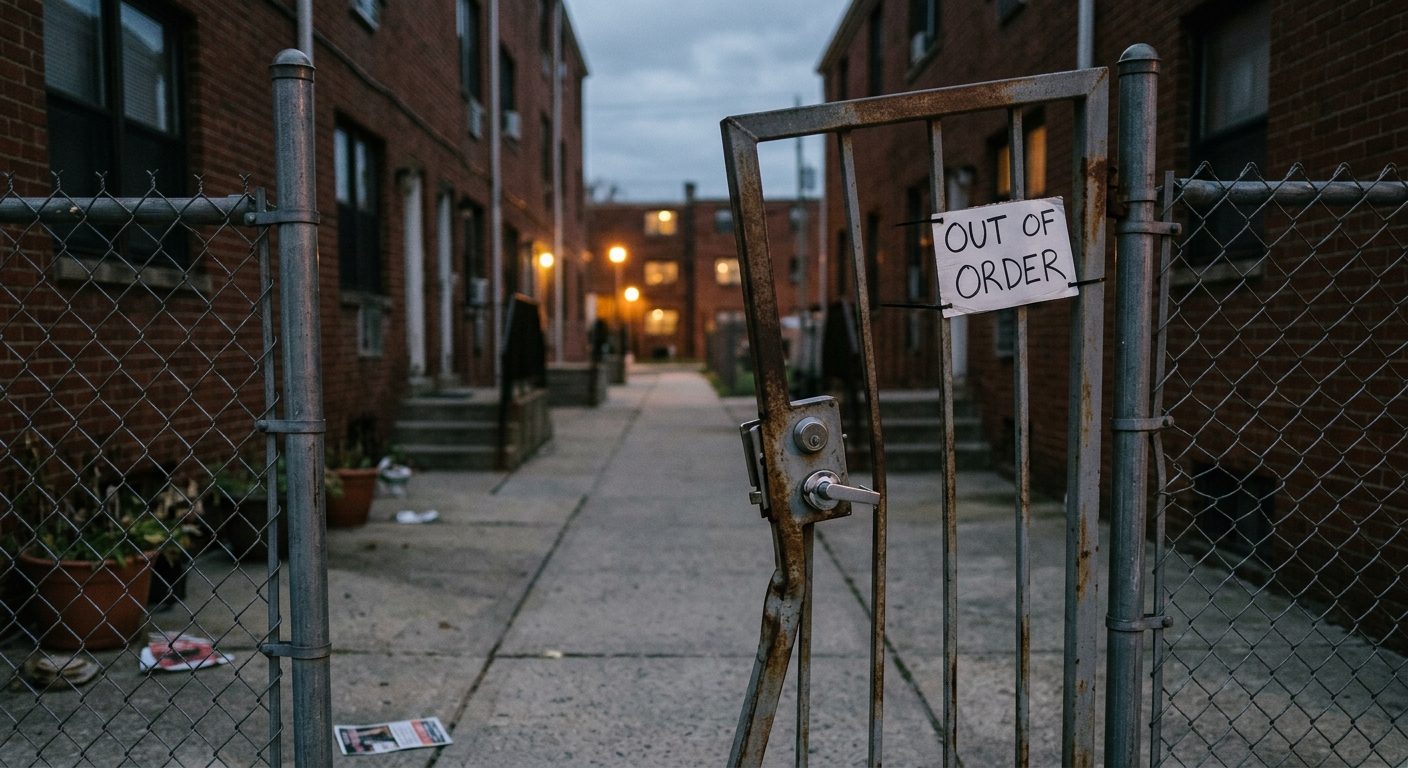
You were attacked on someone else’s property. It could have been an apartment complex, parking lot, hotel, bar, store, gas station, or ATM. The property owner failed to provide basic security: working locks, good lighting, security cameras, or guards. Now you live with a traumatic brain injury that has permanently changed your life.
You may have a legal claim against the property owner. The person who attacked you committed a crime. But the property owner can also be held responsible if their negligence made the assault possible. This is a separate civil claim—different from any criminal case against your attacker.
Not sure what your next step is?
Talk it through with our team — the first consultation is free, confidential, and carries no obligation.
Criminal vs. Civil: Two Different Legal Paths
Many people believe: “If the attacker isn’t convicted, I can’t sue the property owner.”
That’s not true.
Criminal case: The state prosecutes the attacker for assault, battery, or another crime. Guilt must be proven beyond a reasonable doubt.
Civil negligent security claim: You sue the property owner for failing to provide reasonable security. You must show the owner’s negligence made the crime foreseeable and preventable. You do not need the attacker convicted, identified, or even caught.
These are two separate legal paths. You can pursue both. Many clients do.
What Is Negligent Security? Plain Language
Negligent security means a property owner knew (or should have known) that violent crime was likely on their property. They failed to take reasonable steps to prevent it. That failure enabled an assault that injured you.
It’s not a criminal charge. It’s a civil lawsuit for money damages against the property owner.
The property owner’s duty:
This includes protecting visitors from foreseeable violent crime. The duty applies to apartment complexes, parking lots, hotels, bars, stores, gas stations, ATMs, and other public properties.
What “foreseeable” means:
If prior assaults, robberies, or violent crimes happened on or near the property, the owner should have expected it. Prior similar incidents are the strongest evidence that the owner should have anticipated the risk. Courts recognize that repeat crime at a location signals a pattern—and the owner’s failure to respond is negligence.
What “reasonable security” looks like:
- Working locks and gates
- Adequate outdoor and indoor lighting
- Security cameras and monitoring
- Security personnel or patrols
- Regular maintenance and upkeep
- Prompt response to prior incidents
- Warning signs or barriers in high-risk areas
The specific measures depend on the property type, location, and crime history. A parking garage in an urban area with prior robberies needs more security than a small retail store in a safe neighborhood.
Your injury proves harm:
You suffered a serious, permanent, life-altering brain injury. That injury resulted directly from the assault enabled by the owner’s negligence.
How Brain Injuries Occur During Assaults on Unsafe Property
Traumatic brain injuries from assaults happen in several ways:
- Direct head trauma: You are struck, beaten, or kicked by an attacker who accessed the property because of inadequate security.
- Shooting or stabbing: A violent crime occurs because the owner failed to prevent foreseeable criminal activity or provide deterring security.
- Fall or collision during attack: You fall and strike your head on a hard surface during a violent confrontation.
- Cumulative trauma: Repeated blows result in multiple head impacts and severe brain injury.
In each case, the property owner’s negligence directly enabled the assault and your injury.
What a Negligent Security Brain Injury Claim Covers
We investigate and pursue compensation for:
Medical and rehabilitation expenses: – Emergency care, hospitalization, and surgery – Diagnostic imaging (CT scans, MRI, PET scans) – Specialist care (neurology, neuropsychology, psychiatry) – Physical therapy, occupational therapy, speech therapy – Neuropsychological rehabilitation and cognitive retraining – Medications, assistive devices, and adaptive equipment – Home modifications for accessibility – Long-term or permanent care needs
Financial losses: – Past and future lost wages – Loss of earning capacity if your injury prevents you from working – Transportation and accessibility costs
Pain, suffering, and permanent impairment: – Physical pain and emotional trauma from the assault – Cognitive impairment (memory loss, difficulty concentrating, personality changes) – Loss of enjoyment of life and activities you can no longer do – Permanent disability and reduced quality of life – Psychological impact and PTSD
Investigation and evidence: – Police reports and incident reports from your assault – Prior assaults, robberies, or violent crimes at the property – Security incident reports and complaint logs – The property’s security history and the owner’s knowledge of risk – Security measures that were missing or inadequate – Witness statements and security footage (if available) – The attacker’s identity and criminal history (if known)
Why Property Owners Can Be Held Liable: Florida Law
Courts have consistently recognized that property owners can be liable for criminal acts of third parties if the crime was foreseeable and the owner failed to take reasonable security measures.
The elements we must prove in your negligent security claim:
-
Duty: The property owner owed you a legal duty to maintain safe conditions and protect you from foreseeable harm.
-
Foreseeability: Prior similar crimes (assaults, robberies, violent incidents) occurred on or near the property. This history puts the owner on notice that violent crime is foreseeable. We obtain police reports, incident reports, and witness statements to document this pattern.
-
Breach: The owner failed to provide reasonable security measures—working locks, adequate lighting, cameras, personnel, or maintenance—that would have prevented or deterred the crime.
-
Causation: The lack of security directly enabled the assault and your brain injury. Without the owner’s negligence, the crime would not have occurred.
-
Damages: You suffered a serious, permanent, life-altering injury with documented medical expenses, lost income, ongoing impairment, and pain and suffering.
Comparative fault:
Florida follows comparative fault rules (Fla. Stat. § 768.81(6)). Even if you were partially at fault, you may still recover compensation reduced by your percentage of fault—as long as you are 50% or less at fault.
Have questions about what happened?
Ask our team directly. The first conversation is free, confidential, and there is no obligation to continue.
How Much Compensation Can You Recover?
Compensation in a negligent security brain injury claim includes economic and non-economic damages.
Economic damages (calculable, documented losses): – All past and future medical treatment and rehabilitation – Lost wages and lost earning capacity – Home modifications and accessibility equipment – Transportation and care costs
Non-economic damages (pain, suffering, and permanent impairment): – Physical pain and emotional trauma from the assault – Cognitive impairment and its impact on daily life – Loss of enjoyment of activities you can no longer do – Permanent disability and reduced quality of life
Factors that affect value: – Severity of the traumatic brain injury (mild, moderate, or severe) – Your age and prior health status – Your occupation and earning potential – Your prognosis and long-term care needs – The strength of evidence of prior crimes at the property – The clarity of the property owner’s negligence – The jurisdiction and local jury attitudes
There is no fixed formula. Each case is unique. Compensation depends on the specific facts, medical evidence, and the property owner’s degree of fault.
Step-by-Step: How Your Negligent Security Claim Works
Step 1 – Free Case Evaluation
You contact us and describe what happened, where, and how you were injured. An attorney reviews the facts, your injuries, the property’s security history, and any prior incidents. This consultation is confidential and at no cost. We work on a contingency fee basis—you pay nothing upfront and nothing unless we recover compensation.
Step 2 – Investigation
We obtain: – Police reports and incident reports from your assault – Prior assault, robbery, or violent crime reports at that location – Security incident logs and complaint records – Maintenance and security records – Witness statements and security footage (if available) – Your complete medical records, imaging, and specialist reports – Expert consultation (security experts to establish industry standards)
Step 3 – Demand Letter
We send a detailed letter to the property owner’s insurance company. It outlines: – The property owner’s negligence and breach of duty – Your injuries and medical evidence – Prior crimes at the property (foreseeability) – The damages you are claiming (medical, lost wages, pain and suffering) – A demand for fair compensation
Step 4 – Negotiation
The insurance company responds. We negotiate aggressively to reach a fair settlement. Most negligent security cases resolve at this stage without litigation.
Step 5 – Litigation (if necessary)
If settlement is not reached, we file a lawsuit, conduct discovery, and prepare for trial. We coordinate with medical experts and security experts to prepare testimony.
Step 6 – Trial or Final Settlement
If the case goes to trial, we present evidence to a jury or judge. If settlement is reached before trial, we finalize the agreement and recover your compensation.
Timeline: Most cases take 1–3 years from filing to resolution, depending on complexity and whether the case is settled or tried.
Frequently Asked Questions
Q: Can I sue the property owner even though the attacker committed the crime?
Yes. The attacker is criminally responsible for the assault. The property owner is civilly liable if they failed to provide reasonable security and that failure enabled the crime. These are two separate legal matters. You can pursue both. Most clients do.
Q: How do I prove the property owner knew about the risk of violence?
We investigate prior incidents on the property—police reports, complaints, prior assaults or robberies, security assessments. Prior similar crimes are the strongest evidence that the owner should have anticipated the risk. We also consult security experts to establish industry standards for that type of property and location. If prior crimes occurred and the owner did nothing to improve security, that is powerful evidence of negligence.
Q: What if I was partially at fault—for example, I was in an area I shouldn’t have been?
Florida follows comparative fault rules (Fla. Stat. § 768.81(6)). Even if you were partially at fault, you may still recover compensation reduced by your percentage of fault, as long as you are 50% or less at fault. For example, if you are found 20% at fault and your damages are $100,000, you recover $80,000.
Q: What if the crime was unforeseeable? How do I overcome that argument?
The property owner will often argue the crime was unforeseeable. We counter with evidence of prior similar crimes at the property. If prior assaults or robberies occurred, foreseeability is established. If no prior crimes are documented, we examine the property type and location. We also consult security experts who can testify about industry standards and what the owner should have anticipated.
Q: How long do I have to file a negligent security claim in Florida?
Under Florida Statutes § 95.11, the statute of limitations for premises liability is generally two years from the date of injury. However, time limits can vary depending on the specific circumstances and jurisdiction. Do not delay. Contact us promptly to preserve evidence and protect your rights.
Q: What if the property owner’s insurance company denies my claim or offers a low settlement?
We will pursue litigation and take the case to trial if necessary. We are fully prepared to fight for your rights in court. Insurance companies often undervalue cases initially. Aggressive negotiation and the credible threat of trial often result in fair settlements.
Q: Will my case go to trial?
Most cases settle before trial. However, we are fully prepared to litigate and present your case to a jury if the insurance company refuses a fair settlement.
Q: What is your fee? Will I have to pay upfront?
We work on a contingency fee basis. You pay nothing upfront and nothing unless we recover compensation for you. Our fee is a percentage of the recovery. This means we are financially invested in your case and have every incentive to maximize your compensation.
Bilingual Support: English and Spanish
We serve English and Spanish-speaking clients. All consultations, documents, and communications can be conducted in your preferred language. You should never feel like a language barrier stands between you and justice.
Want to know where you stand?
Tell us what happened and our team will walk you through the options available to you, at no cost.
Why This Firm for Your Negligent Security Brain Injury Claim
Exclusive focus on catastrophic injuries: We focus exclusively on serious, life-altering injuries—traumatic brain injuries, spinal cord injuries, paralysis, amputations, and severe burns. This depth of experience means we understand the long-term medical, financial, and personal impact of your injury.
Florida-based with nationwide reach: We are licensed to practice in Florida and handle negligent security and premises liability cases across the United States. Whether your assault occurred in Miami, Orlando, Tampa, Jacksonville, or anywhere else in the country, we can help.
No upfront cost: We work on a contingency fee basis. You pay nothing upfront and nothing unless we recover compensation for you.
Coordination with medical and expert witnesses: We work with neurologists, neuropsychologists, security experts, and other specialists to build a strong, credible case on your behalf.
Your Next Step
If you suffered a traumatic brain injury in an assault on someone else’s property because of inadequate security, you may have a claim against the property owner.
Contact us for a free, confidential case evaluation. We’ll listen to your story, review the facts, and explain your options—in English or Spanish, at no cost and with no obligation.
Know This
The person who attacked you is criminally responsible. But the property owner is civilly liable if they failed to provide reasonable security—working locks, adequate lighting, cameras, or guards—and that failure made the attack possible. These are two separate legal matters, and you can pursue both.
What Negligent Security Means
You Were Attacked on Property You Didn't Own
An assault, shooting, robbery, sexual assault, or other violent crime at an apartment complex, parking garage, hotel, bar, gas station, store, ATM, or other business premises.
The Owner Failed to Protect You
Broken locks or gates, poor or no lighting, no cameras, no security guards, or other lapses in basic security measures that a reasonable property owner should have provided.
You Suffered a Brain Injury
The assault caused a traumatic brain injury—concussion, contusion, diffuse axonal injury, or other damage—that has altered your life, your work, or your relationships.
The Owner Knew (or Should Have Known) of the Risk
Prior crimes, complaints, or reports of violence on the property, or conditions that made the property an obvious target for criminal activity.
Why CHG Personal Injury Lawyers
Focused Exclusively on Catastrophic Injury
We focus exclusively on serious and life-altering injuries—including traumatic brain injuries from assault. We understand the medical, financial, and emotional toll.
Experience with Negligent Security Claims
We know how to investigate property security failures, identify prior incidents, and build a strong case against negligent owners.
Licensed Florida Attorneys
Our team is admitted to the Florida Bar and handles cases nationwide. We bring local knowledge and national reach.
We Listen and Advocate
We treat you with respect and dignity. Your recovery—and fair compensation—is our focus.
Common Questions About Your Case
Can I sue the property owner if someone else committed the crime?
Yes. The attacker is criminally responsible. The property owner is civilly liable if they failed to provide reasonable security and that failure enabled the crime. These are separate legal matters, and you can pursue both.
How do I prove the property owner knew about the risk?
We investigate prior crimes on the property, police reports, complaints from tenants or visitors, and the property's history. We also examine whether the location itself—a high-crime area, an isolated parking garage, a poorly lit entrance—made the risk obvious.
What if I don't remember much about the attack?
Traumatic brain injuries often cause memory loss and confusion. That's common and doesn't weaken your case. We work with medical professionals to document your injury and gather evidence from police reports, witnesses, and security footage.
How much is my case worth?
The value depends on the severity of your brain injury, your medical costs, lost income, pain and suffering, and long-term care needs. We evaluate all of these factors and fight for fair compensation tailored to your situation.