


Coup-Contrecoup Brain Injury: Double Damage from One Impact
When your brain strikes the skull twice in a single accident, the injury compounds. Understand what happens, why recovery is complex, and what you can do next.
By CHG Lawyers · Published August 23, 2026
Coup-Contrecoup Brain Injury from Truck Crashes and Negligent Security: Medical Facts and Legal Rights
A coup-contrecoup brain injury means two separate zones of brain damage from one impact. One injury occurs where your head was struck (the coup). The other occurs on the opposite side of your brain (the contrecoup). This happens because your brain moves inside your skull after impact, striking both the front and back of the skull wall. It’s one of the most serious types of traumatic brain injury (TBI). It often requires emergency care, long-term rehabilitation, and substantial medical resources.
If someone you care about was in a serious accident—a truck crash, motorcycle collision, fall, or assault—and suffered a head injury, you need to understand what a coup-contrecoup injury is. You also need to know what symptoms to watch for, what medical evidence shows about recovery, and what legal options your family may have.

If you were attacked on someone else's property due to inadequate security, you may have a claim. Talk it through with our team — the first consultation is free, confidential, and carries no obligation.
What Is a Coup-Contrecoup Brain Injury?
A coup-contrecoup brain injury involves bruising, bleeding, or tearing of brain tissue at two separate locations from one traumatic event. According to the National Institutes of Health, the coup injury occurs directly at the point of impact. The contrecoup injury occurs on the opposite side of the brain, where the brain rebounds and strikes the skull wall again.
Why does this matter? A single impact creates two zones of damage. Recovery becomes unpredictable and often severe. Neurologists must understand both injury sites to predict what functions may be affected and what rehabilitation will be needed.
Damage to one side of the brain may affect motor control, speech, or vision. Damage to the opposite side may affect memory, judgment, or emotional regulation—or both.
The Mechanics: How a Coup-Contrecoup Injury Happens
Your brain is suspended in cerebrospinal fluid (CSF)—a clear liquid that cushions it inside the skull. When your head strikes an object with force—a steering wheel, dashboard, windshield, or pavement—your skull stops suddenly. But your brain, suspended in fluid, continues moving forward due to inertia. This is the basic physics of a coup-contrecoup injury.
Here’s what happens:
The first injury (coup): The brain strikes the inside of the skull at the point of impact. Brain tissue bruises, tears, and may bleed into surrounding tissue.
The brain rebounds: After hitting the front of the skull, the brain bounces backward. This happens because of the fluid suspension and the elasticity of brain tissue.
The second injury (contrecoup): The brain strikes the opposite side of the skull. This causes a second area of damage, often as severe as or more severe than the coup injury.
The faster and more violent the impact, the more extreme this movement. High-speed crashes—truck collisions, motorcycle accidents, falls from height, and high-impact assaults—create the extreme acceleration-deceleration forces that cause coup-contrecoup injuries. A person in a low-speed fender-bender may escape with minor or no injury. A person in a truck crash involving a commercial vehicle weighing 80,000 pounds often does not.
Truck Crashes and Extreme Forces
Commercial truck crashes are a leading cause of catastrophic brain injuries, including coup-contrecoup injuries. A fully loaded semi-truck weighs approximately 80,000 pounds and travels at highway speeds. When such a vehicle collides with a passenger car, the forces involved are extreme.
According to National Highway Traffic Safety Administration (NHTSA) data, large-truck fatal crashes increased 13% from 2020 to 2022. Occupants of passenger vehicles struck by trucks face forces far exceeding those in car-to-car collisions. These extreme forces are precisely the conditions that cause coup-contrecoup injuries—the violent acceleration-deceleration that makes the brain strike both sides of the skull.
Coup Injury vs. Contrecoup Injury: What’s the Difference?
Coup injury is damage directly under the impact site—where the head was struck. If you hit your forehead on a steering wheel, the coup injury is the bruising and damage to the front of the brain (frontal lobe).
Contrecoup injury is damage on the opposite side of the brain from the impact. In the same steering-wheel example, the contrecoup injury is damage to the back of the brain (occipital lobe), where it rebounded and struck the skull.
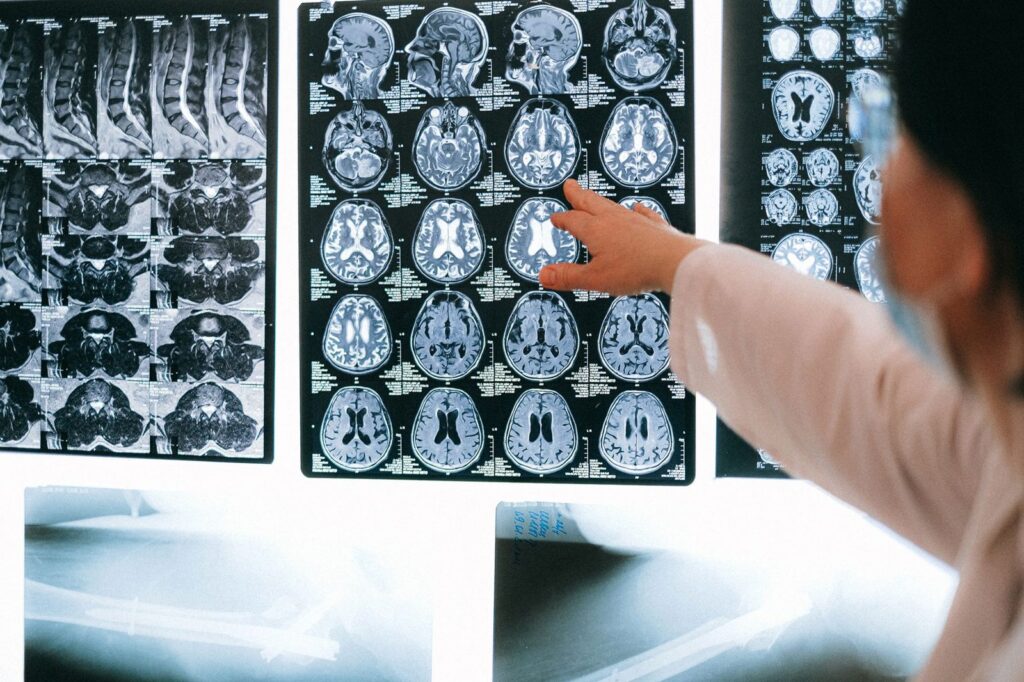
Both happen in the same accident. A single high-impact event causes both injuries at the same time. The distinction matters because doctors need to know both injury sites to predict recovery and plan treatment. Imaging—CT scans and MRI—will show bruising, bleeding, or swelling in both locations.
The location of each injury determines what functions are affected. Damage to the frontal lobe affects executive function, decision-making, and personality. Damage to the temporal lobe affects memory and language. Damage to the occipital lobe affects vision. A coup-contrecoup injury affecting two different lobes means multiple systems are disrupted at the same time.
Early Warning Signs of Brain Damage After a Crash
Some symptoms appear immediately. Others emerge over hours or days. If someone you care for was in a serious accident and hit their head, watch for these warning signs:
Immediate symptoms: – Loss of consciousness (even briefly) – Confusion or disorientation – Severe headache – Nausea or vomiting – Dizziness or balance problems – Slurred speech
Behavioral and emotional changes: – Irritability or aggression – Mood swings – Personality changes – Unusual anxiety or fear
Cognitive symptoms: – Difficulty concentrating – Memory problems – Trouble understanding what others are saying – Difficulty finding words
Physical symptoms: – Weakness or numbness – Sensitivity to light or sound – Difficulty with coordination – Fatigue or drowsiness
Why timing matters: Some symptoms appear at the scene. Others develop over the next 24–72 hours. A person may seem alert immediately after a crash but deteriorate over the next few hours. This is why emergency evaluation is critical—even if someone refuses an ambulance at the scene.
Seek emergency care immediately. Any head injury from a serious accident warrants emergency evaluation at a hospital. Do not wait to see if symptoms improve on their own. Early diagnosis and treatment reduce the risk of complications like brain swelling or bleeding.
Not sure what your next step is?
Talk it through with our team — the first consultation is free, confidential, and carries no obligation.
Prognosis and Recovery: What the Medical Evidence Shows
Recovery from a coup-contrecoup brain injury is unpredictable. Severity depends on many factors: the force of the impact, the exact location of both injuries, the person’s age and overall health, and whether there is bleeding or swelling inside the skull.
According to the National Institutes of Health, some people regain significant function over months of rehabilitation. Others face permanent changes in cognition, physical ability, personality, or independence. No two coup-contrecoup injuries are identical because no two brains are identical, and no two impacts are identical.
What medical research tells us:
- Recovery takes time. Meaningful improvement often continues for 6–12 months or longer. Some people continue improving for years.
- Rehabilitation is essential. Physical therapy, occupational therapy, speech therapy, and cognitive rehabilitation improve outcomes significantly. Early and intensive rehabilitation yields better results than delayed treatment.
- Long-term effects are common. Cognitive, physical, emotional, and behavioral changes may persist even after intensive rehabilitation. Some effects are permanent.
- Ongoing medical care is necessary. Neurologists, neuropsychologists, and other specialists monitor recovery and adjust treatment as the person heals.
The Brain Injury Association USA emphasizes that recovery is highly individual. Factors like the person’s motivation, family support, access to specialized rehabilitation, and financial resources all affect outcomes. Families often become primary caregivers, facing emotional and financial strain. The cost of long-term care—medical bills, therapy, lost wages, home modifications, and adaptive equipment—can be substantial and life-altering.
How a Coup-Contrecoup Brain Injury Is Diagnosed
Emergency imaging: The first step is a CT (computed tomography) scan to rule out bleeding inside the skull or a skull fracture. CT is fast and available in every emergency room.
MRI for detail: A magnetic resonance imaging (MRI) scan shows brain tissue damage more clearly than CT. It is usually performed within the first few days. MRI can detect bruising and swelling that CT may miss.
Neurological examination: Doctors test reflexes, balance, cognition, memory, and sensory function to assess the extent of injury. This includes the Glasgow Coma Scale (GCS), a standardized tool that measures level of consciousness.
Neuropsychological testing: Early baseline testing of thinking, memory, attention, and emotional function helps doctors understand the injury’s severity and track recovery over time. This testing is repeated during rehabilitation to measure progress.
Repeat imaging: Follow-up scans may be needed to monitor swelling, bleeding, or healing as the person recovers.
Why documentation matters: Detailed medical records—imaging, test results, doctor notes, and therapy progress—are essential for understanding the injury’s severity and predicting long-term impact. If needed, they also document the case for a legal claim. These records become critical evidence if you pursue compensation for your injuries.
Treatment and Recovery After a Coup-Contrecoup Injury
Acute hospital care focuses on preventing further injury and managing complications. Doctors may use medication to reduce brain swelling, monitor intracranial pressure, and manage seizures or other emergencies. In severe cases, surgery may be needed to relieve pressure or stop bleeding.
After the acute phase, rehabilitation becomes the focus. A multidisciplinary team works together:
- Physical therapists rebuild strength, balance, and mobility.
- Occupational therapists help the person relearn daily activities (dressing, eating, bathing).
- Speech therapists address swallowing, voice, and language problems.
- Neuropsychologists assess and treat cognitive, emotional, and behavioral changes.
- Neurologists monitor healing and adjust medication.
Recovery can take months to years. Some effects may be permanent. Families often become primary caregivers, facing emotional and financial strain. The cost of long-term care—medical bills, therapy, lost wages, home modifications, and adaptive equipment—can be substantial.
When a Crash or Attack Causes Permanent Brain Injury: Legal Rights and Compensation
A coup-contrecoup brain injury can be life-altering. It may affect the person’s ability to work, maintain relationships, live independently, or engage in activities they once enjoyed. Personality changes, cognitive difficulties, and physical limitations can strain relationships and require ongoing support.
But there is a path forward. If the crash or accident was caused by someone else’s negligence or wrongdoing, the injured person and their family may have a legal claim for compensation.
Truck Crashes and Negligent Drivers
If a reckless or negligent truck driver caused the crash—through speeding, distracted driving, driver fatigue, improper maintenance, or violation of federal trucking regulations—the injured person may have a claim against the driver and the trucking company. Trucking companies have a legal duty to hire qualified drivers, maintain their vehicles, and ensure compliance with federal safety regulations.
Negligent Security: Assaults and Attacks on Unsafe Properties
A coup-contrecoup brain injury can also result from an assault or attack on an unsafe property. If you were assaulted, shot, robbed, or attacked in a parking lot, apartment complex, hotel, garage, or other location, and the property owner failed to provide reasonable security—working locks, adequate lighting, cameras, or security personnel—the owner may be liable for your injuries under Florida’s premises liability law.
Property owners have a legal duty to maintain reasonably safe premises. They must take reasonable steps to protect visitors and tenants from foreseeable criminal acts. If the property owner knew or should have known that the location was a target for crime and failed to provide adequate security, they may be held liable for injuries resulting from an attack.
Your Right to Compensation Under Florida Law
Under Florida law, if someone else’s negligence caused the crash or attack that resulted in your brain injury, you may recover damages. This includes compensation for:
- Medical expenses and rehabilitation costs
- Lost wages and lost earning capacity
- Pain and suffering
- The cost of future care and support
- In cases of permanent disability, compensation for loss of enjoyment of life
Time Matters: Florida’s Statute of Limitations
This deadline is strict. If you miss it, you lose your right to pursue compensation, regardless of the strength of your case.
Acting quickly protects your rights and ensures evidence is preserved. Witness memories fade, accident scenes change, and physical evidence may be lost. Early legal action preserves critical evidence and protects your claim.
Florida’s Comparative Negligence Rule
Florida follows a comparative-negligence rule. Under Florida Statute § 768.31, you may recover damages even if you were partially at fault for the accident—as long as you were not more than 50% at fault. Your recovery is reduced by your percentage of fault.
For example, if you were 20% at fault and the defendant was 80% at fault, you may recover 80% of your damages. This rule means that even if you bear some responsibility for the accident, you may still have a valid claim.
Have questions about what happened?
Ask our team directly. The first conversation is free, confidential, and there is no obligation to continue.
Frequently Asked Questions
What’s the difference between a coup injury and a contrecoup injury?
A coup injury is damage at the point of impact. A contrecoup injury is damage on the opposite side of the brain where it rebounds and strikes the skull. Both happen in the same accident.
How long does recovery take?
Recovery varies widely. Some people show meaningful improvement within 6–12 months. Others continue recovering for years. Some effects may be permanent. The severity of the injury, the quality of rehabilitation, and individual factors all affect recovery time.
Can a coup-contrecoup brain injury cause permanent disability?
Yes. Permanent changes in cognition, physical ability, personality, or independence are common, depending on the severity and location of both injuries.
What should I do immediately after a head injury in a crash?
Seek emergency medical evaluation. Even if the person seems alert, brain injuries can worsen over hours. Do not wait. Call 911 or go to the nearest emergency room.
If the accident was caused by negligence, can I sue?
Yes. If someone else’s negligence—a reckless driver, inadequate security, unsafe conditions—caused the crash or attack, you may have a legal claim for compensation.
What compensation might be available?
Compensation may cover medical expenses, rehabilitation, lost wages, pain and suffering, and the cost of future care. The amount depends on the severity of the injury, the circumstances of the accident, and the defendant’s liability.
How long do I have to file a claim?
Under Florida law, you have two years from the date of the injury to file a personal-injury claim. After two years, your claim is barred by the statute of limitations.
What Happens Next
If you or someone you care for is recovering from a coup-contrecoup brain injury after a truck crash, a fall, or an assault on an unsafe property, you’re facing a long road. Medical decisions, rehabilitation planning, and financial strain are overwhelming. And if someone else’s negligence caused the injury, you need to understand your legal rights and act quickly to protect your claim.
Many families in exactly this situation reach out to discuss their case. They don’t know where to start, but they know they need guidance. We’re here to help you understand what happened, what your injury means, and whether you have a legal claim.
Get a free case evaluation. Tell us about the accident, the injury, and your questions. Our team will listen and help you understand your options—with no pressure and no obligation. Contact us today to protect your rights and explore your path to compensation.
How Coup-Contrecoup Injury Happens
Coup Injury (Impact Point)
Damage occurs at the exact spot where your head strikes an object—the windshield, dashboard, or ground. Tissue bruises, bleeds, or tears at that location.
Contrecoup Injury (Opposite Side)
Your brain rebounds inside the skull and crashes against the opposite wall. This secondary impact causes a second wave of damage, often as severe as the first.
Combined Effect
Both injuries happen in the same accident. The brain is now injured in two locations, complicating recovery and increasing the risk of long-term disability.
Why It Matters
Doctors must identify and treat both injuries. A scan that misses the contrecoup damage can delay critical care and worsen outcomes.
Early Imaging Is Critical
Not all brain injuries show up on initial CT scans. If you've had a serious head impact—especially from a truck crash, fall, or violent assault—insist on follow-up imaging (MRI or repeat CT) even if early results seem normal. Contrecoup injuries can develop or become visible over hours or days.
Common Causes of Coup-Contrecoup Brain Injury
Truck and Motor Vehicle Crashes
High-speed collisions throw your head forward violently, then the brain rebounds. Unrestrained passengers and those in smaller vehicles face the highest risk.
Falls from Height
A fall from a ladder, balcony, or construction site can cause your head to strike the ground or a hard surface, creating both impact and rebound injury.
Assaults and Violent Attacks
A blow to the head—from a punch, weapon, or fall during an assault—can produce coup-contrecoup damage. If you were attacked on someone else's property due to inadequate security, you may have a claim.
Workplace and Construction Accidents
Being struck by falling objects or equipment, or falls on job sites, commonly cause this type of brain injury.
What Coup-Contrecoup Injuries Can Mean for Recovery
Unpredictable Healing
Recovery timelines vary widely. Some people show meaningful improvement within 6–12 months; others face lifelong challenges. The location and severity of both injuries determine your path.
Cognitive and Physical Changes
You may experience memory loss, difficulty concentrating, mood changes, balance problems, or chronic headaches. These can persist long after the initial injury.
Ongoing Medical Needs
Rehabilitation, therapy, imaging follow-ups, and specialist care add up quickly. Long-term support—occupational therapy, speech therapy, neuropsychology—is often necessary.
Life-Altering Impact
A catastrophic brain injury can affect your ability to work, care for yourself, maintain relationships, and enjoy the life you had before. The financial and emotional toll is real.
Steps to Take After a Coup-Contrecoup Brain Injury
Seek Immediate Medical Care
Even if you feel okay, get to an emergency room. Report the impact, describe your symptoms (headache, dizziness, confusion, nausea), and ask for imaging. Tell doctors about any loss of consciousness.
Follow Up with Imaging
If your first scan is normal but symptoms persist or worsen, request follow-up MRI or CT scans. Contrecoup injuries can be subtle and may not appear immediately.
Document Everything
Keep records of all medical visits, test results, medications, and therapy. Note your symptoms and how they change over time. This documentation is essential if you pursue a claim.
Consult a Brain Injury Attorney
If your injury resulted from a truck crash, negligent security, a workplace accident, or someone else's wrongdoing, you may be entitled to compensation for medical care, lost income, and pain and suffering. Contact a lawyer who focuses exclusively on catastrophic injuries to understand your options.
Negligent Security and Brain Injuries
Were you assaulted or attacked on someone else's property—an apartment complex, parking garage, hotel, bar, or business—and suffered a head injury? If the property owner failed to provide reasonable security (working locks, lighting, cameras, or guards) and that failure allowed the attack to happen, you may have a legal claim. This is called negligent security, and it holds property owners accountable for preventable violence.