
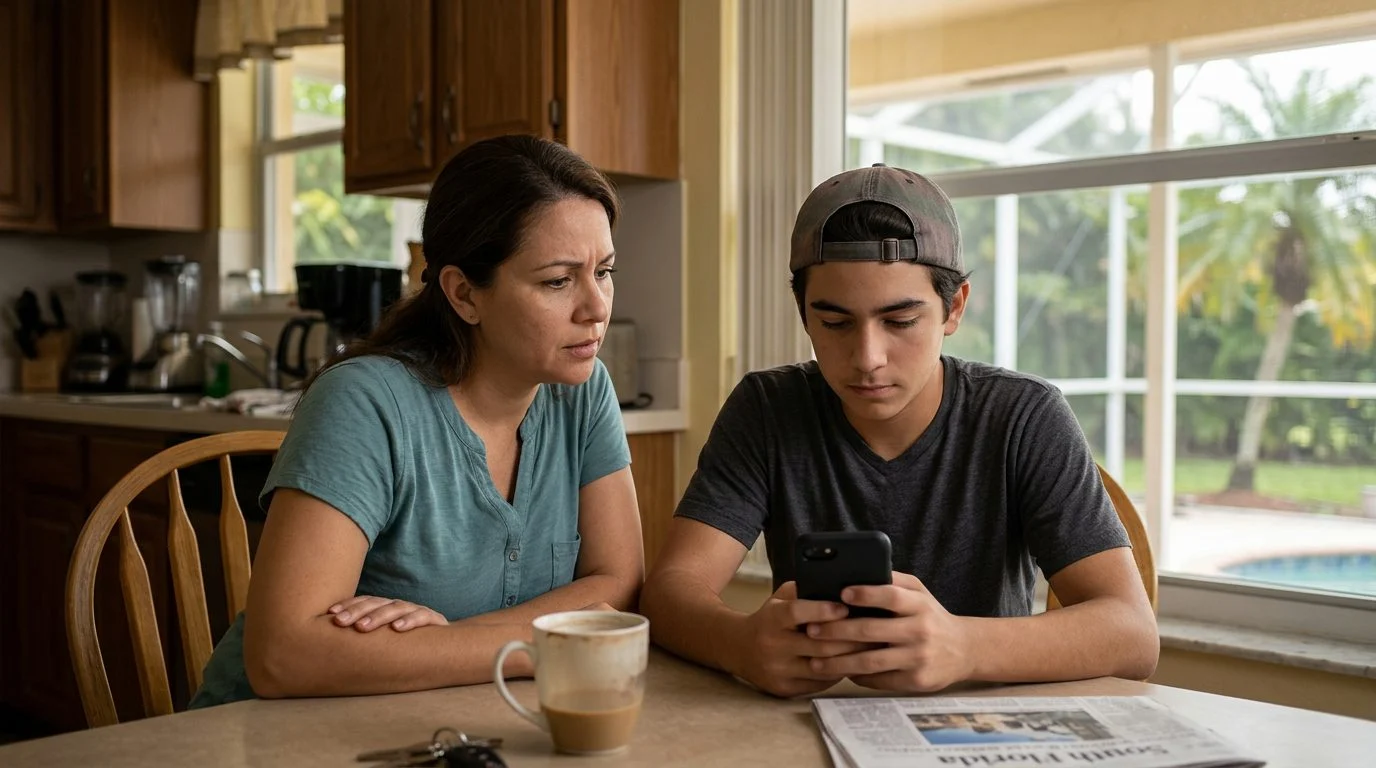
Social Media Addiction Lawsuits | Florida Families
When Social Media Seems to Be Harming Your Child, You Don't Have to Sort Out the Next Steps Alone
Here is what these lawsuits allege, what parents often document, and how a Florida law firm can talk through your family's options.
About CHG Personal Injury Lawyers
Florida
Florida-based firm serving clients throughout Florida
Licensed
Attorneys admitted to The Florida Bar
By CHG Lawyers · Published November 16, 2026
Social Media Addiction Lawsuit for Self-Harm in Florida
If your child has hurt themselves or tried to take their own life, you may wonder whether social media played a part.
A social media addiction lawsuit is a civil claim. It alleges that a platform’s design caused serious mental-health harm to a minor. These claims are allegations, not proven facts. Whether a claim is supported depends on your child’s records and the law.
If your child is in crisis or may harm themselves, call or text the 988 Suicide & Crisis Lifeline by dialing 988. Help is available any time.
If you are watching your child struggle, you do not have to answer the question of social media's role alone. Talk it through with our team — the first consultation is free, confidential, and carries no obligation.

What a Social Media Addiction Lawsuit Is and Who It Is For
A social media addiction lawsuit is filed for a child or teen. It alleges that the child suffered serious harm. The claim links that harm to how a social media platform was built.
This page is written for parents and guardians. Your child may have struggled with:
- Depression
- Anxiety
- An eating disorder
- Self-harm
- A suicide attempt
Many families ask a hard question: did the apps my child used every day play a part?
The lawsuits say they did. That is what they allege. A court decides whether the facts support those claims. A diagnosis alone does not answer the question.
Lawyers also look at:
- How the child used social media
- When symptoms began
- What else was happening in the child’s life
Some of these cases are part of a federal group of lawsuits. Others may be referred to another law firm. Some may be handled together with one. If a referral is involved, CHG Personal Injury Lawyers will tell you before you decide anything.
What the Lawsuits Allege About Platform Design
The lawsuits allege that certain features keep young users scrolling far longer than they intend. These features include:
- Infinite scrolling, which never seems to end
- Autoplay, which starts the next video automatically
- Frequent notifications
- In describing which platforms it covers, the statute refers to platforms that use algorithms to analyze user data and choose the content users see.
Florida has a minors’ social media law. Under the statute, infinite scrolling, meaning content that loads continuously or as the user scrolls down the page without opening a separate page, is one of the listed addictive features. The definition also covers platforms that employ algorithms to analyze user data and select content for users.
The statute lists these features in its definition of a social media platform. It does not decide whether any child was harmed.
The federal transfer order for MDL 3047 describes the plaintiffs’ claims. MDL means multidistrict litigation. It is a group of related federal cases handled together.
The plaintiffs claim that platforms were designed to encourage addictive use by adolescents. They also claim the companies failed to warn about harm to minors. The order treats these as allegations in the litigation. They are not findings of the court.
Research describes associations, not proof of cause:
- The Surgeon General’s youth mental health report links heavy social media use with increased risks of depression and anxiety.
- A CDC report on high school students found that frequent use was associated with bullying, persistent sadness, and suicide risk.
Self-Harm Warning Signs Families Describe and Immediate Support
Families often describe:
- Sudden withdrawal
- Changes in sleep or eating
- Falling grades
- Loss of interest in friends
- Intense distress tied to phone use
These signs are not diagnoses. Only your child’s doctors and mental-health professionals can assess what is happening.
If your child is in crisis or may harm themselves, call or text the 988 Suicide & Crisis Lifeline by dialing 988. The line is available any time. Parents can use it too.
Follow the care plan set by your child’s doctors and treating professionals. This page does not offer medical advice.
The CDC’s youth mental health resource describes the mental-health challenges many U.S. adolescents face.
Keep medical, hospital, and counseling records. They matter for your child’s care. They also matter for any later review of a claim.
How a Claim Is Evaluated and What Families Should Gather
A lawyer reviews four main things:
- Your child’s social media use
- Medical and counseling records
- School information
- The timeline of events
This review decides whether a claim fits. Gathering this material early can make the review faster.
Useful items include:
- Diagnosis, treatment, and counseling records
- Hospital, emergency, and clinic notes
- Device and app history, if it is available
- Screenshots and saved messages showing how your child used a platform
- School records, such as attendance or grade changes
- A written timeline of when changes began
Do not delete accounts, apps, or devices until you have talked with a lawyer. Evidence may matter. Deleting it can make review harder.
Gathering this information does not commit your family to filing anything.
How the Process Works, Step by Step
The process begins with your first conversation with our lawyers. Here is what usually follows.
- First consultation. You share the basics: your child’s age, the platforms used, the timeline, and any prior legal steps. The lawyer explains how the process works.
- Record review. The firm reviews the records and timeline. It checks whether the facts fit the claims being made.
- Decision. If your family chooses to go forward, the firm explains the filing, the parties involved, and any referral to another firm.
- Litigation. A case can involve discovery (exchanging records between the sides), motions (formal requests to the court), and possible settlement or trial. These cases can take a long time. No timeline or result is promised.
CHG charges no attorney’s fees and no case costs unless there is a recovery.
Not sure what your next step is?
Talk it through with our team — the first consultation is free, confidential, and carries no obligation.
Florida Deadlines and Where These Cases Stand
Florida sets time limits for filing lawsuits. These are called statutes of limitations. Deadlines apply.
The general rules are in Florida’s limitations statute, which sets filing deadlines.
Under Fla. Stat. § 95.11, deadlines apply to these lawsuits. Contact the firm promptly. Do not wait.
A defendant may argue that others share the blame. Under Florida’s comparative fault statute, fault charged to the claimant lowers the amount awarded by that share. It does not bar recovery, unless the claimant is found more than 50 percent at fault for his or her own harm, in which case no damages may be recovered (this 50 percent bar does not apply to medical negligence actions under chapter 766).
In a negligence case, the court enters judgment against each liable party. The judgment is based on that party’s percentage of fault.
Centralization does not mean that any settlement or payment is available to any family. No reader is promised inclusion in any settlement.
Questions Families Ask About Social Media Addiction Lawsuits
Most answers depend on your child’s facts, records, and the applicable deadlines. These short answers may help you start.
Can I sue for social media addiction?
Families facing a serious injury often have many questions about what comes next. Whether a claim is supported depends on the child’s records and the applicable law.
How much can a family recover for emotional distress in Florida?
No amount can be promised. Damages depend on the facts, the evidence, and how Florida law applies to the case.
Who qualifies for a social media lawsuit?
Families with a minor who alleges serious mental-health harm should speak with a lawyer to review eligibility. This includes self-harm or a suicide attempt.
Does my child have to be a certain age?
Age is one factor reviewed during the consultation. Florida’s law requires certain platforms to end accounts held by 14- and 15-year-olds when a parent has not consented. The platform must give the account holder 90 days to dispute the termination. The termination takes effect when those 90 days expire, if the account holder does not effectively dispute it.
Will my child have to testify?
Your lawyer explains the process and what participation may involve. This happens during the first consultation.

Why Families Work With CHG Personal Injury Lawyers
CHG Personal Injury Lawyers is a Florida-based personal injury firm. It serves people throughout Florida. That includes Miami Gardens, Palmetto Bay, Weston, Miami, Orlando, Tampa, and Jacksonville.
Igor Hernandez is the responsible lawyer for this page. Our lawyers are licensed attorneys admitted to The Florida Bar. Our team supports families through each step of the process.
The firm handles personal injury cases of every severity. That includes catastrophic injuries, such as spinal cord injuries and traumatic brain injuries. It also includes wrongful death claims and mass-tort matters, such as social media addiction lawsuits.
Some of these matters may be referred to another law firm. Some may be handled together with one. We will tell you if that applies to your family.
If you are watching your child struggle, you do not have to answer the question of social media’s role alone. Contact CHG Personal Injury Lawyers for a free, confidential first consultation, with no obligation to continue.
How We Can Help Your Family
Focused on your child and your family
We keep your child's recovery and your family's well-being at the center of every conversation, not only the paperwork.
A free, confidential first consultation
The initial consultation is free, confidential, and carries no obligation to continue.
Clear answers about records
We explain which medical, school, and online-account records may matter, and what we would need to review before discussing a claim.
Shared handling when appropriate
Some social media cases may be referred to, or handled together with, another law firm. We will tell you clearly how your matter would be handled.
No fees unless there is a recovery
CHG charges no attorney's fees and no case costs unless there is a recovery.
If your child is in crisis, get help now
If your child is in crisis or talks about self-harm or suicide, call or text 988 (the 988 Suicide & Crisis Lifeline) right away, or contact emergency services. Follow your child's doctors' care and treatment plan.
Steps Parents Can Take Now
Keep a written timeline
Note changes in mood, sleep, school performance, and social life, along with dates, so you can share them with your child's doctors and with a lawyer.
Gather records
Save medical and counseling records, school communications, and screenshots of anything relevant, and keep the originals safe.
Follow medical guidance
Work with your child's doctors or therapist on treatment. A law firm does not provide medical care, and medical decisions belong with your child's care team.
Ask for a consultation
Bring your questions to a free, confidential consultation so you can learn what the lawsuits allege and whether they may apply to your family.