

Social Media Addiction Lawsuits | Serving Florida Families
Can a School District Sue Social Media Companies?
Some school districts and families have filed lawsuits alleging that social media platforms were designed to be addictive and harmed children and teens. Here is what that means in plain language, and how CHG Personal Injury Lawyers can help you understand your options.
By CHG Lawyers · Published November 5, 2026
Short Answer: Yes, School Districts Have Filed These Lawsuits
Yes. School districts have filed lawsuits against social media companies. They allege that the platforms’ design harmed students’ mental health. They also allege that the design added costs for schools.
These are allegations. The companies dispute them.
Many of the federal cases are grouped together. The U.S. Judicial Panel on Multidistrict Litigation placed them in one group, called MDL No. 3047. An MDL is a set of federal cases handled together. The cases share common factual questions. School district claims are among the case groups in that proceeding.
This is a developing area of law. Case status changes over time. This description reflects the JPML transfer order cited above.
In February 2023, Seattle’s public school district filed suit against major social media companies, according to public news reporting.
For the wider picture, read our guide to social media addiction lawsuits in Florida.
If you're worried about a child's mental health and wonder whether social media played a part, we can talk it through with you in a free, confidential consultation. Talk it through with our team — the first consultation is free, confidential, and carries no obligation.
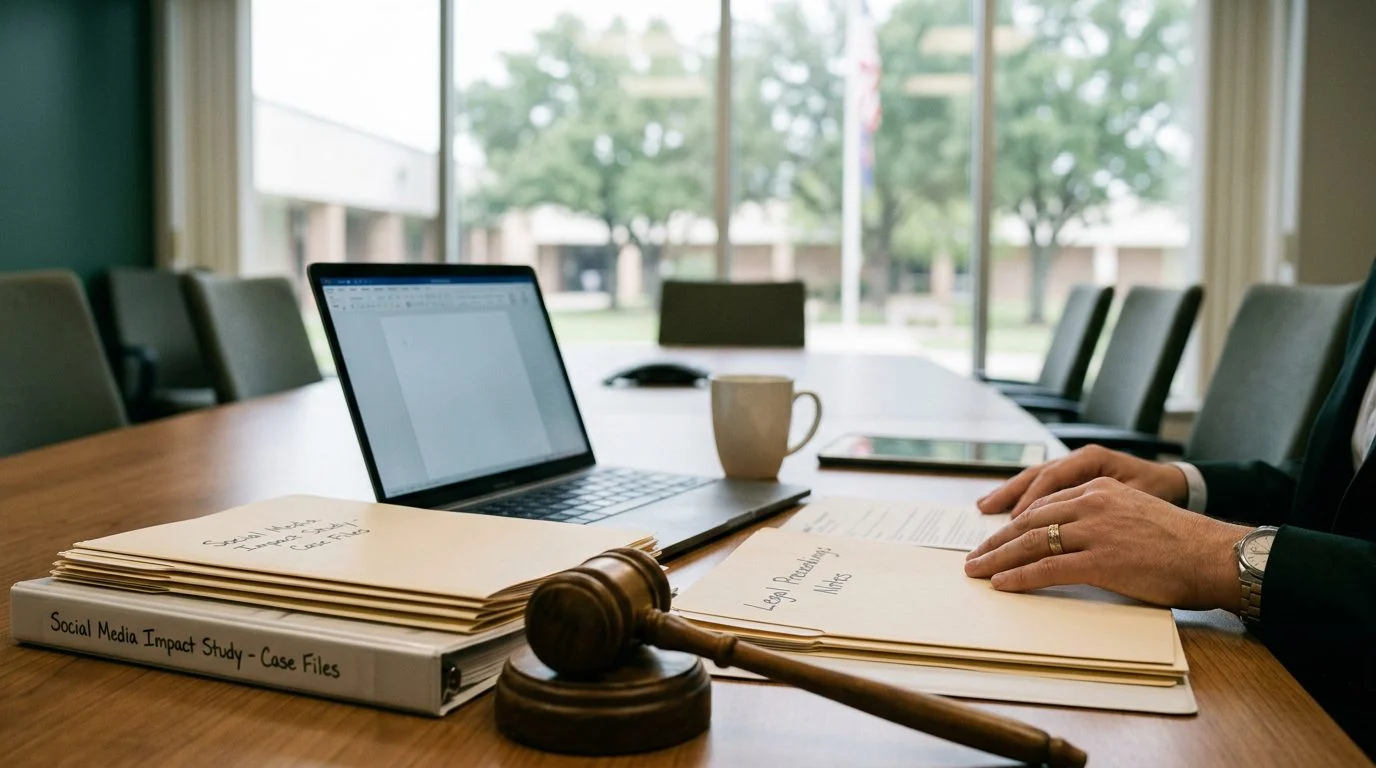
What a School District Lawsuit Typically Claims
A school district lawsuit usually claims that social media platforms were built to keep young users coming back. It also claims that this design caused added costs and harm for the district’s students.
District complaints commonly raise these points:
- Platform design: The complaints allege the platforms were designed to encourage addictive use by young people.
- Failure to warn: The federal transfer order describes allegations that the platforms failed to warn about harm to minors.
- Student harm: Districts point to anxiety, depression, eating disorders, and self-harm among students, as the lawsuits allege.
- District costs: Districts say they have paid for added counselors, mental-health staff, crisis response, and staff training.
A district seeks to recover money the district itself spent. A family’s claim seeks damages for a child’s own injuries. The two claims are different, even when they involve the same platforms.
The lawsuits allege these things. They do not prove them. You can read more about what social media lawsuits allege about company knowledge and how those claims are framed.
Where These Cases Are Filed and Who Decides
A school district’s decision to sue is made by its governing body, the elected school board. The board acts with its attorneys. Individual teachers, staff, or parents do not make that call.
Cases can move in two main ways:
- Federal consolidation: Many federal cases with shared facts can be grouped in one multidistrict litigation (MDL). A judge coordinates pretrial steps for the group.
- State court: Cases filed in state court follow that state’s court rules. They move on their own schedule.
The parties, the claims, and court rules all affect where a case is filed. The lawyers handling each filing make those choices.
A Florida school district and a Florida family may sit in different case groups. That difference can affect timing and procedure.
Not every company is named in every case. To see which platforms appear in these filings, read about who social media addiction lawsuits name as defendants.
What the Social Media Companies Say in Response
The social media companies dispute these allegations. They say so in court filings and public statements.
Their stated positions often point to safety tools, parental controls, and age-based features. They also deny that their platforms caused mental-health conditions.
The science is debated, and both sides cite research.
The CDC data for U.S. high school students in 2023 links frequent social media use with bullying, persistent sadness or hopelessness, and suicide risk. These are statistical associations. They are not proof that social media caused those outcomes.
The U.S. Surgeon General’s advisory reports an observed link between heavy social media use and higher risks of depression and anxiety. The advisory does not establish legal liability. Courts must decide the legal questions in each case.
What This Means for Florida Families and Their Children
A school district lawsuit does not decide your child’s case. A family may have its own options whether or not a district sues.
Keep these points in mind:
- Deadlines apply: Florida sets filing deadlines in its statute of limitations for civil actions. The clock can start before a family connects a child’s harm to social media use. Contact a lawyer promptly.
- Shared fault: In a negligence case, Florida’s comparative fault statute requires the court to enter judgment against each liable party based on that party’s percentage of fault. An injured person’s own share of fault reduces the damages awarded, and in a negligence case covered by this statute, a person found more than 50 percent at fault for their own harm may not recover any damages, though this bar does not apply to personal injury or wrongful death cases arising out of medical negligence under chapter 766. It does not make each party liable for the whole amount.
- No promises: No one can promise that a case will be filed, become part of a settlement, or produce any amount of money.
If your child is in crisis, call or text the 988 Suicide & Crisis Lifeline (988) now.
Follow your child’s doctors’ care. We do not give medical advice.
How a Florida Social Media Harm Claim Is Reviewed, Step by Step
A review usually starts with a conversation. Then it moves to records.
The length of each stage depends on the records, the case group, and court schedules. No timeline can be promised.
- Free, confidential initial consultation. A licensed attorney listens to the family’s account. This includes the child’s history, how and when the child used social media, and the symptoms the family has observed.
- Records review. The family can share medical and school records, treatment history, and information about devices or accounts.
- Fit review. The team compares the family’s facts with the allegations in pending cases. It looks at the platforms involved and the timeline of harm.
- Decision on next steps. Options may include filing, joining existing proceedings, or working with another firm. We explain each option before anything moves forward.
Families who prefer Spanish can take part in the consultation in Spanish. The consultation is free, confidential, and carries no obligation to continue.
Not sure what your next step is?
Talk it through with our team — the first consultation is free, confidential, and carries no obligation.
Why Families Contact CHG Personal Injury Lawyers
CHG Personal Injury Lawyers is a Florida-based personal injury firm. We serve families throughout Florida, including Miami, Orlando, Tampa, and Jacksonville.
Igor Hernandez is the responsible lawyer for this page. Our team includes licensed attorneys admitted to practice in Florida.
Several points matter for families weighing their options:
- Referral and co-counsel: A matter may be referred to, or handled together with, another law firm. CHG Personal Injury Lawyers is not lead counsel in any MDL.
- Fees: CHG charges no attorney’s fees and no case costs unless there is a recovery.
- Language: The firm publishes educational content in English and Spanish.

Frequently Asked Questions
Is there a lawsuit against social media companies?
Yes. Many lawsuits make these claims. The companies dispute the allegations.
Each claim has its own facts and deadlines.
Does a school district lawsuit mean a family automatically receives money?
No. No one can promise an outcome, a settlement, or any amount.
Is my child’s situation the same as the cases in the news?
Only a review of your child’s specific facts can answer that. Read about whether a teen’s phone use may be an addiction or a lawsuit.
If you are watching your child struggle, and you wonder whether social media is part of the picture, you do not have to sort it out alone. Reach out to CHG Personal Injury Lawyers for a free, confidential consultation with no obligation to continue.
How CHG Personal Injury Lawyers Can Help
Plain-Language Answers
We explain what the lawsuits allege, what they do not yet prove, and how the court process works, without legal jargon.
Review of Your Situation
We look at the facts of your family's situation, including the children's history, school records, and medical care, before anyone decides what comes next.
Support for Families
We understand that a child's mental health is a family concern. We treat every conversation with patience and respect.
Florida-Based Attorneys
Our attorneys are licensed by The Florida Bar and serve families throughout Florida, from Miami and Orlando to Tampa and Jacksonville.
If Your Child Is in Crisis
If your child or teen is in immediate danger or may harm themselves, call or text the 988 Suicide & Crisis Lifeline (988) right away, or call 911. Please follow the guidance of your child's doctors and mental health providers.
Questions Parents Often Ask
Is there a lawsuit against social media companies?
Yes. Many lawsuits make these claims, including claims brought by school districts and families. The companies dispute the allegations.
Does a school district lawsuit mean my family automatically receives money?
No. No one can promise an outcome, a settlement, or any amount. Each situation depends on its own facts.
Is my child's situation the same as the cases in the news?
Every family's situation is different. Our team can review the details of your child's experience and explain how they compare to the lawsuits.
Do I need to act quickly?
Legal deadlines apply to claims like these. Please contact our team promptly so we can review your situation while your options are still open.