
Social Media and Teen Mental Health | Serving Florida Families
Is Social Media Affecting Your Teen's Well-Being?
Parents often notice changes before they understand them. Here is how to recognize the warning signs, document what you see, and learn what options your family may have.
By CHG Lawyers · Published November 27, 2026
Signs Social Media Is Harming My Teen? A Parent’s Checklist
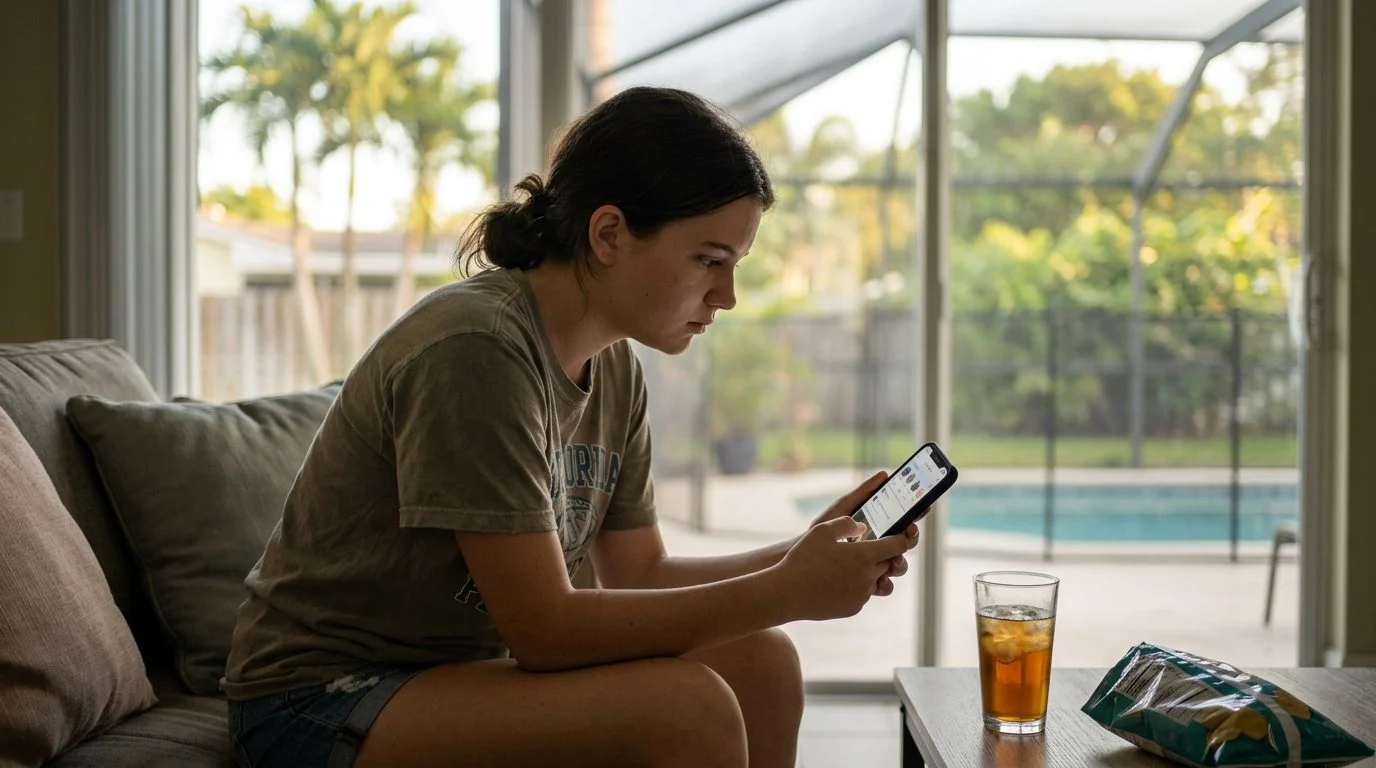
If your teen is always on a phone, or seems like a different kid since joining certain apps, you may be wondering what’s going on. Signs that social media may be harming your teen often show up as changes in sleep, mood, school, and friendships.
These signs are clues, not a diagnosis. This guide gives you a checklist you can use at home, separates what you can observe from what a clinician must assess, explains when to get help right away, and summarizes what lawsuits allege.
If your teen's sleep, mood, or schoolwork has changed alongside heavy phone use, you don't have to sort it out alone. Talk it through with our team — the first consultation is free, confidential, and carries no obligation.
Why Parents Are Asking About Social Media and Teen Health
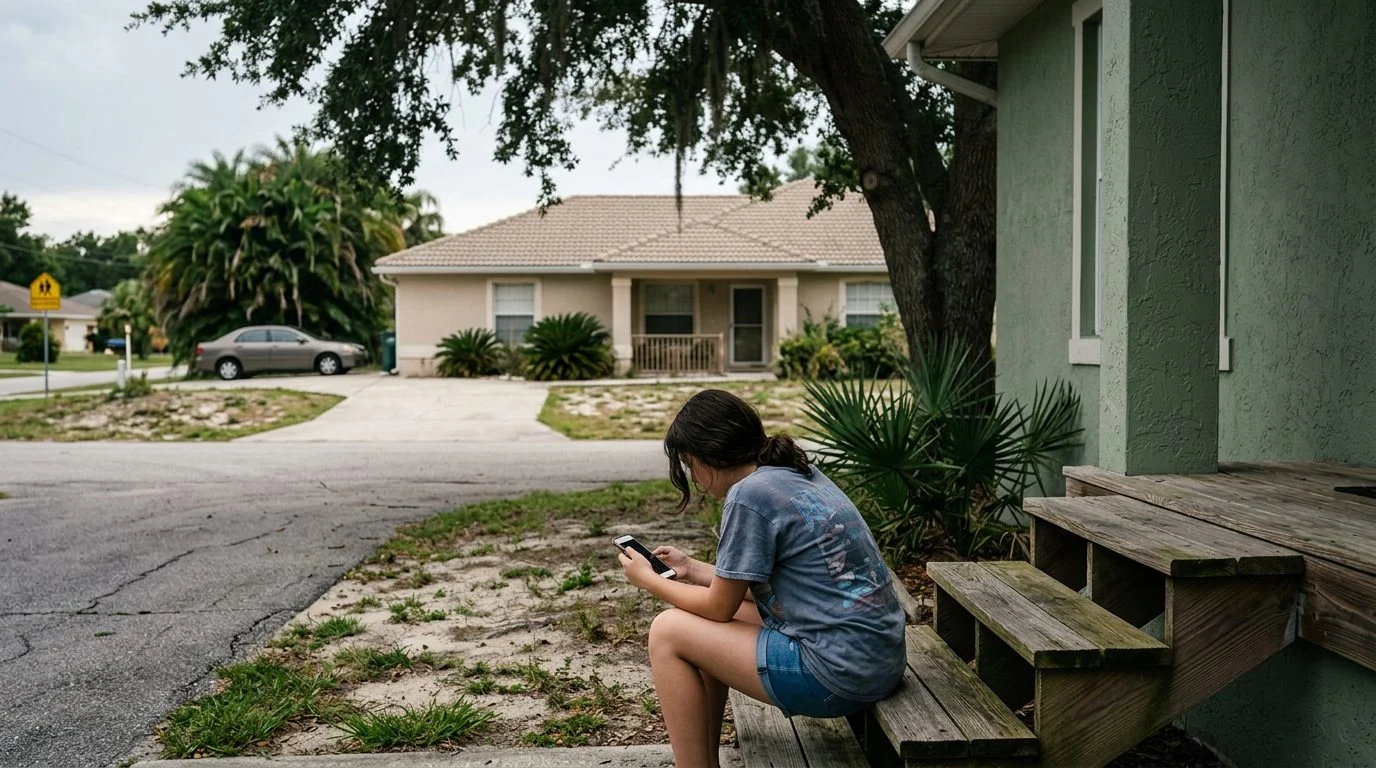
Social media affects teens differently. Some use it with few problems, while others struggle, and that difference is why parents often feel unsure.
Researchers and courts have not reached one settled answer. A 2025 Pew Research Center report describes how U.S. teens see social media’s effects on their mental health. Pew’s survey data shows what teens perceive and report. It does not, by itself, prove that social media causes harm.
Parents often ask whether a change is normal teen behavior or a real problem. The answer depends on how much the change disrupts daily life. A teen who still sleeps, eats, studies, and sees friends is in a different place than one who has stopped doing most of those things. Look at the pattern, not one bad day. Changes that last for several weeks deserve a closer look.
This guide is not medical advice, and it cannot diagnose anything. Your child’s doctors can help sort out what is happening.
Part 1: What You Can Observe at Home
You do not need a clinical background to notice these changes. Write down what you see, with dates. A written record is easier to read later than memory.
Sleep and routine – Your teen stays up late on devices, or you hear the phone long after bedtime. – Your teen has trouble waking for school or seems worn out during the day. – Meals are skipped or eaten at odd times, or your teen stops eating with the family.
Phone and app behavior – Your teen becomes angry, panicky, or withdrawn when phone or app access is limited. – Your teen hides screens or messages, or changes passwords and turns away when you walk by. – Screen time has grown far beyond what it was before.
Friends, activities, and school – Your teen drops sports, hobbies, or friends who are not online. – Grades fall or assignments go missing in a way that is new for this child. – Your teen worries about likes, comments, or missing out on what friends are doing.
Mood and talk – Your teen seems down most days or says nothing will get better. – Small things set off irritability, and your teen is short with the family. – Your teen judges their looks or body against what they see online.
Florida Department of Health guidance supports evaluating a child’s electronic screen behaviors and reducing screen time when a child has mental or behavioral health concerns. That makes screen habits a sensible first place to look.
Compare your teen to their own past, not to other kids. A change from their normal routine tells you more than any checklist.
Part 2: What Only a Clinician Can Assess
Some signs go beyond what a parent can judge. Bring your written log to your child’s pediatrician or another doctor, who can assess the following:
- Whether a mood, anxiety, or eating condition is present. Only a clinician can evaluate this. Do not try to label it at home.
- Other possible causes. School stress, family changes, sleep disorders, and health conditions can produce similar signs.
- Eating changes. Share what you have observed, such as weight changes or skipped meals. Let the doctor decide what it means.
- Safety risk. A clinician assesses any talk of death or self-harm.
- Treatment and medication questions. Follow the care plan your doctor recommends, and ask about anything you do not understand.
A calm, specific log helps the doctor. Write what changed, when, how often, and how your teen reacted. Your observations and the doctor’s assessment work together.
Signs That Need Immediate Help
Any talk of death, self-harm, or suicide needs a prompt response from an adult. Don’t wait for the next scheduled appointment when safety is at risk.
Warning signs that need urgent attention include:
- Talk of death or hopelessness about the future.
- Giving away belongings or saying goodbye in a way that feels final.
- Hidden or unexplained injuries, or sudden withdrawal from everyone at home.
If a child is in crisis, call or text the 988 Suicide & Crisis Lifeline (988) at any time. If there is immediate danger, get emergency care right away. Stay with your teen, and keep them away from anything they could use to hurt themselves. The Florida Department of Health suicide prevention guidance explains when and how to seek crisis help.
What Lawsuits Allege, and What Remains Disputed
Lawsuits allege that some social media platforms were designed to be addictive and contributed to serious mental-health harm in young people. These are allegations. Courts have not decided them, and the companies dispute them.
Florida has a law aimed at social media for minors. Under Florida law, a “social media platform” is an online forum, website, or application that meets several criteria, including allowing users to upload content or to view the content or activity of other users. The statute sets rules for minors’ accounts. It requires a platform to prohibit a minor under 14 from entering into a contract to become an account holder.
For accounts held by children under 14, the statute says the platform must terminate the account and provide 90 days for the account holder to dispute the termination, as set out in the same statute.
Social media also offers real benefits. Many teens find friendship, support, and learning online, and that is part of why the question is hard. Whether any claim fits your family turns on the details of your situation. For more background, see our guide to social media addiction lawsuits in Florida.
Not sure what your next step is?
Talk it through with our team — the first consultation is free, confidential, and carries no obligation.
How Parents Can Respond at Home and With a Doctor
A calm talk about how your teen is doing works better than a lecture. Focus on their wellbeing, not on blame.
Practical steps that many families use include:
- Shared device rules. Set rules that everyone in the home follows, adults included.
- Devices out of bedrooms overnight. Add a device-free time before bed.
- Offline routines. Encourage hobbies, family time, regular sleep, and physical activity.
- A simple written log. Track changes in sleep, mood, school, friendships, and eating.
Bring that log to your child’s pediatrician. Follow the care plan your doctor gives you.

Legal Options for Florida Families and the Next Step
Families sometimes ask whether a lawsuit is possible. The answer turns on the facts, your child’s age, and Florida’s filing deadlines. Deadlines apply, and the rules can be complex, so families should act promptly rather than wait.
CHG Personal Injury Lawyers is a Florida-based personal injury firm serving families throughout Florida. Igor Hernandez is the responsible lawyer for this page. Our lawyers handle these matters for families in Florida. A matter may be referred to or handled with another firm. CHG charges no attorney’s fees and no case costs unless there is a recovery.
Can parents sue a social media company in Florida?
It may be possible. Whether it fits your family turns on your child’s age, how the platform was used, and Florida law.
How long do families have to file?
Florida sets deadlines for filing lawsuits, and they can vary by case. Families should act promptly.
If your teen’s sleep, mood, or schoolwork has changed alongside heavy phone use, you don’t have to sort it out alone. You can reach our team through the contact page for a free, confidential consultation with no obligation to continue.
Changes Parents Often Notice First
Shifts in mood
Persistent sadness, irritability, anxiety, or a loss of interest in activities your teen used to enjoy.
Sleep disruption
Staying up late on phones, waking at night to check messages, or sleeping far more or less than usual.
Pulling away
Withdrawing from friends and family, or becoming upset when phone access is limited.
Changes in school and eating
Falling grades, skipped classes, or noticeable changes in appetite, weight, or body image concerns.
Compulsive use
Repeated attempts to cut back that fail, or continued use despite clear harm to sleep, school, or health.
If your teen is in crisis
If your child talks about suicide or self-harm, or you believe they are in immediate danger, call or text the 988 Suicide & Crisis Lifeline (988) right away. Follow your teen's doctors' care and treatment plan.
Steps Florida Families Can Take Now
Keep a record
Save screenshots, dates, school notices, and notes about changes in your teen's behavior, sleep, and health.
Involve your teen's doctor
Share your concerns with your child's pediatrician or counselor so they can recommend appropriate care.
Talk openly at home
Ask your teen about their online life without blame, and agree on limits that support healthy sleep and school.
Ask about your legal options
Lawsuits filed by families allege that social media platforms were designed to be addictive. Our team can explain what these claims involve and whether they may fit your family's situation.