

Short-Term Rental Liability | Miami
Injured at a Short-Term Rental in Miami? You May Have a Claim.
When a property owner fails to maintain safe conditions or provide adequate security, guests can suffer catastrophic injuries. We help injured guests and their families pursue accountability.
By CHG Lawyers · Published August 31, 2026
Short-Term Rental Liability in Miami: When a Guest Is Catastrophically Injured
When a guest is catastrophically injured at a short-term rental in Miami, the property owner may be legally liable. Short-term rental liability happens when unsafe conditions, poor maintenance, or failure to provide security causes severe, permanent harm. This liability exists whether or not the owner has proper licensing or insurance. If you or a loved one suffered a catastrophic injury at an Airbnb, VRBO, or other vacation rental in Miami, understanding your rights is the first step toward recovery.
Miami’s thriving short-term rental market brings constant guest turnover and higher injury risk. Property owners who fail to maintain safe conditions or protect guests from foreseeable harm can face substantial liability. Understanding short-term rental liability in Miami helps you recognize whether you have a claim.
If you were assaulted, robbed, or sexually assaulted because the owner failed to provide reasonable security, the owner may be liable. Talk it through with our team — the first consultation is free, confidential, and carries no obligation.
What Is Short-Term Rental Liability in Miami?
Short-term rental liability in Miami is a property owner’s legal responsibility when a guest is injured. The injury must result from an unsafe property, poor maintenance, or inadequate security. This is different from regulatory compliance. An owner can have all the right Miami-Dade permits and still face a liability lawsuit if the property itself is dangerous.
When you rent a property short-term, the owner owes you a duty. They must keep the premises reasonably safe. They must warn you of known hazards. If the owner breaks that duty and you’re hurt, you may recover damages. These include medical bills, lost wages, pain and suffering, and permanent disability.
Regulatory compliance (licensing, taxes, certificates) is about following the law. Liability is about negligence—whether the owner knew or should have known of a dangerous condition and failed to fix it or warn you. Both can matter in an injury claim. But they’re separate legal obligations.
Common Causes of Catastrophic Injuries at Miami Short-Term Rentals
Catastrophic injuries at short-term rentals stem from preventable hazards owners fail to address:
Unsafe pools and water features. Drowning, near-drowning, and spinal cord injuries occur when owners don’t maintain proper fencing or post depth warnings.
Structural hazards. Balcony collapses, stair failures, and inadequate railings cause falls and traumatic brain injuries. Rotting wood, loose railings, or broken stairs are maintenance failures owners must fix.
Electrical hazards. Faulty wiring, exposed outlets, and non-functioning ground-fault circuit interrupters (GFCIs—devices that prevent electrical shock) can cause electrocution. This is especially true in bathrooms and near pools.
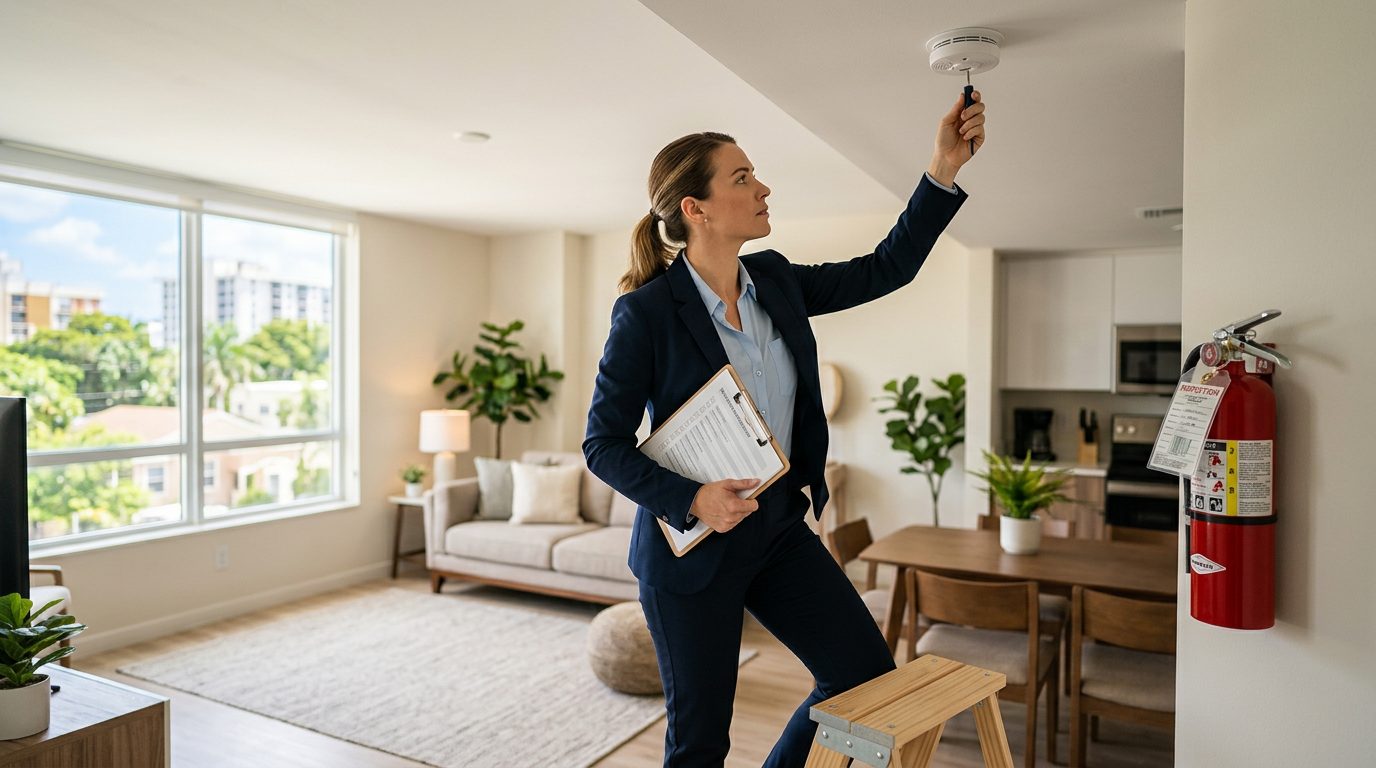
Maintenance failures. Mold, gas leaks, and absent or non-functioning smoke detectors create fire and health hazards.
Security failures. Broken locks, inadequate lighting, missing cameras, and unsecured gates invite assault, robbery, and sexual assault. When a guest is attacked because the owner failed to provide reasonable security, the owner may be liable.
Undisclosed hazards. Pools without proper fencing, hot tubs without temperature controls, and uneven surfaces must be disclosed. Silence about known dangers strengthens an injury claim.
When Can a Guest Sue a Short-Term Rental Owner in Miami?
A guest can sue a short-term rental owner in Miami if the owner’s negligence caused the injury. Negligence requires four elements: duty, breach, causation, and damages.
Premises liability. The owner has a duty to maintain the property in a reasonably safe condition. They must warn guests of known hazards. If the owner breaks that duty and you’re injured, you have a claim. Learn more about catastrophic injury claims.
Negligent security. If you were assaulted, robbed, or sexually assaulted because the owner failed to provide reasonable security, the owner may be liable. The owner doesn’t have to prevent every crime but must take reasonable steps to protect guests from foreseeable harm.
Failure to warn. If the owner knew of a dangerous condition and didn’t tell you, they’re liable if you’re injured because of that undisclosed hazard.
Violation of Miami-Dade or City of Miami safety codes. Non-compliance with local building, electrical, or fire codes can establish negligence. Code violations strengthen the owner’s liability.
Comparative negligence. Florida law allows recovery even if you were partially at fault. Under Fla. Stat. §768.81, you can recover as long as you’re not more than 50% responsible. If you were 30% at fault and the owner 70%, you can recover 70% of your damages. Partial fault doesn’t eliminate your claim.
Short-Term Rental Insurance and Its Limits
Many property owners believe their homeowners insurance covers short-term rentals. It doesn’t. Standard homeowners policies exclude rental operations. An owner who rents without specialized insurance faces personal liability for all damages.
Short-term rental liability insurance exists but often has caps, exclusions, and gaps. Policies may not cover gross negligence, intentional acts, or code violations. If a guest suffers a catastrophic injury—spinal cord damage, traumatic brain injury, severe burns—medical and lifetime care costs can exceed policy limits by hundreds of thousands of dollars.
Even with insurance, the owner remains personally liable if the claim exceeds the policy limit or falls outside coverage. An injured guest can pursue claims against the owner’s personal assets. This is why injured guests need legal representation.
Miami-Specific Liability Considerations
Miami-Dade County and the City of Miami impose strict short-term rental regulations. Non-compliance strengthens injury claims.
Certificate of Use. Miami-Dade requires owners to register short-term rental properties and obtain a Certificate of Use. Failure to comply is a violation and evidence of negligent operation.
City of Miami vs. Miami Beach rules. Different municipalities impose different restrictions. An owner operating in violation of local zoning rules is more vulnerable to a negligence claim.
Tourist tax obligations. Non-payment or mishandling of the 12.5% tourist development tax can indicate negligent business practices.
HOA and condo rules. Many Miami properties are in homeowners associations with additional safety requirements. Violations of HOA rules establish negligence.
Hurricane and weather preparedness. Miami owners have a duty to maintain properties and warn guests of seasonal risks. Failure to secure a property before a hurricane can result in liability.
Not sure what your next step is?
Talk it through with our team — the first consultation is free, confidential, and carries no obligation.
Types of Catastrophic Injuries That Trigger Liability Claims
The injuries in short-term rental liability cases are permanent and life-altering:
Spinal cord injuries and paralysis. Falls from balconies, diving accidents in shallow pools, and structural collapses cause spinal cord damage. Victims may suffer partial or complete paralysis (paraplegia or quadriplegia). According to the Christopher & Dana Reeve Foundation, approximately 17,700 new spinal cord injuries occur in the United States each year.
Traumatic brain injuries. Slips and falls on poorly maintained surfaces, assaults, and accidents from structural failures cause traumatic brain injury. Victims may suffer cognitive impairment, memory loss, and permanent disability.
Severe burns. Electrical hazards, gas leaks, and fires cause severe burn injuries. These require emergency care, skin grafts, and years of rehabilitation.
Amputations and limb loss. Machinery accidents, electrical hazards, and water-related accidents can result in amputation or permanent limb loss.
Drowning and near-drowning injuries. Pools without proper fencing or supervision result in drowning and hypoxic brain injuries.
Assault and sexual assault. Guests attacked on inadequately secured property suffer physical injuries and severe psychological trauma.
What Damages Can an Injured Guest Recover?
Damages in catastrophic injury cases are substantial:
Medical expenses. Emergency care, surgery, rehabilitation, ongoing treatment, assistive devices, home modifications, and future medical care.
Lost wages and loss of earning capacity. For permanent injuries, victims often cannot return to work. Damages include past lost wages and future lost earnings over a lifetime.
Pain and suffering. Compensation for physical pain, emotional trauma, and psychological distress.
Permanent disability and loss of quality of life. For spinal cord injuries, brain injuries, and amputations, damages reflect permanent loss of function and independence.
Wrongful death damages. If the injury is fatal, the family may recover funeral costs, loss of financial support, and loss of companionship.
Punitive damages. In cases of gross negligence, courts may award additional damages to punish the owner and deter similar conduct.
Steps to Take If You or a Loved One Is Injured at a Miami Short-Term Rental
If you’re injured at a short-term rental, act quickly:
-
Seek immediate medical attention. Document all injuries and treatment. Medical records are critical evidence.
-
Report the incident to the property owner and platform in writing. Keep copies of all communications.
-
Photograph and document the hazardous condition that caused the injury. Take photos of the unsafe area and any warnings or lack thereof.
-
Gather witness contact information and statements. Other guests can corroborate what happened.
-
Preserve all communications with the owner, platform, insurance company, and medical providers. Do not delete emails, texts, or messages.
-
Do not sign any settlement or release without legal advice. Insurance companies often offer quick settlements far below catastrophic injury claim value.
-
Consult with an attorney immediately. Florida law sets a 2-year statute of limitations under Fla. Stat. §95.11 for personal-injury lawsuits. Missing this deadline forfeits your right to sue.
Why You Need an Attorney for a Short-Term Rental Injury Claim
Going up against a property owner and their insurance company alone is unequal. Property owners and platforms have legal teams and insurance adjusters. Injured guests need equal representation.
Liability is often disputed. An attorney investigates the property and gathers evidence. They collect maintenance records, prior complaints, and code violations. They interview witnesses and establish negligence. Insurance companies routinely deny or undervalue claims. An attorney negotiates or litigates on your behalf.
In catastrophic injury cases, damages are substantial. A quick settlement offer often falls far short of lifetime medical care and lost earning capacity. An attorney ensures you pursue full compensation.
The statute of limitations is strict. You have two years to file suit. Missing that deadline means you lose your claim forever. An attorney tracks deadlines and protects your rights.
Have questions about what happened?
Ask our team directly. The first conversation is free, confidential, and there is no obligation to continue.
Frequently Asked Questions
What is the difference between short-term rental compliance and liability for guest injuries?
Compliance means following Miami-Dade licensing and tax rules. Liability means the owner was negligent and caused your injury. You can have one without the other.
Can I recover damages if I was partially at fault for my injury?
Yes. Under Florida’s comparative-negligence rule, you can recover as long as you’re not more than 50% at fault (Fla. Stat. § 768.81(6)).
How long do I have to file a lawsuit?
Two years from the date of injury, under Florida law (Fla. Stat. § 95.11(5)(a)).
Does short-term rental insurance cover all guest injuries?
No. Standard homeowners policies exclude rentals. Specialized insurance has limits, exclusions, and gaps.
What if the owner has no insurance?
You can still pursue a claim against the owner’s personal assets and income.
Is the platform (Airbnb, VRBO) liable?
Platforms may be liable in some cases, particularly for negligent security or failure to disclose known hazards. An attorney can evaluate your claim against both the owner and the platform.
If you or a loved one suffered a catastrophic injury at a short-term rental in Miami due to unsafe conditions or negligent security, you may have a claim against the property owner. Contact us for a free case evaluation. We help injured guests understand their rights and pursue the full compensation they deserve.
Why Short-Term Rental Owners Can Be Held Liable
Duty to Maintain Safe Premises
Property owners—including short-term rental operators—must keep their premises reasonably safe. This includes working locks, secure entry points, functioning smoke detectors, and well-maintained structures.
Foreseeable Risks Require Protection
If a property owner knows (or should know) of a dangerous condition—broken stairs, faulty electrical wiring, inadequate lighting, or a history of break-ins—they must address it or warn guests.
Negligent Security Claims
If you were assaulted, robbed, or attacked at a short-term rental because the owner failed to provide reasonable security measures, the owner may be liable for your injuries.
Catastrophic Injuries Matter
We focus exclusively on serious, life-altering injuries: spinal cord damage, traumatic brain injury, severe burns, amputations, and other permanent harm caused by a property owner's negligence.
Common Short-Term Rental Injury Scenarios
Structural Failures & Falls
Collapsed balconies, defective stairs, unsecured railings, or inadequate maintenance causing falls that result in spinal cord injuries, paralysis, or traumatic brain injury.
Assault or Violent Crime
You were attacked, shot, robbed, or sexually assaulted at the rental because the owner failed to install working locks, security cameras, adequate lighting, or hire security personnel.
Fire & Severe Burns
Faulty wiring, missing smoke detectors, blocked exits, or inadequate fire suppression systems leading to severe burns or smoke inhalation injuries.
Drowning or Water Hazards
Unsupervised or poorly maintained pools, hot tubs, or water features without proper barriers, drain covers, or safety equipment causing drowning or near-drowning injuries.
Time Matters in Injury Claims
Evidence at a short-term rental—security footage, maintenance records, prior incident reports—can disappear quickly. The sooner you document the scene and notify the property owner and platform, the stronger your claim. Contact us promptly to preserve evidence and understand your rights.
Questions About Short-Term Rental Liability
What's the difference between a licensing violation and a liability claim?
A short-term rental may violate Miami-Dade licensing or tax rules, but that doesn't automatically mean the owner is liable for your injury. Liability depends on whether the owner was negligent—whether they failed to maintain safe conditions or provide reasonable security that directly caused your harm.
Can I recover damages if I was partly at fault?
Yes. Florida law allows injured people to recover even if they share some responsibility for the accident, as long as they are not more than 50% at fault (Fla. Stat. § 768.81(6)). Your recovery is reduced by your percentage of fault.
Who can I sue—the owner, the platform, or both?
Typically, you can sue the property owner for negligence. Depending on the facts, you may also have claims against the short-term rental platform if it failed to warn you of known dangers or failed to vet the property. An attorney can evaluate your specific situation.
What damages can I recover?
Catastrophic injuries often lead to substantial damages: medical expenses (past and future), lost income, cost of ongoing care, pain and suffering, and loss of quality of life. Wrongful death claims may be brought by surviving family members.