


Paralysis & Spinal Cord Injuries
How to Prove a Paralysis Claim: Evidence & Documentation
Building a strong case requires medical records, accident investigation, and clear proof of liability. Learn what evidence matters and how we help you gather it.
By CHG Lawyers · Published September 23, 2026
How to Prove a Paralysis Claim in Florida: Medical Evidence, the ASIA Scale, and Lifetime Damages
To prove a paralysis claim in Florida, you must establish four legal elements. You need medical proof of your spinal cord injury. You need evidence that the defendant’s negligence caused it. You need expert testimony connecting the accident to your paralysis. And you need detailed records of your lifetime care costs and lost income.
Paralysis is objective and permanent. It shows up on diagnostic scans. Neurological tests confirm it. The real challenge isn’t proving the injury exists—it’s proving the defendant caused it and calculating what your life will cost.
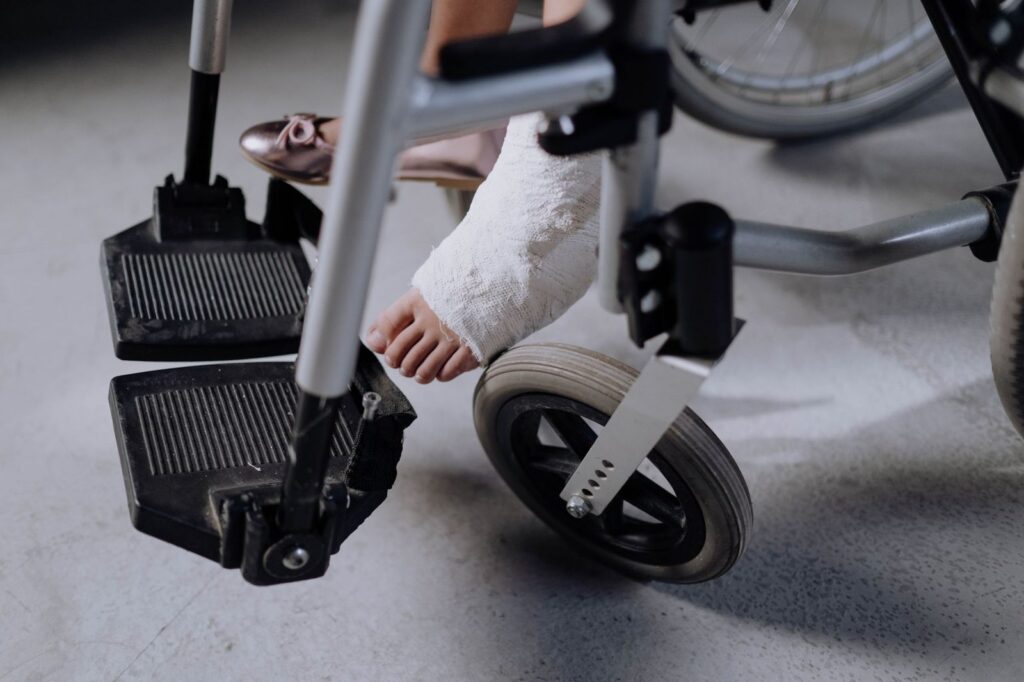
If you or a family member suffered paralysis in an accident, reach out to our team. Talk it through with our team — the first consultation is free, confidential, and carries no obligation.
The Four Legal Elements of a Paralysis Claim
Every paralysis claim rests on four legal foundations under Florida law:
Duty: The defendant owed you a legal obligation to act safely. – A truck driver must operate their vehicle safely and obey traffic laws. – A property owner must maintain safe premises and provide reasonable security. – A medical professional must follow accepted standards of care.
In most cases, this element is straightforward.
Breach: The defendant failed to meet that duty. – A driver who was speeding or texting breached their duty. – A property owner who failed to repair a known hazard breached theirs. – A medical professional who deviated from accepted practice breached their duty.
Breach is proven through accident reports, witness statements, photographs, and expert testimony.
Causation: The defendant’s breach directly caused your paralysis—not a pre-existing condition or your own actions.
This is often the most contested element. Insurance companies will argue your injury resulted from something unrelated to the accident. You must prove a direct link between the defendant’s conduct and your spinal cord injury. Accident reconstruction experts and medical experts are critical here.
Damages: You suffered real, measurable harm.
Damages include medical expenses, lost income, home modifications, attendant care, and pain and suffering. Under Florida Statute § 768.81, if you are more than 50% at fault, you generally recover nothing. Proving the defendant’s breach is essential.
Medical Evidence: Diagnostic Imaging and the ASIA Impairment Scale
Diagnostic imaging and neurological testing provide objective proof of spinal cord injury and loss of function. Courts rely on standardized medical classifications to understand injury severity.
Diagnostic imaging is the foundation.
- MRI scans detect spinal cord damage, swelling, and bleeding.
- CT scans and X-rays show bone fractures, vertebral alignment, and structural damage.
These images document where and how badly you are injured. Courts accept them as objective evidence.
Emergency room and hospital records from the date of injury establish what happened immediately after: your symptoms, vital signs, initial imaging, and the doctor’s clinical impression. These records link the accident directly to your paralysis.
Neurological examinations confirm loss of function.
- Electromyography (EMG) measures electrical activity in your muscles and detects nerve damage.
- Nerve conduction studies assess how quickly electrical signals move along nerves.
These tests objectively document whether your paralysis is complete (total loss of function below the injury level) or incomplete (some preserved sensation or movement).
Understanding the ASIA Impairment Scale
The American Spinal Injury Association (ASIA) Impairment Scale is the standard medical classification system used by neurologists, physiatrists, and courts to describe spinal cord injury severity. Understanding it helps you grasp how your injury is classified and why it matters for damages.
The ASIA Scale rates spinal cord injuries from A to E:
- ASIA A (Complete): Total loss of sensory and motor function below the injury level. No sensation, no voluntary movement. Permanent paralysis.
- ASIA B (Incomplete): Sensation preserved below the injury level, but no motor function. You may feel touch or pain but cannot move voluntarily.
- ASIA C (Incomplete): Some motor function preserved, but most muscles below the injury level are weak (graded 3 or less on a 5-point scale).
- ASIA D (Incomplete): Motor function preserved, and most muscles below the injury level are strong (graded 4 or higher).
- ASIA E (Normal): Normal sensory and motor function. Full recovery.
Your ASIA classification directly affects lifetime care costs, independence level, and damages. An ASIA A (complete) quadriplegic will require 24-hour attendant care and adaptive equipment worth millions over a lifetime. An ASIA D incomplete paraplegic may require less intensive care but still face significant vocational and functional limitations.
Physician documentation of your level of injury is critical:
- Paraplegia is paralysis of the lower body (legs and lower trunk). The spinal cord injury is in the thoracic (mid-back) or lumbar (lower-back) region.
- Quadriplegia (also called tetraplegia) is paralysis of all four limbs and the trunk. The spinal cord injury is in the cervical (neck) region.
These have vastly different lifetime costs and care needs. A cervical spinal cord injury affecting all four limbs typically requires more intensive, expensive care than a thoracic injury affecting the legs alone.
Ongoing medical records showing treatment and functional status over time reinforce that your paralysis is permanent. According to the National Institute of Neurological Disorders and Stroke, most functional recovery occurs within the first six months after injury. Medical records beyond that establish permanence and support your claim.
Medical records alone do not prove negligence. They document that you are paralyzed, not who caused it. Liability evidence proves causation.
Expert Witnesses: Medical Testimony and Accident Reconstruction
Insurance companies hire their own experts to challenge your claim. Your experts must be equally credible and thorough.
Treating physicians testify about the nature, extent, and permanence of your paralysis. They explain your diagnosis, prognosis, and ongoing medical needs in language a jury understands. They can reference your ASIA classification and explain what it means for your daily life.
Independent medical experts—neurologists, neurosurgeons, or physiatrists—review your medical records and accident circumstances. They provide an objective opinion on causation: whether the accident would cause your type of spinal cord injury. Insurance companies expect this testimony and will challenge it aggressively.
Accident reconstruction experts analyze how the accident occurred and the forces involved. – In truck accidents, they examine vehicle damage, electronic data recorder (black-box) information, road conditions, and driver behavior. – In falls or negligent security cases, they document the hazard and explain causation.
Life-care planners are medical professionals (nurses, physiatrists, or rehabilitation specialists) who project your lifetime medical, therapeutic, and personal-care needs. Their testimony often quantifies damages most powerfully.
Vocational Rehabilitation Experts: Quantifying Lost Earning Capacity
One of the largest and most often overlooked damages categories in paralysis claims is lost earning capacity. A vocational rehabilitation expert quantifies this loss and testifies about it.
What vocational experts do:
A vocational expert reviews your pre-injury employment history, education, skills, and work experience. They then evaluate your post-injury functional limitations (based on your ASIA classification, medical records, and life-care plan) and determine what work, if any, you can perform.
How earning capacity is calculated:
If you cannot return to your pre-injury job, the vocational expert calculates the difference between what you earned before and what you can earn now. This is your lost earning capacity.
For example: – You were a 35-year-old construction supervisor earning $65,000 per year. – After a spinal cord injury leaving you with paraplegia (ASIA A), you cannot perform construction work. – The vocational expert determines you can perform sedentary desk work, earning $35,000 per year. – Your annual lost earning capacity is $30,000. – Over a 30-year work-life expectancy (to age 65), accounting for inflation and raises, your lost earning capacity may total $800,000 to $1.2 million or more.
For self-employed individuals or those with focused skills, the calculation is more complex but follows the same principle: comparing pre-injury earning potential to post-injury earning capacity.
Why this matters:
Insurance companies often minimize lost earning capacity by arguing you could work from home or perform light-duty jobs. A vocational expert’s testimony, backed by labor-market data and your actual functional limitations, counters this. Courts and juries understand that paralysis often ends a career entirely, and lost earning capacity damages reflect that reality.
Life-Care Plans: Documenting Your Lifetime Needs
A life-care plan is the centerpiece of damages in a paralysis claim. It is a detailed, itemized projection of all medical, therapeutic, and personal-care services you will need for life.
A certified life-care planner prepares it in consultation with your medical team: your neurologist, physiatrist, primary-care physician, and other specialists. The planner reviews your medical records, your ASIA classification, your functional limitations, and your living situation.
What a life-care plan includes:
- Medications and medical supplies (catheters, wound-care supplies, medications)
- Routine medical follow-up and specialist visits (neurology, urology, orthopedics, dermatology)
- Rehabilitation and therapy (physical therapy, occupational therapy, speech therapy if applicable)
- Adaptive equipment (manual and power wheelchairs, hospital beds, lifts, pressure-relief cushions, braces, orthotics)
- Home modifications (ramps, accessible bathrooms, widened doorways, accessible kitchen, bedroom on first floor)
- Vehicle modifications (hand controls, wheelchair lifts, accessible vans)
- Attendant care (in-home personal assistance, nursing care, bathing, dressing, toileting, meal preparation)
- Homemaking and household services (cleaning, laundry, yard maintenance)
- Transportation and community access
- Vocational rehabilitation or job retraining (if partial recovery or alternative employment is possible)
- Psychological counseling and mental-health support
- Recreation and community integration
Each item is priced at current market rates in your geographic area. The plan projects costs for your entire remaining lifespan, accounting for inflation and aging. As you age, some costs may increase (medical visits, nursing care) while others may change.
Insurance companies scrutinize life-care plans closely. A vague or speculative plan will be challenged and discredited. A professional, detailed plan backed by medical evidence and market-rate pricing is far more persuasive.
The life-care plan often represents the largest component of damages—sometimes exceeding $1 million to $3 million or more, depending on your age, level of injury (ASIA classification), and life expectancy.
Not sure what your next step is?
Talk it through with our team — the first consultation is free, confidential, and carries no obligation.
Documentation of Economic Damages
Economic damages are quantifiable losses proven with documents.
Lost wages and lost earning capacity are proven through tax returns, pay stubs, W-2 forms, and employment records. If you cannot return to your prior job, a vocational expert testifies about your reduced earning capacity. For self-employed individuals, business records and tax returns establish pre-injury income.
Medical expenses include hospital bills, emergency room charges, surgery costs, rehabilitation, ongoing treatment, diagnostic imaging, medications, and medical equipment. Collect invoices from every provider. Request itemized statements; do not rely on insurance explanations of benefits alone.
Home and vehicle modifications require quotes and invoices from contractors and equipment suppliers. These often total tens of thousands of dollars or more.
Attendant care and personal assistance are documented through invoices, timesheets, and market-rate pricing for in-home care in your area. Keep detailed records of hours worked and rates paid.
Economic damages rest on documents and objective numbers. Insurance adjusters expect thorough documentation.
Non-Economic Damages: Pain, Suffering, and Loss of Life Quality
Non-economic damages compensate for pain, emotional distress, loss of enjoyment of life, and permanent disability. These rest on your testimony, medical records demonstrating severity, and expert testimony about the psychological and functional impact of paralysis.
Journals or personal records documenting your pain, limitations, emotional struggles, and lost activities powerfully support non-economic damages. Write about what you can no longer do: play with your children, work, participate in hobbies, travel, or maintain independence. Be specific about times, activities, and emotional impact.
Photographs of your home, adaptive equipment, wheelchair, and daily life illustrate the scope of your injury.
Testimony from friends, family, and caregivers about the change in your personality, mood, and ability to participate in life can be compelling.
In catastrophic paralysis cases, non-economic damages often equal or exceed economic damages. A jury may award millions to reflect the permanence and severity of your loss.
Evidence of Liability: Accident Reports, Witnesses, and Scene Documentation
Liability evidence proves the defendant breached their duty and caused your injury.
Police reports and incident documentation from the date of injury establish what happened and the officer’s preliminary assessment of fault. Obtain the full report, not just a summary.
Witness statements and contact information are invaluable. Witnesses who saw the accident, hazardous condition, or negligence provide credible, independent testimony. Collect names, phone numbers, and written statements as soon as possible.
Photographs or video of the accident scene, hazardous conditions, or negligence are powerful evidence. – If you were injured in a fall, photograph the hazard. – If you were injured in a truck accident, photograph the scene and vehicle damage. – If you were assaulted on an unsafe property, photograph the lack of lighting or broken locks.
Maintenance records (or the absence of them) show whether a property owner neglected to repair a known hazard. If records don’t exist, that itself is evidence of negligence.
In truck accidents: Obtain the truck driver’s logbook, the trucking company’s maintenance records, the driver’s safety record, and the truck’s electronic black-box data. These often reveal speeding, fatigue, mechanical failure, or safety violations.
In negligent security cases: Request prior incident reports, security camera footage, and evidence about the property’s security measures. If someone was assaulted because the property lacked working locks, adequate lighting, or security guards, that documentation is critical.
This evidence proves the defendant’s breach and connects it directly to your injury.
Preserving Evidence: What You Must Do Immediately
Time is critical. Evidence can be lost, destroyed, or become unavailable within days or weeks.
Request all medical records from every provider—emergency room, hospital, surgeons, neurologists, physiatrists, rehabilitation facilities, and outpatient clinics. Ask for imaging (MRI, CT, X-rays), test results (EMG, nerve conduction studies), operative reports, discharge summaries, and progress notes. Keep these organized in a single folder or digital file.
Obtain the police report and any incident documentation from the date of injury. Request the full report, not a summary.
Collect photographs of the accident scene, your injuries, your home modifications, your adaptive equipment, and your daily life. Photographs are powerful evidence.
Preserve physical evidence: Do not discard medical equipment, clothing, or vehicles involved in the accident. Insurance companies and defense experts may want to inspect them.
Document your daily life: Keep a journal of your pain, limitations, emotional struggles, and care needs. Be specific about times, activities, and how your injury affects you. This supports non-economic damages.
Identify and contact witnesses while memories are fresh. Get their names, phone numbers, addresses, and written statements if possible.
Work with your legal team to coordinate expert evaluations, life-care planning, and accident reconstruction early. These professionals need time to do thorough work.
Have questions about what happened?
Ask our team directly. The first conversation is free, confidential, and there is no obligation to continue.
Why Professional Help Matters
In catastrophic-injury cases, insurance companies resist paralysis claims aggressively. They employ teams of adjusters, nurses, and lawyers whose job is to minimize or deny your claim. They hire their own medical experts to challenge your diagnosis and ASIA classification. They scrutinize your life-care plan for any sign of overreach. They question your vocational expert’s lost earning capacity calculations.
Gathering, organizing, and presenting evidence requires knowledge of what courts and juries expect. Expert witnesses must be credible and able to withstand aggressive cross-examination. Life-care plans must meet professional standards or they will be dismissed. Accident reconstruction must be thorough and defensible. Vocational testimony must be grounded in labor-market data and your actual functional limitations.
Mistakes in documentation, evidence handling, or expert selection can weaken your claim significantly. An experienced legal team knows how to build a compelling case from the start and defend it against the insurance company’s challenges.

Frequently Asked Questions
What is the deadline to file a paralysis claim in Florida?
Florida Statute § 95.11 imposes a two-year statute of limitations for personal-injury actions. You generally have two years from the date of your injury to file a lawsuit. Injuries on navigable waters are often maritime claims with a three-year federal deadline (46 U.S.C. § 30106). Do not delay; evidence can be lost and the deadline is firm.
What does my ASIA classification mean for my claim?
Your ASIA classification (A through E) describes your spinal cord injury severity and is used by courts to understand your functional limitations. A complete injury (ASIA A) typically requires more intensive, expensive lifetime care than an incomplete injury (ASIA B–D). Your classification directly affects damages calculations, particularly for attendant care and home modifications.
Can I prove a paralysis claim on my own?
You can gather initial evidence, but building a claim strong enough to withstand insurance company resistance requires professional help. Expert witnesses, life-care planning, vocational rehabilitation testimony, and legal strategy are beyond what most injured people can do alone.
What if I was partially at fault for the accident?
Under Florida’s comparative fault law, you can still recover damages even if partially at fault—as long as you were not more than 50% at fault (Fla. Stat. § 768.81(6)). If you were 40% at fault and the defendant 60%, you recover 60% of your damages. Strong liability evidence that minimizes your share of fault is critical.
How much does a life-care plan cost?
A professional life-care plan typically costs $2,000 to $5,000 or more, depending on injury complexity and planner experience. This is a worthwhile investment because the plan often supports damages claims worth hundreds of thousands or millions of dollars.
How long does it take to build a paralysis claim?
Thorough evidence gathering, expert evaluation, and life-care planning typically take 6 to 12 months or longer. Insurance companies will pressure you to settle quickly. Do not rush; a well-developed claim is worth far more than a hasty settlement.
If you or a family member suffered paralysis in an accident, reach out to our team. We help people understand what documentation and evidence they need to prove a paralysis claim and whether they have a claim. Contact us for a free case evaluation.
Key Evidence in a Paralysis Claim
Medical Documentation
Diagnostic imaging (MRI, CT scans), neurological exams, ASIA Impairment Scale classification, surgical records, and ongoing treatment notes establish the severity and permanence of your injury.
Accident Investigation
Police reports, scene photographs, witness statements, vehicle damage assessment, and accident reconstruction reports prove how the injury occurred and who was at fault.
Liability Evidence
Negligence, violation of safety rules, maintenance records, security footage, or breach of duty—whatever shows the defendant caused or failed to prevent your injury.
Damages Documentation
Medical bills, rehabilitation costs, lost wages, care plans, assistive device expenses, and records of your life changes quantify the financial and personal impact of paralysis.
How We Help You Build Your Case
Medical Record Review
We obtain and organize all medical records, imaging, and treatment history to establish the nature and permanence of your injury.
Liability Investigation
We investigate the accident, gather police reports, witness testimony, and evidence of negligence or safety violations that caused your paralysis.
Medical Consultation
We work with physicians and medical professionals who can explain your condition, prognosis, and long-term care needs to support your claim.
Damages Calculation
We document all costs—medical, rehabilitative, lost income, and future care—to ensure your claim reflects the full impact of your injury.
Timeline Management
We know the deadlines that apply to your case and move quickly to preserve evidence and file within required timeframes.
Clear Communication
We explain what evidence we need, why it matters, and how it strengthens your case—in plain language, every step of the way.
Time Matters
Florida law imposes strict deadlines for filing paralysis claims. Evidence can be lost, witnesses' memories fade, and accident scenes change. The sooner you act, the stronger your case.
Common Questions About Proving Paralysis Claims
What is an ASIA classification and why does it matter?
The ASIA Impairment Scale is a standardized medical tool that classifies spinal cord injuries by severity and function. It helps doctors, insurers, and courts understand the extent of your paralysis and predict your long-term needs and care costs.
Do I need a lawyer to prove my paralysis claim?
While you can file a claim yourself, paralysis cases are complex. Medical evidence must be properly presented, liability must be proven, and damages must account for lifelong care. An attorney who focuses exclusively on catastrophic injuries can navigate these challenges and help maximize your recovery.
What if the accident was partially my fault?
Florida law allows recovery even if you share some responsibility for the accident. Your recovery may be reduced by your percentage of fault, but you may still have a valid claim. We evaluate the facts and advise you on your options.
How long does it take to prove and settle a paralysis claim?
Every case is different. Simple cases may settle within months; complex cases involving multiple parties, significant liability disputes, or catastrophic injuries may take longer. We work to resolve your case fairly and efficiently while protecting your rights.