


Catastrophic Injury Attorneys · Florida
When Paralysis Changes Everything, You Deserve Answers in Plain Language
We represent victims of spinal cord injuries and catastrophic back and neck trauma causing paraplegia, quadriplegia, and permanent paralysis. Serving Florida and taking catastrophic cases nationwide.
Focused Legal Advocacy for Catastrophic Injuries
Bilingual
English & Spanish resources
Licensed
Florida Bar–admitted attorneys
Nationwide
Catastrophic cases accepted
Catastrophic Only
Our exclusive focus
By CHG Lawyers · Published July 07, 2026
Paralysis Injury Lawyer: Paraplegia & Quadriplegia Claims
If a crash or medical error left you or someone you love with permanent paralysis, you are facing a lifetime of medical care and a legal system that rarely explains itself in plain terms. This page does that. It walks through how catastrophic spinal cord injury claims actually work, what the medical classifications mean, and the specific Florida deadlines and fault rules that can decide whether you recover anything at all.
We handle only catastrophic cases. If your injury is temporary or expected to heal, this is not the right page for you — and we will tell you so honestly.
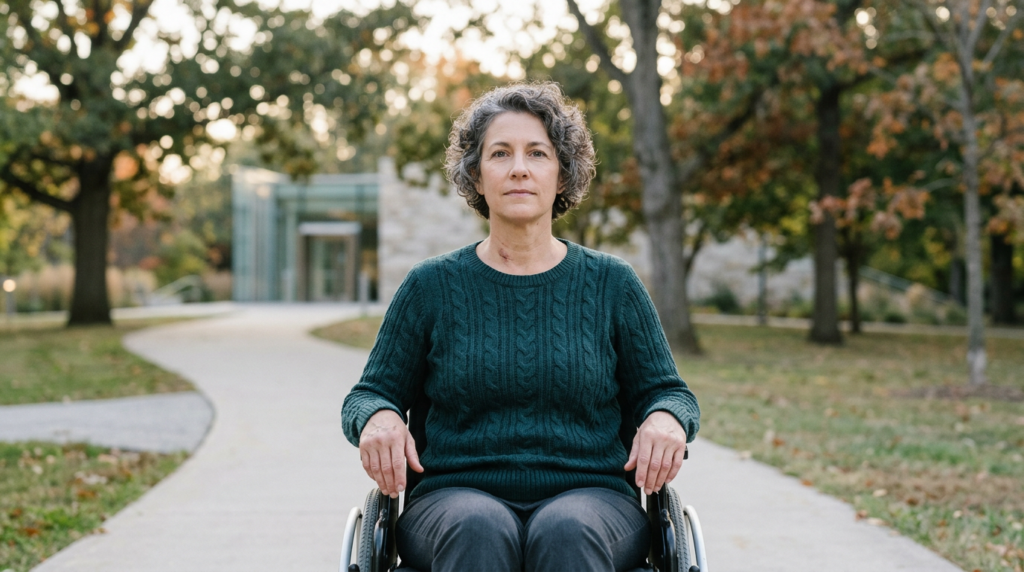
If your injury is temporary or expected to heal, this is not the right page for you — and we will tell you so honestly. Talk it through with our team — the first consultation is free, confidential, and carries no obligation.
What This Firm Does — and Does Not — Handle
CHG Personal Injury Lawyers focuses exclusively on catastrophic spinal cord and back/neck injuries: those causing paraplegia, quadriplegia (tetraplegia), or other permanent, life-altering impairment.
We do not take cases involving whiplash, muscle strains, or herniated discs that heal without lasting neurological damage. This narrow focus is deliberate.
Our attorneys are admitted to The Florida Bar. The firm is based in Florida and accepts catastrophic paralysis cases nationwide. We cannot promise a specific outcome — no lawyer ethically can — but we can explain your options clearly and without charge.
Request your free case evaluation.
What Doctors Mean by “Paralysis” — Grounded in the Medical Record
Paralysis is the loss of muscle function and sensation caused by damage to the spinal cord or the nerves it carries. According to the Mayo Clinic, a spinal cord injury can cause permanent changes in strength, sensation, and body functions below the level of injury — including bladder and bowel control, breathing, blood pressure, and circulation.
That last point matters more than most people realize. A high cervical injury doesn’t just affect movement; it can affect the ability to breathe without a ventilator. When we evaluate the full value of a claim, these “invisible” complications are often the costliest.
For a closer look, see complete vs. incomplete paralysis and the causes of permanent paralysis after an accident.
Levels and Classification: How Injuries Are Graded
The words in a medical chart drive the value of a case. Two people can both be “paralyzed” and have very different futures. Here is how clinicians describe the difference — and why it matters legally.
Paraplegia
Paraplegia affects the lower body — the legs and sometimes the trunk — while arm and hand function is preserved. Injuries at the thoracic, lumbar, or sacral levels typically produce paraplegia. See our paraplegia injury attorney page.
Quadriplegia (Tetraplegia)
The American Spinal Injury Association (ASIA) uses the term tetraplegia for injuries at the cervical (neck) levels, which impair the arms, hands, trunk, legs, and pelvic organs. These cases often involve round-the-clock attendant care. See our quadriplegia and tetraplegia injury lawyer page.
The ASIA Impairment Scale (AIS)
Rather than the loose terms “complete” and “incomplete,” treating physicians classify injuries using the ASIA Impairment Scale (AIS), a five-grade system from AIS A (complete — no motor or sensory function preserved in the lowest sacral segments) through AIS E (normal function). This is documented in the International Standards for Neurological Classification of Spinal Cord Injury (ISNCSCI).
Why lawyers care: the AIS grade and neurological level recorded in the acute-care record become anchor evidence for prognosis, future care, and damages. Compare types on our difference between paraplegia and quadriplegia page.
What Causes Catastrophic Paralysis
The cause is not just background — it points directly to who may be legally responsible and what evidence must be preserved.
- Motor vehicle crashes. The Mayo Clinic identifies motor vehicle accidents as a leading cause of spinal cord injury.
- Falls from height, common in construction and industrial work.
- Pedestrian and bicycle collisions with vehicles.
- Medical negligence — surgical error, anesthesia mistakes, delayed diagnosis of cord compression, or improper handling of an unstable spine.
A trucking crash and a surgical error demand completely different investigations. One turns on black-box and log data preserved within days; the other turns on the operative report and standard-of-care testimony. See accidents that cause paralysis and our medical malpractice paralysis lawyer page.
Proving Who Is Liable
To recover, you must establish negligence — four elements, in plain terms:
- Duty — someone owed you reasonable care.
- Breach — they failed to provide it.
- Causation — that failure caused the injury.
- Damages — you suffered real, documented losses.
Depending on the facts, the responsible party could be a driver, an employer, a property owner, a product manufacturer, or a healthcare provider — and often more than one. Read who is liable for a paralysis injury and whether you can sue for permanent nerve damage.
Compensation: An Honest Explanation of the Numbers
You will find websites promising six- or seven-figure “average” paralysis settlements. Ignore them. There is no reliable average, because every case turns on the injury level, the care required, the strength of the evidence, and the available insurance. No ethical lawyer can quote you a figure before reviewing your case.
What we can explain honestly is the categories of damages a claim may pursue:
- Medical care — emergency treatment, surgery, rehabilitation, and future treatment.
- Lost income and lost earning capacity — wages already lost and future earnings you can no longer produce.
- Future attendant and in-home care — often the single largest category in high-level injuries.
- Home and vehicle modifications — ramps, lifts, accessible bathrooms, adapted controls.
- Pain, suffering, and loss of life’s enjoyment — the non-economic toll.
Why do amounts vary so widely? Because a preserved-hand-function paraplegic who returns to sedentary work has very different lifetime needs than a ventilator-dependent tetraplegic requiring 24-hour care. We explain this in our paralysis claim damages and compensation guide and how much compensation for paralysis.
The Life-Care Plan: The Document That Defines the Claim
The lifetime cost of catastrophic injury is enormous, and it is proven — not guessed — through a life-care plan: a detailed report prepared with physiatrists, life-care planners, and economists that itemizes every future need, from catheters to caregiver hours to replacement wheelchairs, and reduces it to present-day dollars.
The National Spinal Cord Injury Statistical Center (NSCISC) maintains U.S. data on the long-term costs and care needs following spinal cord injury. In catastrophic claims, a rigorously built life-care plan is frequently the difference between a settlement that covers a lifetime of care and one that runs out. Read more on lifetime cost of paralysis and life-care plan in a paralysis lawsuit.
Not sure what your next step is?
Talk it through with our team — the first consultation is free, confidential, and carries no obligation.
How These Cases Are Built
- Rapid evidence preservation — sending litigation-hold and preservation letters before vehicles are repaired, footage is overwritten, or records are altered.
- Expert development — treating and retained physicians on prognosis; engineers or medical experts on how the injury occurred; economists on future loss.
- Insurer negotiation from a documented position, not a hopeful one.
- Trial preparation when the defense will not offer a fair resolution.
Florida Deadlines and Fault Rules — With the Statutes
These two rules quietly end more valid claims than any defense argument. Both changed in 2023, so older articles may be wrong.
The Statute of Limitations
For general negligence and personal-injury claims that accrue on or after March 24, 2023, Florida’s deadline is generally two years under Fla. Stat. § 95.11. (Claims that accrued before that date generally fall under the prior four-year period.) Medical malpractice, wrongful death, and claims against government entities carry their own separate deadlines and notice requirements. Because the correct deadline depends on your facts and the type of claim, get it confirmed early. See paralysis claim statute of limitations and how long a paralysis lawsuit takes.
Modified Comparative Negligence
Florida now follows a modified comparative negligence rule under Fla. Stat. § 768.81: a plaintiff found greater than 50% at fault for their own injury generally cannot recover damages. If you are 50% or less at fault, your recovery is reduced by your percentage of fault. This is a significant change from Florida’s former pure comparative-fault system, and it makes early, careful investigation of fault critical.
Support for Families and Caregivers
Paralysis reshapes the whole household. The Christopher & Dana Reeve Foundation offers practical resources on daily living with paralysis. We provide guidance through caring for a loved one with paralysis and whether paralysis is considered a permanent disability.
Where We Help
Based in Florida, we serve clients statewide and accept catastrophic cases nationwide:
- Florida paralysis injury lawyer
- Miami paralysis injury attorney
- Orlando paralysis injury attorney
- Tampa paralysis injury attorney
- Jacksonville paralysis injury attorney
Frequently Asked Questions
How much compensation is available for a paralysis injury?
There is no reliable “average.” Compensation depends on the injury level and AIS grade, future care needs, lost earning capacity, the strength of the evidence, and available insurance. No lawyer can responsibly quote a figure before reviewing your case.
What are the levels of paralysis?
Paraplegia affects the lower body; quadriplegia (tetraplegia) affects all four limbs and results from cervical-level injuries. Clinicians further classify severity using the ASIA Impairment Scale (AIS A–E).
Do I have to pay a lawyer up front?
No. We handle catastrophic paralysis cases on a contingency-fee basis — you pay no attorney fees unless we recover for you. Case costs are discussed in your fee agreement.
How long does a paralysis lawsuit take?
It depends on the facts and whether the case settles or goes to trial. Catastrophic cases often take longer because the life-care plan and expert evidence must be fully developed before value is clear.
Can I still file if the injury was partly my fault?
Possibly. Under Fla. Stat. § 768.81, a person found more than 50% at fault generally cannot recover, and recovery below that threshold is reduced by your share of fault.
Talk With a Paralysis Injury Lawyer
A free case evaluation costs nothing and creates no obligation. We listen, answer your questions, and explain how a claim might work — in English or Spanish. Spanish speakers can visit our página en español para casos de parálisis, paraplejía y cuadriplejía.
Because Florida deadlines can be as short as two years and physical evidence fades quickly, acting early protects your claim.
Contact us today for your free case evaluation.
This page is general information, not legal advice, and does not create an attorney-client relationship. Every case is different, and past results do not guarantee a similar outcome. For advice about your situation, speak with a licensed attorney.
Have questions about what happened?
Ask our team directly. The first conversation is free, confidential, and there is no obligation to continue.
Related practice areas
- orlando-paralysis-injury-attorney
- es-abogado-paralisis-paraplejia-cuadriplejia
- how-long-paralysis-lawsuit-takes
- caring-for-loved-one-with-paralysis
- paralysis-claim-statute-of-limitations
- paralysis-claim-damages-compensation
- lifetime-cost-of-paralysis
- paralysis-injury-compensation-explained

Related practice areas
- Jacksonville Catastrophic Injury Lawyer | Spinal & Paralysis
- Proving Fault in a Catastrophic Injury Claim
Deadlines Can End Your Case Before It Starts
Florida sets strict time limits for filing injury and medical negligence claims, and evidence fades quickly after a catastrophic event. If you or a loved one is living with permanent paralysis, do not wait to learn your rights.
Catastrophic Injuries We Handle
Spinal Cord Injuries
Damage to the spinal cord that disrupts signals between the brain and body, often leading to permanent loss of function below the level of injury.
Paraplegia
Paralysis affecting the lower body and legs, typically resulting from injury to the thoracic, lumbar, or sacral regions of the spine.
Quadriplegia
Paralysis affecting all four limbs and the torso, usually following injury to the cervical spine—among the most life-altering outcomes we address.
Catastrophic Back & Neck Trauma
Severe spinal injuries causing permanent, life-altering impairment beyond routine recovery, including cases tied to accidents and medical negligence.
Why Families Turn to CHG Personal Injury Lawyers
Catastrophic Cases Only
We concentrate on permanent, life-altering spinal and paralysis injuries—so this work is not a sideline for our firm.
Clear, Plain-Language Guidance
We explain medical classifications, fault rules, and the claims process without confusing jargon.
Bilingual Support
Educational resources and communication are available in both English and Spanish.
Licensed Florida Attorneys
Our team is admitted to the Florida Bar and handles catastrophic injury matters nationwide.