

Paralysis & Spinal Cord Injury Claims
Making Your Home Livable Again After Paralysis
A spinal cord injury can turn your own home into an obstacle course. When someone else's negligence caused your paralysis, the cost of ramps, widened doorways, and accessible bathrooms can be part of your injury claim. Learn how these expenses are recovered.
Why Families Turn to CHG
Licensed
Attorneys admitted to the Florida Bar
Nationwide
Catastrophic injury cases accepted
Bilingual
English & Spanish resources
Focused
Only serious, life-altering injuries
By CHG Lawyers · Published July 25, 2026
Home Modifications, Wheelchairs & Adaptive Equipment After Paralysis: Can You Recover These Costs?
Yes. If someone else’s negligence caused your paralysis, you can often recover the cost of making your home accessible. You can also recover the cost of adaptive equipment. These costs become part of your injury claim. Lawyers call them “future medical and life-care damages.” How much you recover depends on the facts, the evidence, and who was at fault.
Coming home after a spinal cord injury is rarely simple. The injury changes your body. It also changes the home you return to. Doorways may be too narrow. The bathroom may not work for you. Stairs can become a wall you can’t cross.
This page explains three things in plain language. First, what changes and equipment people with paralysis usually need. Second, why insurance and grants often fall short. Third, how an injury claim can recover these costs. This is educational information, and every case is different. A free case evaluation can address your situation. For the bigger picture, see our main guide on paralysis, paraplegia, and quadriplegia claims.
Not sure what your next step is?
Talk it through with our team — the first consultation is free, confidential, and carries no obligation.
What home modifications do people with paraplegia or quadriplegia typically need?
People who use wheelchairs usually need changes to their home. These changes affect how they get in, move around, and use it. The goal is safety and independence. The exact needs depend on the injury level.
Common changes include:
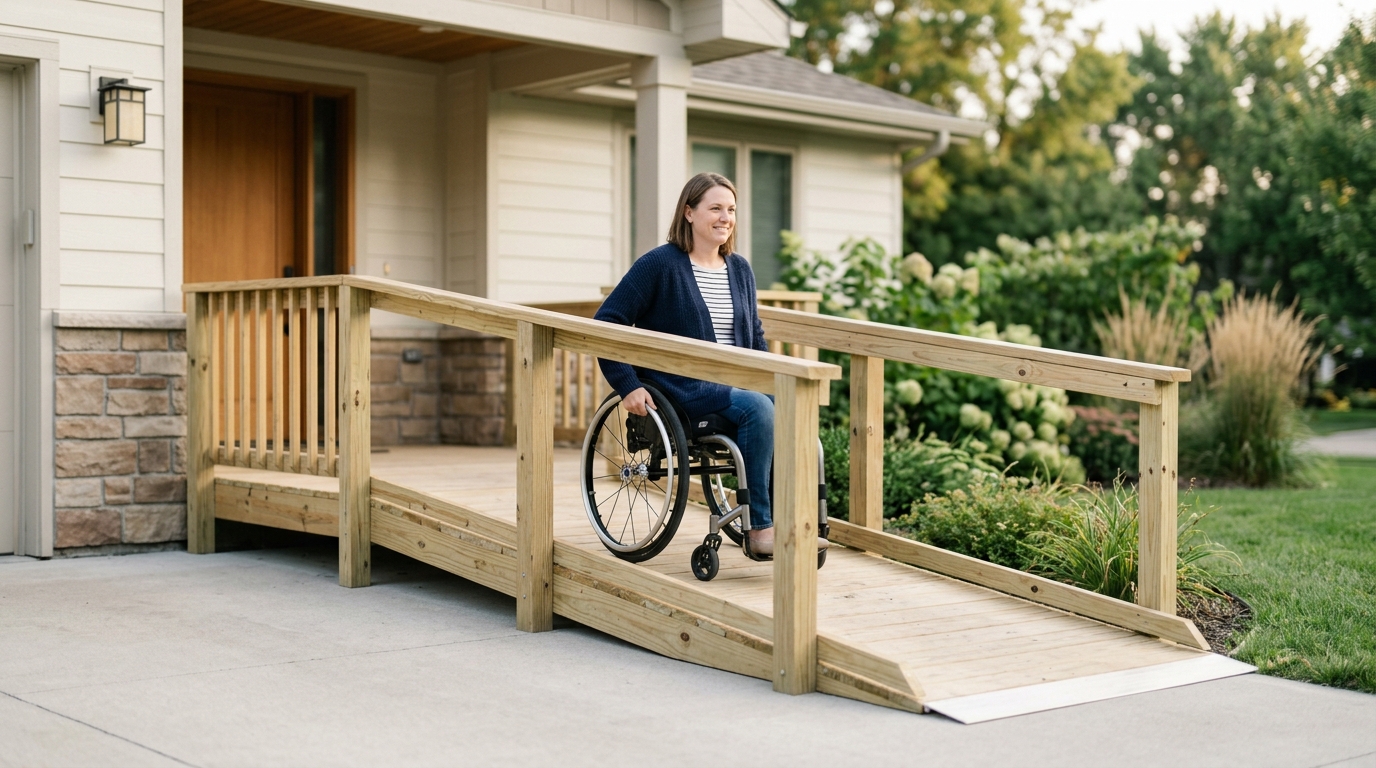
- Entry and access: wheelchair ramps, wider doorways, threshold changes, and sometimes lifts or elevators.
- Bathroom safety upgrades: roll-in showers, grab bars, accessible sinks, and adapted toilets.
- Kitchen changes: lower counters and cabinets. Also appliances and controls a person can reach while seated.
- Bedroom and living space: hospital beds, ceiling track lifts, and wider hallways.
Needs differ a lot between paraplegia and higher-level injuries. The Mayo Clinic explains that a spinal cord injury’s effects depend on where it happens and how severe it is. Higher cervical (neck) injuries affect more of the body, including the arms and hands. Lower injuries may leave arm function intact.
For that reason, people with quadriplegia often need automated systems. Quadriplegia is paralysis that affects all four limbs. These systems include lighting, doors, and thermostats you control by voice or switch. In the catastrophic-injury cases our attorneys handle, these controls are essential, not luxuries. If breathing support is also involved, see our page on ventilator-dependent quadriplegia claims.
Wheelchairs and adaptive equipment: why the cost is ongoing
Adaptive equipment isn’t a one-time purchase. It wears out. You must replace and maintain it for a lifetime. This ongoing cost is one of the most overlooked parts of a paralysis claim.
Equipment often includes:
- Wheelchairs: manual and power chairs, plus special seating to prevent pressure sores.
- Adaptive vehicles: wheelchair-accessible van conversions and hand controls.
- Communication and computer-access devices, especially for people with limited hand function.
- Daily-living aids that help with dressing, bathing, and eating.
Here’s the point families miss. A power wheelchair usually lasts about five years before it needs replacing. An accessible van won’t last forever either. Over a normal life span, you may replace both several times. So the true cost isn’t what you spend this year. It’s what you’ll spend across decades.
This is why future costs must be documented, not just current bills. A claim that only counts today’s expenses leaves out most of the real cost.
How much do home modifications and adaptive equipment cost?
Costs vary widely by injury level, home layout, and region. So any numbers are examples only, not a promise. A single change might be modest. A full transformation is not.
The National Spinal Cord Injury Statistical Center (NSCISC) tracks the lifetime costs of spinal cord injury. It consistently finds that more severe injuries cost more. High-tetraplegia estimates can reach into the millions of dollars over a lifetime, on top of lost wages. NSCISC’s figures cover medical and attendant care. On top of that come home renovations, a van conversion, and repeated equipment replacement.
That answers a common question: how much does quadriplegic care cost? In general, the more function a person loses, the higher the lifetime cost. Someone with quadriplegia usually needs more equipment, more home automation, and more personal care than someone with paraplegia. Those needs continue for life.
Reliable numbers don’t come from guesses. They come from professional cost projections built for your situation. That’s the role of a life care plan, which we explain below.
Does insurance cover home modifications?
Usually, no — not fully. Private health insurance and Medicare/Medicaid often cover little or none of the structural changes a home needs. They also often limit or deny high-end wheelchairs and accessible vehicles.
Insurance may sometimes pay for a basic medical device or a standard wheelchair. But it commonly leaves out ramps, roll-in showers, wider doorways, and home automation. It also rarely covers a van conversion. Coverage depends on your plan and situation. So read your policy and ask questions.
This gap is why so many families end up paying out of pocket. And that’s exactly why recovery through a claim matters. When another party caused the injury, you shouldn’t have to drain your savings to make your home livable.
Are there grants or programs for accessibility modifications?
Yes, some grants and programs exist. But they’re often limited, competitive, and rarely cover the full cost. They can help. They usually can’t solve the whole problem.
Sources of help may include:
- VA programs for eligible veterans who need home changes, such as the Specially Adapted Housing (SAH) and Special Housing Adaptation (SHA) grants.
- State vocational rehabilitation and certain Medicaid waiver programs, depending on eligibility.
- Nonprofit and disability organizations, such as the Christopher & Dana Reeve Foundation. It reports that roughly 1 in 50 people in the U.S. — about 5.4 million — live with some form of paralysis.
Think of these as extras, not substitutes. When someone else’s negligence caused your paralysis, a grant shouldn’t replace the full recovery you may be owed. It should sit alongside it.
Have questions about what happened?
Ask our team directly. The first conversation is free, confidential, and there is no obligation to continue.
Recovering home modification costs after paralysis through an injury claim
When someone else’s negligence caused your paralysis, you can claim the cost of making your home accessible. You can also claim the cost of buying and replacing equipment. These are damages. This is the heart of recovering home modification costs after paralysis.
These aren’t just past bills. They’re future medical and life-care damages — the costs you’ll face for years to come. A well-built claim looks forward, not only backward.
To recover these costs, you generally must prove two things. First, that another party was at fault. Second, that the changes and equipment are reasonable and medically necessary, at a documented cost. Fault might involve a truck accident, a property owner who failed to provide reasonable security, or another form of negligence. Our page on who is liable in a catastrophic injury explains how fault gets established.
Florida law shapes these cases. Under Fla. Stat. §768.81, Florida follows a modified comparative-negligence rule (shared fault). A person found more than 50% at fault for their own harm generally recovers nothing. There’s also a deadline. Under Fla. Stat. §95.11, most negligence claims that start on or after March 24, 2023 must generally be filed within two years.
No lawyer can promise a specific result. Recovery always depends on the facts and the evidence.
How a life care plan proves these costs
A life care plan is a professional roadmap of every future need and its projected cost. It turns everyday accessibility needs into court-ready evidence — the ramp, the roll-in shower, the next power chair. Without it, a defense can easily dismiss future costs as guesswork.
A certified life care planner usually builds the plan with your treating doctors. A thorough plan documents:
- Home modifications, from ramps to bathroom upgrades.
- Wheelchairs and other equipment, plus how often each item must be replaced.
- Accessible vehicles and van conversions.
- Personal care, therapy, and future medical treatment.
In plain terms, it puts a credible, itemized number on a lifetime of need. It ties each item to a medical reason. Instead of a family guessing, a qualified professional projects the costs. That’s powerful evidence. Learn more on our page about the life care plan in catastrophic injury cases.
Can you go back to normal after being paralyzed?
Honestly, most severe spinal cord injuries cause permanent changes. The Mayo Clinic notes that there’s currently no way to reverse damage to the spinal cord. Rehabilitation and adaptive equipment can greatly improve independence. But many injuries are life-altering.
Doctors classify spinal cord injuries using the ASIA Impairment Scale. This scale describes complete and incomplete injuries and the function that remains. Some people regain more than others.
This permanence is why lifetime accessibility and equipment costs matter so much in a claim. If the injury lasts a lifetime, the costs do too. A fair recovery must account for that.
Steps to protect your right to recover these costs
You can take practical steps now to protect your claim. The most important one is simple: keep good records.
- Save everything. Keep receipts, contractor estimates, equipment invoices, and written medical recommendations.
- Document the medical need. Don’t rush major renovations without a record. Show why they’re needed and what they cost.
- Get professional cost projections before settling. You generally can’t reopen a claim later. If future costs are left out, that money is usually gone for good.
- Talk with an attorney early. This helps make sure future costs aren’t missing from a settlement.
The NSCISC tracks the long-term realities of these injuries — decades of care and equipment. Those realities are the same ones your claim needs to capture.
Want to know where you stand?
Tell us what happened and our team will walk you through the options available to you, at no cost.
Talk with CHG Personal Injury Lawyers
You shouldn’t have to carry the cost of making your home livable alone. Not when someone else caused the injury. Making a home accessible after paralysis is expensive, and the burden is heavy. But it doesn’t have to fall only on you.
CHG Personal Injury Lawyers are licensed attorneys admitted to The Florida Bar. We’re Florida-based and handle catastrophic-injury cases nationwide. We offer bilingual support in English and Spanish. We focus on serious, life-altering injuries.
Is someone you love living with paralysis after an accident? Contact us for a free case evaluation. We can’t promise a specific outcome. But we can explain your options clearly. To learn more, visit our main guide on paralysis, paraplegia, and quadriplegia claims or our overview of catastrophic injury claims.

Frequently asked questions
Can you recover home modification costs after paralysis?
Yes. When another party’s negligence caused your paralysis, you can recover home modification and equipment costs. They count as future life-care damages in an injury claim.
Does insurance cover home modifications for disability?
Usually not fully. Private insurance and Medicare/Medicaid often cover little of a home’s structural changes. They may also limit or deny high-end wheelchairs and vehicles.
Are there grants for home modifications?
Yes, some VA, state, Medicaid waiver, and nonprofit programs help. But grants are often limited and competitive. They rarely cover full accessibility costs.
How long do I have to file a paralysis claim in Florida?
Most negligence claims that start on or after March 24, 2023 must generally be filed within two years under Fla. Stat. §95.11.
What is a life care plan?
A life care plan is a professional projection of every future need and cost after a serious injury. It includes home modifications, equipment, vehicles, and care.
Can I recover the cost of a wheelchair-accessible van?
Often yes. If the vehicle is medically necessary and another party is at fault, its cost can be included in your claim. So can its future replacement.
Don't Pay for Modifications Out of Pocket First
Before you spend savings or take on debt to remodel your home, talk to an attorney. Documenting these needs correctly matters. Once a claim is settled, you generally cannot go back and ask for costs that weren't included, so it's important to account for lifetime modification and equipment needs from the start.
Home Modifications That May Be Recoverable
Access & Mobility
Wheelchair ramps, widened doorways and hallways, stair lifts or residential elevators, and level thresholds so you can move through your home safely.
Bathroom & Bedroom
Roll-in showers, accessible sinks and toilets, grab bars, and lowered fixtures. Bedroom changes may include lifts, adjustable beds, and reachable controls.
Kitchen & Daily Living
Lowered counters and cabinets, accessible appliances, and layouts that let you handle daily tasks with as much independence as possible.
Ongoing Costs
Home modifications are rarely a one-time expense. Future life-care plans can account for repairs, upgrades, and replacements over your lifetime.
How These Costs Fit Into Your Claim
Documented as Future Damages
When negligence caused your paralysis, home modification and equipment costs can be claimed as future life-care damages, not just past medical bills.
Backed by Life-Care Experts
Attorneys often work with medical and life-care planning professionals who project the accessible housing, equipment, and support you will need over time.
Beyond What Insurance Covers
Private insurance and Medicare or Medicaid typically cover little of the cost of accessibility remodeling, leaving families to shoulder the gap on their own.
Tied to the At-Fault Party
In a successful claim, the party responsible for the injury, and their insurer, may be held accountable for these life-altering costs.
Find Out What Your Paralysis Claim Should Include
Related practice areas
- Paralysis After an Accident: Legal Help for Paraplegia & Quadriplegia Victims