

Paralysis & Spinal Cord Injury Claims
Making a Home Accessible After Paralysis Shouldn't Bankrupt Your Family
When a spinal cord injury leaves you or a loved one paralyzed, your home often needs major changes to become livable again. These costs are real damages in a paralysis claim. We help families pursue what it takes to rebuild.
Why Families Turn to CHG
Nationwide
Catastrophic injury cases accepted
Bilingual
English & Spanish support
Licensed
Florida Bar–admitted attorneys
Free
Case evaluations, no upfront cost
By CHG Lawyers · Published July 26, 2026
Home Modifications and Accessible Vehicles: Recovering These Costs After Paralysis
Did someone else’s negligence cause your paralysis? If so, the cost of making your home and vehicle accessible can be part of your injury claim. These changes are future medical and living costs. That makes them a type of economic damages — money you lost or will spend. In a catastrophic case, they are often one of the largest parts of the claim.
Do you or someone you love now live with paraplegia or quadriplegia? The home you own may no longer fit your body. Your car may be impossible to use safely.
This page explains three things:
- First, which changes paralysis usually requires.
- Second, why insurance and grants rarely cover them.
- Third, how a legal claim can try to close that gap.
We write from the catastrophic-injury cases our attorneys handle. In these cases, accessibility costs are real. They repeat over time. And they are easy to underestimate.
Not sure what your next step is?
Talk it through with our team — the first consultation is free, confidential, and carries no obligation.
Why accessibility costs matter after paralysis
A spinal cord injury can cause loss of movement and feeling below the injury. The higher the injury on the spinal cord, the greater the effect on the body, according to Mayo Clinic.
A neck-level (cervical) injury can affect the arms, hands, trunk, and legs. This is often called tetraplegia or quadriplegia. A lower injury in the back may leave the arms working but affect the legs and lower body. This is called paraplegia.
That level of injury changes everyday life. Stairs, narrow doorways, and a standard bathroom stop being small annoyances. They become real barriers.
Changing a home is not a luxury. It makes safe transfers, bathing, and leaving the house possible. A person who can’t get through their own front door can’t reliably reach work, medical appointments, or a child’s school event.
When people first picture an injury claim, they think of hospital bills. But rebuilding a home around a wheelchair is just as real a cost. And unlike a hospital stay, it repeats for a lifetime.
What home modifications does paralysis usually require?
The most common changes involve entrances, bathrooms, doorways, and floor space. The exact list depends on the injury level and the home itself.
Entrances and exits
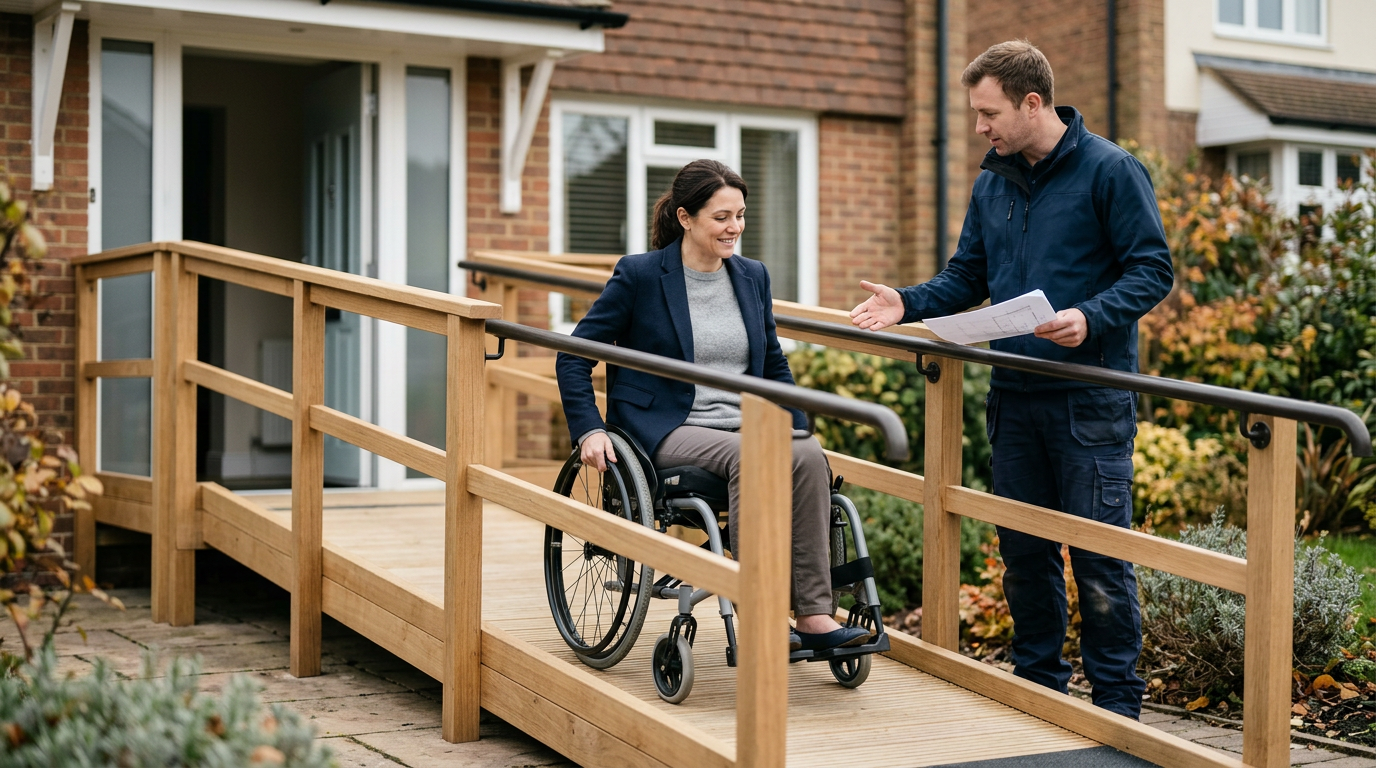
- Ramps or a no-step entry to replace stairs
- Wider doorways for a wheelchair
- Lowered or leveled thresholds
Bathrooms
- Roll-in showers with a bench or seat
- Grab bars near the toilet and shower
- Accessible sinks and toilets with room to transfer safely
Bedroom, living space, and kitchen
- Open layouts with room to turn a wheelchair
- Lowered counters, cabinets, and appliances
- Reachable light switches, outlets, and controls
Flooring and higher-level needs
- Smooth, low-resistance flooring in place of carpet and thresholds
- Ceiling track lifts to help with transfers
- Environmental controls (voice- or switch-operated lighting, doors, and temperature)
Doctors and life care planners often tie these needs to how the injury is classified. The American Spinal Injury Association publishes the International Standards for Neurological Classification of Spinal Cord Injury (ISNCSCI). This standard pairs a neurological level with an ASIA Impairment Scale (AIS) grade. The grades run from A (complete) to E (normal).
A person with a high cervical, AIS-A injury usually needs far more support. That can include ceiling lifts, environmental controls, and space for a caregiver. Someone with an incomplete, lower-level injury may need less.
This classification is more than medical shorthand. It is a documented way to explain, and price, what a home actually needs.
Accessible vehicles and transportation costs
An accessible vehicle is often one of the largest and most repeated costs after paralysis. Many people need a wheelchair-accessible van. It may need a lowered floor, a ramp or lift, tie-downs, and hand controls or other adaptive driving equipment.
Transportation isn’t optional. It is how a person reaches doctors, therapy, work, and community life.
This is a repeat cost, not a one-time purchase. Vans wear out. Lifts and controls fail. Every replacement vehicle must be adapted again. That is why accessible-vehicle costs belong in a paralysis claim. They are future expenses spread across a lifetime, not a single line item.
How much do home and vehicle modifications cost?
Costs vary widely. So an honest answer depends on the specific case. We won’t quote a single dollar figure, because that would mislead you. Several factors drive the number:
- The level and completeness of paralysis. A higher, more complete injury (see AIS grade above) usually means more equipment and more structural change.
- The home itself. Some homes can be adapted room by room. Others cannot be made safe and must be largely rebuilt or replaced.
- The vehicle tier. A simple hand-control installation costs far less than a full wheelchair-accessible van with a lowered floor.
The key point: these are lifetime costs. A ramp today may need to become a ceiling lift in ten years. A qualified life care planner or rehabilitation expert projects these totals across the person’s expected lifespan. That is how a defensible number is built.
Have questions about what happened?
Ask our team directly. The first conversation is free, confidential, and there is no obligation to continue.
Does insurance or a grant cover home modifications?
Usually very little. As general information, most private health insurance, Medicare, and Medicaid focus on medical treatment, not construction. They cover little to none of the structural changes a home needs.
Some partial help may exist, depending on whether you qualify:
- Medicaid Home and Community-Based Services (HCBS) waiver programs, which vary by state
- VA Specially Adapted Housing (SAH) and Special Housing Adaptation (SHA) grants for eligible veterans
- Nonprofit grants and disability-assistance programs
These sources are often limited, competitive, or capped. They rarely cover the full cost of a truly accessible home. That gap is exactly why recovering these costs through a legal claim matters.
Eligibility rules change and differ by state. So treat this as general information, not benefits advice.
Can you recover modification costs in a paralysis injury claim?
Yes. When someone else’s negligence caused the paralysis, home and vehicle modifications can be part of your damages. They count as future medical, care, and living costs.
A legal claim is different from an insurance benefit or grant. It seeks full accountability from the at-fault party. It aims at what you actually need to rebuild your life, not a program’s capped amount.
This applies no matter how the paralysis happened. It could be a truck accident, another serious crash, or a violent attack that a property owner failed to prevent.
Were you assaulted, shot, robbed, or otherwise attacked at an apartment complex, a parking lot or garage, a hotel, a bar, a gas station, or a store? Were you hurt because the property owner failed to provide reasonable security — like working locks and gates, good lighting, cameras, or guards? If so, you may have a claim against that owner.
Lawyers call this negligent security. But you don’t need to know the term to have a case. A paralyzing gunshot or head injury from such an attack carries the same lifetime accessibility costs as any crash-related injury. Those costs can be part of the claim against the owner whose failures allowed the harm.
We can describe what a claim may seek. We cannot promise a specific outcome or dollar amount. No ethical lawyer can.
How future modification costs are documented and proven
Future costs are proven with a life care plan built by qualified experts. This plan projects everything a person will need over a lifetime. It attaches realistic costs to each item. Building that proof usually includes:
- Contractor and vendor estimates for the specific home and vehicle changes
- Occupational therapy assessments describing daily function and equipment needs
- Physician documentation tying the changes to the injury and its ASIA/AIS classification
- Replacement and inflation accounting, so future van and equipment replacements are included
Practical records help. Keep receipts, written estimates, and medical documentation in one place. This is how “you can recover this” becomes a documented, defensible number inside the larger catastrophic injury claim.
How much compensation is possible for paralysis?
There is no fixed number. Value depends on several things. These include the injury’s severity, lifetime care needs, lost earning capacity, the daily support a person may need, and the specific facts of the case.
Home and vehicle modifications are one important piece of a much larger picture. Because each case is different, any honest lawyer will insist on an individual evaluation before saying anything about value.
Two Florida rules shape a claim. First, the deadline to file most negligence lawsuits is generally two years for claims accruing on or after March 24, 2023, under Fla. Stat. §95.11.
Second, Florida follows modified comparative negligence. This means fault can be shared. A person found more than 50% at fault for their own injury generally recovers nothing. And any recovery is reduced by the percentage of fault assigned to them, under Fla. Stat. §768.81. Deadlines and rules can differ in other states. That matters because we take catastrophic cases nationwide.
For more on how these injuries and claims work, see our pages on spinal cord injuries and paralysis, paraplegia, and quadriplegia.
Want to know where you stand?
Tell us what happened and our team will walk you through the options available to you, at no cost.
Talk to a paralysis injury lawyer about your accessibility costs
Rebuilding a home and finding the right vehicle can feel overwhelming while you are still healing. The goal of a claim is not just paperwork. It is restoring the independence and dignity that a permanent injury takes away. You shouldn’t have to carry the cost of someone else’s negligence alone.
A free case evaluation can help identify which accessibility costs may be recoverable in your situation. Our licensed attorneys are admitted to the Florida Bar. We serve clients across Florida, including Miami, Orlando, Tampa, and Jacksonville. We take catastrophic cases nationwide and offer resources in English and Spanish.
If you or a loved one is living with paralysis after a serious accident or an attack on unsafe property, contact us for a free case evaluation.
Frequently asked questions
Does health insurance cover home modifications after a spinal cord injury?
Usually not. As general information, most private insurance, Medicare, and Medicaid cover little to none of the structural home changes. So many families rely on grants or a legal claim to close the gap.
What is the most common home modification needed after a spinal cord injury?
Bathroom and entrance changes are among the most common. These include roll-in showers, grab bars, ramps, and wider doorways for safe wheelchair access. Higher, more complete injuries often add ceiling lifts and environmental controls.
Can I recover the cost of a wheelchair-accessible vehicle in a paralysis claim?
Yes. An accessible van and adaptive driving equipment can be included as future costs. These vehicles must be replaced and re-adapted over a lifetime.
How are future modification costs proven in a case?
Through a life care plan. It is supported by contractor estimates, occupational therapy assessments, and physician documentation that project lifetime needs and future replacements.
Can I recover these costs if the paralysis came from an attack on someone else’s property?
Possibly. If a property owner failed to provide reasonable security and you were paralyzed in a violent attack, you may have a claim that includes accessibility costs.
How long do I have to file a paralysis claim in Florida?
Generally two years for claims accruing on or after March 24, 2023, under Fla. Stat. §95.11. Other states have different deadlines, so contact a lawyer promptly.
Common Home Modifications After Paralysis
Ramps & Entryways
Wheelchair ramps, widened doorways, and level thresholds so you can safely enter and move through your own home.
Bathroom Accessibility
Roll-in showers, grab bars, accessible sinks, and adapted toilets — often the single most needed change after a spinal cord injury.
Kitchen & Living Spaces
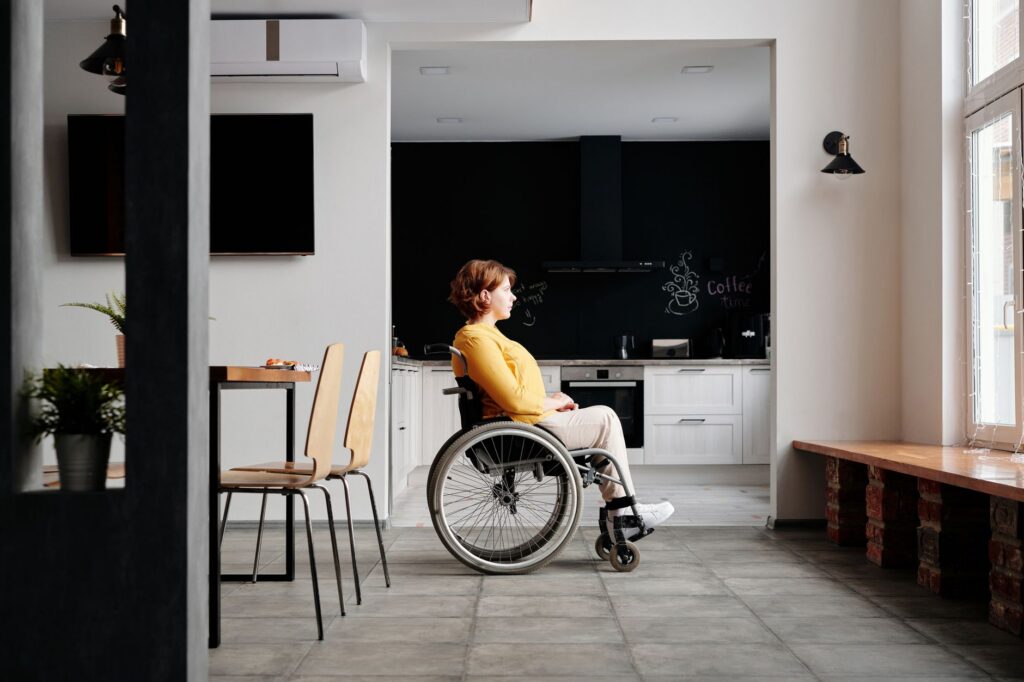
Lowered counters and cabinets, widened hallways, and reconfigured rooms so daily life is possible from a wheelchair.
Lifts & Elevators
Ceiling track lifts, stair lifts, or residential elevators for multi-level homes, plus adapted vehicle needs in some cases.
Health Insurance Usually Won't Pay for This
As general information, most private insurance, Medicare, and Medicaid cover little to none of the structural changes a home needs after paralysis. Many families end up relying on grants or a legal claim to close the gap. Don't assume these costs are covered — document them early.
How We Help Prove Home Modification Damages
Documenting the Full Cost
We work with life-care planners and contractors to itemize every modification your injury makes necessary — now and over your lifetime.
Standing With Your Family
Paralysis affects the whole household. We build the claim around how your home must change so life can go on with dignity.
Planning for the Long Term
Needs change over time. A well-built claim accounts for future replacements, maintenance, and evolving accessibility requirements.
Pursuing the At-Fault Party
When someone else's negligence — a truck crash, unsafe property, or other wrongdoing — caused the injury, these costs may be recoverable from them.