

Spinal Cord Injuries · Florida & Nationwide
The First Year After a Spinal Cord Injury: What Your Family Can Expect
A spinal cord injury changes life in an instant. The months that follow bring hard medical decisions, mounting costs, and questions no one prepared you for. Here is a plain-language guide to that first year — and how a lawyer fits into it.
By CHG Lawyers · Published August 02, 2026
The First Year After a Spinal Cord Injury: A Family’s Guide to What Comes Next
The first year after a spinal cord injury usually has three stages. First comes emergency hospital care. Next comes inpatient rehab. Then comes the return home to daily life.
Most measurable nerve improvement happens in the early months. But progress can continue longer. This year is also when families face the highest medical costs. It brings the hardest emotional changes too.
If you’re reading this right after a diagnosis, you’re likely scared and overwhelmed. That’s normal. Below is a plain-language map of the next 12 months. It covers what often happens—medically, emotionally, and practically. Every injury and every recovery is different. This page is general information, not medical or legal advice.
This is a supporting guide. For the full overview, see our paralysis injury resources.

Not sure what your next step is?
Talk it through with our team — the first consultation is free, confidential, and carries no obligation.
A quick word on the numbers you’ll see online
As you research, you’ll find a lot of statistics. Not all sources are equal. Two names come up most often. They do different jobs:
- The National Spinal Cord Injury Statistical Center (NSCISC) at the University of Alabama at Birmingham is the U.S. data authority. Its yearly SCI facts and figures reports track new injuries each year. They also track causes, ages, and outcomes. The numbers come from a federally funded database of SCI patients.
- The Christopher & Dana Reeve Foundation publishes prevalence estimates. These estimate how many people are living with paralysis from all causes. The Foundation also offers family support resources.
We cite each source only for what its own page says. Be careful with pages that give a big number with no source. Also watch for pages that blur “new injuries this year” with “people living with paralysis.” Those are different measures. Mixing them creates misleading figures.
Understanding the diagnosis: complete vs. incomplete injury and injury level
Doctors describe a spinal cord injury by two things. One is how “complete” it is. The other is where it happened on the spine. Both shape the year ahead.
A complete injury means near-total loss of feeling and movement below the injured area. An incomplete injury means some feeling or movement remains. According to the Mayo Clinic, incomplete injuries leave more function intact. That often affects recovery potential.
Injury level matters too. Higher injuries in the neck (cervical) can affect the arms, hands, trunk, and legs. This is often called tetraplegia or quadriplegia. Lower injuries in the mid or lower back (thoracic or lumbar) may affect the trunk and legs. This is called paraplegia.
What “ASIA scale” and “spinal shock” mean
In the first weeks, your medical team may use confusing terms. The ASIA Impairment Scale is the standard tool doctors use to grade the injury. The American Spinal Injury Association created it. The test is called the ISNCSCI exam. It classifies both the level and the completeness of the injury. It uses grades from A (complete) to E (normal).
You may also hear “spinal shock.” This is a temporary state right after injury. Reflexes and function shut down for a while. It can make early predictions unreliable. So doctors often wait before giving a firm outlook. For more on recovery potential, see our guide on whether you can recover from paralysis.
Stage 1: Acute hospital care (the first days and weeks)
The first goal is to keep the injury from getting worse. Doctors work fast. They stabilize the spine, control bleeding, and protect what function remains.
This stage often includes surgery or bracing to hold the spine steady. Higher neck injuries may need breathing support. Many patients spend this time in an intensive care unit (ICU). There, staff watch blood pressure, breathing, and signs of spinal shock closely.
This is a good time to start asking questions. Ask about the injury level. Ask whether it’s complete or incomplete. Ask about the ASIA grade and the next steps. Write down the answers. You’ll be hearing a lot at once.
Keep every record from this stage. Hospital notes, imaging, and surgical reports document the injury from day one. In the catastrophic-injury cases our attorneys handle, these early records often matter later. That’s true when someone else caused the crash or attack.
Stage 2: Inpatient rehabilitation
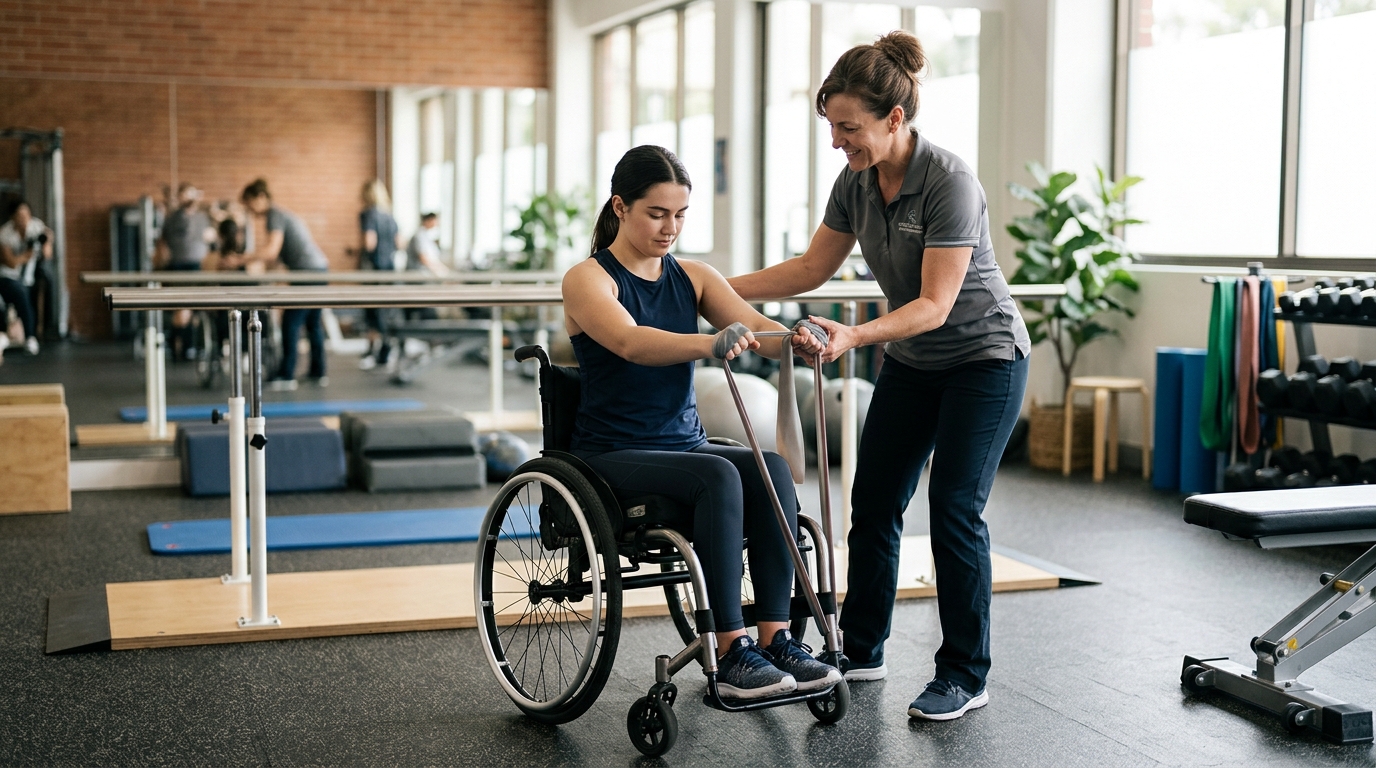
Once the patient is stable, care usually moves to a specialized spinal cord injury rehab program. This is where the real work of rebuilding daily life begins.
Rehab stays vary widely. Some last a few weeks. Others last months. It depends on the injury level, complications, and how the body responds.
You’ll meet a full team during this stage:
- Physiatrists — doctors who focus on rehabilitation medicine
- Physical therapists — who rebuild strength and mobility
- Occupational therapists — who teach daily-living skills like dressing and bathing
- Rehabilitation nurses — who manage medical care and prevent complications
- Psychologists — who support emotional adjustment
- Social workers — who help plan the return home
Early rehab focuses on function and independence. That means building strength, learning to use a wheelchair, and mastering adaptive self-care skills. For higher injuries, this may mean learning to direct caregivers rather than do tasks alone.
Families are part of this training. Rehab staff teach loved ones how to help safely, from transfers to skin checks. This preparation makes the homecoming smoother and safer.
How long does recovery take, and what improvement is realistic?
First, it helps to define what “recovery” means. Online pages often reduce it to one thing: walking. It isn’t just that.
Recovery runs along two tracks at once:
- Neurological recovery — the return of feeling and voluntary movement below the injury. This is what most people picture. It’s largely set by whether the injury is complete or incomplete.
- Functional recovery and independence — regaining the ability to manage your own body and life. This includes transfers, self-care, driving, working, parenting, and directing your own care. This track keeps improving for many people long after nerve change has leveled off.
A person can make huge progress on the second track while the first stays mostly fixed. They can still build a full, self-directed life. Judging recovery only by whether someone walks misses most of what recovery is.
How long does it take to recover from an incomplete spinal cord injury? With an incomplete injury, some function often returns during the first months. Improvement can continue for a year or more. The range is wide. It depends on the injury level, its severity, and each person’s body. No two recoveries follow the same path.
What are the chances of walking again after a complete spinal cord injury? After a truly complete injury, the chance of walking on your own is low. It’s dishonest for anyone to promise otherwise. Some people regain limited movement. But rehab focuses on getting the most independence in whatever form that takes. False hope helps no one.
Can a person recover from a spinal cord injury? Yes—but as above, “recovery” means more than walking. It includes regaining function, building independence, and adapting to a new way of living. Many people rebuild full, meaningful lives even when the injury is permanent.
One serious note on this first year: the World Health Organization reports that the risk of death is highest in the first year after a spinal cord injury. It stays higher than the general population afterward. That’s why steady medical follow-up during these 12 months truly matters.
Have questions about what happened?
Ask our team directly. The first conversation is free, confidential, and there is no obligation to continue.
Medical complications to watch for in the first year
Certain complications are common in the first year. Catching them early can prevent serious harm. Ongoing monitoring is a core part of survival and recovery.
The Mayo Clinic lists complications that need active management, including:
- Pressure injuries (pressure sores) from sitting or lying in one position too long
- Bladder and bowel control problems
- Respiratory problems, especially with higher injuries
- Blood clots and circulatory issues
- Muscle spasticity (tightness and spasms)
- Chronic pain
- Depression
One condition deserves special attention: autonomic dysreflexia. This is a dangerous, sudden spike in blood pressure. It can happen with injuries at or above the T6 level. It’s often triggered by something as simple as a full bladder or a pressure sore. It’s a medical emergency. Families should learn the warning signs before leaving rehab. These include a pounding headache, sweating, and flushing above the injury.
A steady care team is your best protection. Missed follow-up visits and skipped monitoring can turn a manageable problem into a crisis. These complications also raise long-term costs. That matters when someone else’s negligence caused the injury.
Adjusting emotionally: you and your family
Emotional adjustment is as real and important as physical recovery. It takes time. Grief, anger, and fear are normal responses—not signs of weakness.
How do I adjust to life after a spinal cord injury? Give yourself permission to grieve. Lean on people you trust. Ask for mental-health support early rather than waiting for a crisis. Adjustment is a process, not a single moment. It often moves in waves, not a straight line.
Depression is common after this kind of injury, and it’s treatable. Talking to a psychologist or counselor isn’t a last resort. It’s part of good care. Rehab teams usually include mental-health support for exactly this reason.
The injury affects the whole family. Spouses, parents, and children often take on new roles. A partner may become a caregiver. A child may take on adult responsibilities. These shifts strain relationships. It helps to name them openly.
Peer support can be powerful. Talking with someone who has lived through a spinal cord injury offers hope that clinical facts can’t. The Christopher & Dana Reeve Foundation connects families with peer mentors and community resources. You are not the first family to walk this road.
Coming home: living space, equipment, and daily life
The return home takes planning. That planning should start during rehab, not after discharge. A home that worked before the injury may need real changes.
Common home modifications include:
- Ramps for entrances
- Widened doorways for wheelchair access
- Accessible bathrooms with roll-in showers and grab bars
- Lowered counters and reachable storage
Assistive equipment also becomes part of daily life. This includes a wheelchair, transfer aids, and a hospital-style bed. It also includes adaptive tools for cooking, dressing, and communication. Rehab staff help match equipment to the person’s needs.
Building a daily-care routine takes trial and error. Some families arrange home health aides or attendant care, especially with higher injuries. Others manage care within the family. If your family is taking on caregiving, see our guide on family caregiving and paralysis claims.
Returning to work, school, and community
Many people with spinal cord injuries return to work, school, and community life over time. This often happens beyond the first year. It’s usually a longer arc, not a first-year milestone—and that’s okay.
Vocational rehabilitation helps people retrain, find accessible jobs, or return to their old field with support. Workplace accommodations—like accessible entrances or adjusted duties—are protected under the Americans with Disabilities Act. You have the right to reasonable adjustments.
Driving is often possible again. It takes adaptive hand controls and special training. Getting back behind the wheel restores independence. It reconnects people to their communities.
Community reintegration means getting back to friends, hobbies, worship, and errands. It rebuilds identity and confidence. Progress here often continues for years. The first year lays the foundation, but the story doesn’t end when it closes.
Want to know where you stand?
Tell us what happened and our team will walk you through the options available to you, at no cost.
The financial reality of the first year
The first year after a spinal cord injury is often the most expensive year of a person’s life. Emergency care, surgery, ICU stays, inpatient rehab, equipment, and home changes add up quickly. The NSCISC tracks average first-year and recurring costs by injury level in its facts and figures reports. The pattern is consistent: higher, more complete injuries cost far more. And much of the spending recurs every year for life.
On top of medical bills, families often lose income. The injured person may be unable to work. A family member may cut back hours to provide care. These losses stack up while the bills pile on.
Insurance rarely covers everything. Coverage gaps, caps, and denials are common. Long-term needs stretch far beyond the first year. These include ongoing therapy, replacement equipment, and future care.
When a spinal cord injury results from a truck crash, an unsafe property, or another party’s negligence, many of these costs may be recoverable through a claim. To learn how these losses are calculated, see our guide on how insurers value paralysis claims.
If someone else’s negligence caused the injury
If a preventable act caused the injury, the injured person or family may have a legal claim against the at-fault party. That could be a negligent truck driver, a trucking company, or a property owner who failed to keep people safe.
That last point matters more than many people realize. Say you or a loved one was assaulted, shot, robbed, sexually assaulted, or otherwise attacked on someone else’s property. This could be at an apartment complex, a parking lot or garage, a hotel, a bar, a gas station, or a store. The owner may be responsible if they failed to provide reasonable security. That means working locks and gates, lighting, cameras, or guards. Lawyers call this “negligent security.” But you don’t need to know the term to have a claim.
Timing matters. Under Fla. Stat. §95.11, the deadline to file most personal-injury lawsuits in Florida is generally two years. That applies to cases accruing on or after March 24, 2023. Missing that deadline can end a claim before it starts.
Florida also uses a shared-fault rule. Under Fla. Stat. §768.81, a person found more than 50% at fault for their own injuries generally cannot recover damages. This is one reason early documentation and legal advice help.
CHG Personal Injury Lawyers is made up of licensed attorneys admitted to the Florida Bar. The firm handles catastrophic-injury cases nationwide. A free case evaluation is a no-pressure talk about what happened and your options.
We can’t promise any specific outcome, and no honest lawyer can. But if a preventable injury upended your family, you deserve to understand your rights. Contact us for a free, no-obligation case evaluation.

Frequently asked questions
How long does it take to recover from an incomplete spinal cord injury?
Some function often returns during the first several months after an incomplete injury. Improvement can continue for a year or more. The exact timeline depends on the injury level and severity, so no two recoveries are alike.
What are the chances of walking again after a complete spinal cord injury?
After a truly complete spinal cord injury, the chance of walking on your own is low. No one can honestly promise it. Rehab focuses on getting the most independence in whatever form is realistic for that person.
Can a person recover from a spinal cord injury?
Yes, but recovery means more than walking. It spans neurological recovery (return of feeling and movement) and functional recovery (independence in daily life). Many people rebuild full, meaningful lives even when the injury is permanent.
What complications are most common in the first year after a spinal cord injury?
Common first-year complications include pressure injuries, bladder and respiratory problems, blood clots, spasticity, chronic pain, and autonomic dysreflexia. Consistent medical follow-up helps catch these early.
How long does inpatient rehabilitation last after a spinal cord injury?
Inpatient rehab can last from a few weeks to several months. It depends on the injury level and any complications. The care team sets goals based on each person’s progress and needs.
Which spinal cord injury statistics can I trust?
For U.S. numbers on new injuries, causes, and costs, the NSCISC is the recognized data authority. For estimates of how many people are living with paralysis and for family resources, the Reeve Foundation is a reliable source. Be wary of pages citing large numbers with no source.
This article is general information about the first year after a spinal cord injury. It is not medical or legal advice. For guidance about your specific situation, speak with a qualified doctor and a licensed attorney.
The Phases of That First Year
Acute Care & Stabilization
The earliest days focus on stabilizing the injury, surgery, and preventing further damage. Families are often making decisions while still in shock.
Inpatient Rehabilitation
Rehab teaches new ways to move, communicate, and manage daily life. For incomplete injuries, some function often returns over these months and can keep improving for a year or more.
Coming Home
The return home frequently means home modifications, adaptive equipment, and ongoing care — costs that add up quickly and last a lifetime.
The Long-Term Picture
By the end of the first year, the medical outlook is clearer. This is when the full lifetime cost of care comes into focus and why documenting everything early matters.
Don't Sign Anything From an Insurer First
Early in the first year, an insurance company may offer a quick settlement before the lifetime cost of a spinal cord injury is known. Once you accept, you generally cannot go back. Talk to a lawyer before you sign or give a recorded statement.
Common Questions Families Ask
How long does recovery take after an incomplete injury?
Some function often returns during the first several months, and improvement can continue for a year or more. Because timelines depend on the level and severity of the injury, no two recoveries are alike.
What are the chances of walking again after a complete injury?
Outcomes vary widely and depend on many medical factors. No lawyer or website can promise a specific recovery — these are questions for your treating doctors, who know your case.
Who pays for a lifetime of care?
If someone else's negligence caused the injury, a claim can seek compensation for medical bills, future care, lost income, and more. The value depends on the full lifetime cost, not just current expenses.
How soon should we contact a lawyer?
Sooner is better. Evidence can disappear, deadlines apply, and early guidance helps protect your claim while your family focuses on care.