

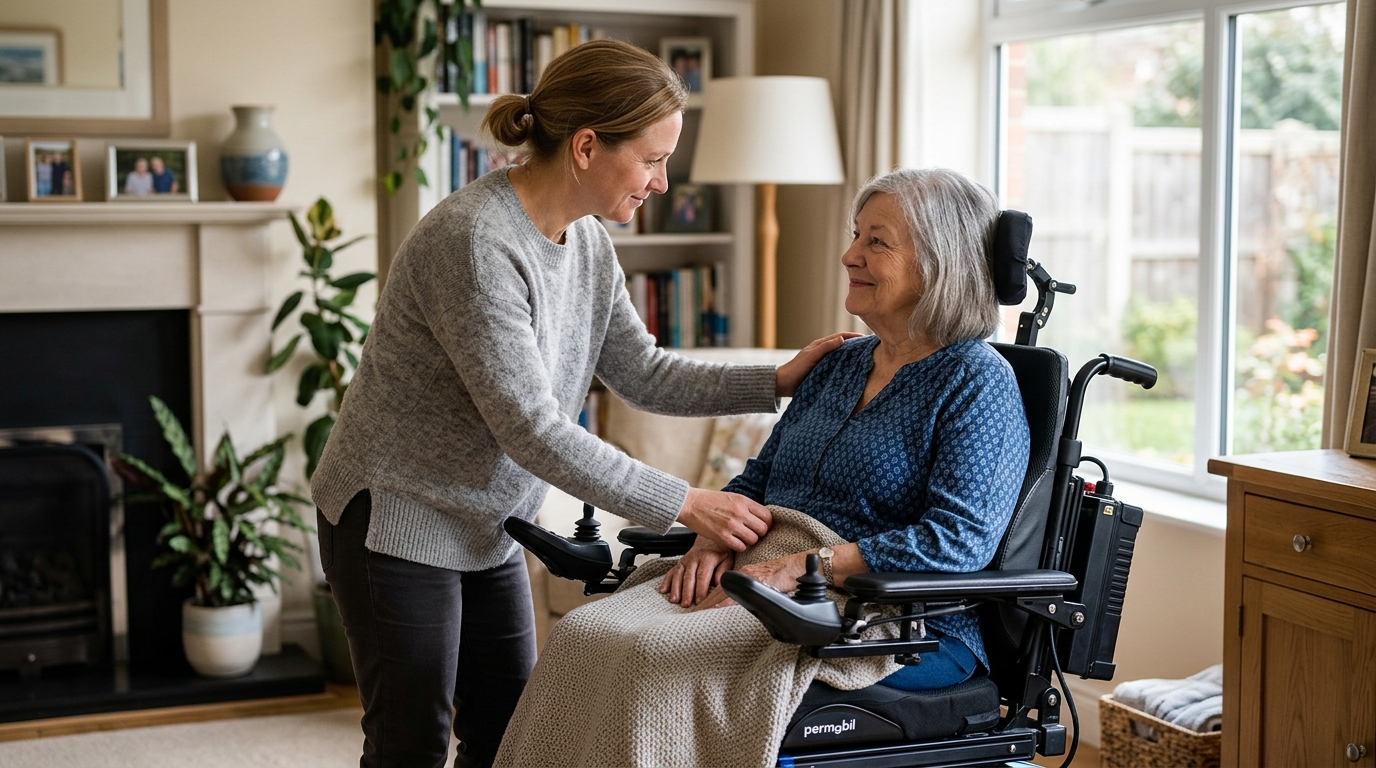
Catastrophic Injury Support · Florida & Nationwide
Your Loved One Is Paralyzed. Here's How to Steady Yourself in the First Days.
A spinal cord injury changes life in an instant. This plain-language guide walks families through the first practical steps — from medical care to protecting your legal rights — with empathy and clear direction.
Guidance You Can Rely On
Licensed
Florida Bar–admitted attorneys
Nationwide
We take catastrophic-injury cases across the U.S.
Bilingual
Resources in English & Spanish
No Fee
Free, no-obligation case evaluation
By CHG Lawyers · Published July 25, 2026
Caring for a Newly Paralyzed Loved One: A Calm First-30-Days Family Guide
If someone you love was just paralyzed, you do not have to plan the whole road ahead this week. You only have to take the next right step. This guide gives you a calm, week-by-week plan for the first 30 days. It also explains, in plain language, what your family’s legal rights may be if someone else caused the injury.
We wrote this for families facing serious, permanent paralysis — paraplegia or quadriplegia — after a spinal cord injury. If that is you, the days ahead feel like too much to hold. That is a normal reaction to an abnormal event. Read one section at a time.
One note we will repeat: we are not your loved one’s medical team. Nothing here is medical advice. Every question about diagnosis, outlook, and daily care belongs to the doctors and therapists treating your family member. They know details no article ever will.

Not sure what your next step is?
Talk it through with our team — the first consultation is free, confidential, and carries no obligation.
The First 30 Days: A Calm, Ordered Framework
Most guides hand you a scattered list of tips. Families under this much stress do not need 40 loose suggestions. You need to know what matters this week and what can wait. Here is a simple order.
Week 1 — Stabilize and understand (in the hospital)
Your loved one is in acute care. There, the medical goal is to stabilize the injury. Your job this week is smaller than it feels:
- Ask the team to explain the injury in plain words. What is the level of the spinal cord injury (roughly, how high up)? Is it “complete” or “incomplete”? Doctors classify injuries with a standard method from the American Spinal Injury Association (ASIA). Ask them to translate the classification into plain daily-life terms.
- Start one place for records — a phone folder or a binder. That is all Week 1 needs from you on paperwork.
- Write your questions down before rounds. It is hard to think clearly under shock. A three-line list keeps you from going blank when the doctor is finally there.
You are not expected to plan rehab or fix up a home this week. You are expected to listen, write things down, and rest when you can.
Week 2 — Find the discharge planner and choose rehab
Ask early — ideally in the first few days — to speak with the discharge planner or case manager. This is the most useful person in the building for your next stage.
Many families miss one key point. An acute-care hospital treats the injury. A specialized spinal cord rehabilitation program teaches your loved one (and you) how to live and function afterward. These are different steps.
Ask about programs with spinal cord injury experience. Ask what your insurance will approve. Getting this right shapes the years that follow.
Week 3 — Prepare the home and the money trail
Two things start now, side by side:
- A home assessment. Ask whether an occupational or physical therapist can check your home before discharge. Many rehab programs offer this. See the home section below.
- A cost log. From day one, save every receipt and bill tied to the injury. See the funding section below. This one habit protects both benefit applications and any legal claim.
Week 4 — Build the support net and pace yourself
By now the reality is settling in. Set up rotating help. Look into respite care. And if the injury may have been someone else’s fault, learn your legal options before deadlines start running.
None of these is a race you must win today. They are foundations you lay so week five is not lonelier than week one.
You can go deeper anytime on our paralysis, paraplegia, and quadriplegia and spinal cord injuries pages.
Understanding What Paralysis Will and Won’t Mean
Only your loved one’s treating team can speak to their specific outlook. Be careful with internet timelines that promise a set recovery.
Here are the plain-language words you will hear. Paraplegia is paralysis of the lower body. Tetraplegia — also called quadriplegia — affects the arms, trunk, legs, and pelvic organs. The Mayo Clinic explains that a spinal cord injury can cause loss of both movement and feeling below the level of injury.
A “complete” injury means no movement or feeling below the injury. An “incomplete” injury means some signals still get through. Mayo Clinic notes that this difference affects the outlook. That is why the outlook is a conversation with the care team, not a web search.
Families ask, “Will my loved one ever walk again?” The honest answer is that it depends on the type and severity of the injury. Some people regain function, and many do not. Rehabilitation focuses on maximizing independence and function, not on a promised cure. When you want a real answer, ask the treating doctors and therapists.
Preparing the Home for Safety and Mobility
Start with the three rooms that matter most: the entrance, the bathroom, and the bedroom.
Common changes include:
- A ramp or level, threshold-free entry
- Wider doorways so a wheelchair can pass
- Grab bars and a roll-in or accessible shower
- A bed set up for safe transfers and repositioning
Ask the rehab team — not a store clerk — which wheelchair, transfer equipment, and lifts fit your loved one’s abilities. The wrong equipment causes falls.
Here is the step families miss: request a home evaluation by an occupational or physical therapist before discharge. A therapist walks your actual rooms and spots hazards you cannot see. Then they suggest fixes matched to your loved one’s exact function. One visit can prevent a fall or a pressure injury that would cost months of recovery.
Daily Care and Serious Health Risks — Ask Your Team
Good daily care pairs dignity with careful watching. Your loved one is still the decision-maker. Your job is to watch closely and know when to call for help.
On dignity: ask before you help, explain what you are doing, and involve your loved one in every choice you can. Paralysis changes the body. It does not change a person’s right to direct their own life. Treating that independence as central is not a courtesy — it is care.
On watching closely: your care team will train you in the specific skills — this article does not. But knowing the risks helps you ask the right questions. The Mayo Clinic describes serious problems families watch for:
- Pressure sores from staying in one position too long
- Bladder and bowel control problems
- Blood clots and circulation issues
- Breathing trouble, especially with higher injuries
- Autonomic dysreflexia — a sudden, dangerous spike in blood pressure that can be a medical emergency
Ask your team to teach you the warning signs of each. Ask exactly when to call the doctor and when to call 911. Repositioning, skin checks, and steady routines all help prevent these — but follow their instructions, not a checklist online.
Emotional and Identity Adjustment Matters Just as Much
Adjusting to life after paralysis is an emotional journey for the whole family, not only the injured person.
Grief, anger, and sadness are normal. So is depression. If your loved one — or you — feels hopeless, withdrawn, or unable to cope for more than a couple of weeks, contact a mental-health professional. Asking for help is strength.
Rebuilding matters too. New routines, restored relationships, and renewed purpose all help people move forward. Many people living with paralysis lead full, meaningful lives. The Christopher & Dana Reeve Foundation reports that about 5.4 million people in the United States — roughly 1 in 50 — live with some form of paralysis. Your family is not the first to walk this road, and you are not alone on it.
Families also ask what to give someone with paraplegia. The best gifts support independence and connection — adaptive tools, an accessible outing, a subscription they will enjoy, or your time and presence. Better still, ask what would actually help. The question itself honors their independence.
Have questions about what happened?
Ask our team directly. The first conversation is free, confidential, and there is no obligation to continue.
Family Caregiving or a Personal Care Attendant?
The choice comes down to time, physical demands, and the real risk of burnout. There is no single right answer — only the right one for your family.
A personal care attendant (PCA) helps with bathing, dressing, transfers, and other daily needs. Signs your family may need one: exhaustion, back or shoulder injuries from lifting, missed work, or one person carrying the whole load alone.
Weigh the trade-offs honestly. Family care is personal and can cost less, but it is hard on the body and the heart. Paid care brings training and relief, but it costs money and takes effort to arrange.
To find a PCA, families often start with rehab-team referrals, home-health agencies, or local disability groups. Check candidates carefully: review references, confirm training, and run a trial period if you can. Whatever you choose, set limits you can keep. Caregiving should not swallow one person’s whole life.
Taking Care of Yourself as the Caregiver
You cannot pour from an empty cup. Protecting your own health is part of caring for your loved one.
Build a support network before you are desperate. Rotate duties among family members. When people say “let me know if you need anything,” give them a specific task — a meal Tuesday, an hour of company Thursday.
Respite care means short breaks where someone else takes over. It is not a luxury. It is what keeps a caregiver going for the long haul. The Reeve Foundation offers caregiver resources and a virtual support group. Give yourself permission to rest, to grieve, and to ask for help. You matter in this story too.
Paying for Care: Insurance, Benefits, and the Big Question of Cost
Lifelong paralysis care can be very expensive. So learn your funding sources early and track every cost from day one.
Just how expensive? The National Spinal Cord Injury Statistical Center (NSCISC) estimates that first-year costs for high tetraplegia can top $1.3 million. Each year after that can run into the hundreds of thousands of dollars. And those figures do not include lost wages. This is not meant to frighten you. It is why the funding and legal sections below matter so much.
Common funding sources:
- Private health insurance for medical care and some equipment
- Medicaid, which covers many long-term-care needs based on eligibility
- Medicare, for those who qualify
- Social Security disability benefits for income support
Families ask, “Will Medicare pay a family member to be a caregiver?” In general, Medicare does not pay family members directly for personal caregiving. Some Medicaid programs and other benefits may. But the rules vary by program and state, so check directly with each one, because coverage changes.
From the very start, track every expense tied to the injury: medical bills, equipment, home changes, medications, mileage to appointments, and lost wages. These records protect your family for benefit applications and — as you will see next — for any legal claim.
When Someone Else Caused the Paralysis: Your Legal Rights
If another person’s carelessness caused the paralysis, your family may have a legal claim. It can help recover the huge costs you never chose to take on.
Think about how the injury happened. Was your loved one hurt in a truck crash? Injured by medical negligence? Or attacked — assaulted, shot, or robbed — on someone else’s property that failed to keep people safe? That could be an apartment complex, a parking garage, a hotel, a bar, a gas station, or a store.
When a property owner ignores basic protection — working locks and gates, lighting, cameras, or guards — and someone is hurt as a result, the family may have a claim against that owner. The legal name for that kind of claim is negligent security. But you do not need to know the term to have the right.
A personal-injury claim is meant to help pay the lifelong costs the injury created. That includes medical care, rehabilitation, wheelchairs and equipment, home changes, lost income, and long-term attendant care. Given the NSCISC figures above, those costs can reach into the millions over a lifetime. The goal is to shift that burden onto the party that caused the harm, not your family.
Two Florida rules matter.
First, deadlines apply. Under Fla. Stat. §95.11, many negligence claims arising on or after March 24, 2023 generally give you two years to file a lawsuit. Miss it, and you may lose the right to recover anything.
Second, Florida uses a shared-fault rule. Under Fla. Stat. §768.81, a person found more than 50% at fault for their own harm generally cannot recover damages.
Every case is different, and no one can promise a result. But learning your options costs nothing and helps you plan. Read more on our catastrophic injury claims, truck accidents, and negligent security pages.
Want to know where you stand?
Tell us what happened and our team will walk you through the options available to you, at no cost.
How CHG Personal Injury Lawyers Can Help
CHG Personal Injury Lawyers represents victims of catastrophic, life-altering injuries — including spinal cord injuries and paralysis. Our licensed attorneys are admitted to The Florida Bar. We take cases nationwide and offer help in English and Spanish.
A free case evaluation is a simple, no-pressure conversation. You tell us what happened. We listen, answer in plain language, and explain whether you may have a claim. No obligation, no fee to talk.
Our aim is to protect the funds your loved one needs for a lifetime of care. That way your family can focus on healing instead of fighting insurers alone.
If someone else’s negligence caused your family member’s paralysis, reach out for a free, no-obligation case evaluation: Contact CHG Personal Injury Lawyers.
Frequently Asked Questions
Can a quadriplegic ever walk again?
It depends on the type and severity of the injury. Only the treating medical team can answer for a specific person. Some people regain function, and many do not. Rely on your loved one’s own doctors rather than online timelines.
Will Medicare pay for a family member to take care of a disabled person?
In general, Medicare does not pay family members directly for personal caregiving. Some Medicaid programs and other benefits may. Because rules vary by program and state, verify with each program directly.
What is a good gift for a paraplegic?
The best gifts support independence and connection, such as adaptive tools, an accessible outing, or simply your time. Ask your loved one what would actually help them most.
How do I care for a paralyzed person safely at home?
Follow the training your care team provides. Keep the home free of fall hazards. Watch for serious problems like pressure sores and autonomic dysreflexia. Always call the doctor or 911 when warning signs appear.
How long do I have to file a claim if someone else caused the paralysis?
Under Fla. Stat. §95.11, many Florida negligence claims arising on or after March 24, 2023 must be filed within two years. Because deadlines and exceptions vary, speak with a licensed attorney about your situation as soon as you can.
First Steps for Families
Focus on Medical Care First
Let the treating team stabilize your loved one. Ask questions, take notes, and understand the injury level and what rehabilitation may involve. Their doctors — not online timelines — are the reliable source for what recovery could look like.
Keep Every Record
Save medical bills, discharge paperwork, imaging summaries, and the names of every provider. Note the date and circumstances of the accident. These details matter later if someone else's negligence caused the injury.
Learn What Long-Term Care Involves
Paralysis often means home modifications, equipment, ongoing therapy, and in-home help. Understanding these needs early helps you plan financially and emotionally for the road ahead.
Understand Your Legal Options
If a truck crash, unsafe property, or someone else's carelessness caused the paralysis, your family may have a claim to help cover lifelong care. Speaking with an attorney early protects important evidence and deadlines.
Be Careful Before Signing or Settling
Insurance companies may reach out quickly with an early offer or ask for a recorded statement. The lifetime cost of paralysis is enormous, and an early settlement rarely reflects it. Talk with a licensed attorney before agreeing to anything or giving a statement.
How CHG Personal Injury Lawyers Can Help
We Meet You With Compassion
We understand a catastrophic injury affects the whole family. We listen first and explain your options in plain language, at your pace.
We Investigate What Happened
Whether it was a truck accident, a fall, an act of violence on unsafe property, or medical negligence, we work to identify who is responsible.
We Account for Lifelong Needs
We build claims around the real cost of paralysis — future medical care, equipment, home modifications, lost income, and daily support.
Licensed, Accountable Advocates
Our Florida Bar–admitted attorneys handle serious injury cases nationwide and stand with your family throughout the process.