
Asbestos Disease | Florida
Workers’ Compensation for Asbestos Disease in Florida
A diagnosis can arrive decades after the exposure. Here is how families in Florida can begin sorting out their options, one step at a time.
Why Families Contact Our Team
Free
First consultation, confidential and without obligation to continue
Florida
Florida-based firm serving clients throughout the state
Licensed
Attorneys admitted to The Florida Bar
By CHG Lawyers · Published November 22, 2026
If you worked around asbestos years ago and now have a diagnosis, you may have two big questions:
- Can workers’ compensation help?
- Can you pursue anyone else?
Florida’s workers’ compensation law can cover an asbestos illness caused by your job. This only happens when the facts fit.
Many families also look at a separate claim against another party. Some look at asbestos bankruptcy trusts, too.
The right path depends on where and how the exposure happened.
How Workplace Asbestos Exposure Can Lead to Illness
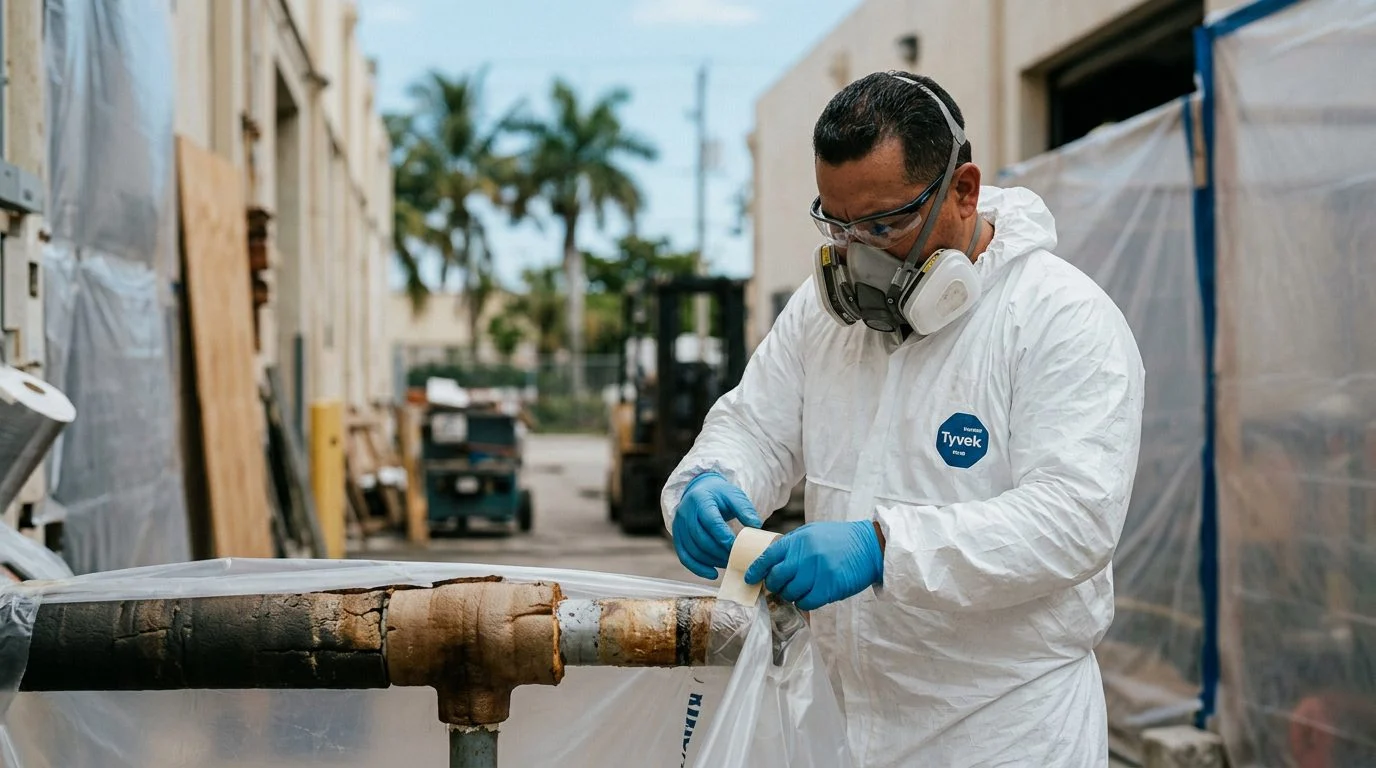
Asbestos fibers released at a job site can be breathed in. They can also be carried home on work clothes.
Illness can follow many years later.
Mesothelioma is a rare cancer. It affects the membranes (thin linings) around the lungs, chest, or abdomen. It usually appears decades after the asbestos exposure.
A latency period is the time between exposure and the first signs of illness. A job held decades ago can still matter.
Asbestosis is another asbestos disease. Under Fla. Stat. § 774.203, asbestosis means bilateral diffuse interstitial fibrosis of the lungs caused by inhalation of asbestos fibers. In plain terms, it is scarring of both lungs caused by breathing in asbestos fibers.
A claim turns on where and how you were exposed. That is why your work history is central.
Share your full exposure history with your medical team. Follow their care.
If you worked around asbestos and now face a diagnosis, or you hold old job papers, reach our team . Talk it through with our team — the first consultation is free, confidential, and carries no obligation.
How Florida’s Workers’ Compensation System Works
Workers’ compensation is a program administered by this state or the United States that provides benefits, funded by a responsible employer or its insurance carrier, for work-related injuries and illnesses.
It is a benefit system. It works differently from a jury lawsuit.
The statute says the disablement or death from such a disease “shall be treated as the happening of an injury by accident.”
“(1)(a) Where the employer and employee are subject to the provisions of the Workers’ Compensation Law, the disablement or death of an employee resulting from an occupational disease as hereinafter defined shall be treated as the happening of an injury by accident, notwithstanding any other provisions of this chapter, and the employee or, in case of death, the employee’s dependents shall be entitled to compensation as provided by this chapter, except as hereinafter otherwise provided; and the practice and procedure prescribed by this chapter shall apply to all proceedings under this section, except as hereinafter otherwise provided.”
In plain terms, where the employer and employee are subject to the Workers’ Compensation Law, an occupational disease is treated like a work injury under this law. Fla. Stat. § 440.151 reads: “Provided, however, that in no case shall an employer be liable for compensation under the provisions of this section unless such disease has resulted from the nature of the employment in which the employee was engaged under such employer, was actually contracted while so engaged, and the nature of the employment was the major contributing cause of the disease.”
Under Fla. Stat. § 440.11, the employer’s workers’ compensation liability is exclusive. In plain terms, it takes the place of other liability to the employee.
The law lists some exceptions. One is an employer that fails to secure payment of compensation.
So a worker usually cannot sue the employer in an ordinary negligence case. A separate claim often targets someone other than the employer.
Can Workers’ Compensation Cover an Asbestos Disease in Florida?
It can be. This happens when the illness is linked to the job and the proof holds up.
Florida’s occupational disease statute sets a high bar for proof.
Under § 440.151, the disease must result from the nature of the employment.
- Or the disease is much more common in that job than in most other jobs.
- The work must be the major contributing cause. Only medical evidence can show this, as demonstrated by physical examination findings and diagnostic testing.
- You must prove that the work caused the illness. You must also prove enough exposure to a specific harmful substance at work. The proof must be clear and convincing, which is a high standard.
- In claims for death under s. 440.16, death must occur within 350 weeks after last exposure (Fla. Stat. § 440.151).
Your work history carries much of the proof. Gather job titles, sites, dates, employers, and any products or materials you handled.
A common mistake is assuming an old job is too far back to matter.
Florida also has an asbestos-specific timing rule. For a civil asbestos or silica claim not already barred when the act took effect, Fla. Stat. § 774.206 says the limitations period does not begin to run until the exposed person discovers, or with reasonable diligence should have discovered, that they are physically impaired by an asbestos-related or silica-related condition.
The clock does not start until the exposed person discovers, or with reasonable diligence should have discovered, that they are physically impaired by an asbestos-related or silica-related condition.
Deadlines still apply. Acting early matters.
When a Separate Lawsuit May Also Be Possible
A lawsuit against someone other than your employer may be possible alongside a workers’ compensation claim. These suits may allege that a product maker or property owner is responsible for the exposure.
The value of any civil claim depends on the facts. No amount can be promised.
Florida limits some remedies in asbestos cases. Under Fla. Stat. § 774.207, punitive damages (extra damages meant to punish) may not be awarded in any civil action alleging an asbestos or silica claim.
When a complaint is filed in an asbestos or silica civil action, the plaintiff must also file a verified written report. “Verified” means signed under oath.
This report lists collateral source payments received or to be received on the same claim. Collateral source payments are money from other sources for the same harm. The plaintiff must update that report regularly.
When an asbestos disease causes death, the family may have a claim.
- Florida law allows the family of a person who dies from an asbestos disease to bring a wrongful death claim.
- Under Fla. Stat. § 768.21, a surviving spouse may recover for loss of the decedent’s companionship and protection.
- A surviving spouse may also recover for mental pain and suffering from the date of injury.
Our firm may refer a matter to another law firm. We may also handle it together with one, when that makes sense for you. We would explain this before you decide.
Asbestos Bankruptcy Trusts and Separate Compensation
Some companies that made asbestos products went through bankruptcy. These companies set up asbestos bankruptcy trusts. The trusts may pay claims separately from a lawsuit.
Each trust follows its own process. Each sets its own rules for reviewing and paying claims.
A review of your work history can help show which routes may apply. Those routes include:
- A trust claim
- A workers’ compensation claim
- A civil claim
- More than one of these
We do not promise payment from any trust or claim. Trust rules can change over time, so current information matters.
If you have Medicare, the rules may affect any recovery. CMS guidance on reporting a case states that Medicare beneficiaries must notify Medicare when a claim is made against a liability insurer or workers’ compensation.
Medicare’s recovery process explains that a conditional payment must be repaid from a settlement or award. A conditional payment is money Medicare paid while the claim was pending.
Veterans and Military Asbestos Exposure
The VA decides these claims under its own rules.
Veterans exposed during military service may have a claim through the VA. Military service records can help show where exposure happened. The places and dates of service matter, too.
VA benefits are a separate system from workers’ compensation and civil claims.
Share your exposure history with your doctors. Then contact our team to talk through your options.
Not sure what your next step is?
Talk it through with our team — the first consultation is free, confidential, and carries no obligation.
Next Steps and How to Talk With Our Lawyers
Gather your records now. They shape every route above. Bring:
- Job history with dates, employers, sites, and job titles
- Union, site, or military records that show where you worked
- Medical records and diagnosis reports
- Names of coworkers or supervisors who can confirm the exposure
The first consultation is free, confidential, and comes with no obligation to continue. CHG charges no attorney’s fees and no case costs unless there is a recovery.
Igor Hernandez is the responsible lawyer for this page. CHG Personal Injury Lawyers is a Florida-based firm serving clients throughout Florida.
Can I get VA disability benefits for asbestos exposure?
Veterans may be able to apply. The VA decides claims under its own rules.
How much can I sue for pain and suffering in Florida?
The value depends on the facts of each case. No amount can be promised.
How long do I have to file an asbestos lawsuit in Florida?
Florida’s timing rule for asbestos claims is in Fla. Stat. § 774.206. It says that, for any asbestos or silica claim not barred as of the effective date of the act, the limitations period does not begin to run until the exposed person discovers, or through the exercise of reasonable diligence should have discovered, that they are physically impaired by an asbestos-related or silica-related condition.
Deadlines still apply, so acting early matters.
If you worked around asbestos and now face a diagnosis, or you hold old job papers, reach our team. We can review your work history with you.
How Our Team Can Help
Reviewing the Exposure
We listen to where and how the exposure happened, whether at a job site, in the military, or at home, and help map out the facts that matter.
Compassionate Guidance
We understand that a diagnosis changes everything. We explain each option in plain language so your family can decide what comes next.
Support for the Whole Family
Spouses, children, and loved ones often carry the weight of the diagnosis too. We keep them informed and included.
Prompt Attention
Asbestos claims involve deadlines under Florida law. Reaching out early gives our team more time to gather records and review your options.
Act Promptly
Steps to Take Now
Follow Your Doctor's Care
Keep every appointment and follow your physician's treatment plan. Our firm does not give medical advice.
Gather Your Records
Collect medical reports, work history, union or employer documents, and any notes about where you worked or lived.
Write Down Your Exposure
Note the years, places, and tasks involved. Details from memory, even partial ones, can help our team understand your case.
Talk With Our Lawyers
Our attorneys will review your situation confidentially and explain the paths that may be available under Florida law.