

Jet Ski & Personal Watercraft Injuries
Jet Ski Fall Risk & Catastrophic Injury: What You Need to Know
A recreational accident that leaves you paralyzed, brain-injured, or permanently disabled is a life-altering event. You may have a legal claim for recovery.
By CHG Lawyers · Published August 28, 2026
Jet Ski Accidents and Catastrophic Injuries: What Families Need to Know About Legal Recovery
You were thrown from a jet ski at speed. The impact with the water knocked the wind from your lungs. Now you’re facing months of rehabilitation, permanent disability, or the loss of someone you loved. A jet ski fall that seemed like a recreational mishap has become the defining event of your life—and your family’s.
Falls and ejections from personal watercraft (PWCs) are among the most frequently reported boating incidents in the United States. According to the U.S. Coast Guard’s 2022 recreational boating statistics, there were 4,067 reported recreational boating accidents that year, with 701 fatalities. Jet ski accidents represent a significant portion of these incidents—and while many result in minor injuries, others cause permanent paralysis, traumatic brain injury, or death. If you or your family member has suffered a catastrophic injury in a jet ski accident, understanding what happened legally and what comes next is essential.
Not sure what your next step is?
Talk it through with our team — the first consultation is free, confidential, and carries no obligation.
Why Jet Ski Falls Happen—And Why Some Are Catastrophic
Jet skis are inherently unstable in certain conditions. Unlike larger boats with deep hulls and ballast, a jet ski sits high on the water and responds immediately to rider movement, weight shifts, and water conditions. A sudden maneuver, a large wake from a passing boat, rough water, or operator error can throw a rider off balance in seconds.
When a fall occurs at speed, the consequences can be severe. The jet ski often continues moving—sometimes circling back toward the rider—creating a second hazard. A rider may be struck by the moving vessel, caught in the jet intake, or pulled underwater. At high speeds, the impact with water itself can cause spinal cord damage, internal bleeding, or head trauma.
In the catastrophic-injury cases we handle, jet ski accidents have resulted in:
- Spinal cord injury and permanent paralysis (paraplegia—loss of function below the waist; quadriplegia—loss of function in all four limbs)
- Traumatic brain injury causing cognitive impairment, memory loss, or loss of consciousness
- Severe internal injuries requiring emergency surgery
- Drowning when a rider is trapped underwater or loses consciousness
- Severe lacerations and crush injuries from contact with the jet ski
These are not injuries that heal in weeks. They reshape a person’s entire life—and their family’s.
The Numbers: How Often Do Jet Ski Accidents Cause Serious Injury?
The U.S. Coast Guard tracks boating accidents through its Recreational Boating Accident Database. While comprehensive national data specific to jet ski injuries is limited, state boating safety agencies and emergency room records show that jet ski accidents account for a disproportionate share of serious watercraft injuries.
Florida—where jet skis are heavily used year-round—sees hundreds of jet ski accidents annually. Many result in minor injuries (bruises, lacerations, soft-tissue damage). But a meaningful percentage result in catastrophic harm: permanent disability, long-term hospitalization, or death. The severity depends on speed at impact, whether the rider was wearing a life jacket, whether they struck the jet ski itself, and how quickly rescue personnel arrived.
What Happens Immediately After a Jet Ski Accident—And Why Documentation Matters
The first hours and days after a catastrophic jet ski injury are chaotic. Medical personnel are focused on stabilizing and treating the injured person. Family members are in shock, making decisions about emergency care. In that confusion, critical evidence often disappears.
Here’s what you need to do—and do quickly:
1. Seek immediate medical attention. Catastrophic injuries require emergency care. Do not delay transport to a hospital.
2. Report the accident. File a report with local law enforcement or the U.S. Coast Guard (if the accident occurred in federal waters or international waters). Request a copy of the official accident report.
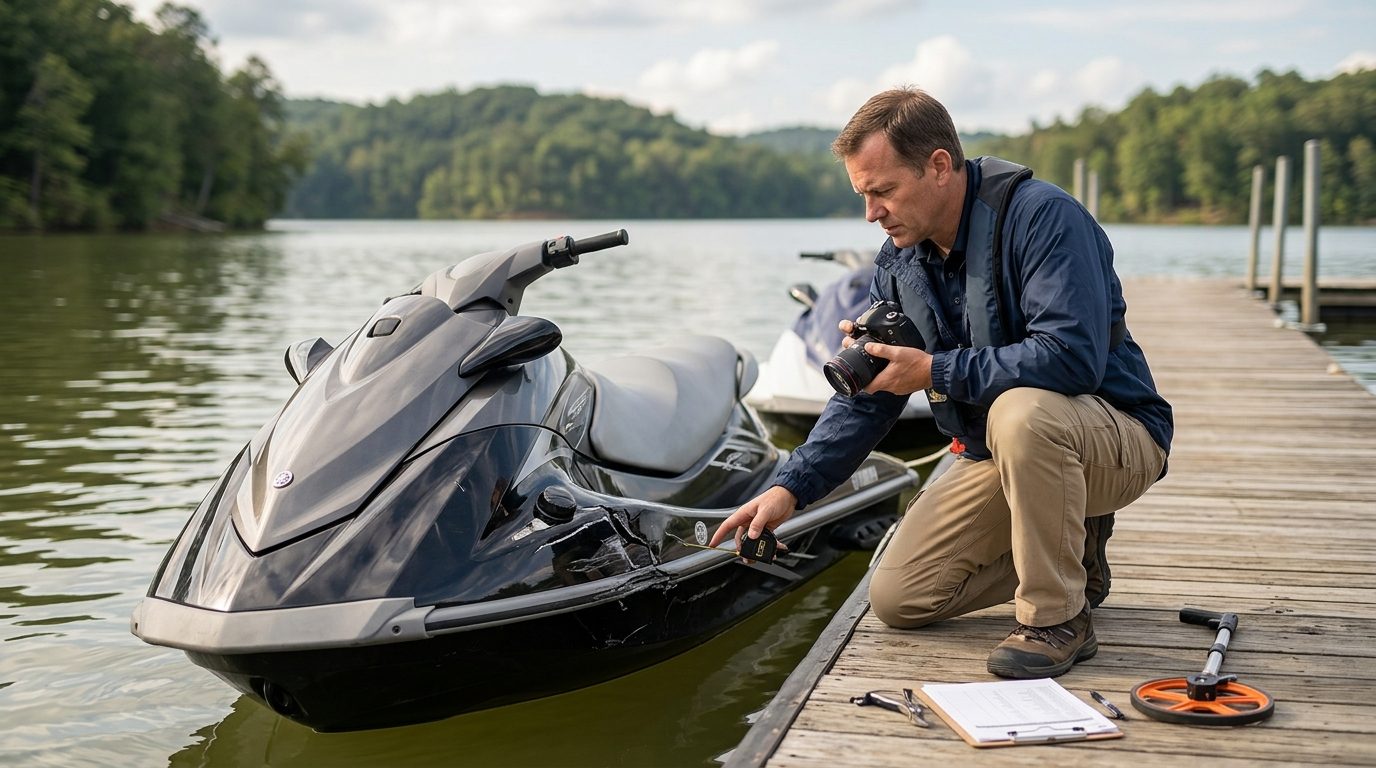
3. Document the scene and preserve evidence. If you or a witness are able, take photographs and video of: – The jet ski itself (before it is moved or repaired) – The water conditions and surrounding area – Any visible injuries – Debris or damage at the scene – The location where the accident occurred
Get the full names, phone numbers, and addresses of all witnesses. Ask them to write down what they saw while it’s fresh.
4. Preserve all communications and records. Keep: – All medical records, test results, imaging (CT scans, MRIs), and surgical reports – Receipts for medical expenses, medications, and adaptive equipment – Photographs of injuries as they heal – Communications with the jet ski rental company, property owner, or other parties – Text messages, emails, or voicemails related to the accident – Billing statements and insurance correspondence
Do not discard or alter any physical evidence (the jet ski, clothing, safety equipment). Do not allow the jet ski to be repaired or modified before an attorney has evaluated it.
5. Do not speak with insurance adjusters or the other party’s representatives without legal counsel. Anything you say can be used against you. An attorney can handle these communications on your behalf.
Have questions about what happened?
Ask our team directly. The first conversation is free, confidential, and there is no obligation to continue.
Who Can Be Held Liable for a Jet Ski Accident?
Liability depends on how the accident occurred. Potential defendants include:
The jet ski rental company or operator: – Failure to maintain or inspect the jet ski – Failure to provide a proper safety briefing – Renting to an intoxicated person – Renting to someone without proper boating experience or a boating license – Failure to provide or ensure use of a life jacket
Another rider or operator: – Reckless operation (excessive speed, dangerous maneuvers) – Operating under the influence of alcohol or drugs – Colliding with your jet ski – Creating hazardous conditions (large wakes, sudden turns)
The jet ski manufacturer: – Defective design (unstable hull, poor weight distribution) – Manufacturing defect (structural failure, engine malfunction) – Failure to warn of known hazards – Defective or failed engine cutoff switch
A property owner or marina: – Failure to warn of hazards (shallow water, rocks, debris, strong currents) – Failure to maintain safe conditions – Overcrowding or inadequate supervision
The U.S. government (in limited cases): – Negligent maintenance of navigational aids or markers – Failure to warn of hazards in federal waterways
Your Legal Rights Under Florida Law
Florida recognizes the right of injured persons to recover damages when an accident is caused by someone else’s negligence or wrongdoing. Under Fla. Stat. §768.81 (Florida’s comparative-negligence statute), you can recover damages even if you were partially at fault—as long as you were not more than 50% responsible for the accident.
Example: If a jet ski rental company failed to maintain the jet ski’s steering system, and the defect contributed to your accident, the company is liable even if you were operating at an unsafe speed. As long as you were 50% or less at fault, you can recover (Fla. Stat. § 768.81(6)).
If the accident resulted in death, Fla. Stat. §95.11 sets a two-year statute of limitations for wrongful-death claims. Your family has two years from the date of death to file a claim. This deadline is firm—missing it means losing the right to recover entirely.
Witnesses move, memories fade, and physical evidence can be lost or destroyed.
What Compensation May Be Available?
Damages in a catastrophic jet ski injury case may include:
- Medical expenses: Emergency care, hospitalization, surgery, rehabilitation, ongoing medical treatment, medications, adaptive equipment (wheelchairs, specialized beds, home modifications)
- Lost income: Wages lost during recovery and rehabilitation, and lost earning capacity if the injury prevents you from returning to work
- Pain and suffering: Compensation for physical pain, emotional distress, loss of enjoyment of life, and psychological trauma
- Disability and long-term care: Costs of in-home care, nursing, personal assistance, and adaptive equipment over a lifetime
- Wrongful death damages (if applicable): Compensation to the family for the loss of the deceased person’s income, companionship, and guidance
In catastrophic cases, lifetime medical and care costs can exceed $1 million to $5 million or more, depending on the severity of the injury and the person’s age and life expectancy.
Why You Need an Attorney Who Focuses Exclusively on Catastrophic Injury Cases
Jet ski accident claims are complex. They often involve multiple defendants (the rental company, the manufacturer, another operator), multiple insurance policies, and technical questions about equipment failure, water conditions, and medical causation. Insurance companies have teams of adjusters and lawyers working to minimize payouts. Without experienced legal representation, injured persons and families often accept settlements far below what their cases are worth.
An attorney who focuses exclusively on catastrophic injury cases understands:
- How to identify all liable parties
- How to obtain and analyze accident reports, maintenance records, and equipment specifications
- How to work with medical experts to document the severity and permanence of your injury
- How to calculate lifetime medical and care costs
- How to negotiate with insurance companies or litigate in court
- How to preserve evidence and meet legal deadlines
Want to know where you stand?
Tell us what happened and our team will walk you through the options available to you, at no cost.
Next Steps: Getting Help
If you or a family member has suffered a catastrophic injury in a jet ski accident, the path forward is daunting. Medical decisions, financial recovery, holding the responsible party accountable—these are significant matters, and you shouldn’t navigate them alone.
Our firm focuses exclusively on catastrophic injury cases. We represent people and families who have suffered spinal cord injuries, paralysis, traumatic brain injury, severe burns, amputations, and other life-altering harm. We understand the medical, financial, and emotional weight of these injuries, and we know how to build a case that holds negligent parties accountable.
Contact us for a free case evaluation. We’ll listen to what happened, answer your questions about your legal rights, and explain what compensation may be available. There’s no obligation, and no fee unless we recover money for you.
The decisions you make in the weeks after a jet ski accident can significantly affect your family’s financial security and your ability to access the care and support you need. Let us help you understand your options.
Time Matters in Catastrophic Injury Claims
If you or a family member suffered a serious, permanent injury in a jet ski accident, the sooner you speak with an attorney, the better. Evidence can be lost, memories fade, and there are legal deadlines that apply to your claim.
Common Catastrophic Jet Ski Injuries
Spinal Cord Injury & Paralysis
High-speed ejection or collision can damage the spine, resulting in paraplegia or quadriplegia. These injuries often require lifelong medical care, mobility aids, and home modifications.
Traumatic Brain Injury
Impact with the water, another vessel, or debris can cause severe brain trauma. TBI can result in cognitive changes, memory loss, personality changes, and permanent disability.
Severe Burn Injuries
Contact with hot engine components or fuel fires can cause catastrophic burns requiring emergency care, skin grafts, and long-term rehabilitation.
Amputation & Limb Loss
Propeller strikes and crushing injuries can result in the loss of fingers, hands, feet, or limbs—permanently altering your ability to work and live independently.
Why You Need an Attorney After a Catastrophic Jet Ski Injury
We Focus Exclusively on Catastrophic Injury Cases
We represent people with life-altering injuries—spinal cord damage, paralysis, brain injury, amputation, and severe burns. We understand the medical, financial, and emotional weight of your situation.
We Handle Complex Liability & Insurance Claims
Jet ski accidents involve multiple parties—manufacturers, rental companies, operators, and property owners. We investigate who is responsible and pursue all available sources of recovery.
We Work with Medical & Rehabilitation Experts
We collaborate with specialists in neurology, orthopedic surgery, rehabilitation medicine, and life-care planning to document the full scope of your injury and lifetime needs.
We Understand Wrongful Death Claims
If a jet ski accident resulted in a fatal outcome, your family may have a claim. We help families navigate the legal process and pursue recovery during an unimaginably difficult time.