


Catastrophic Spine & Nerve Injuries
Cauda Equina Syndrome: Why Every Hour Before Surgery Matters
Cauda equina syndrome is a surgical emergency. When decompression surgery is delayed, the result can be permanent paralysis, loss of bladder and bowel control, and lifelong impairment. Here is how it is treated, why timing is critical, and what your family can do next.
Serious Injuries. Serious Advocacy.
Nationwide
Catastrophic injury cases accepted across the U.S.
Bilingual
Educational resources in English & Spanish
Licensed
Florida Bar–admitted attorneys
24/7
Free, no-obligation case evaluations
By CHG Lawyers · Published August 03, 2026
How Is Cauda Equina Syndrome Treated? Surgery, Timing & Recovery
Doctors treat cauda equina syndrome as a surgical emergency. The main treatment is decompression surgery. This surgery takes pressure off a bundle of spinal nerves at the base of your spine. Timing matters most for the outcome.
Doctors do not wait and see with this condition. The nerves at the bottom of the spinal cord control your legs, bladder, bowel, and sexual function. When something presses on them, every hour counts.
Below, we explain how doctors confirm it. We also cover how the surgery works, why speed matters, and what recovery can look like.
This page is general information. It is not medical or legal advice. If you have red-flag symptoms, call 911 or go to the nearest emergency room now.
Not sure what your next step is?
Talk it through with our team — the first consultation is free, confidential, and carries no obligation.
How doctors confirm cauda equina syndrome first
Doctors confirm cauda equina syndrome (CES) with an urgent MRI scan. An MRI is a detailed imaging test. It shows exactly what is pressing on the nerves, and where.
The MRI helps the medical team find the cause. Common causes include a large herniated disc, spinal trauma, a tumor, an infection, or bleeding near the spine. Finding the cause tells surgeons what to fix.
Before ordering the scan, doctors look for “red flag” symptoms. These include:
- Numbness in the area that would touch a saddle. Doctors call this saddle anesthesia.
- Loss of bladder or bowel control.
- Weakness or numbness in both legs.
These signs push doctors to act fast. According to the Cleveland Clinic, nerve compression (pressure on the nerves) can cause permanent damage if it is not treated quickly.
You can read more about these warning signs in our plain-language guide to the first signs of cauda equina syndrome.
Decompression surgery: how it works
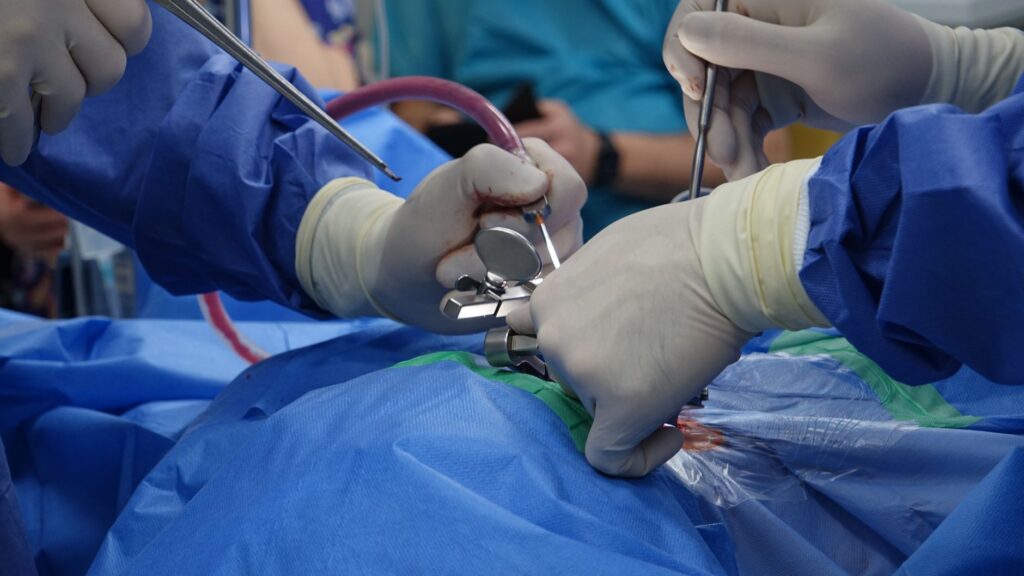
Decompression surgery removes whatever is pressing on the nerves. That is what “decompression” means. The surgeon relieves the pressure. This gives the trapped nerves a chance to recover.
The exact procedure depends on the cause. Two common operations are:
- Laminectomy — the surgeon removes a small piece of bone (the lamina) from the back of a spine bone. This makes more space around the nerves.
- Discectomy — the surgeon removes part or all of a herniated disc that is squeezing the nerves.
Sometimes the spine also needs to be stabilized. If so, the team may add hardware or a fusion. This hardware holds the bones together. According to Medscape, surgery for CES may include a laminectomy with hardware or fusion, or a discectomy. It depends on the cause.
The goal is simple. Doctors want to stop the ongoing nerve injury. This gives the nerves the best chance to heal. Your surgical team picks the approach based on your MRI and the cause of the pressure.
Why timing matters so much
Timing matters because fast surgery can prevent permanent damage. Once nerve injury becomes permanent, surgery cannot reverse it. It can only stop more harm.
Surgeons treat CES as urgent. The American Association of Neurological Surgeons reports that prompt surgery is the best treatment. It says treating patients within 48 hours of onset gives a big advantage. The Columbia Neurosurgery team describes CES as a possible surgical emergency that may need fast decompression.
This is why delay is so dangerous. The nerves control bladder, bowel, sexual function, and leg movement. The Mayo Clinic explains this for spinal cord injuries. A missed or slow diagnosis in an ER or clinic can turn a treatable problem into permanent, life-altering harm.
Have questions about what happened?
Ask our team directly. The first conversation is free, confidential, and there is no obligation to continue.
Treatment and support after surgery
Care after surgery focuses on healing, function, and adjusting to any changes. Surgery is the start of recovery, not the end.
Your medical team may use these treatments and supports:
- Medication. Doctors may prescribe steroids or other drugs to reduce swelling. They may also give medicine to manage pain, as your care team directs.
- Rehabilitation. Physical therapy and occupational therapy help you rebuild strength. They also help you relearn daily tasks. Managing your bladder and bowel is often a key part of care.
- Mental-health support. A CES injury changes daily life. Counseling and support help many people cope.
- Long-term follow-up. How often you follow up depends on how much function returns.
Doctors rate how bad a spinal injury is using the ASIA Impairment Scale. This is the standard way to grade nerve function. It was developed by the American Spinal Injury Association. It helps track recovery over time.
What recovery looks like
Recovery from cauda equina syndrome varies a lot. It can take months to years. Some people regain much of their function. For others, some loss is permanent.
Nerve tissue heals slowly. Even with well-timed surgery, bladder, bowel, or sexual function may not fully return. That does not mean progress stops. Many people keep improving with steady rehabilitation and support. The National Spinal Cord Injury Statistical Center tracks long-term outcomes for spinal cord injuries in the U.S.
We will not promise a specific result, and no honest source can. Your outcome depends on the cause, how fast you were treated, and how your body responds. For more, see our related guides on whether you can fully recover from cauda equina syndrome and whether people with cauda equina syndrome can walk.
When a delay in treatment causes lasting harm
CES is a time-sensitive emergency. A missed or delayed diagnosis can cause permanent paralysis, loss of bladder or bowel control, and nerve damage. Fast surgery might have prevented this. That is one of the hardest facts about this condition.
Sometimes the delay happens because a provider missed the red flags. Or a provider failed to order an urgent MRI. When permanent harm comes from a provider’s negligence, families often have questions about their legal options.
In the catastrophic-injury cases our attorneys handle, timing is often the whole story. At CHG Personal Injury Lawyers, we represent people with permanent spinal cord injuries and paralysis nationwide. In Florida, strict deadlines apply. Many negligence claims must be filed within a limited time under Fla. Stat. §95.11. Florida also uses a shared-fault rule under Fla. Stat. §768.81.
Again, this is general information, not medical or legal advice. For a medical emergency, call 911. To understand your situation, you can request a free case evaluation.

Frequently asked questions
Is cauda equina syndrome a medical emergency?
Yes. Cauda equina syndrome is a surgical emergency. Treatment is usually urgent decompression surgery to relieve pressure on the nerves.
How long does it take to recover from cauda equina syndrome?
Recovery varies a lot. It can take months to years. Some function may return. Some nerve damage can be permanent.
How do surgeons decompress the cauda equina?
Surgeons remove what is pressing on the nerves. They often use a laminectomy or a discectomy. Sometimes they add hardware to stabilize the spine.
What happens if cauda equina syndrome surgery is delayed?
A delay can let temporary nerve pressure become permanent. This may cause lasting paralysis, bladder and bowel problems, or nerve damage that surgery can no longer reverse.
Can you have cauda equina syndrome without pain?
Yes. Some people have little or no back pain. But they still have red-flag signs, like saddle numbness or loss of bladder control. These signs still require emergency care.
Learn more in our full glossary guide to cauda equina syndrome.
This Is a Medical Emergency — Do Not Wait
Sudden numbness in the saddle area, loss of bladder or bowel control, or new weakness in both legs can signal cauda equina syndrome. Go to the emergency room immediately. Delayed diagnosis or delayed surgery is a leading reason patients suffer permanent damage.
How Cauda Equina Syndrome Is Treated
Emergency Decompression Surgery
The main treatment is urgent surgery to relieve pressure on the compressed nerve roots at the base of the spine. Surgeons typically remove the material — often a herniated disc, hematoma, or tumor — pressing on the nerves.
Why Timing Is Critical
Nerve tissue that stays compressed can be damaged permanently. Many surgeons treat this as an emergency operation, and earlier decompression is generally associated with a better chance of recovery.
Rehabilitation & Support
After surgery, recovery may involve physical therapy, pain management, and treatment for bladder, bowel, and sexual function. This care can continue for months or years.
When Recovery Is Incomplete
Some function may return, but some nerve damage can be permanent — including lasting paralysis and loss of continence. The extent often depends on how quickly the condition was diagnosed and treated.
Want to know where you stand?
Tell us what happened and our team will walk you through the options available to you, at no cost.
When a Delay May Point to Negligence
Delayed Diagnosis
When warning signs are missed or dismissed, and surgery is delayed, otherwise recoverable nerve damage can become permanent.
Failure to Order Imaging
An MRI is the key tool for confirming cauda equina syndrome. Failing to order urgent imaging can cost a patient their recovery window.
The Human Cost
Permanent paralysis and loss of bladder or bowel control are life-altering. Families face lifelong medical and care needs that deserve full accounting.
You Deserve Answers
If a preventable delay changed the outcome, you may have a right to hold the responsible parties accountable for the harm caused.
If a Delay Turned a Treatable Emergency Into a Permanent Injury, We Can Help You Understand Your Options.
Related practice areas
- What are the first signs of cauda equina NHS?
- Smoke Inhalation Injury Claim: Airway Burns & Fire