
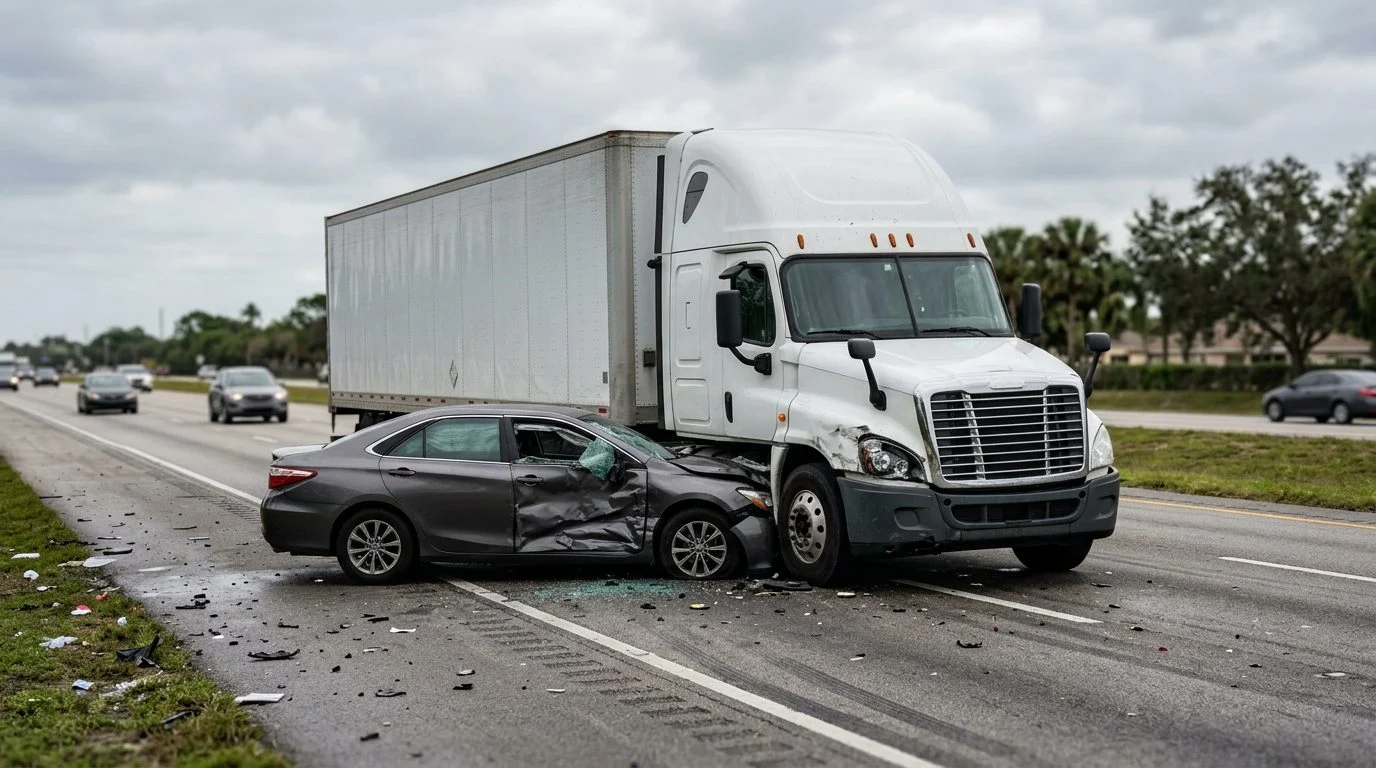
FedEx Truck Accidents | Tamarac, Florida
Hurt in a FedEx Truck Crash in Tamarac? Know Your Next Steps
Plain-language guidance for injured people and their families. Igor Hernandez, responsible attorney, and the CHG Personal Injury Lawyers team serve Tamarac and clients throughout Florida.
Why Families Start With Us
Free
First consultation, confidential and without obligation
Florida
Florida-based firm serving Florida communities
Licensed
Attorneys admitted to The Florida Bar
$0
No fees unless there is a recovery
By CHG Lawyers · Published October 29, 2026
If a FedEx Truck Hit You or Someone You Love in Tamarac
If you were hurt in a crash with a FedEx truck in Tamarac, you may have a claim against the party responsible. The steps you take in the first days can shape what you can prove later.
Broward roads get busy. If you’ve ever sat in traffic on the way to a Florida Panthers game in Sunrise, you know how fast a big truck can fill the lane beside you.
A crash with a large delivery truck is different from a typical fender-bender. More people, more companies, and more paperwork can be involved. You may be a driver, a passenger, a cyclist, a pedestrian, or a family member of someone who was hurt or killed.
This guide covers the first steps, the Florida rules that often apply, and how a claim against a trucking company or truck operator usually works. It is general information, not advice about your specific case. Please follow your doctors’ care, and tell them about every symptom, even small ones.

If you were hurt in a crash with a FedEx truck in Tamarac, you may have a claim against the party responsible. Talk it through with our team — the first consultation is free, confidential, and carries no obligation.
Immediate Steps That Protect Your Injury Claim
The most useful steps are getting medical care quickly and writing down what happened. Start with these five.
- Get checked by a doctor. Some injuries, including brain and neck injuries, may not show up right away. Follow your doctors’ care even if you feel fine at first.
- Get the crash report. When someone is hurt, the officer’s Florida Traffic Crash Report must be submitted within 10 days after the investigation ends. Write down the report number. Florida law allows crash reports to be made available to the parties involved in a crash, their legal representatives, and their insurers, but not for redistribution to anyone the statute does not list (Fla. Stat. § 316.066).
- Take photos. As soon as it is safe, photograph the vehicles, the roadway, lane markings, traffic signals, and any visible injuries.
- Collect details. Get names and phone numbers of witnesses. Note the truck’s unit number, the company name, and any phone number painted on the vehicle.
- Go slowly with insurers. An adjuster may ask for a recorded statement. Speak carefully, and do not sign a release until you understand your injuries.
Who Can Be Responsible When a FedEx Truck Is Involved
Responsibility in a FedEx truck crash can rest with the driver, the company that operated the truck, or both, depending on the facts. Several parties may each play a role in a claim.
Some FedEx delivery trucks are operated by independent contractors. The operator named on the truck, the paperwork, and the insurance policy may differ from what you expect. Finding out who operated the truck, and who insures it, early helps protect your claim.
A claim may look at several questions. Did the driver follow traffic laws? Did the operator train, hire, and supervise the driver properly? Was the truck maintained? The answers depend on the facts of each crash. Federal safety rules also come into play, as explained in the next section.
Evidence That Matters in Commercial Truck Crashes
Commercial truck crashes often leave a paper and data trail that a typical car crash does not. Several kinds of records can matter.
- Duty-status logs. Federal rules require a motor carrier to make each driver record duty status for each 24-hour period. 49 CFR § 395.8 also bars false reports and tampering with electronic logging devices.
- Driver qualification files. Each motor carrier must keep a file for each driver it employs, including the driver’s application and motor vehicle record. 49 CFR § 391.51 sets these requirements.
- Safety records. Federal law requires the Secretary to decide whether an owner or operator is fit to run commercial trucks safely. That decision uses, among other things, the accident record and the safety inspection record. See 49 U.S.C. § 31144.
- Video, maintenance, and dispatch records. Dash cam footage, repair records, and dispatch messages can also show what happened, when they exist.
Federal rules set how long some driver files must be kept. Asking for these records early helps. The police report, scene photos, and eyewitness accounts also help show how the crash happened.
Not sure what your next step is?
Talk it through with our team — the first consultation is free, confidential, and carries no obligation.
Florida Rules and Deadlines to Know in Tamarac
Florida can reduce your recovery by your share of fault. Under Fla. Stat. § 768.81, in a negligence action a party found greater than 50 percent at fault for his or her own harm may not recover any damages, but this does not apply to medical negligence actions under chapter 766.
Damages in a negligence case are also divided by each party’s percentage of fault, not shared equally. This is why the facts of who did what matter so much.
Under Fla. Stat. § 95.11, actions other than for recovery of real property must be commenced within the time set for each type of action, so the deadline depends on the claim. Deadlines apply, and other timing rules can differ, so contacting a lawyer promptly helps protect your options.
Common Questions About Florida Rules
Can I still recover if I was partly at fault?
Florida can reduce your recovery by your share of fault. If you are found more than 50 percent at fault, you generally cannot recover damages.
How long do I have to file?
Most Florida negligence claims generally must be filed within two years under current law. Deadlines apply, so act promptly.
Can a family file after a death?
When a death is caused by another person’s wrongful act or negligence, Florida law provides that the person who would have been liable for damages had the injured person survived remains liable for those damages, even though the injured person has died.
When a FedEx Truck Crash Causes a Catastrophic Injury or Death
Some truck crashes cause life-altering injuries. These include spinal cord injuries, paralysis, traumatic brain injuries, amputations, severe burns, and serious back and neck injuries.
Catastrophic injuries often need long-term medical care, equipment, home changes, and planning for lost income. These needs are part of what a claim may address. Your doctors guide your treatment, and your records help show what it costs.
When a crash causes a death, the family can bring a wrongful death claim. Florida law lets survivors recover lost support and services. A surviving spouse may recover for lost companionship and for mental pain and suffering. Minor children may recover for lost parental companionship, instruction, and guidance. A survivor who has paid medical or funeral expenses may also recover them. See Fla. Stat. § 768.21.
No paperwork can measure the loss of someone you love. Families can take practical steps now. Keep all medical and billing records together. List the changes in daily life at home. Keep the crash report and every letter from insurers in one folder.
Working With CHG Personal Injury Lawyers in Tamarac
CHG Personal Injury Lawyers is a Florida-based personal injury firm. It serves people across Florida, including Tamarac and Broward County residents.
Igor Hernandez is the responsible lawyer for this page. Our lawyers and staff handle car, truck, and other accident and injury matters for clients throughout Florida. Our attorneys are licensed in Florida.
The firm focuses on car accidents, truck accidents, slip and fall cases, catastrophic injury claims, and wrongful death. CHG charges no attorney’s fees and no case costs unless there is a recovery. Some cases may be referred to, or handled together with, another law firm.

Talk to CHG About Your FedEx Truck Crash
A FedEx truck crash can leave you with medical bills, missed work, and insurance calls you didn’t expect. You don’t have to sort through those questions alone. Our team can review your options in a free, confidential first consultation, with no obligation to continue. Contact CHG Personal Injury Lawyers to start that conversation today.
What to Do After a FedEx Truck Crash
Get Medical Care Right Away
Some serious injuries, including back, neck, and head injuries, may not show symptoms for hours or days. Follow your doctors' care and keep every appointment and record.
Write Down What You Remember
Note the date, time, location, weather, and what the driver or company representatives said. Save photos of the vehicles, the road, and any visible injuries.
Keep Your Records Together
Save medical bills, pay stubs, repair estimates, and letters from insurers. Share them with your attorney instead of signing statements without advice.
Talk With a Lawyer Promptly
Deadlines apply to injury claims in Florida. Contact CHG Personal Injury Lawyers early so your options can be reviewed while evidence is still available.
Have questions about what happened?
Ask our team directly. The first conversation is free, confidential, and there is no obligation to continue.
How We Help Tamarac Families
Plain-Language Answers
We explain what happened, what the law says in Florida, and what comes next, without legal jargon.
Support for Your Family
A serious crash affects everyone at home. We keep you informed and give your loved ones a clear point of contact.
Prompt Action on Evidence
Trucking companies keep their own records. Our team focuses on acting quickly to request and preserve important evidence.
Care for Catastrophic Injuries
We handle claims for every severity of injury, including life-altering harm and wrongful death, with the dignity each family deserves.
Important Note on Referrals
Some cases may be referred to, or handled together with, another law firm.